
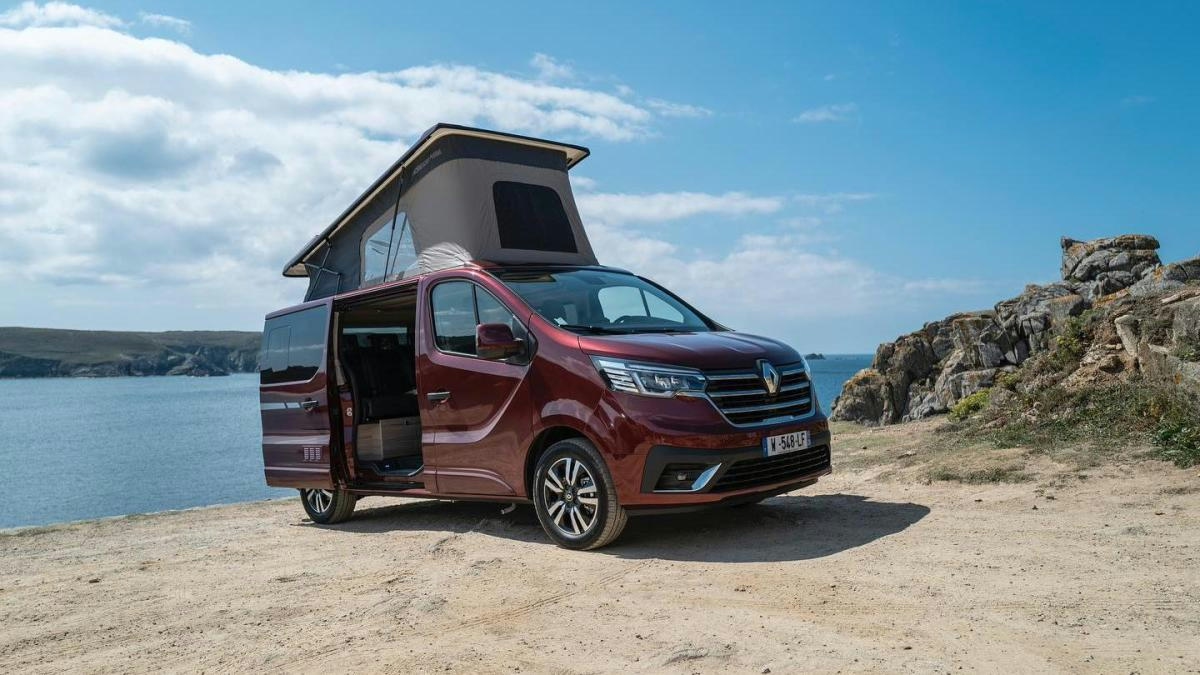
Are you longing to explore Britain’s hidden gems – from the rugged Cornish coast to the windy Scottish Highlands – without giving up on comfort? Enter the HorizonVan 4, a compact-yet-fabulously-equipped campervan hailing from Brittany in northwest France. Built on the solid foundations of the Renault Trafic Phase 2, this little gem is now catching the eye of British adventurers, thanks to its hand-crafted finishes, ingenious interior design, and an attractive price tag.
Below, you’ll discover why the HorizonVan 4 makes sense for travellers in the UK: from narrow Welsh lanes and historical urban centres to the unpredictably wet British weather. Let’s dive into what sets this Breton campervan apart – and how it might just fit perfectly into your next weekend getaway or epic cross-country trip.
1. Why a French Campervan in the UK?
1.1 The Rise of “Go-Anywhere” Road Trips
Over the past few years, more and more Brits have embraced the concept of a self-contained campervan, especially smaller models. Not everyone wants a huge motorhome that’s a nightmare to park and conspicuous in old village streets. With changing lifestyles and the surge of local tourism (post-Covid and all), people crave more flexible ways to discover the British Isles. A manageable van that slips into standard parking bays and can be used spontaneously is in high demand.
1.2 The Compact Craze
Vans measuring around five metres in length (or just over) are the sweet spot for many. Why? They combine essential living space (kitchen, seating, sleeping arrangements) with the manoeuvrability of a medium-sized vehicle. In many areas of the UK – especially old towns with narrow roads, small car parks, or weight restrictions – a large motorhome quickly becomes impractical. This is where something like the HorizonVan 4 shines: a tidy 5.08 metres, easy to navigate, and fully equipped.
1.3 The Appeal of Semi-Artisanal Campers
We’re all familiar with mass-produced campers: functional, sure, but sometimes lacking that personal flair or refined finishing. The last few years have seen a surge of smaller European outfits offering bespoke or semi-bespoke conversions that combine top-notch materials with thoughtful designs. Glénan Concept Cars, based in Brittany, stands out for its artisan approach: each van is carefully assembled, with an emphasis on detail and customisability. That approach resonates strongly with travellers who want something unique, not just another cookie-cutter motorhome.
2. The HorizonVan 4 at a Glance
2.1 Renault Trafic Base: A UK Favourite
The Renault Trafic has a solid reputation among tradespeople and fleets across Britain. Mechanics are familiar with it, parts are widely available, and it offers decent fuel economy. In the HorizonVan 4’s case (2025 version), you get:
- Dimensions: 5.08 m long, around 2.0 m high (with the roof down), making it feasible for multi-storey car parks that have a 2.0 m clearance.
- Engine: A 2.0 dCi (130 bhp) diesel engine, proven in commercial vans across Europe. Expect a moderate ~7.5 L/100 km (around 37-38 mpg) if driven sensibly.
- Phase 2 Upgrades: Slight aesthetic tweaks, possibly improved driver assists, and the usual Renault reliability updates.
2.2 The “Breton” Touch
HorizonVan 4’s real uniqueness lies in the interior build, courtesy of Glénan Concept Cars:
- Hand-assembled: Each unit gets dedicated attention, meaning excellent fit, sturdy cabinet fixtures, and well-finished edges.
- Quality Over Quantity: The manufacturer keeps production volumes small, ensuring quality control is paramount.
- Artisan Warmth: A mix of robust fabrics, carefully chosen wood trim, and a neat sense of design that merges practicality with understated aesthetics.
3. Living Space: Ingenious Layout for a Compact Body
3.1 Clever Sleeping Arrangements
- Main Bed: The bench seat quickly converts to a double bed (approx. 187 x 127 cm). Whether you’re a couple or you have kids, bedtime is a breeze: minimal fuss, no contortions.
- Pop-Top Bed: The roof-lifting system reveals another double bed (198 x 140 cm). With a slatted base and memory-foam type mattress, it’s far more comfortable than many typical “thin foam” solutions. Importantly, you can sleep four adults total, which is rare in a sub-5.10 m camper.
3.2 Full Kitchen Setup
- Two-Burner Gas Hob: Enough for boiling pasta and frying bacon simultaneously.
- 50-Litre Compressor Fridge: Efficient, even in the UK’s variable climate.
- Sink and Tap: Fold-down style, saving precious worktop space.
- Abundant Storage: Overhead lockers, under-seat drawers, and side compartments ensure minimal clutter.
3.3 Dining & Seating
- Swivel Front Seats? Typically, many van conversions incorporate swivel seats up front to create a comfortable lounge. Although not specified in the original specs, it’s likely an optional or standard feature.
- Removable Table: Use it inside or attach it outside. Great for a quick lunch near the Lake District or a coffee break on a windy Norfolk beach.
4. Four-Season Adventure
4.1 Insulation & Winter Use
While much of the UK’s climate is milder than that of the Alps or northern Scandinavia, British weather can still be damp and chilly (especially around the Scottish Highlands or Welsh mountains). The HorizonVan 4’s insulation is designed to keep out the cold drafts. Optional diesel heater installation ensures you can comfortably camp year-round, be it a frosty morning in Snowdonia or a crisp autumn night in the Peak District.
4.2 Decent Water Capacity
A 90-litre fresh water tank is rather generous for a van of this size. That means 2-3 days off-grid usage without constant refills. Ideal for a remote pitch on the North Coast 500 route or boondocking near Dartmoor.
4.3 The Joy of a Compact Footprint
- Country lanes: At just 5.08 m, you’ll manoeuvre through single-track roads in the Cotswolds or Cornwall without too many heart-in-mouth moments.
- City parking: If you’re hitting up cultural spots – say, parking near Edinburgh’s old town or Bath’s city centre – you’re way more likely to find a standard bay that accommodates your length compared to a 6-m+ motorhome.
5. Comparisons with Similar UK-Accessible Vans
| Model | Length (m) | Sleeps | Engine | Starting Price (approx.) | Fresh Water Tank |
|---|---|---|---|---|---|
| HorizonVan 4 | 5.08 | 4 | 2.0 dCi 130 bhp | ~ £47,000 (from €53,400) | 90 L |
| Westfalia Club Joker City | 5.30 | 2 | 2.0 TDI 150 bhp DSG | ~ £62,000 | 60 L |
| Ford Nugget (Custom-based) | ~ 4.97-5 | 4 | 2.0 EcoBlue 130/170 | ~ £58,000 | 42-50 L (var.) |
| Hanroad Trek 5 (Transit) | 5.40 | 4 | 2.0 EcoBlue 130 bhp | ~ £55,000+ | 80 L |
| Auto-Sleeper Air (NV200 base) | 4.40 | 2 | 1.5 dCi / 1.6 petrol | ~ £40,000 | 30-40 L |
(Prices in GBP are approximations based on continental prices; actual cost depends on import taxes, possible Brexit-related fees, shipping, and pound-euro exchange rates.)
Takeaways:
- The HorizonVan 4 stands out for its combination of 4 real berths, a 90 L water tank, and a price that can be quite competitive even after import. Meanwhile, many popular UK options either seat/sleep fewer people or cost significantly more with a similar kit.
6. Practical Tips for UK Buyers
6.1 Import Process from France
- Check the exchange rate: Fluctuations can affect the final cost.
- Taxes & Duties: Post-Brexit, you may need to handle import VAT. The van might require UK homologation if not already recognized via a European certificate. An agent can help.
- Left- or Right-Hand Drive: Usually, the base Renault Trafic is left-hand drive if sourced from France. If you prefer a right-hand drive layout, see if Glénan Concept Cars can source a RHD platform from the Renault network. This might slightly complicate timelines.
6.2 Insurance & Registration
- Once the vehicle is in the UK, you need to register it with DVLA. The category could be “motor caravan” if it meets certain criteria (windows, bed, cooking, etc.).
- Insurance: Some UK insurers might require a specialist “campervan policy,” but that’s common for self-build or small-batch conversions. Premiums are often comparable to mainstream vans.
6.3 Travelling with Diesel in Low Emission Zones
- Many UK cities (like London) operate or plan Clean Air Zones (CAZ). Diesel engines meeting Euro 6d standards typically comply, but older or higher-emission diesels face charges. The 2.0 dCi might be exempt or pay reduced fees if it meets Euro 6 standards fully. Check each city’s CAZ website.
7. Q&A: Extra Common Queries
7.1 “Is it Hard to Drive on Narrow UK Rural Roads?”
Not particularly. The length is 5.08 m, similar to a mid-sized estate car. The van is taller, yes, so mind overhead branches. The decent turning circle and power steering make tight lanes feasible. But sure, a bit of caution on single tracks is wise.
7.2 “Does the Pop-Top Withstand British Gales?”
Yes, the pop-top’s mechanism includes strong latches. If storms are fierce, better to keep it down. But average seaside breezes? No problem.
7.3 “Is the Diesel Engine Allowed in All Cities?”
Mostly yes, if it’s a modern Euro 6, it meets most Ultra Low Emission Zone (ULEZ) standards, though you might pay daily charges in central London if it’s not fully ULEZ-compliant. Always verify specifics for your engine’s exact emission rating.
Could the HorizonVan 4 be purchased with an automatic gearbox for those who dislike manual transmission?
According to Glénan Concept Cars’ usual practice, the HorizonVan 4 is built on a Renault Trafic base. By default, many Renault Trafic units sold in continental Europe come in a 6-speed manual. However, Renault also offers the Trafic with an optional automatic or automated gearbox (sometimes called EDC or “Quickshift,” depending on the generation). If you specifically want an automatic, the key is to place your order so that Glénan Concept Cars acquires a suitable donor vehicle from Renault that has the auto transmission. Some steps might be:
- Check local Renault listings: Confirm that the Trafic version (Phase 2 or the 2025 spec) with an auto gearbox is officially sold in your country/region.
- Coordinate with Glénan Concept Cars: Inform them from the outset that you want the automatic. They’ll source that particular variant from Renault. It might entail a longer wait if the factory needs to build it.
- Implications on price: An automatic Trafic can cost a few thousand euros more than the manual.
- Driving comfort: An auto is particularly nice for city driving or frequent stop-and-go traffic. It can also reduce driver fatigue on long motorway stretches. If you plan cross-continental touring or daily errands with the van, the convenience is notable.
- Performance and reliability: Renault’s auto transmissions generally handle the 2.0 dCi engine decently. While the manual might be fractionally more fuel-efficient, the difference is often minor. You’d trade a slight mpg shortfall for an easier driving experience.
In short, yes, it’s generally feasible if the base vehicle is procured with the automatic transmission. The challenge is ensuring the correct Trafic configuration is available. Early communication with Glénan Concept Cars is crucial so your HorizonVan 4 can be adapted accordingly. Once set up, you’ll enjoy the freedom of a comfy auto drive without constant gear changes – particularly helpful in busy or hilly terrains.
Is there a recommended weight limit for storing gear in the pop-top bed area while traveling?
Pop-top roofs in campervans serve two main functions: providing additional standing room when parked and offering an extra sleeping berth. But some owners also wonder if they can stash heavier luggage on that upper bed area during transit. Several factors come into play:
- Design specs: Glénan Concept Cars typically use a reinforced pop-top with appropriate struts. Nonetheless, many manufacturers advise not to exceed 20-30 kg of static load on the pop-top bed while driving. The reason is that the bed base and lifting mechanism are optimized for sleeping, not for hauling bulky items in motion.
- Balance and center of gravity: Storing significant weight up high raises the van’s center of gravity, which can affect handling. In windy conditions, an overloaded roof area might lead to extra swaying.
- Securing items: Even if you place a moderate load, you need to ensure it’s well-secured. Loose objects up top could shift around or damage the pop-top lining, especially if you brake suddenly.
- Manufacturer’s guidelines: For some pop-tops, the recommended maximum occupant weight (for sleeping) might be around 200-220 kg collectively – but that’s static load when parked. Dynamic load capacity while driving is often significantly lower. So, consult the official manual or ask Glénan Concept Cars. They might say “Light bedding is okay, but no heavy suitcases.”
- Alternative storage: If you plan to transport heavier equipment (bikes, large crates), better to use rear trunk space or roof racks designed for external load. The pop-top’s fabric sides could tear if pressed from within by bulky stuff.
Hence, while the upper bed can accommodate sleeping adults at night, it’s not recommended to load it with heavy gear in transit. Stick to soft, lightweight items (like sleeping bags or pillows) and keep heavier cargo lower down. By respecting these guidelines, you protect the roof mechanism and ensure safer driving.
How does the HorizonVan 4 handle steep inclines in hilly or mountainous regions, especially when fully loaded?
Tackling mountainous roads or steep hills is a test for any campervan. The HorizonVan 4, using a 2.0 dCi 130 hp diesel engine, offers certain advantages:
- Torque: The 2.0 dCi block typically delivers decent low-end torque (around 330 Nm), allowing you to climb moderate slopes without excessive gear shifting. Even fully loaded (passengers, water, luggage), you should maintain a comfortable pace uphill.
- Weight distribution: With an overall length of 5.08 m, the van remains relatively compact, so you don’t have the same weight penalty as larger motorhomes. This helps with acceleration and cornering.
- Gearing: The 6-speed manual (or optional automatic) has enough ratio spread to ensure you can downshift effectively on steep climbs. Some owners might prefer the 150 hp engine variant if they frequently travel mountainous routes.
- Chassis stability: The Renault Trafic base features an independent front suspension and a well-tuned rear for cargo loads. Handling mountain switchbacks can feel more stable than top-heavy RVs, though caution is always necessary.
- Engine brake: On descents, you can rely on engine braking in lower gears to avoid overheating the service brakes. The 2.0 dCi engine’s braking effect is decent, but keep in mind your overall weight, especially if you carry 90 litres of water plus extra gear.
- Turbo response: Diesel turbos lose a bit of performance at higher altitudes, but for typical UK or near-European mountain passes, the difference is negligible. If heading to the Alps at 2,000+ meters, you might notice a slight drop in power, yet still manageable.
- Driving technique: Keep revs in the engine’s torque sweet spot, anticipate hairpin turns by selecting a suitable gear early, and maintain safe speeds on descents. Good practice includes checking your brake pads before a big trip in mountainous areas.
All in all, the HorizonVan 4 is well-equipped to handle hillside or highland roads. As long as you drive sensibly and perhaps opt for the bigger engine version if you’re perpetually in mountainous terrain, you’ll find it a confident climber that rarely feels underpowered.
Is it possible to add a cassette toilet or any integrated bathroom solution without reducing the main living space?
Many camper owners crave the convenience of an on-board toilet or shower. In a compact 5.08 m layout, space is tight. The HorizonVan 4, by default, features an external shower wand plus a decent freshwater tank, but no full indoor bathroom. Could you add one?
- Compact cassette toilet:
- Some travellers use a portable chemical toilet stored beneath the bench seat or in a small cupboard. This requires no permanent installation, so you only set it up when needed.
- If you want a built-in cassette toilet with an external hatch, you’d have to sacrifice part of your cupboard or seat structure. That might mean removing some drawer space or reconfiguring the seat.
- Wet-room or shower cubicle:
- Squeezing a fully enclosed shower into a sub-5.1 m van typically means losing your main closet or partially encroaching on the bench seat. Westfalia–style conversions on bigger vans sometimes do it, but you end up with fewer wardrobes or narrower seating.
- The roof height is also limited, so you’d likely kneel or stoop.
- Van conversion constraints:
- Glénan Concept Cars can do semi-custom modifications, but the entire layout would shift. They’d need to re-certify weight distribution and so forth.
- The brand’s approach emphasises open space, a decent lounge area, and a removable toilet solution for nighttime or emergencies, not a permanent “bathroom.”
- Trade-offs:
- A built-in cassette toilet ensures convenience day and night, especially if wild camping.
- But your interior might feel more cramped, and you’ll lose a chunk of storage.
Hence, while it’s not impossible to incorporate a small cassette toilet, it typically means sacrificing part of the existing floor plan. Most owners content themselves with a portable toilet or rely on campsite facilities. If an indoor shower is a must, you might be better served by a slightly longer van or accept that your interior living area shrinks. In short, everything’s about balancing personal needs with the van’s compact advantage.
What specific insulation materials are used in the HorizonVan 4 to ensure comfortable winter camping in cold climates?
Insulation is crucial for any campervan that wants to remain cozy in colder months or overnight temperature drops. Glénan Concept Cars states that the HorizonVan 4 benefits from a “reinforced insulation” approach, but you might be curious about the exact materials:
- Multilayer foil insulation:
- Often, van converters use a reflective foil-based product (sometimes called Armaflex or similar) layered with air pockets to block thermal bridging. This handles conduction and some radiant heat.
- In the side panels and ceiling, such multi-layer foil can be cut precisely to fill the cavities, then taped to seal edges.
- Closed-cell foam:
- Certain areas might get a closed-cell foam layer. This foam doesn’t absorb moisture easily, reducing risk of mould if condensation forms behind the walls.
- It’s also lightweight, which is key in preventing added weight.
- Fleece or recycled wool:
- Some artisanal builders prefer natural fibre (sheep’s wool, for instance), because it breathes, controlling humidity, though it must be treated against insects.
- Alternatively, synthetic “fleece” insulation can be used in smaller gaps.
- Vapour barrier and internal lining:
- After installing insulation, a vapour barrier layer is often placed to keep interior moisture from penetrating the insulation. Then a plywood or decorative panel goes on top.
- Seams around windows or roof-lights might have extra foam gaskets.
- Toit relevable:
- The pop-top edges usually use a high-grade fabric with some integrated insulation. Some owners add an external “winter wrap” or thermal wrap if planning serious winter trips.
In practice, it’s a combination. Glénan Concept Cars typically tailors the method to strike a balance between weight, cost, and thermal performance. The result? A van that retains internal warmth more effectively, cuts down on cold drafts, and helps manage condensation. For deep winter scenarios, you’d also rely on a diesel heater, but the improved insulation ensures less heat loss, meaning fewer heater cycles and a quieter, more comfortable night. If you want the exact brand names of the insulation layers, you can ask Glénan Concept Cars directly, but typically these multi-layer foils and foam combos are the go-to solution.
How does Glénan Concept Cars manage after-sales service for customers living outside of France?
Buying a van from abroad can raise concerns about maintenance and support. If you’re in the UK, Ireland, or anywhere else, how do you get warranty issues resolved without driving all the way back to Concarneau in Brittany?
- Long-distance communication:
- Glénan Concept Cars often provides direct phone and email assistance. If you encounter a small snag (like a loose cabinet hinge or a minor water pump glitch), they can guide you step by step on quick fixes. Photos or videos can help them diagnose the problem.
- Collaboration with Renault:
- The base vehicle is a Renault Trafic, so any engine or chassis-related trouble is typically handled by your local Renault dealer. That’s straightforward because the mechanical warranty is valid across the official Renault network.
- Specialised camper components:
- If the fridge, heating system, or roof-lifting mechanism needs attention, Glénan Concept Cars might direct you to an approved local technician, especially if you live in a region where they’ve established partner relationships. They can supply the replacement part under warranty and reimburse the labour if it’s indeed a manufacturing fault.
- Occasional return:
- In bigger or more complicated issues (e.g., serious water leak in the roof structure), you might consider scheduling a trip to France for a thorough fix at the workshop. Some owners tie that repair visit to a mini-holiday.
- Warranty duration:
- Typically, they give 2 years on the camper conversion (furniture, fittings, etc.), plus however many years Renault grants on the chassis. If you discover a problem, it’s recommended to contact them promptly.
Despite the cross-border distance, many owners say the direct, human-scale approach at Glénan Concept Cars can be more responsive than massive mainstream brands. Yes, logistics can be trickier if you can’t simply pop in, but with phone support, couriered parts, and the extensive Renault network, after-sales issues are generally solvable without an epic drive. The key is open, consistent communication whenever something arises.
Are there any concerns about condensation forming around the roof seams or window edges in humid environments?
Campervans are prone to moisture, particularly in areas with cooler nights and warmer, more humid days. If the insulation or sealants around windows or roof edges aren’t top-notch, condensation can accumulate. For HorizonVan 4:
- Double-checking sealants:
- Glénan Concept Cars emphasises their artisanal finishing. They typically apply robust silicone or mastic-based sealants at all critical points – the pop-top perimeter, window frames, vent openings.
- This reduces the chance of moisture creeping in from outside.
- Inside condensation:
- Even if the van is watertight from external infiltration, occupant breath and cooking can produce humidity that condenses on cold surfaces. The corners near the roof or around windows are prime spots.
- Opening a small vent or partially unzipping the pop-top liner helps air circulation. Many travellers use a tiny dehumidifier pack or a moisture-absorbing pot if they’re in damp locales.
- Material choices:
- The interior panels likely have a water-resistant laminate, so small drops shouldn’t cause immediate damage. Periodic wiping in the morning can prevent mould.
- The roof canvas often has a water-repellent treatment. It’s recommended to air it out thoroughly after a rainy night.
- Winter or sea climates:
- In coastal or mountainous areas, humidity is high, and the temperature differences between day and night can be abrupt. This scenario can cause daily condensation. Using a heater at night, plus adequate ventilation, typically keeps condensation at bay.
- Storing wet gear (rain jackets, wetsuits) outside or in a sealed container helps.
Overall, minimal condensation is normal in a camper. The HorizonVan 4’s design and finishing aim to limit it. But occupant habits – like venting after cooking or drying out damp clothes promptly – remain crucial. If someone frequently encounters heavy condensation or drips near the seams, contacting Glénan Concept Cars for a check could be wise, but generally, users find it well-managed.
Could one fit additional safety features, like rear airbags or extra anchor points, for traveling with small children?
Safety is a prime concern if you plan to travel with toddlers or young kids in a camper. The HorizonVan 4, as built on a Renault Trafic platform, includes certain standard automotive safety features, but can you add extras like rear airbags or more anchor points?
- Standard occupant protection:
- The Trafic typically has front airbags (driver + passenger). Rear airbags in a panel van are not usually provided unless the vehicle manufacturer offers them. Retrofitting side or curtain airbags is rarely feasible.
- The bench seat in the conversion is designed to have seatbelts, sometimes with Isofix anchor points, but not always. Check whether Glénan Concept Cars includes Isofix if you need it for child seats.
- Retrofits:
- Installing an airbag system is extremely complex. It requires sensors, an ECU update, wiring harnesses, plus structural considerations. It’s not something a camper converter can do off the shelf.
- If you specifically want advanced passenger or side airbags, you’d have to find a base vehicle specification from Renault that includes them from the factory. But most panel vans do not come with rear side airbags by default.
- Anchor points:
- Some families request an extra top-tether or additional harness anchor. Possibly, Glénan Concept Cars can incorporate a strong mounting plate in the seat frame or behind the bench if it meets safety regs. Homologation in the camper world is tricky, though, so they must ensure it’s crash-tested or at least meets structural standards.
- Practical child seat usage:
- If your bench seat has 3-point belts, you can secure universal child seats. Just confirm there’s enough space to properly install them.
- For more advanced systems (like swivelling seats or integrated Isofix), you must clarify that at the ordering stage.
Ultimately, while some minor add-ons (like extra anchor points) might be possible, advanced modifications such as rear airbags are usually beyond the scope of a typical camper conversion. The best route is to choose a base van with the safety package you need, then let Glénan Concept Cars adapt the interior around that specification.
Is the fuel economy heavily impacted when driving consistently at higher motorway speeds (110-130 km/h)?
Efficient cruising is a priority for many campervan owners. Typically, the HorizonVan 4’s 2.0 dCi engine achieves about 7.5 L/100 km in mixed conditions, but what if you frequently drive at 70-80 mph on UK motorways or European autoroutes?
- Wind resistance:
- Above 100 km/h, aerodynamic drag grows significantly. A high-roof van like the HorizonVan 4 presents a bigger frontal area than a standard car. So each 10 km/h increment above ~100 can add a noticeable drag factor.
- Expect consumption to climb from 7.5 to around 8.5 or 9 L/100 km if you maintain 130 km/h. Some owners see 25-30 mpg at that speed, still acceptable but not as thrifty.
- Weight:
- If you carry water, supplies, and up to four people, you might be an extra 300–400 kg above an empty van. More mass means the engine must work harder, especially on inclines or with headwinds.
- Engine sweet spot:
- The 2.0 dCi usually has a sweet spot around 2,000 rpm in 6th gear, equating to roughly 100-110 km/h. Pushing to 130 km/h raises rpms and diesel usage.
- You can keep an eye on the real-time consumption gauge if the dash offers it.
- Driving style:
- Smooth acceleration, anticipating overtakes, and avoiding abrupt speed changes help mitigate extra fuel burn.
- If you’re carrying a roof rack or big accessories, drag will be even higher.
- Trade-off:
- If you want to reduce journey times on long motorway legs, be prepared to accept 1 or 2 extra litres per 100 km. If you prefer to keep consumption low, cruising at 100-110 km/h might be the sweet compromise.
Overall, yes, running steadily at 110–130 km/h does boost fuel consumption. But the HorizonVan 4 remains relatively efficient for a camper. Many owners happily “chill” at moderate speeds, enjoying better mpg, quieter cabin noise, and a more relaxed vibe, which is often the spirit of camper travel anyway.
Which financing or leasing options are usually available when buying the HorizonVan 4 from abroad?
For many people, dropping the full purchase price in one go is daunting, especially if you’re importing from France. What are the typical financing solutions or leasing arrangements for a foreign buyer?
- Direct bank loan:
- You could arrange a personal loan or vehicle finance from your local bank in the UK (or whichever country you reside in). They provide a sum to buy the van outright from Glénan Concept Cars. The challenge is ensuring the bank is comfortable financing a foreign transaction, but some do if you provide appropriate documentation (pro forma invoice, etc.).
- Credit from a French institution:
- Sometimes, the converter might partner with a French finance company. Yet that’s generally aimed at French residents. Non-residents might face language barriers or require a French bank account.
- Leasing / LOA:
- In France, “LOA” (Location avec Option d’Achat) is popular. However, cross-border leasing can be complicated, as you’d need to keep the vehicle registered in France until fully paid. This might not suit a buyer wanting a UK-registered vehicle.
- In your home country, you’d likely approach a specialised camper finance company that’s used to funding self-builds or smaller brand conversions. They’ll want an invoice specifying the final purchase cost, including import taxes, etc.
- VAT and import taxes:
- If you’re in the UK post-Brexit, you must consider import VAT (usually 20%) upon bringing the van over. That affects the financed amount, so the lending entity must incorporate all duties.
- Collateral:
- Some finance providers might treat the van as collateral. They want to verify that it can be registered and insured in your country.
In short, the easiest route is often obtaining a personal or auto loan from a local bank or finance provider. Present the purchase invoice from Glénan Concept Cars, confirm the total with taxes, and ensure you can handle the paperwork for registration. The notion of a cross-border lease or PCP might be feasible, but typically it requires more negotiations and might not be as straightforward. Always check the full cost, including possible currency exchange fluctuations, so you don’t end up with unexpected surcharges.
8. Why the HorizonVan 4 Stands Out for UK Road Trips
8.1 Balanced Dimensions
At 5.08 m, it’s an easy jump from daily driving – less stress parking at a supermarket or a National Trust site. Meanwhile, inside, the bed arrangements let you take up to four people on an adventurous weekend in the Lake District or a festival in Glastonbury.
8.2 Genuine Craftsmanship
In a sea of mass-produced campers, the semi-handcrafted approach from Brittany feels refreshing. People love the personal touches, the well-fitted cabinets, and the friendly after-sales support.
8.3 Value Proposition
Starting around €53,400 (roughly £47,000–£48,000 plus possible import costs), the HorizonVan 4 undercuts some well-known UK or German campers that easily push above £60,000 with fewer features. Factor in 4 real sleeping berths, a decent water capacity, plus the brand’s willingness to do minor custom tweaks.
9. Final Thoughts: A Tasty Slice of Breton Innovation for UK Camper Fans
The HorizonVan 4 offers a cunning blend of space optimisation, comfortable living, and enjoyable driving. Yes, you’ll need to handle the specifics of importing or purchasing a French-based vehicle, but the payoff is a unique camper that suits British roads, weather, and travel habits. Whether you’re pottering around the Cotswolds, tackling the hairpins of the Scottish Highlands, or ferry-hopping to Ireland, a compact and cleverly designed van is your best friend.
Plus, you get the intangible charm of an artisanal product – with real people behind it, dedicated to ensuring everything works seamlessly. If you’re longing for getaways close to nature or extended tours across Europe (why not?), the HorizonVan 4 might be that perfect middle ground. Compact enough to remain practical, large enough to welcome you for cosy nights. All from the coast of Brittany, with a little “salt in the air” vibe that resonates wherever you roam in the UK and beyond.
So, if you want to break away from cookie-cutter conversions, love the idea of a smaller brand that invests real care into each build, and appreciate a thoroughly European approach to comfortable van living, HorizonVan 4 should be on your radar. Before you know it, you’ll be off, waking up to birdsong in the Yorkshire Dales or enjoying a sunrise over the White Cliffs of Dover, your Breton van proud and ready for the next chapter. Safe travels and happy camping!





