
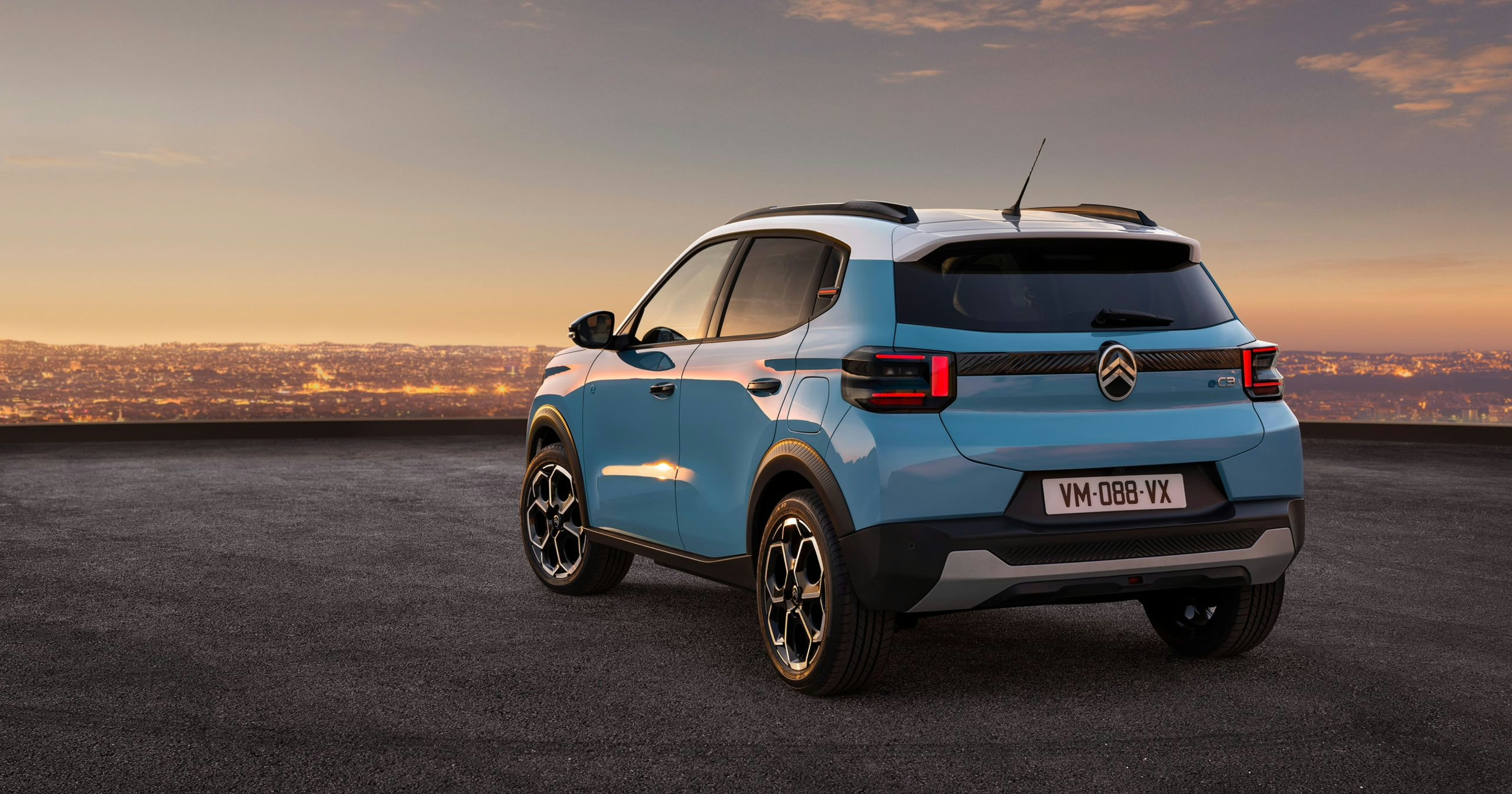
Discover the Citroën ë-C3 Van 2025, a micro-electric van that transforms an everyday city car into a 0.9 m³ cargo carrier, tailored for last-mile deliveries in UK city centres. Under 19k GBP (pre-VAT) after grants, it aims to revolutionise small businesses’ approach to zero-emission transport.
Introduction: A New Player in the UK’s Urban EV Segment
The ever-growing wave of Ultra Low Emission Zones (ULEZ) and Clean Air Zones across the UK is forcing logistics operators, independent trades, and last-mile delivery couriers to rethink their fleets. Large electric vans can be costly, and not every business needs 3 m³ or more of space. Enter the Citroën ë-C3 Van – a left-field solution that starts life as the all-electric Citroën C3 supermini, then trades its rear seats for a load bay. Measuring just over 4 metres, it promises day-long electric range, simple handling in cramped streets, and a price tag that’s surprisingly low. In the process, it challenges the status quo by delivering a truly miniature EV cargo solution for the UK’s busiest areas.
While we’ve seen big brand vans like the e-Berlingo or e-Dispatch, they’re usually bigger (and pricier). The ë-C3 Van 2025 specifically targets professionals who only need to carry small parcels or limited tools but do so multiple times a day in dense urban zones from Manchester to London. Let’s see how this micro-van compares, what it delivers in terms of performance, and why it might be a game-changer for British SMEs.
1. From City Car to Micro-Van
1.1 Origins and Rationale
In the UK, the typical “car-derived van” concept isn’t new. We’ve seen vehicles like the Corsavan or Fiesta Van. Yet, a fully electric offering in that niche is rare. Citroën’s strategy with the ë-C3 Van is straightforward:
- Capitalize on the all-electric C3 platform (44 kWh LFP battery, 83 kW motor).
- Strip out the rear seats, add a load floor and protective bulkhead.
- Sell it at a fraction of the cost of bigger e-LCVs, thus courting smaller businesses.
By focusing on minimal volume (0.9 m³) but easy manoeuvrability, they address last-mile deliveries or trades that rarely max out larger vans. Meanwhile, the price after the government’s plug-in van grant could dip below £19,000 (plus VAT), a figure that might tempt those who never even considered an EV van before.
1.2 Potential Users
- Takeaway couriers who want more carrying capacity than a scooter, plus the comfort of an enclosed cabin (and the 0-emission label).
- Urban trades like locksmiths or small repairs, who only carry a modest kit.
- Florists or small e-commerce entrepreneurs making daily deliveries in congested London or Birmingham streets.
- Local authorities or small departments that need a short-range, zero-emission runabout.
2. Exterior and Cargo Layout
2.1 Familiar Face, Converted Rear
The standard C3 silhouette remains: 4.01 m in length, a raised front with the brand’s current design language. The main difference is at the back: no rear seats, tinted or panelled side windows, and conventional outward-opening rear doors. If you’re used to sliding side doors on bigger vans, you won’t find that here. But the upside is a car-like shape, letting you park in standard spaces without drama.
- Length: ~4.01 m
- Height: ~1.52 m
- Doors: typical passenger-car style for the rear, not a tailgate or twin barn doors.
In the UK, if you do multiple short stops, you might miss a side slider. But for truly minimal-volume transport, these standard doors suffice. The real advantage is the micro footprint, perfect for narrow streets in places like Bath or Edinburgh’s Old Town.
2.2 0.9 m³ of Cargo Space
Open those rear doors and you’ll see a smallish cargo hold: approx. 1.08 m long, 1 m wide, 80-90 cm high, plus a robust floor cover. You get a 364 kg payload – enough for packs of tools or parcels. Sure, you won’t fit big appliances, but that’s not the mission here. The partition behind the front seats prevents items from rolling forward, while also improving cabin soundproofing.
3. Powertrain and Driving Range
3.1 Tech Specs
- Motor: 83 kW (roughly 113 bhp), LFP battery of 44 kWh.
- Range: up to 320 km WLTP. Possibly 180-220 miles in mixed conditions. On pure urban routes, you can harness decent regen from frequent stops.
- Charge: 7 kW AC single-phase or up to 100 kW DC, letting you top from 20% to 80% in half an hour.
- Performance: 0-62 mph in about 11 seconds, top speed ~84 mph.
3.2 Real-World Usage
Given it’s a 44 kWh battery, daily trips around a city centre or short inter-town journeys are perfectly feasible. If you do 50-70 miles a day, you might only need to plug in overnight at your depot. If you must occasionally use motorways, you can do so, but continuous 70 mph speeds will lower range to perhaps 140-160 miles. Then again, the DC fast-charging capability can bail you out with a quick lunch-break recharge.
4. Comfort and Interior Features
4.1 A City Car’s Cabin
Sitting inside the front, you’re in something that feels very much like a standard C3, except the rear seats are replaced by that cargo area. That means:
- Driver + 1 passenger seat, likely with Citroën’s typical cushion softness.
- Climate controls, a touchscreen with Apple CarPlay/Android Auto (depending on trim).
- Basic but effective instrumentation to monitor battery levels and energy flows.
- Possibly a couple of ADAS features like lane departure warning or forward collision braking.
Everything is scaled to keep the purchase cost as low as possible, so you can’t expect a suite of advanced driver assists. But for weaving around Leicester or Glasgow’s city centre, it’s enough. The comfortable suspension — a hallmark of Citroën’s “Advanced Comfort” approach — helps cushion speed humps or cobbles, so your daily routine in congested roads is less of a chore.
4.2 Loading Odd-Shaped Items
The floor is flat and covered with a no-slip mat. Though the volume is modest, you can carry a variety of small boxes or a couple of tool crates. The main annoyance might be the narrower rear door opening — it’s not as wide as a typical van with double barn doors. Some rotating or angling of large parcels might be needed, but if your deliveries are mostly compact, this is manageable.
5. Why Such an Affordable Price Tag?
5.1 Breaking the EV Price Barrier
Citroën claims a starting net price below £23k before plugging in the government’s plug-in van grant. With the incentive, you might see it dip under ~£19k plus VAT. That’s significantly cheaper than a typical e-Partner or e-Kangoo, which can cost above £25k net even after grants. The reasons:
- Smaller battery (44 kWh).
- LFP chemistry which often lowers manufacturing costs.
- Minimal cargo capacity so minimal body changes.
- A strategy to democratise electric for ultra-urban tasks.
5.2 Operating Costs
Electric vans usually excel in TCO. The ë-C3 Van’s reduced size and weight yield better efficiency in city traffic, possibly 12-15 kWh/100 km, meaning 4-5 miles/kWh. In the UK, if you pay ~18p/kWh at your depot, that’s ~2.5-3 p/mile. Add to that fewer mechanical parts to maintain (no oil changes or clutch). The biggest cost is the initial purchase, but if that’s also quite low, your monthly overhead could be drastically less compared to a small diesel. Factor in no daily ULEZ charges in many city centres, and the argument becomes more compelling.
6. Potential Drawbacks and Limitations
- Just 0.9 m³: If you ever need to haul anything larger than typical parcels, you’ll run out of space quickly.
- No side sliding door: Rear loading only could slow multi-drop if parked in tight areas.
- 2 seats: Not suitable for a team of three heading to a job site.
- No advanced telematics? Possibly restricted to simple smartphone connectivity.
- Cloison is likely fixed and not removable, so you can’t expand volume occasionally.
Still, for many micro-logistics routes, the small size is a perk, not a flaw. No wasted cargo volume means lower cost and better agility.
7. Ideal Use Cases in the UK
- Food deliveries where a driver carries multiple orders in sealed containers.
- Local craft or repair shops needing short runs around city streets.
- Boutique florists delivering modest bouquets.
- Municipal services in historic districts (like York or Chester) with extremely narrow lanes.
The compact turning radius and an easy time parking in restricted city parking spots could save endless hassle. Also, with “zero tailpipe emission,” you avoid central London’s ULEZ fees, or Bath’s Clean Air Zone charges.
8. FAQ
Is there a 3-seater variant or a double passenger seat for the ë-C3 Van?
Likely no. The base C3 platform is quite narrow, and the van derivative only has two front seats. For three seats, you’d need a bigger model (like Berlingo). The cabin design focuses on driver comfort plus one passenger.
Can you get a partially glazed bulkhead to see into the cargo area?
From official info, the standard partition is solid metal, but possible custom conversions might exist. Some owners might ask a specialist to install a small plexiglass window. Citroën hasn’t announced a factory option.
How well does it handle short motorway bursts at 70 mph?
You can do it, but range will drop faster. The official range of ~200 miles (320 km) is under gentler conditions. If your business route includes a short highway stretch, it’s feasible. But 50+ miles of constant motorway daily might not be ideal.
Are we able to mount an external roof rack or rooftop sign?
Likely yes, in principle. But keep in mind the limited structural design of a small hatchback-based van. Roof carrying capacity might be modest. For big signwriting or a mild rack for ladders, a professional fitter can advise, but watch for battery efficiency dips from aerodynamic drag.
Are there any special insurance considerations for the ë-C3 Van given its unusual status as a compact EV commercial vehicle
Insurance for a van derived from a passenger car can sometimes differ from a standard commercial policy. Insurers may classify the ë-C3 Van under the “car-derived van” category, which often leads to different premium calculations than a full-size LCV. Because it’s fully electric, some UK insurers offer specific EV discounts or packages. On the other hand, the van aspect (carriage of goods, commercial usage) can add to the overall premium compared to a typical private car.
Key points:
- Vehicle classification: The DVLA in the UK might categorize it as an N1 commercial vehicle if Citroën has homologated it that way. Some insurers ask for an exact model reference (like “C3 Van Electric”), which might not appear in standard car drop-down menus.
- Payload: At 364 kg, it’s modest, but for insurance, it confirms the vehicle is indeed for business use, so a commercial policy is likely required.
- Electric factor: Many insurers now recognize EV technology is generally reliable, but they may factor in battery replacement costs if an accident damages the pack. Still, the presence of LFP chemistry, which is robust, might reduce concerns about battery fires.
- Coverage specifics: If you carry valuable items, you might need Goods in Transit coverage. Also, certain policies can incorporate roadside assistance specialized in EVs (for instance, covering towing to a rapid charger if the battery runs out).
If an insurer is unfamiliar with the ë-C3 Van, they might request additional details or a certificate of conformity. Patience might be needed to ensure they classify it properly, but as EV adoption grows, the market becomes more accustomed to such vehicles. In the end, premiums could be quite reasonable if you demonstrate low annual mileage and urban usage, presumably leading to fewer at-speed collisions.
Might Citroën introduce an “all-inclusive” leasing package that covers maintenance, roadside assistance, and a home charging point for UK businesses adopting the ë-C3 Van
It’s increasingly common for manufacturers to bundle EV purchase or leasing with extra services. The idea is to give small businesses a worry-free experience: a monthly payment that covers the van, basic maintenance, possibly the warranty extension, and often a charging station. Since the ë-C3 Van is targeted at cost-conscious urban operators, an all-in-one plan could make sense.
Potential elements:
- Maintenance: Routine checks for brakes, fluid top-ups, annual battery health checks.
- Home or depot charging: A 7 kW wallbox installed by an approved electrician, included in the lease deal. Some OEMs partner with British charging specialists or energy companies, so it’s plausible Citroën might do the same.
- Insurance: Could also be integrated in a single invoice, though it’s less common in the UK market.
- Flexible mileage: If your business is uncertain about usage patterns, a flexible lease might let you pay a set rate but adjust mileage annually.
For Citroën, the primary advantage is brand loyalty: if operators find it simple to adopt the van with everything sorted from day one, they’re more likely to choose this micro-electric LCV over alternatives. Already, the brand offers various finance solutions for its main electric vans, so extending a similar approach to the ë-C3 Van seems logical.
Caveats: The monthly cost must remain competitive. If it gets too close to the monthly outlay of a bigger e-Berlingo, the unique advantage of the compact van might fade. Also, not every small business has premises suitable for a dedicated charger installation. Some rely on street charging. The manufacturer might, however, propose a voucher-based system or partner with major charging networks.
Given the popularity of such packages among new EV adopters, it wouldn’t surprise many if Citroën eventually launched a “Plug & Drive” or “Easy Charge” scheme specifically tied to the ë-C3 Van.
Can the ë-C3 Van handle mild off-road or gravel paths if certain trades require visiting semi-rural locations, or is it strictly for paved urban routes
Built on a standard city-car platform, the ë-C3 Van has a ground clearance similar to the normal C3 hatch. That’s enough for speed bumps and potholes in urban roads, but not ideal for rough farmland tracks or extended gravel surfaces. In the UK, some trades might indeed venture off the tarmac (like going across short gravel lanes to a client in a rural village).
Key considerations:
- Suspension: The “Advanced Comfort” system is more about soaking up city bumps than providing robust off-road articulation. If you only occasionally traverse a well-maintained gravel driveway, it should be acceptable.
- Underbody: The battery pack is likely integrated beneath the floor. While it’s protected by a shell, repeated bumps on rocky paths risk scraping. If a trade often sees muddy farm tracks, a van with higher ground clearance might be safer.
- Traction: The front-wheel-drive layout and normal road tyres limit traction on loose surfaces. There’s no dedicated traction control mode for off-roading.
- Load: If you’re carrying near-max payload plus driving on uneven ground, the potential for bottoming out is higher.
Hence, the ë-C3 Van can handle short stints on mild gravel or a farm entrance, but it’s not recommended for anything beyond very gentle off-road. The brand presumably expects 95% of use in urban or suburban areas. For an electrician or a caretaker who visits semi-rural sites occasionally, driving slowly on a relatively smooth track might be fine. However, if your job regularly involves rough terrain, consider a bigger LCV with raised suspension.
So, yes, it can cope with mild unpaved roads if driven carefully at low speed, but it’s far from being an all-terrain or high-clearance vehicle. If there’s a real need for frequent off-tarmac travel, the minimal ground clearance and standard tyres of the ë-C3 Van might not suffice.
Is there a way to secure loads if they are tall enough to potentially topple over, given the limited cargo height and the presence of a solid bulkhead
Because the ë-C3 Van’s cargo area is short in length (1.08 m) and the overall height is under a metre, many loads won’t exceed the space. That said, a narrow but tall package could still wobble if not properly tied down. Typically, Citroën installs a few anchor points on the floor or side edges. These let you attach bungee cords or ratchet straps to keep heavier or elongated objects from tipping.
Possible methods:
- Load-lashings with tension straps hooking into metal rings in the floor.
- Rubber mats or foam inserts, especially if transporting delicate equipment.
- Partition accessories: some small LCV owners place removable vertical dividers or crates.
No overhead net or top tie rail is standard, so anything tall might rely on hooking it to the floor loops. The internal vertical space is around 80-90 cm, so truly tall items might not even fit upright. If your cargo is borderline, you could tilt it or lay it horizontally.
Safety: If an object is free to shift, it could slam into the bulkhead under hard braking. The partition protects the driver, but constant banging might damage your goods or cause noise. Strapping it down is recommended.
Upgrades: Aftermarket solutions might exist—like custom side rails or an overhead crossbar installed by a converter. But Citroën’s official kit presumably is quite basic. They want to keep costs minimal, expecting many owners to adapt to personal needs.
Hence, while the standard anchor points on the floor should suffice for moderate loads, if your daily cargo is tall or odd-shaped, you’ll want to invest in securing accessories. The absence of a huge vertical clearance at least means items aren’t stacked dangerously high.
Could the ë-C3 Van be used for advertising by placing a large wrap on the sides, or does the design limit high-impact brand graphics
Many small businesses rely on their commercial vehicles as rolling billboards. With the ë-C3 Van’s shape, you do have side panels (replacing rear side windows) that could serve as prime space for signage. Even though it’s smaller than a standard van, the “blank” rear quarter can display a sizable logo or tagline. Wrapping the entire body is also feasible.
Considerations:
- Surface area: The portion from the B-pillar backward might suffice for eye-catching designs or your brand name.
- Vinyl application: As with any new vehicle, it’s wise to use quality wrap film and a professional installer. This ensures no damage to the paint or difficulty in removal if you rebrand.
- C3 lines: The curvy shape means your wrap must handle the door seams and contoured panel edges. Skilled wrap shops can handle that.
- Visibility: The back doors, though narrower than typical van barn doors, can still host a large decal. Some owners do a partial wrap on the bonnet or front wings.
Why it’s beneficial: - Contrasting a bright-coloured wrap on a stock white van can stand out in city traffic, effectively free marketing.
- If the price is so low, the cost of investing in good signage might be a fraction of what you’d pay for a bigger LCV.
Potential caveats: - If you plaster large logos across the rear side, keep the door handles accessible.
- If you’re often in heavy traffic, the wrap might wear or peel at edges. Proper lamination helps.
In short, the ë-C3 Van’s smaller expanse is still enough for brand promotions. The design doesn’t hamper a full or partial vinyl wrap. Even a complete colour change is possible if you want, for instance, bright orange or a patterned design. So yes, it’s well-suited to rolling advertisements, albeit on a smaller scale than typical larger vans.
Does the simplified “car-based” structure affect crash safety ratings compared to more conventional vans, and has the ë-C3 Van undergone separate commercial vehicle tests
Car-derived vans typically rely on the Euro NCAP results of their passenger-car counterpart. So the C3 platform’s rating would presumably carry over, though modifications (no rear seats, added bulkhead) can shift weight distribution. Usually, manufacturers don’t re-test these derivatives under a separate “van” crash protocol— they rely on the existing structure’s integrity.
Points to note:
- The bulkhead might actually benefit occupant safety by preventing cargo intrusion. Some might argue that a fully integrated van body (like a Berlingo) has been tested as an LCV specifically, but in a small derivative, it’s common to adapt the passenger shell.
- The C3 (depending on year, spec) has decent Euro NCAP results. The overall occupant protection is strong for a supermini. That said, removing the rear seats changes how the load path occurs in a rear impact, though presumably the floor pan and unibody remain robust.
Differences from typical vans - A bigger van (Transit Custom, Vivaro, etc.) might be tested with commercial considerations (seatbelt anchor forces for multiple seats, cargo restraint tests). The e-C3 Van is effectively a two-seater city car with a cargo hold.
- Some fleets prefer a van that’s been explicitly tested in its commercial form. This might not be the case here. Still, within Stellantis, they ensure compliance with LCV regs.
Conclusion: We can assume the front crash performance parallels the standard e-C3. The presence of advanced features (like lane departure, emergency braking) remains. For a professional user, it’s about trusting that Citroën has done the necessary modifications to keep occupant safety robust. Usually, no separate rating is published for micro-van conversions, but the brand’s typical safety features (airbags, seatbelt tensioners, ESC) still apply. - How does the ë-C3 Van cope with heavier electrical accessories in the rear (like a portable battery pack or fridge unit) in terms of weight distribution and energy consumption
- Some trades may require carrying specialized gear: a portable battery generator, a small fridge for samples, or medical coolers. The question: is the floor robust enough, and can the 12 V system power such add-ons? Also, does the added weight plus continuous draw hamper the driving range?
- Load capacity: The Van’s official payload is 364 kg. A moderate battery generator or small fridge might weigh 20-40 kg. That’s feasible. But watch out if you also carry other heavy tools. Exceeding that limit can compromise handling or cause legal issues.
- Energy draw: If a fridge or battery system taps from the 12 V line, it eventually pulls from the main traction battery via the DC/DC converter. A heavily used fridge might consume a few hundred watts. Over a full day, that could nibble at your range, removing, say, 10-15 miles if it’s always running. In city deliveries, the cost might be manageable, but it’s still a factor.
- Anchorage: A compact piece of kit is no problem if strapped to the floor. However, consider the Van’s limited interior height. If the fridge stands tall, ensure it doesn’t exceed the available vertical space.
- Weight distribution: The extra mass in the rear can shift the center of gravity slightly. In normal city driving, it’s not a big deal. But if you corner briskly or face an emergency stop, the load should be secured to avoid shifting. The suspension is tuned for modest cargo, so as long as you remain within the stated 364 kg limit, you shouldn’t degrade handling severely.
- Hence, heavier electrical accessories are possible, but each user must confirm whether the daily power consumption remains moderate enough to maintain acceptable range, and whether the item’s dimension fits the small cargo hold. A specialized upfitter might be able to add an auxiliary battery or rearrange cables if the usage demands it daily.
- Could the driver’s seat be adapted for ergonomic improvements (like multiple adjustable lumbar supports) to cater to multi-stop drivers
- Urban multi-stop drivers can face fatigue if their seat isn’t supportive. The C3 passenger model often includes a reasonably comfortable seat design, but not always elaborate lumbar adjustments. Because the ë-C3 Van is cost-focused, we might see a simpler seat that’s adequate but not extremely adjustable. If you’re in it for 8 hours a day, you might want extra customisation.
- Possible solutions:
- Some higher trim might come with partial lumbar support. Alternatively, an optional comfort pack might exist, though not guaranteed.
- Aftermarket seat covers or additional lumbar cushions can help if the standard seat is too basic.
- A specialized seat from another C3 variant might fit, but that must be cleared with official spares to ensure airbag compatibility.
Unique constraints: Because the car-based van tries to keep weight and cost low, no big seat rails or sophisticated adjusters are standard. In bigger vans (like Dispatch or Relay) you might find suspension seats or more advanced setups. The user who does multi-drop might have to accept that the seat is more akin to a standard city car’s.
Driving posture: The upright vantage of a typical LCV might not be as pronounced here, though the C3 already has a somewhat elevated stance. Frequent breaks due to deliveries ironically can help. You’ll be hopping out to deliver boxes, so that might mitigate the need for extended seat comfort. But for the portion you do spend behind the wheel, comfort matters.
Hence, if advanced seat ergonomics is a dealbreaker, you may be disappointed. The brand positions the ë-C3 Van for minimal cost. That typically excludes premium seat features. You can remedy it somewhat with a quality seat cushion or backrest. Over time, Citroën might offer an optional upgraded seat, but as of now, expect a decent but not “luxury” seat design. - What are the recommended intervals for brake servicing and fluid checks, considering the van’s frequent urban stop-and-go cycles
- Although electric vehicles often use regenerative braking to slow the vehicle, physically saving wear on the friction brakes, an urban delivery van might be stopping hundreds of times a day. That could indeed put some stress on the mechanical brake system, especially if the driver doesn’t heavily rely on regen. For the ë-C3 Van:
- Annual check: Citroën typically says an annual or 15-20k miles check for fluid levels, including brake fluid.
- Brake pad longevity: In EVs, pads can last longer if the driver regularly uses regenerative deceleration. However, in short stop-and-go cycles, sometimes the friction brakes still come into play at low speeds or to hold the vehicle. So it might not be as dramatically extended as in some EV passenger cars that do lots of highways.
- Heat: Repeated city braking is generally low-speed, so brake discs don’t get extremely hot. But heavy daily usage requires at least an annual inspection to confirm no uneven wear or squeals.
Potential fluid intervals: Some car-based EVs propose changing brake fluid every two years, ensuring no moisture infiltration. Or it might be a “inspect yearly, replace every 2-3 years.” Because the maintenance schedule is simpler than an ICE engine (no oil, no filter changes), the brand wants to keep the brake system in top shape since it’s central for safety.
Driver habit: Good “regen usage” means letting off the accelerator early and letting the motor slow the van. This can drastically reduce friction-brake usage. If a driver is always in a hurry and slams the brake pedal, the wear might be akin to any other small petrol van.
So the best practice is to adopt a smooth driving style, get the system checked annually, and follow Citroën’s official guidelines for fluid replacements. The net result is significantly less mechanical complexity than a diesel, so total servicing costs remain low.
9. Concluding Thoughts for UK SMEs
The Citroën ë-C3 Van 2025 stands out as an unconventional but potentially game-changing proposal: a tiny, cost-effective EV that addresses ultra-urban delivery. If your daily cargo fits in ~0.9 m³ and you appreciate effortless parking in central Manchester or Coventry, it might be the best fit. With a sub-£19k net cost (after the plug-in van grant) and minimal running expenses, it can slash operational overheads while sidestepping ULEZ or Clean Air Zone fees.
No doubt, bigger vans like the e-Berlingo or e-Kangoo offer more capacity if you need it. But that also means a steeper purchase price and a bigger footprint. Meanwhile, the ë-C3 Van’s biggest plus is its pure city-car DNA: easy to steer, minimal space usage, and an EV range that suits daily local routes. If the UK’s push toward zero emissions intensifies, we might see a real appetite for solutions this compact.
Yes, it’s not for hauling wardrobes or oversize cargo, but there’s a whole world of small commercial tasks that only need a few packages or tool sets. For them, this micro-electric van could prove a revelation, combining zero tailpipe emissions, budget-friendly TCO, and genuine day-to-day convenience. Keep an eye on how it evolves, because if it resonates with British small businesses, we may see more ‘car-based’ micro EV vans in the near future.





