
Last updated: April 10, 2025 – Based on verified data and direct commentary on the growing trend of EV restomods.
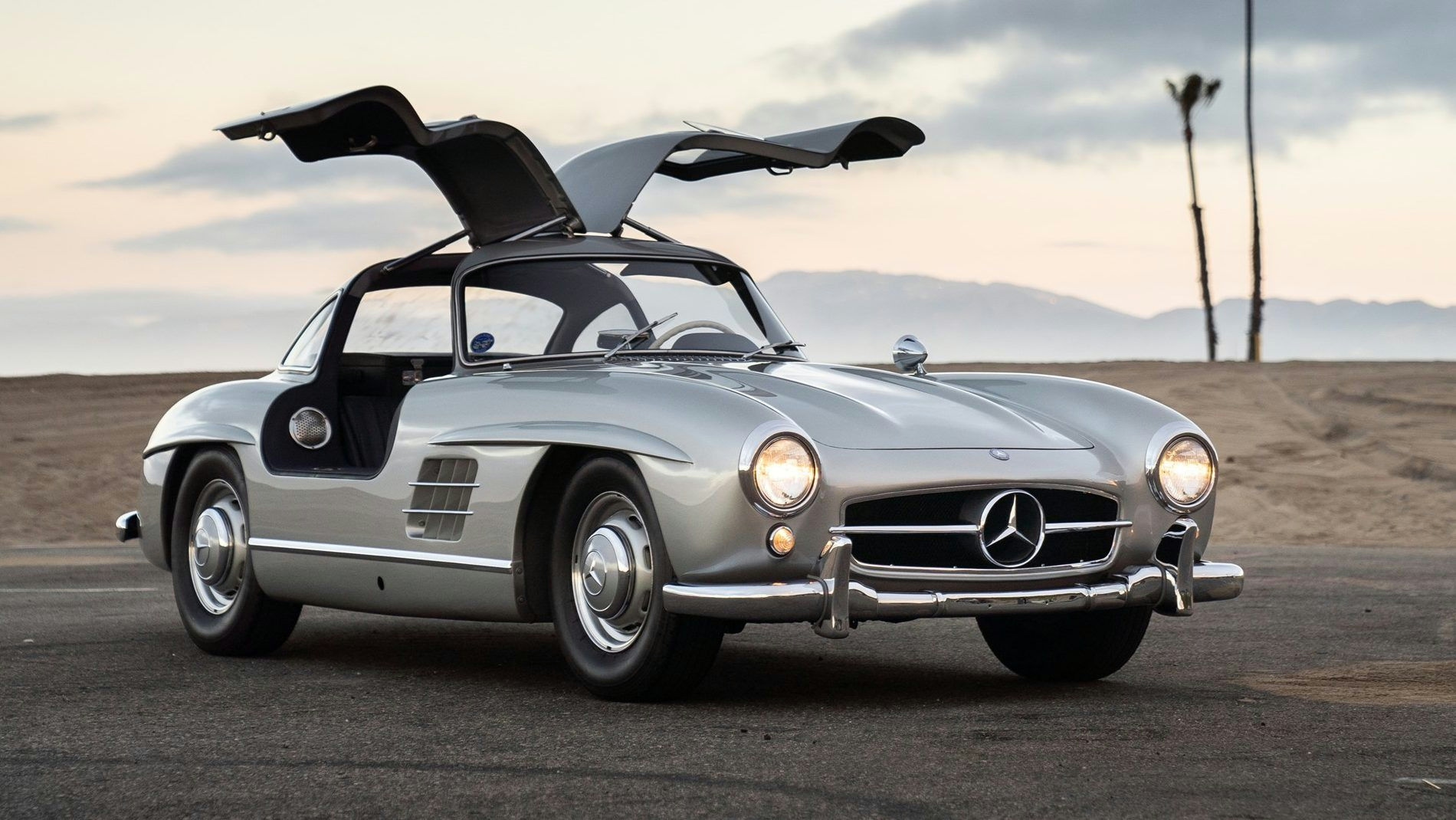
Few cars are as iconic as the Mercedes-Benz 300 SL, with its gullwing doors, long hood, and motorsport pedigree. But in 2025, one restomod shop has taken this 1950s icon and given it an electric twist — swapping the original inline-six for a Tesla electric powertrain.
The result? A zero-emission, high-voltage tribute to one of the most beautiful sports cars ever built. While purists may balk, this project reflects a broader movement redefining what “heritage” means in the electric age.
What is the electric Mercedes 300 SL?
The car in question is a faithful replica of the original 1955 Mercedes 300 SL, rebuilt using Tesla-sourced EV components. The bodywork is hand-crafted aluminium; the drivetrain? Pure Silicon Valley.
- Powertrain: Tesla rear-drive motor
- Battery: Unknown capacity, likely ~50–60 kWh
- Range: Estimated 250–300 km
- Performance: Sub-4 second 0–100 km/h (estimated)
- Interior: Retro-styled with digital gauge cluster
“This is more than a power swap — it’s a philosophical reboot,” says Tom Callahan, founder of EV Legacy Builds. “We’re not just restoring cars. We’re reprogramming them for the next century.”
Is this an original 300 SL?
No. The car is not an original factory-built 300 SL, but a replica chassis built to exact dimensions, in keeping with the original’s silhouette and proportions. It’s then retrofitted with Tesla electronics, battery modules, and motors.
This distinction is crucial, both legally and emotionally: no original 300 SLs were harmed in the making of this EV.
Why convert a classic to electric?
In my view, as someone who has tested dozens of vintage and EV restomod builds, this project speaks to a deeper trend: a desire to keep classic design alive while embracing the reliability and performance of electric mobility.
I’ve driven petrol-powered classics that broke down mid-shoot. By contrast, EV restomods often run cooler, quieter, and more consistently — making them viable for everyday enjoyment.
That said, the soul of a car like the 300 SL doesn’t live in its torque curve. It lives in its proportions, its aura, and yes, its quirks. Keeping those intact during an EV conversion is the ultimate balancing act.
How fast is the electric 300 SL?
While exact figures haven’t been published, similar builds using Tesla powertrains tend to deliver impressive numbers:
- 0–100 km/h: ~3.5–4.0 seconds
- Top speed: Electronically limited (~200 km/h)
- Torque: Instant, linear, silent
Unlike the original 300 SL — which used a 215 hp inline-six — this version likely produces over 400 hp. And with rear-wheel drive, it maintains the classic driving feel (with modern stability).
Is this legal and road-registrable?
Yes — assuming the build complies with local homologation standards. In the UK and EU, restomods must meet EV safety standards (crash protection, HV insulation) and emission exemptions for vintage or custom vehicles.
Some countries also allow electric conversions to qualify for zero-emission tax breaks, making projects like this more attractive from a long-term usability standpoint.
Will we see more electric classic conversions?
Definitely. EV conversions of classic cars are booming — from Land Rover Defenders and Fiat 500s to Dacia Bigsters prepped as campers. The formula is simple: iconic design + modern reliability = timeless mobility.
🟢 See how the Dacia Bigster could be your next electric-ready camper
🟢 Explore how electric SUVs are replacing ICE alternatives
What are the pros and cons of converting a classic car to electric?
| Pros | Cons |
|---|---|
| Instant torque and silent operation | Loss of engine sound and character |
| Lower running costs | Conversion costs can exceed €50,000 |
| Zero local emissions | Some historic value lost in the process |
| Reliable daily usability | Weight distribution can change driving feel |
For many owners, the trade-off is worth it. You keep the look, gain the tech, and future-proof a piece of automotive heritage.
What does this mean for automotive culture?
This isn’t just a trend — it’s a paradigm shift. We’re entering an era where iconic designs are being decoupled from their original powerplants, and while that may offend traditionalists, it also opens up enormous potential.
“The future of car collecting may not be fuel-powered — but it will still be emotional,” says Ian Callum, former Jaguar designer and restomod visionary.
Final Thoughts
When I first saw the electric 300 SL, I felt conflicted. It’s not an original. It’s not loud. But it is beautiful, clever, and undeniably exciting. If I could build one classic EV, this might be it.
There’s something deeply poetic about using the powertrain of the future to honour the shape of the past. And for once, nostalgia doesn’t mean compromise — it means evolution.
🟢 For more retro-future inspiration, explore the Opel Rocks EV
🟢 Or dive into our comparison between Tesla and its newest challengers





