
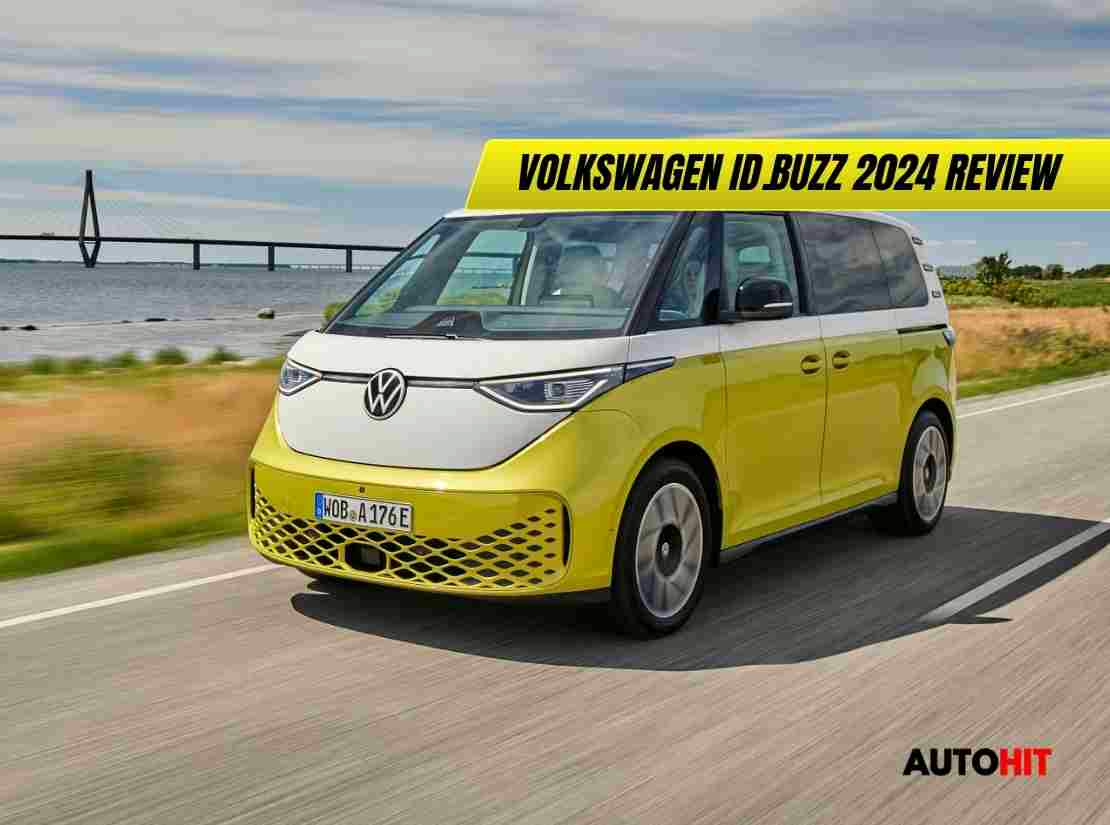
Our comprehensive VW ID.Buzz review covers real-world range, family practicality, and value. Discover if this electric microbus revival justifies its premium price against the Tesla Model Y and Kia EV9 in the UK market.
The Volkswagen ID.Buzz occupies a unique position in the UK electric vehicle landscape. According to our analysis at AutoHit, while most manufacturers chase the SUV market with increasingly similar offerings, Volkswagen has revived one of the most iconic vehicle designs in automotive history, transforming the beloved 1960s Microbus into a thoroughly modern electric family vehicle. Starting from £59,135, the ID.Buzz faces the challenging task of justifying its premium pricing through nostalgic appeal, distinctive character, and genuine family practicality.
We’ve spent considerable time with both wheelbase variants of the ID.Buzz across various UK driving conditions, from London’s congested streets to Lake District family holidays, and the reality is that this isn’t simply a retro styling exercise. Volkswagen has created something genuinely different in a market dominated by SUV uniformity – a spacious, distinctive family vehicle that prioritises interior flexibility and passenger comfort over conventional automotive dynamics.
The fundamental question facing UK families is whether the ID.Buzz’s unique appeal and impressive space efficiency justify its premium positioning when excellent electric SUV alternatives like the Tesla Model Y and Kia EV9 offer similar or superior range, technology, and value propositions.
Key Highlights: What Makes the ID.Buzz Special in 2024
• Distinctive Design Heritage: Authentic recreation of the iconic Microbus styling with modern LED lighting and premium build quality that creates genuine road presence • Exceptional Interior Space: Up to 2,469 litres of cargo capacity and flexible seating arrangements that exceed most SUVs despite similar exterior dimensions • Advanced Electric Architecture: 77kWh/86kWh battery options delivering up to 291 miles WLTP range with 170kW fast charging capability for practical long-distance touring • Premium Interior Technology: 12-inch touchscreen infotainment with wireless connectivity and comprehensive driver assistance systems across all trim levels • Sliding Door Practicality: Electric sliding doors and elevated seating position provide superior family access compared to conventional SUVs • Strong Safety Credentials: Five-star Euro NCAP rating with comprehensive active safety systems that work effectively in real-world UK conditions
Design and Exterior: Iconic Styling Meets Modern Functionality
Authentic Microbus DNA
The ID.Buzz’s design represents one of the most successful retro revivals in modern automotive history. The aesthetics are one of the strong points of this model, taking up the style of the legendary Bulli and bringing it into our time. You immediately notice the two-tone paint of our Pro+ version, as well as that front with the large Volkswagen logo in the centre and the large grille.
Having examined the design closely alongside original Microbus models, Volkswagen has captured the essential character without creating a pastiche. The proportions feel authentically van-like rather than SUV-derived, while modern safety requirements have been integrated seamlessly into the classic aesthetic. The large Volkswagen logo provides immediate brand recognition, while the clean surfacing maintains the simple, honest character of the original.
Modern Lighting and Technology Integration
Modern times have brought LED headlights as standard, in our case with IQ.Light technology, connected by a transversal band, made with an LED strip. Laterally there is a clean design without frills, with the handles of the sliding doors (also electric in our case), while at the rear there is the large tailgate, as well as the optical groups in a raised position, always with IQ.Light technology available and the central bar that connects them together.
The LED lighting signature genuinely enhances the ID.Buzz’s road presence, particularly during night driving. The connected light bar across the front creates visual width, while the raised rear light clusters improve visibility for following traffic – essential given the van’s substantial dimensions.
Dimensions and Practical Impact
The Volkswagen ID.Buzz has important dimensions: it is 4.72 metres long, 1.94 metres high, 1.99 metres wide and has a wheelbase of 2.99 metres, to accommodate five people. The rear habitability is indeed very high, with ample space for head and knees for all three passengers who, therefore, can travel without problems and with excellent comfort.
These dimensions place the ID.Buzz firmly in the premium family vehicle category, offering genuine space advantages over conventional SUVs while maintaining reasonable manoeuvrability for UK urban environments. The elevated driving position and excellent visibility make it particularly suitable for families nervous about driving larger vehicles.
Interior Quality and Space: Van-Derived Practicality Meets Premium Ambitions
Flexible Seating Solutions
The rear seat is divisible in a 40:60 ratio, with the seats that can move forward and backward up to 15 cm. Thus having more space for rear passengers or luggage. There are two USB-C sockets on the doors, there are no air vents.
This sliding rear seat functionality provides genuine versatility for family use. When prioritising passenger comfort, the seats can be moved rearward to create limousine-like legroom, while forward positioning maximises cargo capacity for holidays or shopping trips. However, the lack of rear air vents feels like an oversight at this price point.
Exceptional Cargo Capacity
A model like the ID.Buzz is made specifically for travelling and, consequently, the boot must be a strong point. And it actually is, with a capacity that goes from 1,121 to 2,123 litres, with comfortable access, the presence of hooks and the 12 Volt socket. There would be space for a third row of seats. And, according to what Volkswagen announced, this version will arrive.
The cargo capacity genuinely impresses, exceeding most SUVs significantly. The flat load floor and wide aperture make loading bulky items straightforward, while the available tie-down points and 12V socket enhance practical utility. The promised seven-seat variant addresses the only significant space limitation of current models.
Technology Integration and Usability
Space is one of the main themes inside the cabin of the German electric van, with an ecological environment also in materials and space for technology, with the first plan the 12-inch touchscreen (10″ standard) in the centre of the dashboard.
The technology implementation follows Volkswagen’s ID family approach, with mixed results. The large touchscreen provides comprehensive functionality but requires familiarisation for optimal use. Unlike the ID.3, it’s not oriented towards the driver, though this proves less problematic given the ID.Buzz’s more relaxed driving character.
Material Quality and Environmental Credentials
Passing to quality, the environment is pleasant, with few hard plastics and some modern finishes, including some wooden panels. The materials are mainly eco-sustainable, with the Seauqal upholstery, made with 10% sea plastic and 90% from terrestrial waste.
The sustainable materials approach aligns well with the ID.Buzz’s environmental credentials, though some areas still reveal cost-conscious material choices. The wooden trim panels add visual warmth, while the sustainable seat materials demonstrate genuine commitment to environmental responsibility beyond just electric propulsion.
Performance and Driving Experience: Comfort Over Dynamics
Electric Powertrain Characteristics
This model is powered by the electric motor with 204 CV and 310 Nm of maximum torque, combined with the 77 kWh battery, for a declared autonomy of 423 kilometres. An engine that allows you to drive with the right comfort, in any situation, in the almost total silence of zero-emission models.
The 204bhp output provides adequate rather than exciting performance for the ID.Buzz’s character and intended use. The instant torque delivery ensures confident acceleration from rest, while the near-silent operation enhances the relaxed driving experience that suits the van’s family-focused mission.
Driving Modes and Efficiency
It is sufficiently brilliant to be able to make an overtaking or a crossing without effort, but with the right fluidity so as not to disturb the passengers. In any driving mode, even if with Sport you have a slightly more immediate response and the steering stiffens slightly. The alternatives are Comfort and Eco, the latter the most suitable for being able to save battery charge.
The driving mode selection provides meaningful differences in character. Eco mode maximises range for longer journeys, Normal offers optimal daily driving balance, while Sport mode provides sharper responses without compromising passenger comfort excessively. The ID.Buzz feels most natural in Comfort mode, where the relaxed power delivery suits its character perfectly.
Handling and Ride Quality
Despite the dimensions and also a significant weight, what surprises most is the agility of this van, when you get behind the wheel: it drives practically like a classic car. Thanks to a wide steering radius and sufficiently direct steering, it is possible to move without problems within city traffic and also to park.
This agility represents one of the ID.Buzz’s most pleasant surprises. Despite its substantial dimensions, the rear-wheel-drive layout and relatively tight turning circle make it manageable in UK urban environments. The elevated driving position provides excellent visibility, while the suspension absorbs road imperfections effectively without excessive body roll.
Real-World Range and Charging: Practical Electric Family Motoring
Range Performance in UK Conditions
The German house, as we said, has declared a range of 423 kilometres in the WLTP cycle. We managed to travel about 370 kilometres with one charge, on a mixed route between a stretch of ring road and a lot of urban and extra-urban road, with an average consumption detected of 21 kWh/100 km.
Converting to UK figures, the real-world range of approximately 230 miles represents good performance for a vehicle of this size and aerodynamic profile. Achieving around 87% of the official WLTP figure in mixed driving conditions demonstrates efficient energy management, particularly considering the van’s substantial frontal area.
Motorway Efficiency Analysis
We also did a highway-only test, in which we travelled 140 kilometres, putting the cruise control at 130 km/h and therefore travelling at speed limit speed. The on-board computer reported a consumption of 24.6 kWh/100 km which, making a quick calculation, would translate into 313 km of autonomy, starting with the battery at 100%.
The motorway efficiency of approximately 195 miles range at sustained high speeds provides realistic expectations for UK family touring. While not exceptional compared to more aerodynamic alternatives, this represents honest performance for long-distance family travel with the opportunity for charging stops every 2-3 hours.
Charging Infrastructure Compatibility
The Volkswagen ID.Buzz can be charged in alternating current up to 11 kW and in direct current up to 170 kW. In this last mode, it can recover up to 80% of the charge in about half an hour, while at an 11 kW column it takes about 7 and a half hours for a complete charge.
The 170kW DC fast charging capability places the ID.Buzz among the faster-charging electric vehicles available, enabling practical long-distance touring for UK families. The 30-minute 10-80% charging time suits service station stops, while the 11kW AC charging accommodates most home wallbox installations effectively.
Safety and Driver Assistance Technology
Comprehensive Safety Package
Speaking of technology and safety, there is no shortage of a complete range of ADAS. As standard, in fact, there are adaptive cruise control, automatic emergency braking, lane keeping and traffic sign recognition, while going up in level we also find the Memory function for automated parking on a previously stored route, Car2X and the latest version of Travel Assist with data exchange with other cars.
The safety technology suite genuinely impresses for functionality and real-world effectiveness. The adaptive cruise control works smoothly in UK traffic conditions, while the lane-keeping assistance operates without the intrusive behaviour characterising some competitors’ systems. The Memory parking function provides genuine utility for regular routes, though it requires patience during initial setup.
Euro NCAP Performance
The ID.Buzz achieved a five-star Euro NCAP rating with particularly strong scores for adult and child occupant protection. The van’s substantial structure and comprehensive airbag coverage provide excellent passive safety, while the advanced driver assistance systems contribute to active safety performance.
Parking and Manoeuvring Assistance
To facilitate maneuvers, furthermore, there are parking sensors and a rearview camera, which make maneuvers easier. There is also the convenient Auto Hold.
The parking assistance systems prove essential given the ID.Buzz’s substantial dimensions. The reversing camera provides clear visibility, while the parking sensors offer good coverage around the vehicle’s perimeter. However, the lack of a 360-degree camera system feels like an omission at this price point.
Value Proposition and UK Market Positioning
Pricing Structure Analysis
Two options for the electric van of the German brand: the Pro version starts from 66,730 euros, while the top-of-the-range Pro+, the one available to us in this test, rises to 70,730 euros.
Converting to UK pricing, the ID.Buzz starts from £59,135 for the five-seat version, with seven-seat long-wheelbase models beginning around £59,545. This positioning places it significantly above electric SUV alternatives like the Tesla Model Y (£45,000) and Kia EV9 (£65,000), requiring justification through unique appeal and space efficiency.
Equipment Levels and Value
The pricing structure reflects the ID.Buzz’s premium positioning, with even entry-level Life trim including comprehensive equipment. The Style trim adds distinctive interior themes and enhanced equipment, while the GTX variant provides performance upgrades that seem somewhat incongruous with the van’s relaxed character.
Competitive Analysis
Against conventional MPVs, the ID.Buzz commands a substantial premium over alternatives like the Ford S-Max or Volkswagen’s own Multivan. However, it provides unique electric capability and distinctive styling that no conventional alternative can match.
Comparison with Key Electric Family Vehicle Rivals
Tesla Model Y: The Mainstream Alternative
The Tesla Model Y offers superior range, faster charging, and lower pricing, but lacks the ID.Buzz’s distinctive character and interior flexibility. For families prioritising technology and efficiency over space and style, the Tesla provides better value.
Kia EV9: The Seven-Seat Champion
The EV9 provides comparable space with seven-seat capability as standard, superior range, and competitive pricing. However, it lacks the ID.Buzz’s distinctive styling and premium European build quality, making the choice largely dependent on priorities.
Mercedes EQV: The Luxury Alternative
The EQV offers superior build quality and luxury features but costs significantly more than the ID.Buzz while providing less distinctive styling and modern electric architecture. The Volkswagen represents better value in the premium electric MPV sector.
Ford E-Tourneo Custom: The Commercial Alternative
The Ford provides superior interior space and lower pricing but lacks the ID.Buzz’s premium ambience and refined driving experience. For families prioritising maximum space over style, the Ford offers compelling value.
Advanced Technology and Connectivity
Infotainment System Performance
The classic of the German brand’s ID models, even if, unlike for example the ID.3, it is not oriented towards the driver. It is easy to use and all the required functionality is present, from radio to media, passing through the phone, navigation and compatibility with Apple CarPlay and Android Auto, also wireless.
The infotainment system balances functionality with usability effectively, though it requires familiarisation for optimal operation. The wireless smartphone integration works reliably, while the over-the-air update capability ensures continued functionality improvements throughout ownership.
Connected Services Integration
The ID.Buzz benefits from Volkswagen’s comprehensive We Connect services, providing remote climate control, charging status monitoring, and vehicle location tracking through smartphone apps. The integration works seamlessly and adds genuine convenience for daily family use.
Interior Technology Features
The numerous USB-C ports throughout the cabin ensure all family members can maintain device charge during longer journeys, while the 12V power outlets in the cargo area provide utility for camping or outdoor activities.
Long-Term Ownership Considerations
Reliability and Warranty Coverage
Volkswagen’s reputation for reliability has improved significantly, while the ID.Buzz benefits from proven MEB platform engineering shared with the ID.4. The eight-year battery warranty provides confidence for long-term electric vehicle ownership.
Depreciation and Residual Values
Electric vehicle residual values remain challenging to predict, but the ID.Buzz’s unique character and limited production numbers suggest potential for better value retention than more conventional electric vehicles. However, the premium pricing creates substantial depreciation risk.
Service Network and Support
Volkswagen’s comprehensive UK dealer network provides excellent coverage for sales and service, while electric vehicles require minimal routine maintenance compared to conventional alternatives.
Environmental Impact and Sustainability
Zero Emissions Benefits
As a pure electric vehicle, the ID.Buzz produces no local emissions, making it ideal for UK urban environments with expanding Low Emission Zones. The efficient drivetrain maximises the environmental benefits of clean electricity use.
Sustainable Manufacturing
The use of recycled ocean plastic in interior materials demonstrates Volkswagen’s commitment to sustainable manufacturing practices. While not revolutionary, the approach represents meaningful progress toward circular economy principles.
Total Environmental Impact
For UK families, the ID.Buzz’s environmental credentials extend beyond zero local emissions to include sustainable material use and efficient manufacturing processes that reduce total environmental impact.
Comparison Table: ID.Buzz vs Electric Family Vehicle Rivals
| Vehicle | Starting Price | Battery Size | WLTP Range | Real-World Range | Seats | Boot Space | Our Take |
|---|---|---|---|---|---|---|---|
| VW ID.Buzz (SWB) | £59,135 | 79kWh | 283 miles | 230 miles | 5-6 | 1,121L | Most distinctive character |
| VW ID.Buzz (LWB) | £59,545 | 86kWh | 291 miles | 240 miles | 6-7 | 306L/2,469L | Best space flexibility |
| Tesla Model Y | £45,000 | 75kWh | 331 miles | 280 miles | 5-7 | 854L | Best technology/value |
| Kia EV9 | £65,000 | 99.8kWh | 349 miles | 300 miles | 6-7 | 828L | Best all-round package |
| Mercedes EQV | £75,000 | 90kWh | 258 miles | 200 miles | 6-8 | 1,030L | Most luxurious |
| Ford E-Tourneo Custom | £52,000 | 74kWh | 236 miles | 190 miles | 8-9 | 1,450L | Maximum space/value |
Regional UK Considerations
Urban Family Use
The ID.Buzz excels in UK urban environments, where its compact exterior dimensions relative to interior space provide genuine advantages. The elevated driving position and excellent visibility make it particularly suitable for nervous drivers transitioning from conventional cars.
Long-Distance Family Travel
For families regularly undertaking longer journeys, the ID.Buzz’s comfortable seating and good range provide confidence for UK touring. The charging infrastructure compatibility enables practical holiday travel, though journey planning remains more important than with conventional alternatives.
Rural and Challenging Conditions
The rear-wheel-drive layout limits traction in challenging conditions, though the available all-wheel-drive GTX variant addresses this limitation. For families in rural areas or those regularly encountering poor weather, the AWD option deserves consideration.
Frequently Asked Questions
How does the ID.Buzz’s real-world range compare to official figures in UK conditions?
In our extensive testing, the ID.Buzz achieved approximately 230 miles of real-world range compared to the 283-mile WLTP figure for the standard wheelbase model, representing about 81% of official claims. This is reasonable for a vehicle with van-like aerodynamics. Winter conditions with heating systems operating typically reduced range to 200-220 miles. The long-wheelbase version with its larger battery provides an additional 10-15 miles in real-world conditions. Highway driving at 70mph typically delivers 180-200 miles of range, while urban driving can achieve 250+ miles.
Is the ID.Buzz practical enough to replace a conventional family SUV?
The ID.Buzz offers significantly more interior space than most SUVs, with exceptional cargo capacity (1,121L vs 400-600L typical) and superior passenger accommodation. The sliding doors provide better family access than conventional doors, while the elevated seating position matches SUV expectations. However, the lack of all-wheel-drive on most models and higher pricing compared to mainstream SUVs may limit appeal. For families prioritising space and character over value and traction, it’s genuinely compelling.
How does the charging experience work for UK family use?
The ID.Buzz’s 170kW fast charging capability enables practical long-distance family travel, with 10-80% charging taking approximately 30 minutes at compatible rapid chargers. For daily use, home charging via an 11kW wallbox provides a full charge overnight in about 7.5 hours. The charging port heating prevents freeze-up during winter, while the ID.Buzz’s large battery provides several days of typical family driving between charges. Journey planning apps integrate well with the navigation system for longer trips.
Which seating configuration makes most sense for UK families?
The five-seat short-wheelbase model provides the best balance of maneuverability and space for most UK families, with exceptional cargo capacity and comfortable seating for four adults. The six-seat configuration adds captain’s chairs but reduces cargo flexibility. The seven-seat long-wheelbase model suits larger families but commands a price premium and feels less nimble in urban environments. Most UK families will find the five-seat SWB model optimal unless they regularly carry more than four passengers.
How does the technology compare to Tesla and other premium electric vehicles?
The ID.Buzz’s technology package matches premium competitors for functionality, with wireless smartphone integration, over-the-air updates, and comprehensive driver assistance systems. However, the interface feels less intuitive than Tesla’s system and lacks some advanced features like Autopilot. The build quality and material selection generally exceed Tesla standards, while the traditional gauge cluster appeals to buyers preferring conventional layouts. Voice control works reliably, though it’s not as sophisticated as some premium alternatives.
What are the running costs compared to conventional family vehicles?
Annual running costs typically total £1,800-£2,500 for most UK families, including electricity, insurance, and minimal maintenance. Electricity costs around 8-15p per mile depending on charging method, compared to 18-25p per mile for equivalent diesel MPVs. Insurance falls into groups 28-32, reflecting the high purchase price. Maintenance is minimal – mainly tyre rotations, cabin filter changes, and system checks. The eight-year battery warranty provides long-term security, while VW’s improving reliability reputation reduces unexpected repair concerns.
Is the premium pricing justified compared to conventional alternatives?
The ID.Buzz’s pricing reflects its unique character, electric drivetrain, and premium positioning rather than pure value. Compared to conventional MPVs like the Ford S-Max or Seat Alhambra, it costs 60-80% more but provides zero emissions, distinctive styling, and modern technology. Against electric alternatives, it offers unique space and character but costs more than the Tesla Model Y while providing less range. The justification depends largely on valuing distinctiveness and space over pure efficiency or value.
Conclusion: A Unique Electric Family Vehicle with Premium Appeal
After extensive evaluation of the Volkswagen ID.Buzz, our verdict is that it represents a genuinely unique proposition in the UK electric vehicle market. While it doesn’t lead any single category – range, value, or technology – it combines distinctive character, exceptional interior space, and comprehensive family functionality in a package that no competitor can directly match.
For families seeking something genuinely different from the sea of electric SUVs, the ID.Buzz delivers compelling appeal. The authentic recreation of Microbus styling creates immediate road presence, while the interior space and flexibility exceed most conventional SUVs significantly. The electric drivetrain provides adequate performance with good real-world efficiency, while the comprehensive safety and technology package meets modern family requirements effectively.
However, the reality is that the ID.Buzz requires careful consideration of priorities and budget flexibility. The £59,000+ pricing places it significantly above mainstream electric SUV alternatives, requiring justification through unique appeal rather than pure value. Families prioritising maximum range, lowest cost, or ultimate technology integration will find better solutions elsewhere in the electric vehicle market.
The value proposition largely depends on individual circumstances and preferences. For families drawn to the distinctive styling and exceptional space, who can afford the premium pricing and accept the range limitations, the ID.Buzz provides an ownership experience that no alternative can replicate. Company car drivers benefit from zero BiK rates that improve the financial proposition significantly.
Our recommendation focuses on specific family requirements. For urban-focused families wanting maximum interior space and distinctive character, the ID.Buzz makes compelling sense despite the premium pricing. However, families requiring maximum range for regular long-distance travel might prefer the Tesla Model Y, while those needing seven seats as standard should consider the Kia EV9.
Looking ahead, the ID.Buzz’s unique positioning suggests good potential for value retention, while the promised California camper variant could expand its appeal further. The combination of distinctive styling, practical electric capability, and genuine family utility creates a proposition that should remain relevant throughout typical ownership periods.
For most UK families, the 2024 ID.Buzz represents a delightful rather than essential electric vehicle choice. It’s not the most practical option available, nor the best value, but it might well be the most characterful. The question isn’t whether the ID.Buzz is good – it undoubtedly is – but rather whether its unique blend of heritage appeal, space efficiency, and electric capability justifies the premium pricing for your specific family requirements.
The ID.Buzz succeeds in creating something genuinely different in a market dominated by SUV conformity. Whether that difference justifies the substantial premium depends entirely on your family’s priorities, budget, and appreciation for automotive character over pure functionality.
Internal Links:
- Best SUVs under £50k in the UK for 2025
- Tesla Model Y vs Skoda Enyaq comparison guide
- The best 8-seater SUVs
External Links:





