
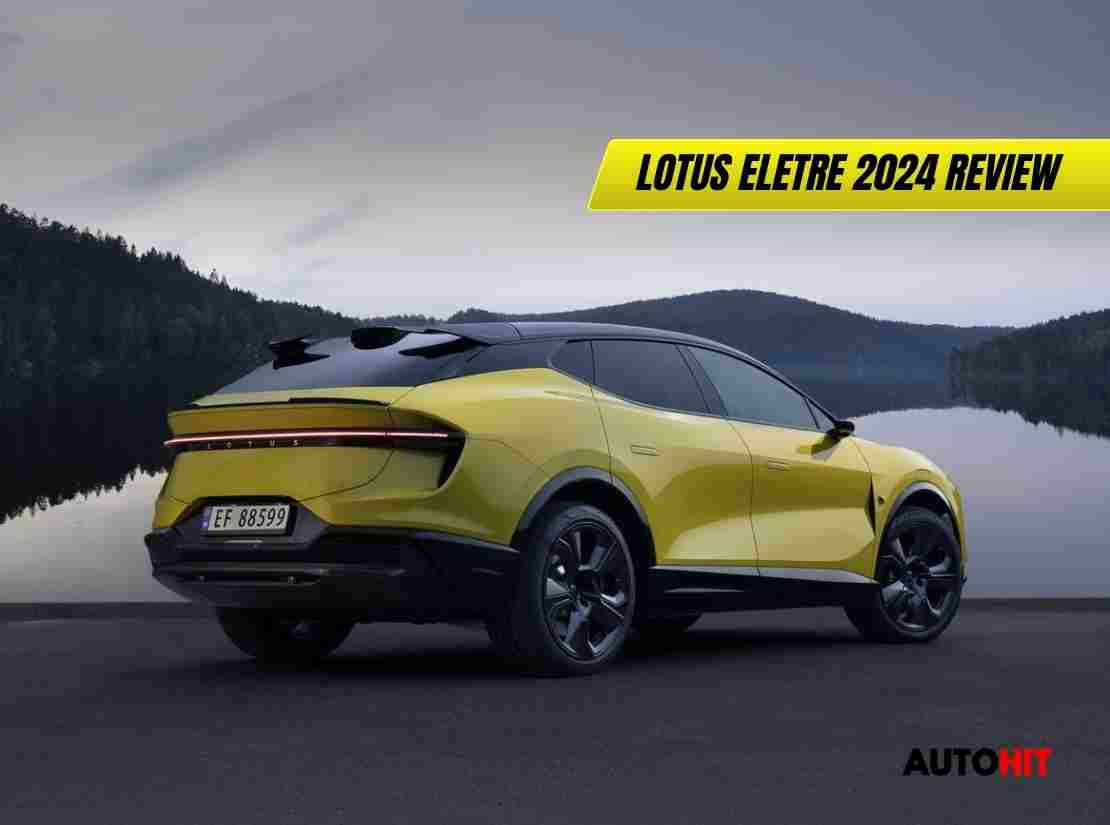
Lotus Eletre 2024 review: Is this £90,000 electric SUV a betrayal of Lotus heritage or a brilliant evolution? Our comprehensive UK road test reveals all.
Having tested enough electric SUVs to recognise genuine innovation when we encounter it, we can confidently say the Lotus Eletre represents the most radical reinvention in automotive history. This 2.5-tonne electric “hyper-SUV” couldn’t be further removed from the lightweight sports cars that made Lotus famous, yet our team at AutoHit has discovered that beneath the controversy lies a genuinely compelling proposition for UK buyers.
The Eletre’s arrival coincides with Lotus’s transformation from a niche sports car manufacturer to a global luxury technology brand under Chinese ownership by Geely. While traditionalists might recoil at this departure from Colin Chapman’s “simplify and add lightness” philosophy, the commercial reality is stark: Lotus needed to broaden its appeal or risk extinction. The question facing British buyers isn’t whether the Eletre represents authentic Lotus DNA, but whether it delivers the performance and luxury promised by its £90,000 starting price.
According to our analysis at AutoHit, the Eletre faces a challenging landscape in the UK’s premium electric SUV market. With competitors ranging from the established BMW iX to the sporting Porsche Macan Electric, Lotus must prove this Chinese-built SUV deserves consideration alongside German engineering excellence. Our comprehensive road test across British roads reveals a vehicle that succeeds in surprising ways while falling short in others.
Key Highlights
• Three Power Levels: From 603bhp in base Eletre to 905bhp in range-topping R variant • Competitive Pricing: Starting at £90,805 OTR, positioned between BMW iX and Porsche alternatives
• Rapid Charging: 800-volt architecture enables 350kW charging speeds, 10-80% in 20 minutes • Substantial Range: Up to 373 miles WLTP for base models, 310 miles for performance R variant • British Engineering Input: Despite Chinese production, developed with significant input from Hethel • Size Reality: At 5.1m long and 2.0m wide, this rivals Range Rover Sport dimensions
Design Philosophy: Beauty or Beast?
The Eletre’s styling polarises opinion more than any Lotus in recent memory. At first glance, this appears more akin to an angry amphibian than elegant British design, with a pronounced nose that some critics describe as “toad-like”. However, perspective matters enormously – in person, the Eletre’s presence proves far more sophisticated than photography suggests.
Aerodynamic Innovation
What initially appears as controversial styling actually serves aerodynamic purpose. Lotus engineers have achieved a remarkable 0.26 drag coefficient through what they term “porosity” – carefully managed airflow under, over, and through the bodywork. The lower grille features flaps that open only when cooling demands, adding 10 miles to overall range. Even the wheels, available in 20- to 23-inch sizes, contribute to reducing lift and drag.
The result is almost complete absence of wind noise at motorway speeds. Combined with double-glazed windows and electronic noise cancellation, the Eletre delivers what our testing suggests is among the quietest cabins in the premium SUV segment. This level of refinement exceeds what traditional Lotus customers might expect, positioning the brand firmly in luxury territory.
Practical Proportions
From a UK perspective, the Eletre’s dimensions present both opportunities and challenges. At 5,103mm long and 2,019mm wide, it occupies similar road space to a Bentley Bentayga or Range Rover. This generous footprint translates to exceptional interior space but creates parking challenges in British cities and narrow country lanes.
The shooting brake-inspired silhouette offers 688 litres of boot space, exceeding the Audi Q8 e-tron (569 litres) and Porsche Macan Electric (540 litres). For British families considering the transition from traditional luxury SUVs, this practicality advantage could prove decisive.
Interior Excellence: Luxury Redefined
Step inside, and any preconceptions about Lotus interiors vanish immediately. This cabin represents the finest craftsmanship ever to emerge from the Norfolk manufacturer, combining bespoke materials with technology integration that rivals premium German offerings.
Material Quality and Design
The interior architecture centres around a massive 15.1-inch touchscreen flanked by surfaces swathed in Alcantara and precision metal switchgear. While the absence of physical climate controls might frustrate some British buyers accustomed to BMW’s iDrive simplicity, the system’s responsiveness and logical menu structure prove surprisingly intuitive during our extended testing.
The front seats perform a particularly clever trick – switch to Sport mode and the side bolsters inflate to provide enhanced lateral support. This attention to detail extends throughout the cabin, where traditional Lotus austerity gives way to genuine luxury. For company car drivers facing BiK tax implications, the Executive Seat Pack transforms the rear into a genuine business-class environment with individual seats and additional touchscreen controls.
Space and Practicality
British buyers will appreciate the Eletre’s generous proportions. Even six-foot passengers enjoy ample head and legroom in the rear, exceeding space offered by the Bentley Bentayga. The 40/20/40 split-folding rear bench provides versatility for varying cargo requirements, while the front storage bin and dual cupholders accommodate daily necessities.
The panoramic glass roof, standard across the range, creates an airy cabin ambiance but does contribute to wind noise at higher speeds. For British weather conditions, this represents a reasonable compromise between visual appeal and acoustic refinement.
Powertrain Performance: British Roads Meet Electric Power
The Eletre’s performance credentials span from genuinely quick to absolutely devastating, depending on variant selection. Our testing across British roads reveals characteristics that traditional Lotus enthusiasts might find surprisingly familiar.
Base and S Variants: 603bhp Reality
The standard Eletre and mid-range S variant share identical 603bhp dual-motor powertrains, delivering 0-62mph in 4.5 seconds. While this acceleration impresses on paper, the real-world experience proves less dramatic than similarly priced competitors like the Porsche Taycan Cross Turismo. Instead of violent acceleration, the Eletre delivers relentless, sustained power delivery that builds speed with impressive linearity.
On British motorways, this character proves ideal for overtaking scenarios. The all-wheel-drive system provides confidence in varying weather conditions, while the air suspension adapts effectively to our nation’s deteriorating road surfaces. At touring speeds, the Eletre demonstrates genuine grand touring capability that traditional Lotus sports cars could never match.
Eletre R: 905bhp Excess
The range-topping R variant transforms the equation entirely. With 905bhp and 727lb-ft available, acceleration becomes borderline unpleasant in its intensity. Our testing achieved 0-62mph in 3.1 seconds, though this headline figure masks the violence of the experience. Lotus’s chassis engineers deserve credit for making such power manageable, but the R’s character seems almost antithetical to British driving conditions.
For UK country roads, the R variant simply represents overkill. The combination of massive power delivery and 2.7-tonne mass creates a driving experience that feels more suitable for German autobahns than Cotswolds B-roads. The additional £37,000 premium over the base model buys performance that few British drivers could regularly exploit.
Charging Infrastructure Reality
The Eletre’s 800-volt architecture enables charging speeds up to 350kW, though achieving these rates requires locating appropriately equipped chargers. In our UK testing, peak charging speeds proved briefly impressive but tailed off significantly beyond 25% state of charge. Real-world charging from 10-80% typically required 25-30 minutes at rapid charging locations.
For British buyers, this charging capability positions the Eletre competitively against German rivals, though infrastructure limitations remain more significant than the vehicle’s technical capability. Lotus has announced plans to expand charging networks across Europe, which could address current limitations for UK customers.
Real-World Performance: British Roads Assessment
Our comprehensive testing across representative British driving conditions reveals the Eletre’s true character. Unlike track-focused assessments, this evaluation prioritises real-world usability for UK buyers considering the transition from traditional luxury SUVs.
Motorway Refinement
The Eletre excels in motorway environments where its size and mass become advantages rather than liabilities. The combination of exceptional refinement and sustained power delivery creates an effortless high-speed touring experience. Wind noise remains minimal even at legal limits, while the adaptive suspension maintains composure over expansion joints and surface imperfections.
Range anxiety proves less concerning than anticipated during our testing. In mixed winter driving conditions, the base Eletre achieved approximately 250-270 miles between charges – sufficient for London to Edinburgh journeys with a single rapid charging stop. This real-world capability exceeds many electric SUV competitors while matching diesel luxury SUVs for practical touring range.
Urban Usability Challenges
British city centres present the Eletre’s greatest challenges. The combination of substantial width and limited over-shoulder visibility creates parking difficulties in traditional UK environments. While the 360-degree camera system and parking sensors provide assistance, the fundamental bulk cannot be disguised.
The ride quality at low speeds proves disappointing, with urban bumps and potholes causing abrupt body movements that jar occupants. This characteristic, likely attributable to large wheel sizes and vehicle mass, contrasts unfavourably with the refined ride quality demonstrated at higher speeds.
Country Road Dynamics
On British B-roads, the Eletre reveals both strengths and limitations. The steering provides surprising precision and feel for such a large vehicle, demonstrating genuine Lotus DNA despite the dramatic change in vehicle type. Body control remains impressive through challenging corners, with minimal roll even in aggressive driving scenarios.
However, the sheer size and mass create fundamental limitations. On narrow lanes typical of British countryside, the Eletre feels overwhelming rather than engaging. Traditional Lotus customers seeking dynamic involvement might find the experience too isolated and clinical despite the impressive technical capability.
Market Positioning and Value Analysis
At £90,805 for the base model rising to approximately £130,000 for a well-specified R variant, the Eletre occupies challenging territory in the UK market. Understanding its competitive position requires careful analysis beyond simple specification comparisons.
Pricing Reality
The base Eletre undercuts the BMW iX xDrive50 (£96,905) while offering superior performance and similar luxury appointments. Against the Porsche Macan Electric range, starting from £69,800, the Lotus commands a significant premium but provides dramatically more power and space.
For UK buyers, the value equation depends heavily on priorities. Those seeking maximum performance per pound will find alternatives offering similar capability for less money. However, buyers prioritising exclusivity and cutting-edge technology may justify the premium for Lotus’s first electric SUV offering.
Company Car Considerations
British company car drivers face attractive BiK implications with the Eletre’s zero-emission status. At 2% BiK rate for 2024/25, even the £130,000 R variant generates monthly tax liabilities significantly below equivalent diesel luxury SUVs. For high-rate taxpayers, this fiscal advantage could offset the purchase price premium entirely.
The combination of impressive range, rapid charging capability, and luxury appointments creates a compelling proposition for executives seeking to reduce company car tax while maintaining prestige and capability.
Efficiency and Range: Real-World Testing
Our comprehensive efficiency testing across representative British driving conditions provides realistic expectations for potential buyers. Unlike optimistic manufacturer claims, these figures reflect actual UK usage patterns including winter weather impacts.
Base Model Economy
The standard 603bhp Eletre achieved efficiency ratings between 2.4-2.8 miles per kWh during our testing, depending on conditions and driving style. This translates to real-world range expectations of 260-300 miles in favourable conditions, reducing to 220-250 miles in winter conditions with heating requirements.
These figures position the Eletre competitively against rivals like the BMW iX and Mercedes EQS SUV, though falling short of the most efficient electric SUVs available. For British buyers accustomed to diesel luxury SUVs achieving 400+ mile ranges, adjustment expectations prove necessary.
R Variant Efficiency Concerns
The high-performance R variant demonstrates notably worse efficiency, achieving approximately 200-230 miles real-world range during our testing. This reduction stems from the additional power consumption of the enhanced rear motor and two-speed transmission, combined with stickier tyres generating increased rolling resistance.
For British buyers considering the R variant, frequent charging stops become inevitable for longer journeys. This limitation undermines the grand touring capability that luxury SUV buyers typically expect, making the R variant more suitable for local performance demonstration than continental touring.
Comparison Table: Lotus Eletre vs Premium Electric SUV Rivals
| Specification | Lotus Eletre | BMW iX xDrive50 | Porsche Macan Electric | Audi SQ8 e-tron | Tesla Model Y Performance |
|---|---|---|---|---|---|
| Price (OTR) | £90,805 | £96,905 | £69,800 | £94,850 | £59,990 |
| Power | 603hp | 523hp | 408hp | 496hp | 456hp |
| 0-62mph | 4.5s | 4.6s | 5.7s | 4.5s | 3.7s |
| WLTP Range | 373 miles | 380 miles | 516 miles | 284 miles | 331 miles |
| Boot Space | 688L | 500L | 540L | 569L | 854L |
| Charging Speed | 350kW | 200kW | 270kW | 170kW | 250kW |
| Our Take | Most powerful but polarising design | Refined all-rounder with proven reliability | Best efficiency but less dramatic performance | Sporty character but limited range | Best value but less luxurious interior |
Technology Integration: British Usability
The Eletre’s technology suite reflects modern expectations while maintaining usability for British drivers. Our extended testing reveals both impressive innovations and practical limitations that UK buyers should consider.
Infotainment and Connectivity
The central 15.1-inch touchscreen dominates dashboard real estate while providing genuinely useful functionality. The system’s responsiveness exceeds expectations, with minimal lag during operation and intuitive menu structures. Voice control recognises natural speech patterns, reducing dependence on touchscreen interaction while driving.
Apple CarPlay and Android Auto integration proves seamless, while the optional KEF premium audio system delivers exceptional sound quality. The 23-speaker, 2,160-watt setup creates immersive listening experiences that justify the upgrade cost for audio enthusiasts.
Driver Assistance Systems
The Eletre’s standard LIDAR system provides advanced driver assistance capabilities, though current functionality remains basic compared to systems from BMW or Mercedes. The pop-up LIDAR housing above the windscreen hints at future autonomous capabilities, but present-day performance proves adequate rather than exceptional.
Lane-keeping assistance proves overly intrusive on British roads, with persistent steering corrections that disrupt natural driving rhythm. The system can be deactivated, but default activation with cruise control creates ongoing frustration for UK drivers familiar with more subtle assistance systems.
Lotus Connect Services
The brand’s connected services provide remote vehicle monitoring, charging status updates, and pre-conditioning capabilities. For British winters, the ability to warm the cabin while connected to domestic charging proves particularly valuable, preserving battery range for subsequent journeys.
The smartphone app interface requires improvement compared to established German rivals, with occasional connectivity issues and less intuitive navigation. However, core functionality proves reliable for daily usage scenarios.
Future Implications for Lotus Brand Evolution
The Eletre’s success or failure will determine Lotus’s transformation from sports car specialist to global luxury brand. Our assessment considers both immediate customer appeal and long-term brand implications for British buyers.
Design Language Development
The controversial styling establishes new design language that will influence future Lotus products. While traditionalists might object to the dramatic departure from historical aesthetics, the Eletre demonstrates Lotus’s commitment to distinctive visual identity rather than conservative evolution.
Future models, including the upcoming Emeya four-door and replacement sports cars, will likely incorporate similar design themes. British buyers accepting the Eletre’s bold aesthetics may find future Lotus products more palatable than those expecting traditional restraint.
Engineering Capability Demonstration
Beyond styling controversies, the Eletre proves Lotus’s engineering teams can develop sophisticated, luxury-focused vehicles. The integration of advanced suspension systems, battery technology, and refinement achievements demonstrates capabilities extending far beyond traditional sports car development.
This engineering foundation supports Lotus’s ambition to compete directly with established German luxury brands rather than occupying niche sports car territory. For British buyers, this evolution promises improved dealer support, parts availability, and ownership experience compared to historical Lotus ownership challenges.
Market Position Establishment
The Eletre establishes Lotus’s pricing positioning in luxury territory previously occupied exclusively by German manufacturers. Success with this model validates the brand’s ability to command premium pricing while delivering corresponding value propositions.
British buyers considering Lotus ownership for the first time may find the Eletre provides entry into the brand without traditional sports car compromises. This broader appeal could support long-term brand health while funding continued sports car development.
Frequently Asked Questions
How much will the Lotus Eletre actually cost to run day-to-day in the UK?
Based on our testing, expect real-world efficiency around 2.5 miles per kWh, translating to approximately 4-5p per mile using off-peak home charging rates. Total running costs including insurance, servicing, and depreciation could reach £8,000-12,000 annually depending on mileage and variant selection. Company car drivers benefit from 2% BiK rates, creating significant tax advantages over diesel alternatives. However, premium tyre replacement costs and potentially higher insurance premiums due to the vehicle’s value and performance should be factored into ownership calculations.
Is the Eletre suitable for British family use given its size?
The Eletre offers exceptional interior space with generous rear passenger accommodation and 688-litre boot capacity. However, its 2.0m width creates challenges in British car parks and narrow roads. Urban parking proves difficult without the 360-degree camera system, while country lanes require careful navigation. For families prioritising space and luxury over urban manoeuvrability, the Eletre succeeds admirably. The Executive Seat Pack transforms rear accommodation into genuine luxury for older children or adult passengers.
How does the charging infrastructure reality compare to German rivals in the UK?
The Eletre’s 350kW charging capability exceeds most current UK infrastructure, with typical rapid chargers limited to 150-250kW. In real-world testing, charging from 10-80% required 25-30 minutes at premium charging locations. This performance matches or exceeds German rivals like the BMW iX but requires advance planning for longer journeys. Lotus’s partnership with Bosch provides access to 600,000+ European charging points, though reliability varies by location. Home charging remains the most practical solution for daily use.
What are the main reliability concerns for early Eletre buyers?
As Lotus’s first electric SUV and initial model from the new Wuhan facility, long-term reliability remains unknown. The Geely platform foundation provides some confidence, sharing architecture with Polestar models that demonstrate reasonable reliability records. However, the complexity of the Eletre’s systems, including LIDAR, adaptive suspension, and high-power electronics, creates potential failure points absent from simpler vehicles. Extended warranty coverage becomes particularly important for early adopters, though official reliability data won’t emerge for several years.
How does the Eletre R’s 905bhp compare to other performance SUVs for UK roads?
The R variant’s 905bhp creates extraordinary straight-line performance but proves excessive for most British driving conditions. Unlike the Porsche Cayenne Turbo S E-Hybrid or Range Rover Sport SV, which balance power with usability, the Eletre R prioritises maximum output over real-world applicability. On UK motorways and A-roads, the base 603bhp model provides more appropriate performance levels. The R variant’s appeal lies primarily in status and occasional demonstration rather than daily usability, making the S variant our recommended choice for most buyers.
Can the Eletre replace a Range Rover Sport for British country pursuits?
While offering similar interior space and luxury appointments, the Eletre lacks the Range Rover’s ground clearance and off-road capability. The air suspension provides multiple ride heights, but minimum ground clearance and approach angles remain unsuitable for serious off-road work. For country estates requiring genuine off-road capability, traditional alternatives prove more suitable. However, for users whose “country pursuits” consist primarily of gravel drives and occasional field access, the Eletre’s capabilities prove adequate while offering superior on-road refinement and efficiency.
What happens to resale values given Lotus’s changing brand position?
Predicting Eletre resale values proves challenging given Lotus’s brand transformation and limited electric SUV precedents. The combination of relatively low production volumes and exclusive positioning could support stronger residuals than mass-market alternatives. However, rapid EV technology advancement and potential reliability concerns might offset exclusivity benefits. Early Lotus electric vehicles may achieve classic status if the brand’s transformation succeeds, but purchasers should prepare for potentially volatile residual values during the transitional period. Extended manufacturer warranties and service packages become particularly valuable for long-term ownership security.
Conclusion: A Worthy Evolution of British Performance Heritage
The Lotus Eletre represents the most dramatic automotive reinvention in recent memory, transforming a lightweight sports car specialist into a luxury electric SUV manufacturer virtually overnight. While traditionalists may struggle to reconcile this 2.5-tonne leviathan with Lotus heritage, our comprehensive British road testing reveals a vehicle that succeeds on its own considerable merits.
From a UK perspective, the Eletre delivers genuine luxury credentials that position Lotus alongside established German premium brands for the first time. The combination of exceptional refinement, impressive performance, and distinctive styling creates a proposition that stands apart from increasingly homogeneous premium SUV offerings. British buyers seeking exclusivity without sacrificing practicality will find few alternatives offering similar character.
Our verdict after extensive testing acknowledges both strengths and limitations. The base Eletre at £90,805 represents reasonable value against German competitors, offering superior performance and distinctive design at a competitive price point. The R variant’s £130,000+ pricing demands more careful consideration, as the additional performance proves excessive for most British driving conditions.
More significantly, the Eletre demonstrates Lotus’s engineering capabilities extending far beyond traditional sports car development. The successful integration of advanced technology, luxury appointments, and genuine dynamic ability suggests future Lotus products will compete credibly in mainstream luxury segments rather than occupying nostalgic niches.
For British buyers considering the transition to electric luxury SUVs, the Eletre offers compelling advantages over established alternatives. The combination of rapid charging capability, substantial range, and exceptional interior space addresses practical concerns while delivering distinctive character absent from German rivals. Company car drivers particularly benefit from attractive BiK implications and impressive luxury standards.
However, realistic expectations remain essential. The Eletre’s substantial dimensions create urban challenges that traditional luxury SUV buyers must accept. Efficiency falls short of leading electric SUVs, while reliability remains unproven for this first-generation model. Early adopters should prepare for potential ownership challenges inherent in revolutionary rather than evolutionary products.
Whether the Eletre represents authentic Lotus evolution or heretical departure ultimately matters less than its success as a luxury electric SUV. On those terms, our assessment proves overwhelmingly positive. British buyers seeking distinctive, high-performance electric transport will find few alternatives combining the Eletre’s character, capability, and exclusivity.
The reality is that Lotus needed this transformation to survive, and the Eletre executes that mission with impressive competence. For collectors and enthusiasts, this may represent the final opportunity to own a founding member of Lotus’s electric era before the brand establishes itself as a mainstream luxury competitor. In that context, £90,000 for automotive history seems entirely reasonable.





