
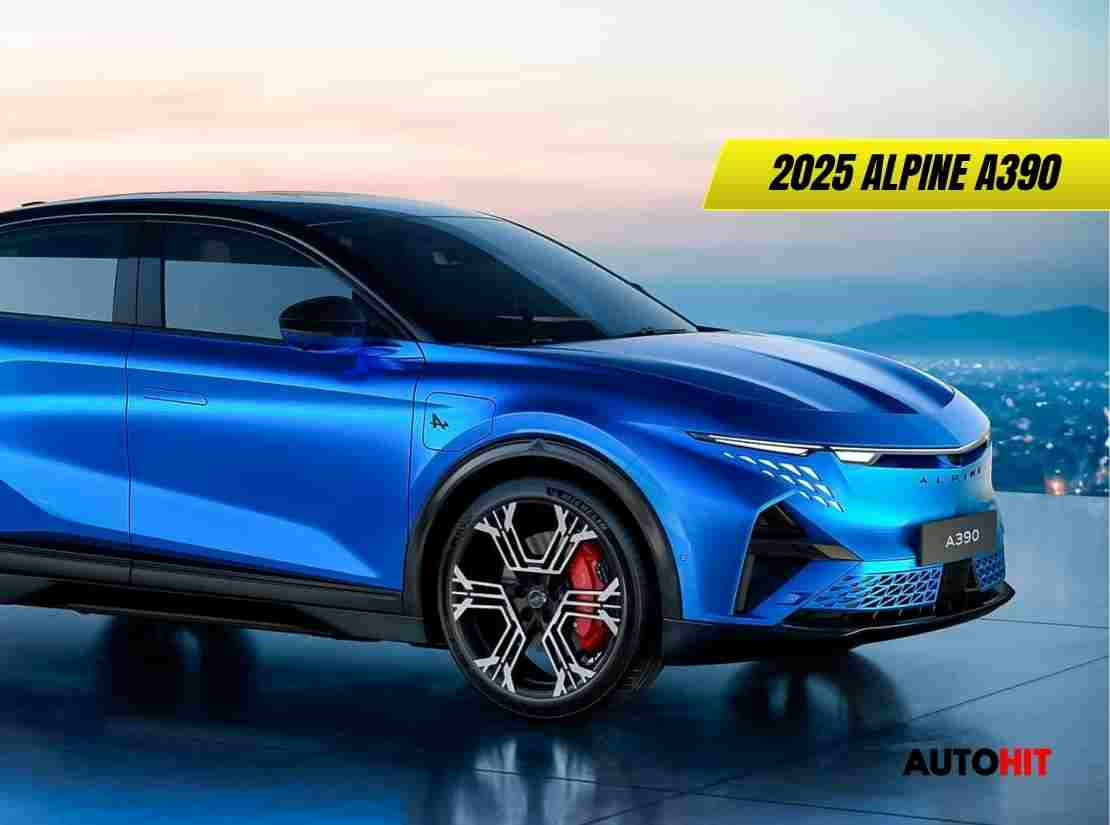
Alpine’s new A390 fastback delivers up to 463bhp from three motors and promises A110-level agility in a practical five-seater. Our analysis of UK pricing, performance, and market impact.
When Alpine revealed the production A390 this week, it wasn’t just another electric SUV launch. According to our analysis at AutoHit, this represents Alpine’s most ambitious attempt yet to challenge the German premium establishment – and potentially the first genuinely exciting French performance car to reach UK shores in decades.
The A390 fastback doesn’t try to hide what it is: a family-friendly performance machine that promises to deliver A110-level driving thrills in a practical five-door package. With up to 463bhp from a tri-motor setup and sophisticated torque vectoring, it’s targeting the electric Porsche Macan directly while offering something genuinely different in the premium performance SUV segment.
We’ve tested enough electric performance cars to know that power figures alone don’t guarantee driver engagement. But Alpine’s approach – combining near-perfect weight distribution, active torque vectoring across three motors, and bespoke suspension tuning – suggests serious intent to deliver on its sporting promises.
From a UK perspective, this timing couldn’t be better. British buyers are increasingly seeking alternatives to the German premium dominance, and the A390’s combination of French flair, cutting-edge technology, and genuine performance capability could provide exactly that differentiation.
Key Highlights: • Tri-Motor Performance: Up to 463bhp and 596lb-ft from three motors with active torque vectoring between all four wheels • UK Launch Timeline: Production begins late 2025 with UK deliveries expected from early 2026, priced from around £60,000 • A110 DNA: Alpine claims the A390 can follow the same racing line as the legendary A110 despite being larger and heavier • Premium Positioning: Targets Porsche Macan EV, BMW iX2 M50, and Audi Q4 e-tron in the electric performance SUV segment • Family Practicality: Five-seat configuration with 532-litre boot capacity while maintaining sporting proportions • French Engineering: Built in Alpine’s historic Dieppe factory with new battery technology and advanced platform adaptations
The A110’s Spiritual Successor in SUV Form
The most intriguing aspect of the A390 isn’t its impressive power output or sophisticated technology – it’s Alpine’s bold claim that this family SUV can deliver the same driving experience as the revered A110 sports car. That’s a significant statement from a brand that built its modern reputation on lightweight, pure driving experiences.
The engineering substance behind this claim centres on the tri-motor configuration. Unlike conventional dual-motor setups, the A390’s twin rear motors enable genuine torque vectoring, actively distributing power not just between front and rear axles but across the rear wheels independently. This allows the car to rotate more naturally into corners and adjust its balance dynamically – characteristics that define the A110’s appeal.
Alpine CEO Philippe Krief has described this as creating “perceived lightness” despite the inevitable weight penalty of batteries and additional motors. The near-perfect 49:51 weight distribution helps, as does the low centre of gravity from the floor-mounted 89kWh battery pack. But the real test will be whether these systems feel natural and intuitive rather than artificially enhanced.
Early testing reports from Swedish proving grounds suggest genuine promise. Journalists have described the A390 as remarkably adjustable on the throttle, with the ability to manage its substantial mass (likely around 2,000kg) even in challenging conditions. The fact that even the most conservative drive mode allows for lift-off oversteer hints at a car tuned for engagement rather than just efficiency.
The suspension setup receives bespoke tuning with hydraulic stops designed to balance comfort and handling. The track has been widened compared to platform siblings, while Alpine’s engineers worked to keep the wheelbase as short as possible for improved agility. These details suggest comprehensive re-engineering rather than simple badge engineering.
Power, Performance, and Technical Innovation
The A390 launches with two distinct performance levels, both impressive by any standard. The base GT variant produces 395bhp and covers 0-62mph in 4.8 seconds, while the flagship GTS delivers 463bhp and slashes that time to just 3.9 seconds. To put this in perspective, the GTS matches the acceleration of many dedicated supercars while offering genuine five-seat practicality.
The tri-motor configuration represents more than just additional power. The single front motor provides 150bhp, while each rear motor contributes approximately 150bhp in the GTS configuration. This allows for sophisticated torque distribution strategies impossible with conventional dual-motor setups. The Active Torque Vectoring system can shift power in milliseconds, effectively creating an electronically-controlled limited-slip differential effect across both axles.
Range figures are competitive rather than class-leading, with WLTP estimates of 323-345 miles depending on specification and wheel size. The 20-inch wheels on the GT variant optimise efficiency, while the flagship GTS comes with 21-inch wheels that prioritise visual impact over maximum range. For UK buyers, these figures should prove adequate for most daily use while offering occasional longer journeys without anxiety.
Charging capabilities include 190kW DC fast charging, enabling 15-80% charges in under 25 minutes. While not the fastest in class, Alpine promises the ability to “maintain high charging power for long periods” thanks to new battery chemistry from French company Verkor and redesigned thermal management systems.
The inclusion of an “overtake” function adds theatrical appeal – providing a 10-second power boost with a 30-second cooldown period. It’s precisely the kind of feature that demonstrates Alpine’s focus on driver engagement over pure efficiency optimisation.
Design Language: Sports Car DNA in Family Form
The production A390 remains remarkably faithful to the striking A390_β concept, with Alpine claiming 85% visual similarity. This represents unusual commitment to concept car design, suggesting confidence in the styling’s market appeal.
The front end features Alpine’s signature design language, including the “Vizor” grille treatment and triangular LED arrays dubbed “Cosmic Dust.” These aren’t just styling flourishes – the lower grille directs cooling air to the battery pack, while the LED positioning improves visibility and presence on UK roads.
The fastback profile creates the coupe-like silhouette that differentiates the A390 from conventional SUVs. At 4,615mm long, 1,885mm wide, and just 1,532mm tall, it’s significantly lower than rivals like the Tesla Model Y while offering comparable interior space. The proportions recall grand touring cars rather than traditional SUVs, reinforcing Alpine’s sporting intentions.
The hidden rear door handles integrate into the C-pillars, maintaining the coupe illusion while providing practical access. The 532-litre boot capacity exceeds many rivals, proving that sporting proportions needn’t compromise practicality for UK families requiring weekend luggage or school run versatility.
Aerodynamic efficiency receives careful attention, with active elements and carefully sculpted surfaces contributing to the overall range figures. The elevated ride height compared to the A110 actually aids aerodynamics at motorway speeds, creating clean airflow under the vehicle.
Interior: Premium Materials Meet Digital Innovation
Inside, the A390 adopts a more conventional approach than the concept’s dramatic adjustable seating and steering configurations. The production interior focuses on premium materials and intuitive technology rather than theatrical transformation.
The dashboard features dual 12.3-inch displays – a digital instrument cluster and portrait-oriented touchscreen angled toward the driver. This arrangement mirrors successful implementations in other Renault Group vehicles while adding Alpine-specific graphics and functionality.
Physical controls remain present on the steering wheel and centre console, addressing common criticisms of overly digitised interiors. The inclusion of traditional switches for climate control and drive modes should prove welcome for UK buyers who prioritise usability over minimalist aesthetics.
Seating varies between trim levels, with the flagship GTS receiving Sabelt bucket seats trimmed in Nappa leather. These provide the support necessary for spirited driving while maintaining comfort for longer journeys. The French tricolour motifs and carbon fibre accents reinforce the performance positioning without overwhelming the overall design.
The Devialet audio system deserves particular mention, delivering 850 watts through 13 speakers. More significantly, Devialet has worked with Alpine to develop specific driving sounds for different modes, with Sport mode featuring “richer low frequencies to accompany torque peaks” while Daily mode offers “lighter and smoother” audio enhancement.
UK Market Context and Competition Analysis
The A390’s arrival coincides with increasing UK buyer interest in alternatives to German premium brands. Recent market analysis shows growing appetite for distinctive, performance-focused vehicles that offer genuine differentiation rather than badge prestige alone.
The competitive landscape includes formidable rivals. The Porsche Macan EV represents the segment benchmark, combining proven performance credentials with Porsche’s sporting heritage. BMW’s iX2 M50 offers similar performance in a more conventional SUV package, while the Audi Q4 e-tron provides quattro all-wheel drive and established premium appeal.
However, none offer the A390’s specific combination of tri-motor sophistication and French engineering flair. The active torque vectoring system represents technology typically reserved for supercars, making this one of the first mainstream applications of such advanced drivetrain control.
Pricing expectations suggest the GT variant will start around £60,000, positioning it competitively against the Porsche Macan EV’s £68,500 starting price. The GTS will likely command approximately £70,000, remaining competitive while offering superior power output and more sophisticated drivetrain technology.
For UK company car drivers, the A390’s 0% BIK rate provides significant advantages over petrol alternatives. The combination of performance, practicality, and tax efficiency could prove compelling for executives seeking engaging transport without compromise.
French Premium Ambitions: Can Alpine Succeed?
Alpine’s broader strategy extends beyond individual model success. The brand aims to establish a credible premium alternative to German dominance, leveraging Formula 1 involvement and motorsport heritage to build credibility in the performance segment.
The A390 represents a crucial test of this strategy. If successful, it could generate the volume and cash flow necessary to fund Alpine’s expanding model programme, including the upcoming electric A110 replacement and additional niche models planned through 2030.
Early signs suggest momentum building. Alpine registrations nearly doubled in Q1 2025 following the A290’s launch, demonstrating market appetite for distinctive French performance cars. The A390’s broader appeal could accelerate this growth significantly.
The manufacturing approach reinforces Alpine’s premium positioning. Production occurs in the historic Dieppe factory, with battery packs from Dunkirk and powertrains from Cleon. This French supply chain emphasises the brand’s domestic credentials while ensuring quality control throughout the process.
Brand Finance estimates Alpine’s value could reach €1 billion in 2025, up from €840 million in 2024. Success of the A390 will largely determine whether these ambitious valuations prove justified.
Technical Deep Dive: The Engineering Reality
Beyond the marketing claims, the A390’s technical specification reveals serious engineering commitment. The AmpR Medium platform receives extensive Alpine-specific modifications, including revised suspension geometry, strengthened mounting points, and optimised weight distribution.
The battery technology represents a significant advancement. Verkor’s new cell chemistry enables higher discharge rates for sustained performance while improving charging consistency. The 400V architecture may seem conservative compared to 800V rivals, but Alpine prioritises proven reliability over theoretical specifications.
The tri-motor configuration requires sophisticated thermal management, with independent cooling circuits for each motor and the central battery pack. This complexity adds weight and cost but enables the torque vectoring capabilities that differentiate the A390 from conventional dual-motor rivals.
Michelin has developed specific tyres for the A390, recognising that advanced chassis dynamics require equally sophisticated rubber compounds. The collaboration extends beyond simple sizing to compound development and tread pattern optimisation for the unique weight distribution and torque characteristics.
Frequently Asked Questions
When will the Alpine A390 be available in the UK and how much will it cost?
Production begins in late 2025 with UK deliveries expected from early 2026. Pricing hasn’t been officially confirmed, but expect the GT variant to start around £60,000 and the GTS at approximately £70,000. These figures position it competitively against the Porsche Macan EV while offering more advanced drivetrain technology and superior power output.
How does the tri-motor system actually work and what difference does it make?
The A390 uses one motor at the front and two at the rear, enabling active torque vectoring across all four wheels. This means the car can vary power delivery not just between front and rear axles, but also between left and right rear wheels independently. In practice, this allows more natural cornering behaviour and better traction management than conventional dual-motor setups, creating the dynamic characteristics Alpine claims match the A110 sports car.
What about real-world range and charging for UK drivers?
Official WLTP range figures quote 323-345 miles depending on specification, with the larger 21-inch wheels reducing efficiency slightly. For UK driving patterns, expect around 280-300 miles in mixed conditions. The 190kW DC charging enables 15-80% charges in under 25 minutes, adequate for longer journeys though not class-leading. The key advantage is consistent charging speeds rather than peak power figures.
How practical is it as a family car compared to conventional SUVs?
Despite its sporting proportions, the A390 offers genuine five-seat accommodation and a 532-litre boot capacity. The fastback profile reduces rear headroom slightly compared to upright SUVs, but most adults should find adequate space. The elevated seating position and good visibility make it practical for daily use, while the smooth electric drivetrain suits family transport duties.
Can it really drive like an A110 despite being much larger and heavier?
Early testing suggests Alpine’s claims have substance. The tri-motor torque vectoring, near-perfect weight distribution, and bespoke suspension tuning enable remarkably agile handling for a 2,000kg SUV. While it won’t match the A110’s pure lightweight feel, the ability to adjust balance dynamically through corners could provide similarly engaging characteristics in a more practical package.
How does it compare to the Porsche Macan EV and other premium electric SUVs?
The A390 offers more power and advanced torque vectoring technology compared to the dual-motor Macan EV, while undercutting it on price. The Porsche offers more established brand prestige and proven build quality, but the Alpine provides superior performance and more distinctive styling. BMW’s iX2 M50 offers similar power but lacks the sophisticated drivetrain technology, while Audi’s Q4 e-tron prioritises refinement over outright performance.
What warranty and servicing arrangements will Alpine offer in the UK?
Alpine will likely follow Renault Group’s warranty structure, though specific UK arrangements haven’t been confirmed. Expect at least three years/60,000 miles coverage with possible extensions available. Service intervals should follow typical EV patterns with minimal maintenance requirements. The main consideration is the expanding Alpine dealer network’s ability to handle complex tri-motor diagnostics and repairs.
Our Verdict: French Flair Meets Electric Innovation
The Alpine A390 represents more than just another electric SUV launch – it’s a statement of intent from a brand determined to challenge German premium dominance through genuine engineering innovation and distinctive French character.
According to our analysis at AutoHit, the A390’s greatest strength lies in its uncompromising approach to performance. Rather than simply adding power to an existing platform, Alpine has created a genuinely sophisticated drivetrain that promises to deliver on the brand’s sporting promises. The tri-motor torque vectoring system represents technology typically reserved for supercars, making this a genuinely advanced piece of engineering.
The combination of 463bhp performance, practical five-seat accommodation, and competitive pricing positions the A390 uniquely in the UK market. While the Porsche Macan EV offers established prestige, the Alpine provides superior power and more advanced technology at a lower price point.
However, this remains unproven territory for Alpine. The brand must demonstrate that sophisticated engineering translates into engaging real-world driving experiences, while building the dealer network and service infrastructure necessary to support premium positioning.
For UK buyers seeking genuine alternatives to German premium orthodoxy, the A390 offers compelling appeal. The combination of French engineering flair, cutting-edge technology, and motorsport heritage creates a proposition unlike anything else in the segment.
Bottom Line: The A390 could establish Alpine as a credible premium alternative while proving that electric performance cars can maintain the sporting characteristics that matter to enthusiast drivers. For buyers willing to embrace something genuinely different, it represents an exciting departure from conventional premium SUV formula.





