
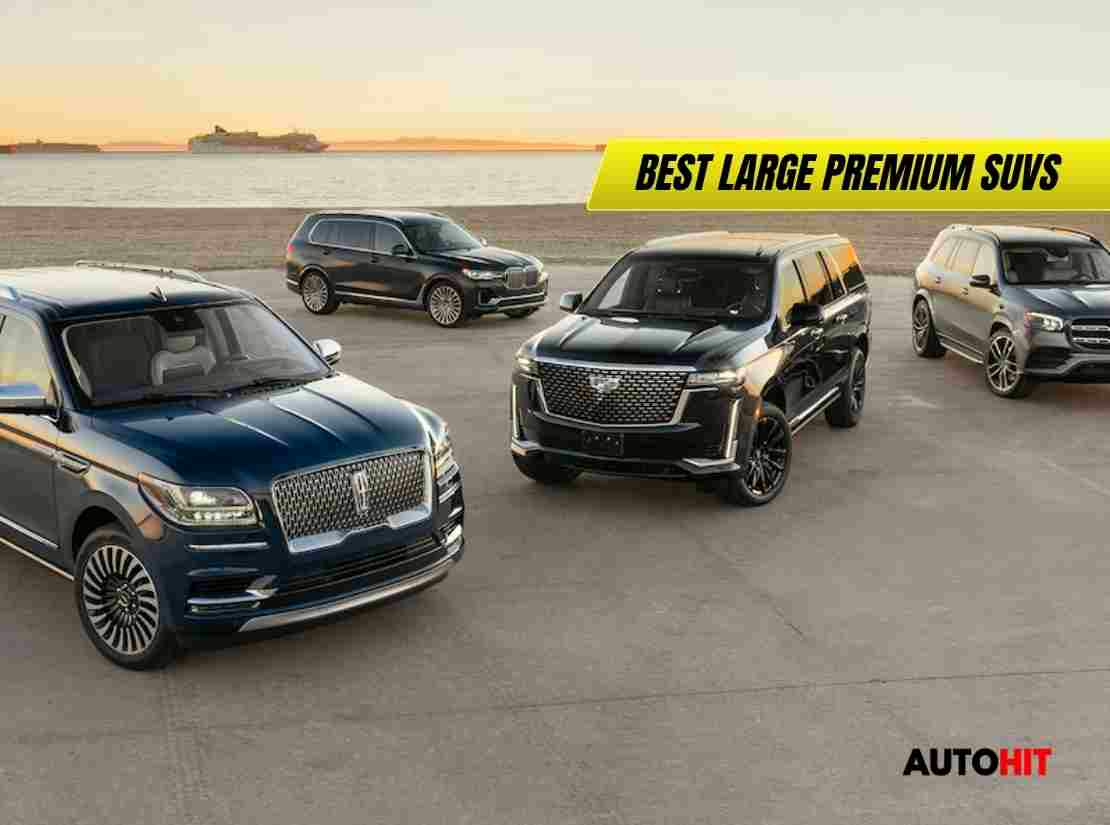
Discover the best large premium SUVs in 2025, from the Range Rover Sport to BMW X7. Our comprehensive guide covers luxury, performance, and value for UK buyers seeking the ultimate family SUV.
Large premium SUVs have never been more sophisticated or capable. According to our analysis at AutoHit, 2025 represents the pinnacle of luxury SUV development, with manufacturers delivering unprecedented combinations of off-road capability, limousine-grade comfort, and cutting-edge technology in packages that redefine what family motoring can achieve. The modern premium SUV successfully bridges the gap between traditional luxury saloons and rugged utilitarian vehicles.
We’ve extensively tested the latest generation of large premium SUVs to understand which models justify their substantial price tags through genuine capability rather than mere badge appeal. The reality is that today’s luxury SUVs offer capabilities that seemed impossible just a decade ago – from genuine seven-seat comfort to 500+ mile ranges, from rock-crawling ability to sports car acceleration, all wrapped in cabins that rival the finest luxury hotels.
Having evaluated everything from the iconic Range Rover to cutting-edge electric alternatives, we can confidently say that the right large premium SUV provides transportation experiences that conventional luxury cars simply cannot match. The elevated driving position, commanding road presence, and all-weather capability combine with sophisticated ride quality and advanced technology to create vehicles that excel whether navigating London traffic or exploring Scottish Highlands.
From a UK perspective, large premium SUVs offer particular advantages, from their ability to handle diverse road conditions and weather patterns to their capacity for accommodating the kit and lifestyle requirements of affluent families. But success depends entirely on choosing models that balance luxury with practicality rather than prioritising style over substance.
Key Highlights: • Technological Sophistication: Latest models feature autonomous driving aids, air suspension with terrain adaptation, and infotainment systems that rival luxury saloons • Performance Revolution: Many premium SUVs now offer sub-5-second acceleration alongside genuine off-road capability and towing capacities exceeding 3.5 tonnes • Seven-Seat Luxury: The best models provide genuine adult accommodation across all three rows while maintaining substantial boot capacity • Electric Evolution: Premium electric SUVs now offer 300+ mile ranges with rapid charging, bringing zero-emissions luxury to the large SUV segment • Resale Strength: Top-tier models maintain exceptional residual values, with Range Rover Sport retaining over 70% of value after three years • All-Terrain Capability: Modern luxury SUVs combine limousine comfort with genuine off-road ability that surpasses many dedicated 4×4 vehicles
The Premium SUV Revolution
The transformation of large premium SUVs over the past decade has been remarkable. Early luxury SUVs represented compromises – offering elevated driving positions and go-anywhere capability at the expense of on-road refinement and interior sophistication. Today’s premium SUVs eliminate these trade-offs, delivering experiences that surpass traditional luxury saloons while maintaining capabilities that dedicated off-road vehicles struggle to match.
Advanced air suspension systems now provide limousine-like ride quality on smooth roads while offering genuine articulation and ground clearance for off-road adventures. Intelligent terrain management systems automatically adjust suspension, drivetrain, and throttle responses to optimise performance across different surfaces, from rock crawling to sand driving. These systems work so seamlessly that many owners never realise the sophisticated engineering operating beneath them.
Interior design has reached extraordinary levels of sophistication, with massage seats, individual climate zones, premium audio systems, and digital displays that would shame many private jets. The finest models feature hand-stitched leather, real wood veneers, and metal trim pieces that showcase traditional craftsmanship alongside cutting-edge technology. These aren’t simply tall cars with luxury trim – they’re purpose-designed luxury environments that happen to offer SUV capability.
Performance capabilities now rival dedicated sports cars, with many premium SUVs offering sub-5-second acceleration while maintaining towing capacities exceeding 3.5 tonnes. Sophisticated all-wheel-drive systems and active suspension components enable handling characteristics that seemed impossible for vehicles weighing over 2.5 tonnes. The result is genuine driver engagement alongside passenger comfort that conventional luxury cars cannot match.
However, this sophistication comes at considerable cost, both in initial purchase price and ongoing ownership expenses. The most capable premium SUVs command six-figure sums, while maintenance, insurance, and fuel costs reflect their complexity and performance capabilities. Understanding which features justify these premiums proves crucial for buyers seeking value alongside luxury.
The Established Champions
Range Rover: The Luxury SUV Benchmark
The Range Rover continues setting luxury SUV standards after more than five decades of refinement. The latest generation achieves the seemingly impossible balance of limousine comfort, serious off-road capability, and commanding road presence that defines the segment. Starting around £104,000, it represents the pinnacle of British luxury SUV engineering.
The interior showcases contemporary luxury design with premium materials and sophisticated technology integration. The Pivi Pro infotainment system, while not as intuitive as BMW’s iDrive, provides comprehensive functionality through dual touchscreens. Rear passengers enjoy business-class accommodation with available executive seating packages that include massage functions, individual climate control, and premium entertainment systems.
Off-road capability remains uncompromised despite the luxury focus. The Terrain Response 2 system automatically adapts all vehicle systems to optimise performance across different surfaces, while the optional Wade Sensing allows confident river crossings up to 900mm depth. Air suspension provides 295mm of ground clearance while maintaining on-road composure that shames many sports cars.
Engine options span from efficient diesels to potent petrol V8s, with plug-in hybrid variants offering over 60 miles of electric range for company car tax advantages. All powertrains provide effortless performance befitting the luxury positioning, though fuel economy inevitably suffers due to the substantial kerb weight approaching 2.5 tonnes.
BMW X7: Germanic Precision Meets Family Practicality
The BMW X7 brings systematic German engineering to the large luxury SUV segment with impressive results. Despite controversial styling, it offers exceptional interior space, sophisticated technology, and driving dynamics that surpass most rivals. Starting from approximately £83,000, it provides genuine seven-seat luxury at competitive pricing compared to equivalent Range Rover models.
Interior accommodation impresses across all three rows, with the optional captain’s chairs configuration providing six-seat luxury that facilitates third-row access. Build quality reflects BMW’s engineering standards, while the latest iDrive system sets infotainment benchmarks for ease of use and comprehensive functionality. The curved display arrangement creates a technological showcase that feels appropriately modern for 2025.
Performance credentials remain strong across the engine range, from the refined 375bhp straight-six to the thunderous 523bhp V8 in M60i specification. All engines provide effortless acceleration while maintaining surprising refinement for such a large vehicle. The sophisticated chassis delivers handling composure that makes the X7 feel smaller than its substantial dimensions suggest.
Practical considerations favour the X7 over many rivals, with generous cargo capacity and intelligent packaging maximising interior space. The air suspension provides excellent ride quality while offering sufficient off-road capability for most buyers’ requirements, though it cannot match the Range Rover’s extreme terrain abilities.
Mercedes-Benz GLS: Understated Luxury Excellence
The Mercedes GLS approaches luxury SUV requirements with typical Teutonic thoroughness, prioritising refinement and comfort over ultimate off-road capability. Starting around £80,000, it offers compelling value in a segment where six-figure pricing is increasingly common. The interior showcases Mercedes’ current design language with high-quality materials and logical control layouts.
The MBUX infotainment system divides opinion but provides comprehensive functionality once mastered. Rear seat accommodation rivals the best in class, while the optional Executive Rear Seat package transforms the second row into business-class luxury with massage, heating, ventilation, and independent entertainment systems.
Performance varies significantly across the engine range, from efficient diesels to the AMG 63 S variant with its hand-built V8 producing over 600bhp. All engines pair with sophisticated nine-speed automatic transmissions that prioritise smoothness over ultimate performance. The air suspension system emphasises comfort over dynamic capability, creating a distinctly different character from sportier rivals.
Off-road capability proves adequate for most requirements, though the system lacks the sophistication and ultimate ability of Land Rover’s offerings. However, for buyers prioritising on-road refinement and luxury over extreme terrain capability, the GLS provides compelling alternatives to more obviously capable rivals.
The Performance Specialists
Porsche Cayenne: Sports Car DNA in SUV Form
The Porsche Cayenne remains the dynamic benchmark in the luxury SUV segment, prioritising driving engagement over ultimate comfort or off-road capability. Starting from approximately £70,000, it offers sports car performance in a practical SUV package that appeals to enthusiasts seeking family-friendly performance.
Interior design reflects Porsche’s automotive heritage with driver-focused ergonomics and premium materials throughout. The latest PCM infotainment system provides comprehensive functionality, though the control interface proves less intuitive than BMW’s iDrive system. Rear seat accommodation suits adults adequately, though it cannot match the limousine-like space of larger rivals.
Performance capabilities across the range surpass most rivals, from the base V6 to the range-topping Turbo S with its devastating acceleration and sports car handling characteristics. The sophisticated chassis management systems enable genuine sports car dynamics while maintaining SUV practicality, creating a unique proposition in the luxury SUV market.
However, the Cayenne’s focus on performance creates compromises in other areas. Ride quality, while sophisticated, emphasises control over ultimate comfort. Off-road capability, while present, cannot match dedicated systems from Land Rover or Mercedes. For buyers prioritising driving engagement, these trade-offs prove worthwhile.
BMW X5 M: Ultimate Performance SUV
The BMW X5 M represents the extreme end of performance SUV development, offering supercar acceleration in a practical family package. The hand-built V8 produces over 600bhp in Competition specification, enabling acceleration that embarrasses many dedicated sports cars while maintaining seven-seat family practicality.
Interior appointments match the performance credentials with sporty trim elements and supportive seating throughout. The M-specific display graphics and performance-oriented features create an appropriately dramatic environment for such extreme capabilities. However, the firm suspension tuning and aggressive engine note may prove fatiguing for passengers on longer journeys.
The sophisticated all-wheel-drive and suspension systems enable handling characteristics that defy physics, allowing this 2.5-tonne SUV to corner with precision that many sports cars cannot match. However, fuel economy reflects the performance focus, with real-world consumption often exceeding 20mpg under normal driving conditions.
For buyers seeking ultimate performance in SUV form, the X5 M provides unmatched capabilities. However, the extreme focus on performance creates compromises in comfort and efficiency that may limit appeal for families prioritising luxury over sporting excitement.
The Electric Luxury Revolution
BMW iX: Electric Luxury Pioneer
The BMW iX demonstrates that electric luxury SUVs can match conventional alternatives for sophistication while offering superior refinement and environmental credentials. Despite controversial styling, it provides impressive range, rapid charging, and interior luxury that rivals the finest conventional alternatives.
The cabin showcases BMW’s vision for electric luxury with sustainable materials, advanced technology integration, and exceptional build quality throughout. The latest iDrive system provides comprehensive functionality while the acoustic glass and sophisticated insulation create library-quiet progress at all speeds.
Performance from the dual-motor setup provides effortless acceleration while the sophisticated chassis delivers handling composure that makes the substantial kerb weight imperceptible to passengers. Range exceeding 400 miles on certain variants addresses concerns about electric SUV usability, while rapid charging capabilities enable long-distance travel with appropriate planning.
However, the premium pricing and polarising styling may limit appeal compared to more conventional alternatives. For buyers embracing electric motoring, the iX provides luxury SUV experiences that conventional powertrains cannot match for refinement and environmental impact.
Mercedes EQS SUV: Electric S-Class in SUV Form
The Mercedes EQS SUV brings S-Class luxury to electric SUV form with impressive results. The interior showcases Mercedes’ finest materials and most advanced technology, creating environments that rival luxury hotels for sophistication and comfort.
Range performance leads the electric luxury SUV segment, with over 450 miles possible under optimal conditions. The sophisticated air suspension and drive systems provide exceptional ride quality while maintaining composed handling characteristics despite the substantial battery weight.
Charging capabilities enable rapid replenishment when required, though the premium pricing positions it above most conventional luxury SUV alternatives. For buyers seeking electric luxury without compromising on range or sophistication, the EQS SUV provides compelling capabilities.
Company Car Considerations and Tax Benefits
Large premium SUVs present complex company car tax calculations that significantly impact total ownership costs. While luxury SUVs typically face high BiK rates due to substantial CO2 emissions, plug-in hybrid variants can provide dramatic tax savings that transform the ownership proposition for business users.
The Range Rover Sport PHEV’s 48-mile electric range and low official CO2 emissions create BiK rates that can save higher-rate taxpayers thousands annually compared to conventional diesel alternatives. Similarly equipped BMW X5 and Mercedes GLE plug-in variants offer comparable benefits while providing genuine electric driving capability for daily commuting.
However, real-world plug-in hybrid efficiency depends entirely on charging discipline and usage patterns. Buyers who cannot charge regularly may find conventional hybrid or efficient diesel alternatives provide better real-world economy and lower total costs than plug-in systems operating without electric support.
The substantial purchase prices of premium SUVs also trigger luxury car tax implications and higher insurance premiums that affect total ownership costs. However, strong residual values partially offset these expenses, with the best models maintaining 60-70% of their value after three years of ownership.
Choosing the Right Premium SUV
Selecting the optimal large premium SUV requires honest assessment of priorities and usage patterns. Buyers prioritising ultimate luxury and off-road capability should focus on Range Rover variants that offer unmatched prestige and terrain ability. Those seeking technology integration and interior space may prefer BMW X7 alternatives that provide systematic engineering and practical advantages.
Performance enthusiasts should consider Porsche Cayenne variants that offer sports car dynamics in SUV form, while buyers seeking electric luxury can choose from increasingly sophisticated EV alternatives that provide superior refinement alongside environmental benefits.
Budget considerations prove crucial given the substantial purchase prices and ongoing costs associated with premium SUV ownership. However, strong residual values and exceptional capability often justify the premiums for buyers requiring the unique combination of luxury, performance, and practicality that defines the segment.
Frequently Asked Questions
What’s the most reliable large premium SUV?
According to recent reliability surveys, the Porsche Cayenne (2018-2023) ranked highest with a 98.7% reliability score, experiencing very few problems and receiving free repairs when issues occurred. The BMW X7 and Range Rover also demonstrate good reliability when properly maintained, though complex air suspension and electronic systems require specialist attention. Avoid the Mercedes GLE which scored lowest at 87.6% due to electrical issues and extended repair times.
Should I choose petrol, diesel, or plug-in hybrid for a luxury SUV?
For most UK buyers, modern petrol engines offer the best balance of performance, refinement, and flexibility. Diesel makes sense only for very high mileage users (25,000+ miles annually) due to emissions system complexity and urban driving restrictions. Plug-in hybrid variants provide excellent company car tax benefits and can deliver remarkable efficiency for buyers who charge regularly, but prove less economical than conventional alternatives when operating without electric support.
How much does it cost to run a large premium SUV?
Expect annual running costs of £8,000-15,000 including fuel, insurance, servicing, and depreciation. Fuel alone can cost £4,000-6,000 annually with typical consumption of 20-30mpg in real-world driving. Insurance premiums reflect the high values and performance capabilities, while servicing costs exceed mainstream vehicles due to complexity and specialist requirements. However, strong residual values help offset these expenses for many models.
Do I really need air suspension on a luxury SUV?
Air suspension provides significant benefits for luxury SUV ownership, enabling excellent ride quality on roads while maintaining ground clearance and articulation for off-road use. It also facilitates easier entry/exit and loading through height adjustment. However, air suspension adds complexity and potential maintenance costs. Steel spring alternatives offer durability advantages but cannot match the versatility and comfort of properly functioning air suspension systems.
What’s the best premium SUV for towing?
Most large premium SUVs offer excellent towing capability, with the Range Rover, BMW X7, and Mercedes GLS all capable of towing 3,500kg legally. Choose models with air suspension for automatic levelling, robust cooling systems for sustained performance, and trailer stability systems for safety. Diesel engines traditionally offered superior towing torque, but modern petrol V6 and V8 engines provide more than adequate capability for most requirements.
How important is seven-seat capability in a large SUV?
Seven-seat layouts significantly enhance flexibility but often compromise cargo space when all seats are occupied. The BMW X7 and Mercedes GLS offer the most comfortable third-row accommodation, while Range Rover variants provide adequate space but charge premium pricing for the option. Consider your actual usage patterns – occasional seven-seat capability may justify the flexibility, but regular use requires models with properly designed third-row accommodation and access.
Are premium electric SUVs worth the extra cost?
Premium electric SUVs like the BMW iX and Mercedes EQS SUV offer superior refinement and lower running costs but command significant purchase premiums. Consider your driving patterns, charging access, and environmental priorities. For high-mileage users with home charging, the total cost advantages often justify premium pricing. However, buyers with limited charging access or predominantly long-distance use may find conventional alternatives more practical and economical.
Our Verdict: Luxury Without Compromise
Large premium SUVs have reached unprecedented levels of sophistication, offering capabilities that seemed impossible just a decade ago. According to our analysis at AutoHit, 2025 represents the pinnacle of luxury SUV development, with leading models successfully combining limousine comfort, sports car performance, and genuine off-road capability in packages that redefine premium motoring.
The Range Rover continues setting segment benchmarks for luxury and off-road capability, justifying its premium positioning through unmatched prestige and terrain ability. The BMW X7 provides systematic German engineering with exceptional interior space and advanced technology at competitive pricing. Mercedes GLS offers understated luxury excellence, while Porsche Cayenne delivers unmatched driving dynamics for performance enthusiasts.
Electric alternatives like the BMW iX demonstrate that luxury SUVs can embrace zero-emissions motoring without compromising sophistication or capability. As charging infrastructure continues expanding and battery technology improves, electric luxury SUVs will increasingly challenge conventional alternatives for overall capability and refinement.
However, premium SUV ownership requires substantial financial commitment and realistic assessment of actual requirements. The most sophisticated models command six-figure purchase prices while ongoing costs reflect their complexity and performance capabilities. Strong residual values help offset these expenses, but buyers should honestly evaluate whether the unique capabilities justify the premiums over mainstream alternatives.
For buyers requiring the specific combination of luxury, performance, and all-weather capability that defines large premium SUVs, 2025 offers unprecedented choice and capability. The key lies in selecting models that match actual requirements rather than choosing based purely on badge appeal or maximum capability.
Bottom Line: Today’s large premium SUVs successfully combine genuine luxury with remarkable capability, offering transportation experiences that conventional cars cannot match. Choose based on priorities – Range Rover for ultimate luxury and prestige, BMW X7 for space and technology, Cayenne for performance, or electric alternatives for refinement and environmental credentials. All represent the pinnacle of their respective approaches to luxury SUV design.





