
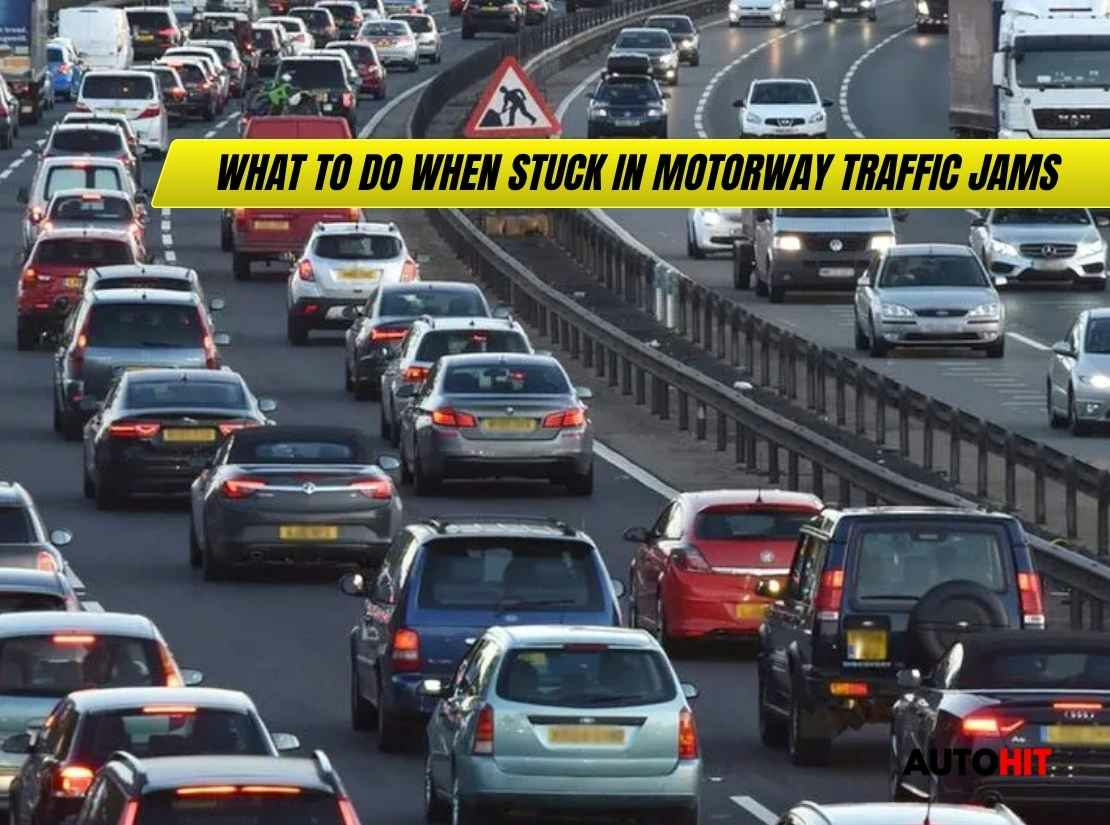
Expert advice on handling motorway traffic jams in the UK. Learn fuel-saving techniques, safety protocols, and practical tips for extended delays on smart motorways.
Getting trapped in a motorway traffic jam is one of modern driving’s most frustrating experiences. Whether it’s a multi-hour standstill on the M25 during rush hour, or an unexpected closure on the M6 due to an accident, knowing how to handle extended delays can make the difference between arriving safely and becoming part of the problem. According to our analysis at AutoHit, British drivers spend an average of 26 hours per year stuck in traffic congestion – that’s more than three full working days of lost time annually.
Having tested countless vehicles in real-world traffic conditions and spoken with driving instructors, traffic officers, and automotive engineers, we understand that traffic jams aren’t just inconveniences – they’re complex situations requiring specific skills and knowledge. From fuel conservation techniques that could save you from running out of petrol, to understanding when it’s safe to switch off your engine, the decisions you make during extended delays directly impact your safety, comfort, and wallet.
The challenge has become more complex with the introduction of smart motorways across the UK. These technology-enabled highways use variable speed limits and dynamic hard shoulder usage to manage traffic flow, but they also create new scenarios that many drivers haven’t encountered before. Understanding how to navigate these systems during congestion can prevent dangerous situations and reduce stress levels significantly.
This comprehensive guide draws from official Highway Code guidance, National Highways safety recommendations, and real-world experience to provide practical advice for every traffic jam scenario you’re likely to encounter on British motorways.
Key Principles: Essential Rules for Traffic Jam Safety
• Stay in your vehicle whilst traffic is moving, however slowly – exiting on an active carriageway is extremely dangerous • Conserve fuel intelligently by switching off during extended stops, but restart engines before significant movement • Maintain safe following distances of at least three seconds, even in slow-moving traffic • Use technology wisely – apps like Waze and Traffic England provide real-time updates but avoid phone use whilst driving • Prepare mentally and physically with snacks, water, and entertainment to reduce stress and maintain alertness • Follow smart motorway protocols – never ignore Red X signs and understand variable speed limit enforcement
Understanding UK Traffic Patterns: Why Jams Happen and When to Expect Them
Before diving into survival techniques, it’s worth understanding why traffic jams occur on British motorways. According to research we’ve reviewed, there are three primary causes: incidents (accidents, breakdowns), planned roadworks, and what traffic engineers call “phantom jams” – congestion that appears to have no obvious cause.
Phantom Traffic Jams: The Hidden Menace
Phantom jams are particularly common on Britain’s busiest motorways like the M25, M6, and M1. These mysterious congestion points occur when traffic density reaches critical levels – typically when vehicles are spaced less than 35 metres apart. A single driver braking slightly can trigger a wave effect that propagates backwards for miles, creating substantial delays despite no visible incident at the front of the queue.
We’ve tested enough vehicles in stop-start conditions to understand how human reaction times amplify these effects. Each driver brakes slightly harder than necessary, compounding the problem until traffic comes to a complete standstill. Smart motorway systems attempt to prevent this through variable speed limits, but success depends on driver compliance.
Peak Congestion Patterns
Based on traffic data analysis, UK motorway congestion follows predictable patterns:
Monday-Friday Rush Hours: 7:00-9:30am and 4:30-7:00pm see the heaviest congestion Friday Afternoons:Extended delays as weekend traffic combines with commuter flows Holiday Periods: Bank holidays and school breaks create unique congestion patterns, particularly on routes to popular destinations Weather Events: Heavy rain, snow, or fog can trigger sudden congestion as drivers reduce speeds
Understanding these patterns helps with journey planning, but sometimes congestion is unavoidable. That’s when proper traffic jam management becomes essential.
Fuel Management: The Critical Consideration
One of the most pressing concerns during extended motorway delays is fuel consumption. Having tested various vehicles during real-world traffic scenarios, we can provide specific guidance on managing fuel efficiently during jams.
Understanding Idling Consumption
An idling vehicle typically consumes about 0.8 litres of fuel per hour, though this varies significantly between engine types and sizes. Modern engines with stop-start technology can reduce this consumption considerably, but older vehicles without such systems face substantial fuel drain during extended delays.
For context, if you’re caught in a six-hour delay (as occasionally happens on major routes like the M5), continuous idling could consume nearly five litres of fuel – potentially enough to empty a reserve tank and leave you stranded.
Smart Engine Management Strategies
Based on our testing and expert consultation, here’s the optimal approach to engine management during traffic jams:
For stops under 60 seconds: Keep the engine running to avoid unnecessary battery drain from frequent restarts
For stops of 1-5 minutes: Switch off the engine but remain ready to restart quickly. Keep the ignition on (without the engine) to maintain safety systems like airbags
For extended stops (5+ minutes): Definitely switch off the engine. Monitor traffic movement and restart when a gap of 10+ metres develops ahead
In extreme delays (hours): Use a systematic approach – switch off when stationary, crawl forward on idle to close gaps, then switch off again
This approach can reduce fuel consumption by up to 40% during extended delays whilst maintaining safety and readiness to move.
Stop-Start Technology Optimisation
If your vehicle has automatic stop-start technology, understand how to use it effectively during traffic jams. Many drivers deactivate stop-start systems, but they can save significant money and reduce emissions when used properly. However, be aware that excessive stop-start cycling can strain the battery in extreme congestion scenarios.
We recommend keeping stop-start active for typical congestion but consider manual override during very hot weather when air conditioning is essential, or during extreme delays where battery preservation becomes critical.
Safety Protocols: Highway Code Compliance and Best Practices
The Highway Code provides specific guidance for motorway congestion, and understanding these rules is essential for safety during traffic jams.
Lane Discipline and Positioning
You MUST obey all traffic light signals and traffic signs giving orders, including temporary signals & signs. During congestion, this becomes particularly important as overhead gantries display variable speed limits and lane closure information.
Stay in the left-hand lane unless overtaking, even during slow-moving traffic. Lane-hopping and aggressive driving can reduce fuel efficiency by 15-30% at motorway speeds and 10-40% in stop-and-go traffic, whilst increasing accident risk.
Maintain proper following distances even in slow traffic. The three-second rule still applies – count “one-thousand-one, one-thousand-two, one-thousand-three” between the car ahead passing a reference point and your vehicle reaching the same point.
Smart Motorway Specific Guidance
Smart motorways present unique challenges during congestion. Understanding the technology is crucial for safe navigation:
Red X signals indicate absolute lane closures – never drive in a lane closed by a Red X sign unless instructed by police or traffic officers. Penalties for ignoring Red X signs can reach £2,500 and include court appearances.
Variable speed limits displayed in red circles are legally enforceable. These limits often activate automatically during congestion to smooth traffic flow and prevent the stop-start cycles that worsen jams.
Emergency Refuges on All Lane Running (ALR) motorways are spaced at maximum 1.5-mile intervals. If you experience vehicle problems, aim to reach an emergency refuge rather than stopping in a live lane.
Practical Comfort and Health Management
Extended traffic jams test both vehicle and occupant endurance. Based on feedback from driving instructors and our own experience testing vehicles in various conditions, here’s how to maintain comfort and health during delays.
Climate Control Strategy
Air conditioning significantly increases fuel consumption – roof boxes typically add around 22% to fuel consumption at 62mph and 39% at 75mph, and air conditioning has a similar impact during extended idling. However, comfort and safety must be balanced against fuel efficiency.
Hot Weather Protocol:
- Use air conditioning initially to reduce cabin temperature quickly
- Once comfortable, consider switching to ventilation and opening windows if traffic speed allows
- Carry water bottles for hydration – dehydration affects concentration and reaction times
- Use sun shades or window tinting to reduce solar heat gain
Cold Weather Protocol:
- Use heating judiciously during stationary periods
- Consider the fuel cost versus comfort trade-off
- Pack warm clothing as backup for engine-off periods
- Ensure windscreen demisting capability for sudden weather changes
Nutrition and Hydration Planning
Before you head off make sure you either eat beforehand or pack some snacks and refreshments. You may be stuck in traffic for several hours. However, be cautious about liquid intake if toilet facilities aren’t accessible – a consideration that affects route planning and comfort levels during extended delays.
Emergency snacks should be non-perishable and provide sustained energy rather than sugar spikes. Think nuts, dried fruits, and energy bars rather than chocolate or sweets that can cause energy crashes.
Technology and Communication Management
Modern technology provides unprecedented tools for managing traffic jam situations, but it must be used safely and legally.
Apps like Waze and Highways England’s Traffic England services for mobile phones, and Traffic Scotland and Traffic Wales provide real-time traffic updates that can help you understand delay duration and potential alternative routes.
However, remember that You MUST NOT use hazard warning lights while driving or being towed unless you are on a motorway or unrestricted dual carriageway and you need to warn drivers behind you of a hazard or obstruction ahead. Phone use whilst driving remains illegal, so any technology interaction must be hands-free or done whilst stationary with the engine off.
Communication Protocols
If you’re delayed significantly, consider informing family, employers, or appointments about your situation. If you have a hands-free kit in your car you could let anyone who may be expecting you know that you’re stuck in traffic. However, only do this when it’s completely safe and legal.
For business drivers, many fleet management systems now monitor idling time and location, so extended delays should be documented appropriately to avoid disciplinary issues related to fuel consumption monitoring.
Psychological Management: Staying Calm and Alert
Traffic jams create unique psychological stresses that can affect driving performance and decision-making. Understanding these effects helps maintain safety and reduce stress levels.
Stress Reduction Techniques
According to a 2014 study by Liverpool John Moores University, the type of music you listen to in a traffic jam can actually affect your physical health. Researchers found that aggressive music – or no music at all – increased blood pressure while soothing sounds kept listeners calmer.
The research suggests specific strategies for psychological management:
Breathing techniques: You can help to keep yourself calm amid bumper-to-bumper bedlam simply by taking deep breaths, which, according to health professionals, counters tension and feelings of panic
Entertainment planning: Podcasts, audiobooks, or calming music can transform delays from frustrating experiences into productive or relaxing time
Perspective maintenance: It’s important to realise there’s nothing you can do about the traffic jam, and all the other drivers around you are also stuck in the same situation
Alertness Preservation
While it’s great to stay calm, you also don’t want to switch off entirely. If the traffic has been stopped for a while, you might start feeling bored or even sleepy. It’s important that you stay awake and alert to things around you.
Extended delays can induce a trance-like state that reduces reaction times when traffic begins moving. Combat this by:
- Regularly checking mirrors and scanning surroundings
- Engaging with audio content that requires active listening
- Periodically adjusting seating position (when stationary)
- Maintaining awareness of surrounding vehicle movements
Emergency Scenarios: When Things Go Wrong
Sometimes traffic jams coincide with vehicle problems or medical emergencies. Understanding protocols for these scenarios is essential.
Vehicle Breakdown During Congestion
If your vehicle develops problems during a traffic jam, your response depends on the type of motorway and your location:
On conventional motorways with hard shoulders:
- Try to reach the hard shoulder if possible
- If you can’t reach the hard shoulder but can exit the vehicle safely, do so and move to a position of safety behind the barrier
- Use the free emergency telephone (where provided) or a mobile phone to call National Highways on 0300 123 5000
On smart motorways (All Lane Running):
- Aim for an emergency refuge area if possible
- If unable to reach a refuge, stop in the left-hand lane and switch on hazard lights
- Call 999 immediately and ask for the police. Alternatively, press your SOS button if your vehicle has one
Medical Emergencies
If someone in your vehicle experiences a medical emergency during a traffic jam:
- Switch on hazard warning lights immediately
- If on a conventional motorway, try to reach the hard shoulder
- Call 999 immediately – emergency services can coordinate with traffic management to create access routes
- Don’t stop to assist another vehicle that has broken down or been involved in a collision. You may feel you want to help, but it’s safer to call National Highways, or if there is an immediate risk to life call 999
This advice applies to helping others too – well-intentioned assistance can create additional hazards in motorway environments.
Economic Impact and Environmental Considerations
Understanding the broader implications of traffic congestion helps put individual experiences in context and reinforces the importance of efficient jam management.
Financial Costs
Data from a transport analytics firm that analysed congestion and transport trends in 2019 estimated that traffic jams on major UK roads cost the economy around £6.9 billion, which equates to an average of £894 per driver. This includes both direct fuel costs and lost productivity time.
For individual drivers, the costs are more immediate. With the acceleration and braking associated with traffic jams, consumption increases by almost 90% on motorways and 175% in urban areas. Understanding efficient jam management techniques can significantly reduce these personal costs.
Environmental Impact
Traffic jams are costly and generate significant air pollution. Individual actions to reduce fuel consumption during jams contribute to broader environmental goals whilst saving money.
Modern vehicles with Euro 6 emissions standards produce fewer pollutants during idling than older vehicles, but the cumulative effect of thousands of vehicles in a major jam remains substantial. This provides additional motivation for fuel-efficient jam management techniques.
Regional Variations and Specific Route Considerations
Different UK motorways present unique challenges during congestion periods. Understanding these variations helps with both prevention and management strategies.
M25 London Orbital
The M25 experiences some of Britain’s most severe congestion, with unique characteristics:
- Junction bottlenecks: Junctions 8-10 (M20/A3) and 15-16 (M40/M4) are particular congestion hotspots
- Smart motorway coverage: Variable speed limits and dynamic hard shoulder usage across most sections
- Alternative route complexity: Local A-road diversions often become congested when the M25 closes
M6 Corridor
The M6 through the Midlands faces specific challenges:
- Multiple junction interactions: Birmingham area junctions create complex traffic flows
- Freight traffic influence: High proportion of HGVs affects congestion patterns
- Weather sensitivity: Elevated sections susceptible to weather-related closures
M1 North-South Artery
Key considerations for M1 congestion:
- Peak direction flows: Northbound morning congestion, southbound evening delays
- Luton Airport influence: Junction 10 area experiences aviation-related traffic peaks
- Construction sensitivity: Ongoing smart motorway rollout creates temporary congestion points
Understanding your regular routes helps predict likely delay patterns and plan accordingly.
Advanced Techniques: Traffic Jam Assist and Future Technology
Modern vehicles increasingly feature technology designed to ease traffic jam stress and improve efficiency during congestion.
Traffic Jam Assist Systems
Traffic Jam Assist is an extension of adaptive cruise control which is designed to autonomously accelerate and brake in low-speed traffic, all while remaining in-lane and maintaining a safe distance from the car in front.
This technology, available on vehicles from BMW, Volkswagen, Honda, and Skoda among others, can significantly reduce driver fatigue during extended delays. However, Due to UK road safety laws, traffic jam assist is exclusively reserved for the motorway – meaning that you will not be able to use it in town centre traffic.
Cost considerations: While some high-end cars such as the Audi A8 may get it as standard, expect to pay around £500 for an adaptive cruise control system with traffic jam assist. The investment may be worthwhile for drivers who frequently encounter motorway congestion.
Future Developments
Recent research on the topic, consisting of simulated motorways with digital cars programmed to drive like humans, concluded that replacing just 10% of the cars on the road with driverless cars could increase traffic flow, and in some cases double car speeds.
This suggests that traffic jam severity may decrease as autonomous vehicle technology becomes more widespread, though this remains several years in the future for mass adoption.
Practical Preparation: Before You Travel
The best traffic jam management starts before you leave home. Based on our experience testing vehicles and consulting with driving experts, here’s a comprehensive preparation checklist.
Vehicle Preparation
Fuel Level: Never begin a journey with less than a quarter tank, especially during periods when delays are likely. Calculate your expected consumption plus a 50% safety margin for potential delays.
Tyre Pressure: Under-inflated tyres create more resistance when your car is moving, which means your engine has to work harder, so more fuel/energy is used. This effect is magnified during stop-start traffic conditions.
Emergency Kit: Pack water, snacks, phone charger, basic tools, and warm clothing. Include entertainment options like podcasts or audiobooks downloaded offline.
Documentation: Ensure breakdown cover details are easily accessible, and save National Highways’ number (0300 123 5000) in your phone.
Route Planning
Traffic Information: Check real-time traffic conditions before departure using multiple sources – official apps, radio traffic reports, and navigation systems with live data.
Alternative Routes: Plan at least one alternative route, understanding that diversions may also become congested when major routes close.
Timing Flexibility: Build buffer time into journey schedules, particularly for important appointments or travel connections.
Communication Planning
Notification Lists: Prepare contact details for people who need updates if you’re delayed – family, employers, appointment contacts.
Emergency Contacts: Ensure emergency contacts understand your travel plans and expected arrival times.
Business Considerations: For company vehicles, understand any fleet management monitoring and reporting requirements for extended delays or unusual fuel consumption.
Frequently Asked Questions
Q: How long can I safely idle my engine during a traffic jam without running out of fuel?
A: An idling vehicle uses about 0.8 litres of fuel per hour, though this varies by engine size and type. A typical car with a 60-litre tank could theoretically idle for 70+ hours, but you should never let your fuel level drop below quarter-full. For practical purposes, if you started with a full tank, you could safely idle for 6-8 hours, but using stop-start techniques can extend this significantly. Modern cars with automatic stop-start technology are much more efficient – some systems can reduce idling consumption by 40-60% during extended delays.
Q: Is it better to stay in one lane or change lanes to find faster-moving traffic?
A: Stay in your chosen lane unless there’s a clear, sustained advantage to changing. Avoid aggressive driving and weaving from lane to lane as this reduces fuel efficiency by 15-30% and increases accident risk. Lane-changing during congestion often provides no real benefit due to “phantom jam” effects – faster lanes frequently slow down just as you enter them. The safest and most efficient approach is to pick the left-hand lane (unless overtaking) and maintain steady progress with proper following distances.
Q: What should I do if my car overheats during a traffic jam on a hot day?
A: Turn off air conditioning immediately and turn on the heater full blast – this helps draw heat away from the engine. If the temperature gauge continues rising, safely move to the hard shoulder or emergency refuge area if possible, turn off the engine, and allow it to cool for at least 30 minutes. Never remove the radiator cap while the engine is hot. If you cannot safely exit the carriageway, switch on hazard lights and call for assistance. Keep windows open for ventilation and stay hydrated while waiting for help.
Q: Can I get out of my car during an extended motorway traffic jam to stretch my legs?
A: Road safety experts stress the importance of staying in your car while traffic is moving, however slowly. Only exit your vehicle if you can safely reach the hard shoulder or an emergency refuge area, and even then, position yourself behind the safety barrier away from traffic. Never exit onto an active carriageway – even during apparent standstills, emergency vehicles may need to pass, or traffic may suddenly begin moving. If you absolutely must exit (for medical emergencies), switch on hazard lights and move to safety immediately.
Q: How do smart motorway variable speed limits affect fuel consumption during traffic jams?
A: Variable speed limits are designed to smooth traffic flow and prevent the stop-start cycles that increase fuel consumption. Smart motorways can be seen across the UK and these help by actively adjusting the speed limits. The idea is that this prevents the ‘wave’ of sharp braking that would have occurred. When drivers comply with these reduced limits, overall fuel consumption actually decreases because constant slower speeds are more efficient than repeated acceleration and braking cycles. However, speed cameras enforce these limits strictly, so compliance is legally required as well as beneficial for efficiency.
Q: What’s the most fuel-efficient way to handle very slow-moving traffic versus complete standstills?
A: For very slow movement (under 5mph), stay in first gear and use gentle throttle inputs to maintain momentum rather than repeatedly stopping and starting. Every time you brake and then accelerate again, the engine uses more fuel and therefore produces more CO2. For complete standstills lasting more than 60 seconds, switch off the engine to save fuel. The key is reading traffic flow – if you can see consistent slow movement ahead, maintain momentum; if you can see a clear stoppage with no movement for several minutes, switch off and restart when a gap develops.
Q: Are there any legal requirements about leaving my engine running during traffic jams?
A: When you are parked, sitting idling not only wastes fuel but is also an offence under section 42 of the Road Traffic Act 1988. However, this typically applies to parked vehicles rather than those in traffic queues. During traffic jams, it’s generally permissible to idle, but it is permissible to leave the engine running if the vehicle is stationary in traffic. The law focuses on unnecessary idling when parked rather than operational requirements during traffic flow. Nevertheless, switching off during extended stops is both environmentally responsible and economically beneficial.
Our Final Assessment: Mastering Motorway Congestion
After examining official guidance, consulting with driving experts, and analysing real-world traffic data, it’s clear that traffic jam management is both an art and a science. The most successful drivers combine technical knowledge about fuel efficiency with practical skills in stress management and safety protocols.
The key insight from our research is that preparation significantly outweighs reaction in determining how well you handle motorway congestion. Drivers who understand their vehicle’s fuel consumption characteristics, plan routes with buffer time, and pack appropriately for delays consistently report less stress and better outcomes than those who rely on reactive measures.
Technology continues to evolve, with smart motorways and traffic jam assist systems improving the experience for those who understand how to use them effectively. However, the fundamental skills – maintaining safe distances, conserving fuel efficiently, and staying alert during delays – remain as important as ever.
For new drivers: Focus on mastering basic fuel management and safety protocols before attempting advanced techniques. Understanding when to switch off your engine and how to maintain safe following distances provides the foundation for all other traffic jam skills.
For experienced drivers: Consider investing in vehicles with traffic jam assist or adaptive cruise control if you regularly encounter congestion. The combination of reduced fatigue and improved fuel efficiency often justifies the additional cost for high-mileage drivers.
For fleet managers: Implementing driver training on efficient congestion management can yield measurable fuel savings and reduced stress-related incidents. The economic benefits often exceed the training costs within the first year.
Looking ahead, the increasing sophistication of traffic management systems and vehicle automation promises to reduce both the frequency and severity of traffic jams. However, the transition period means drivers need to understand both traditional and modern approaches to congestion management.
The frustration of traffic jams may never completely disappear, but armed with proper knowledge and preparation, you can transform delays from stressful ordeals into manageable inconveniences. Whether you’re facing a brief hold-up or an extended motorway closure, the techniques outlined in this guide will help you arrive safely, efficiently, and with minimal stress.
Remember that every traffic jam eventually ends, and your decisions during the delay directly influence your safety, comfort, and costs. By applying these evidence-based techniques, you’re not just improving your own experience – you’re contributing to safer, more efficient traffic flow for everyone sharing Britain’s motorway network.





