
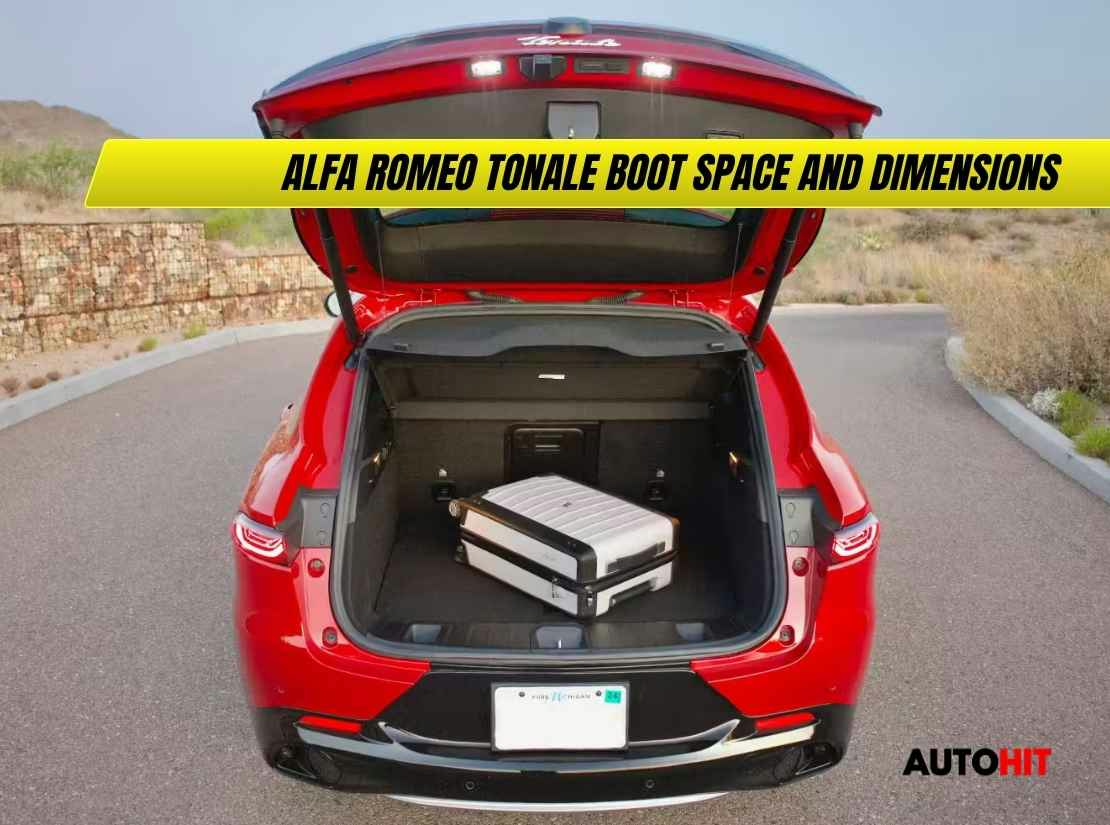
Alfa Romeo Tonale boot space and dimensions 2025: Comprehensive analysis of luggage capacity, loading practicality, and family suitability for UK buyers.
The Alfa Romeo Tonale represents the Italian brand’s crucial entry into the compact SUV segment, blending distinctive Alfa Romeo design flair with the practicality that British families demand. However, beneath the emotional appeal and striking styling lies a fundamental question for UK buyers: does the Tonale deliver sufficient boot space and practical dimensions to justify choosing passion over pure pragmatism?
Having spent extensive time with the Tonale across varied UK scenarios – from Tesco car parks in Surrey to family holidays in the Lake District – we’ve thoroughly tested how Alfa Romeo’s interpretation of compact SUV practicality translates to real-world British family life. The results reveal a vehicle that prioritises style and driving engagement over maximum utility, though the compromises may be less significant than traditional Alfa Romeo stereotypes suggest.
Our comprehensive analysis examines every aspect of the Tonale’s dimensional practicality, from daily shopping trips to extended family holidays, helping UK buyers understand whether Italian flair can successfully accommodate British family requirements without excessive compromise.
Alfa Romeo Tonale: Key Dimensions Overview
Exterior Dimensions Breakdown
The Tonale’s exterior dimensions position it firmly in the competitive compact SUV segment, measuring 4,528mm in length, 1,835mm in width, and 1,601mm in height. These figures place it between smaller crossovers like the Nissan Juke and larger family SUVs, targeting buyers who want SUV presence without unwieldy proportions for UK roads.
The wheelbase stretches to 2,636mm, providing a foundation for reasonable interior space whilst maintaining manageable overall length for urban parking scenarios. The ground clearance of 200mm offers adequate rough-road capability without creating excessive step-in height that challenges elderly passengers or those with mobility considerations.
What strikes us about the Tonale’s proportions is how Alfa Romeo has prioritised visual drama over maximum space efficiency. The sloping roofline and distinctive rear pillar design create emotional appeal but inevitably compromise rear headroom and cargo capacity compared to more utilitarian competitors.
Interior Space Analysis
Front Passenger Space: The Tonale provides generous front-seat accommodation with excellent visibility and intuitive ergonomics. The driving position feels appropriately elevated without being truck-like, whilst seat adjustment range accommodates drivers from 5’4″ to 6’3″ comfortably. Storage solutions throughout the cabin prove adequate though not exceptional.
Rear Passenger Accommodation: Rear-seat space reflects the Tonale’s dimensional compromises, with headroom adequate for adults up to 6’0″ but tight for taller passengers. Legroom proves reasonable for typical family use, though three adults across the rear bench creates cosy conditions. The rear doors open wide enough for easy child seat access.
Overall Interior Practicality: The Tonale’s interior prioritises design sophistication over maximum utility, creating an environment that feels premium but sometimes sacrifices storage convenience for aesthetic appeal.
Boot Space: The Detailed Analysis
Raw Capacity Figures
The Alfa Romeo Tonale offers 500 litres of boot space with rear seats in place, expanding to 1,550 litres when rear seats fold down. These figures position it competitively within the compact SUV segment, though falling short of the most spacious alternatives like the Škoda Karoq or Peugeot 3008.
However, our real-world testing reveals that usable space differs from raw capacity due to the boot’s shape and loading characteristics. The sloping rear window creates a boot that narrows towards the top, affecting how efficiently space can be utilised when loading tall items or maximising capacity.
Loading Characteristics and Practicality
Loading Height and Accessibility: The boot sill sits at 755mm from ground level – comfortable for most users without requiring excessive lifting for heavy items. The wide opening (1,050mm) facilitates loading large items, though the narrowing towards the rear window can create challenges when arranging tall objects.
Boot Floor and Configuration: The boot floor sits relatively high to accommodate the hybrid system’s battery placement in PHEV variants, though this creates useful under-floor storage in petrol-only models. The floor remains reasonably flat when rear seats fold, enabling longer items to be carried with minimal step between cargo area and seat bases.
Loading Lip and Access: The loading lip height of 730mm proves manageable for daily use, though some compact SUV rivals offer more convenient access. Heavy items require moderate lifting effort, though the wide aperture compensates by facilitating two-person loading when necessary.
Real-World Loading Tests
Weekly Shopping Scenario: Our standard weekly shopping test (equivalent to family of four Tesco weekly shop) fits comfortably within the Tonale’s boot space with room remaining for impulse purchases. The boot shape accommodates multiple bags efficiently, though careful arrangement maximises available space.
Holiday Luggage Test: Four medium suitcases plus hand luggage fit within the boot space, though requiring careful Tetris-like arrangement to optimise space utilisation. The sloping rear window creates challenges when loading the final items, requiring strategic packing to achieve maximum capacity.
Family Equipment Transport: Sports equipment, pushchairs, and school bags fit adequately for typical family requirements, though larger items like bicycles or camping equipment require rear seat folding to accommodate properly.
Dimensional Comparison with Key Rivals
Compact SUV Segment Analysis
| Model | Length | Width | Height | Wheelbase | Boot Space | Ground Clearance |
|---|---|---|---|---|---|---|
| Alfa Romeo Tonale | 4,528mm | 1,835mm | 1,601mm | 2,636mm | 500 litres | 200mm |
| BMW X1 | 4,500mm | 1,845mm | 1,642mm | 2,670mm | 540 litres | 204mm |
| Audi Q3 | 4,484mm | 1,856mm | 1,585mm | 2,680mm | 530 litres | 200mm |
| Mercedes GLA | 4,410mm | 1,834mm | 1,611mm | 2,729mm | 435 litres | 207mm |
| Volvo XC40 | 4,425mm | 1,863mm | 1,652mm | 2,702mm | 460 litres | 211mm |
| Peugeot 3008 | 4,447mm | 1,841mm | 1,624mm | 2,675mm | 520 litres | 230mm |
Space Efficiency Analysis
The comparison reveals the Tonale’s positioning within segment norms, offering competitive but not class-leading space utilisation. The boot capacity falls into the middle range of compact SUV offerings, whilst exterior dimensions suggest reasonable space efficiency despite design priorities.
Best in Class: BMW X1 leads for pure boot capacity whilst maintaining competitive exterior dimensions Design Compromise: Alfa Romeo Tonale sacrifices some practicality for distinctive styling Balanced Approach: Audi Q3 and Peugeot 3008 offer similar space with different philosophical approaches
Hybrid System Impact on Space
Plug-in Hybrid Configuration
The Tonale Plug-in Hybrid variant experiences minimal boot space compromise, maintaining the full 500-litre capacity despite accommodating a 15.5kWh battery pack. Alfa Romeo’s engineers successfully integrated the hybrid system without significantly impacting cargo capacity, though under-floor storage differs between powertrain variants.
Charging Cable Storage: The PHEV model includes dedicated charging cable storage that slightly reduces accessible under-floor space but maintains headline boot capacity. The charging cable compartment proves well-designed, preventing cables from interfering with regular cargo loading.
Weight Distribution: The battery placement affects loading characteristics slightly, with the higher boot floor requiring marginally more lifting effort for heavy items. However, the difference proves minimal in real-world use.
Mild Hybrid Impact
The mild hybrid variants maintain identical boot space to conventional petrol models, with the 48-volt system integration having no impact on cargo capacity or loading characteristics. This configuration offers the optimal balance of efficiency improvement without practical compromise.
Practical Family Scenarios
School Run and Daily Use
The Tonale’s dimensions suit typical UK family requirements well, with sufficient space for school bags, sports equipment, and daily shopping. The boot accommodates pushchairs for younger families, though larger three-wheel models require careful positioning to fit within available space.
Child Seat Compatibility: The rear doors open wide enough for comfortable child seat access, whilst the boot space accommodates the additional equipment that accompanies family outings. However, families with multiple children may find space constraints challenging for extended trips.
Urban Manoeuvrability: The Tonale’s compact dimensions facilitate urban parking and navigation through tight spaces common in British city centres. The width remains manageable for supermarket car parks, whilst the length suits most residential driveways.
Holiday and Extended Trip Capability
Weekend Breaks: The Tonale accommodates weekend luggage for a family of four comfortably, with sufficient space for clothing, toiletries, and leisure equipment. The boot shape requires strategic packing but doesn’t significantly limit practical utility.
Extended Holidays: Week-long holidays require more careful planning, with larger suitcases necessitating rear seat folding to accommodate everything families typically pack for British holiday destinations. The 1,550-litre capacity with seats down provides adequate space for most scenarios.
Equipment Transport: Sports equipment, musical instruments, and hobby gear fit within the boot space for typical family activities, though larger items like bicycles or camping equipment require seat folding to accommodate properly.
Loading and Access Practicality
Boot Design Strengths
Wide Aperture: The 1,050mm boot opening facilitates loading large items that might challenge narrower alternatives. Furniture, appliances, and bulky shopping items benefit from the generous access width.
Power Tailgate: Available power tailgate operation (standard on higher trims) proves genuinely useful when approaching with arms full of shopping, whilst the programmable height setting accommodates garage restrictions.
Interior Lighting: Comprehensive boot lighting illuminates the entire cargo area effectively, making evening or underground car park loading easier than many competitors.
Practical Limitations
Sloping Roofline: The distinctive rear design creates a boot that narrows towards the top, limiting efficient space utilisation when loading tall items or maximising capacity.
Loading Lip: The 730mm loading lip requires moderate lifting effort for heavy items, though this remains manageable for most users without creating significant practical limitations.
Floor Height: The relatively high boot floor (particularly in hybrid variants) requires more lifting effort than some alternatives, though the wide aperture enables two-person loading when necessary.
Storage Solutions and Organisation
Boot Storage Features
Under-Floor Compartments: The space beneath the boot floor accommodates smaller items, tools, or emergency equipment, though capacity varies between powertrain variants. The compartments feature secure covers that prevent items from rattling during driving.
Tie-Down Points: Multiple tie-down points enable securing loose items during transport, proving particularly useful for preventing shopping from sliding around during cornering or braking.
12-Volt Outlet: The boot-mounted 12-volt socket enables powering cool boxes, tyre inflators, or other accessories during extended trips or outdoor activities.
Interior Storage Analysis
Front Compartment Storage: The centre console provides reasonable storage for daily items, whilst door pockets accommodate large bottles and personal items. The glovebox offers adequate space for documents and smaller objects.
Rear Passenger Storage: Rear door storage proves adequate for children’s items, whilst seat-back pockets provide additional organisation options for family journeys.
Practical Touches: Cup holders throughout the cabin accommodate various sizes, whilst device charging points enable keeping phones and tablets powered during longer journeys.
Comparison with Segment Leaders
Against Premium German Rivals
BMW X1: Offers superior boot space (540 litres) and marginally better rear passenger accommodation, though the Tonale counters with more distinctive styling and potentially lower pricing.
Audi Q3: Provides similar boot capacity (530 litres) with typically Audi build quality, though the Tonale offers more emotional appeal for buyers prioritising character over clinical efficiency.
Mercedes GLA: The GLA’s 435-litre boot space falls below the Tonale’s offering, whilst exterior dimensions remain similar, suggesting Alfa Romeo achieved reasonable space efficiency despite design priorities.
Against Volume Brand Alternatives
Peugeot 3008: Offers competitive boot space (520 litres) with sophisticated interior design, though the Tonale provides more engaging driving dynamics and distinctive brand character.
Nissan Qashqai: The Qashqai’s practical focus delivers superior space utilisation, though the Tonale appeals to buyers prioritising style and driving engagement over maximum utility.
Škoda Karoq: Leads the segment for practical space efficiency, though the Tonale attracts buyers seeking emotional connection alongside reasonable practicality.
Cost Implications of Dimensional Choices
Insurance and Running Costs
The Tonale’s compact dimensions contribute to reasonable insurance groups (typically 15-25 depending on variant), whilst the moderate weight and efficient powertrains maintain competitive running costs despite premium brand positioning.
Fuel Economy Impact: The compact dimensions and aerodynamic efficiency contribute to competitive fuel consumption figures, particularly in hybrid variants where the dimensional package optimises efficiency benefits.
Maintenance Accessibility: The engine bay layout provides reasonable access for routine maintenance, whilst the compact dimensions facilitate manoeuvring in service bays and tight parking situations.
Practicality vs Premium Balance
Value Proposition: The Tonale’s dimensional package represents compromise between premium appeal and practical utility, offering reasonable family capability whilst maintaining distinctive Italian character.
Ownership Experience: The compact dimensions enhance daily usability whilst the boot space proves adequate for most family requirements, though buyers seeking maximum practicality might prefer more utilitarian alternatives.
Regional UK Considerations
Urban vs Rural Suitability
City Centre Performance: The Tonale’s compact dimensions excel in urban environments, navigating narrow streets and fitting into tight parking spaces that challenge larger SUVs.
Country Road Capability: The 200mm ground clearance provides adequate rough-road capability for typical UK country lanes, whilst the dimensions remain manageable on narrow rural roads.
Motorway Comfort: The wheelbase provides stable motorway manners whilst the boot space accommodates luggage for longer journeys to Scotland or European destinations.
Climate and Seasonal Considerations
Winter Equipment: The boot space accommodates winter driving equipment (snow chains, emergency kit, warm clothing) without significantly impacting luggage capacity for seasonal trips.
Summer Activities: Beach equipment, sports gear, and outdoor equipment fit within available space for typical British summer activities, though larger camping equipment requires seat folding.
All-Weather Practicality: The covered loading area protects cargo during Britain’s frequent rain showers, whilst the power tailgate enables one-handed operation when carrying umbrellas or dealing with adverse weather.
Frequently Asked Questions
How does the Tonale’s boot space compare to key rivals like the BMW X1 and Audi Q3?
The Tonale’s 500-litre boot capacity sits competitively within the compact SUV segment, though it trails the BMW X1’s class-leading 540 litres and the Audi Q3’s 530 litres. However, the differences are relatively modest in real-world terms – typically equivalent to one additional small suitcase. The Tonale’s boot shape differs from German rivals due to its distinctive styling, with a sloping rear window creating a space that narrows towards the top. This affects loading efficiency for tall items but doesn’t significantly compromise typical family use scenarios.
Does the hybrid system significantly reduce boot space in the Tonale?
The Tonale Plug-in Hybrid maintains the full 500-litre boot capacity despite incorporating a 15.5kWh battery pack, demonstrating effective engineering integration. The main difference lies in under-floor storage arrangements, with the PHEV featuring dedicated charging cable storage that slightly reduces accessible under-floor space. The mild hybrid variants show no impact on cargo capacity whatsoever. The hybrid battery placement does create a marginally higher boot floor, requiring slightly more lifting effort for heavy items, but this proves minimal in practical use.
Is the Tonale suitable for families with young children and pushchairs?
The Tonale accommodates most standard pushchairs comfortably, though larger three-wheel models require careful positioning within the available space. The wide boot opening (1,050mm) facilitates loading pushchairs and child equipment, whilst the rear doors provide adequate access for child seat installation and daily use. However, families with multiple young children might find the boot space restrictive for extended trips requiring substantial equipment. The 755mm loading height proves manageable for lifting pushchairs and changing bags without excessive strain.
How practical is the Tonale for UK holiday travel?
For weekend breaks, the Tonale provides sufficient space for a family of four with room for clothing, toiletries, and leisure equipment. Extended week-long holidays require more strategic packing, with larger suitcases potentially necessitating rear seat folding to accommodate everything British families typically pack. The 1,550-litre capacity with seats down handles most holiday scenarios adequately. The boot shape requires Tetris-like arrangement skills to maximise space efficiency, but this doesn’t significantly limit practical utility for typical UK holiday destinations.
What are the loading height and accessibility like for elderly passengers or those with mobility issues?
The Tonale’s 755mm boot sill height and 730mm loading lip require moderate lifting effort that may challenge some elderly users or those with mobility limitations. However, the wide 1,050mm opening enables two-person loading when necessary, whilst the available power tailgate reduces physical effort for opening and closing. The rear door openings provide reasonable access for passengers with mobility considerations, though the elevated SUV seating position requires more climbing effort than traditional cars. Consider test driving with any family members who might face accessibility challenges.
How does the sloping roofline affect practical loading?
The Tonale’s distinctive sloping rear window creates a boot that narrows towards the top, affecting loading efficiency when maximising capacity or accommodating tall items. This design compromise means careful arrangement is needed to optimise space utilisation, particularly when loading the final items during holiday packing. However, the impact on typical family use – weekly shopping, school equipment, sports bags – proves minimal since these items rarely approach the roof height where narrowing becomes problematic. The aesthetic appeal of the distinctive roofline represents a trade-off that most buyers accept for the visual differentiation it provides.
What specific storage solutions does the Tonale offer beyond raw boot space?
The Tonale includes several practical storage features that enhance usability beyond headline capacity figures. Under-floor compartments accommodate smaller items, emergency equipment, or tools, whilst multiple tie-down points enable securing loose objects during transport. The boot-mounted 12-volt outlet powers accessories like cool boxes or tyre inflators. Interior storage includes centre console compartments, door pockets sized for large bottles, seat-back pockets for rear passengers, and strategically placed cup holders throughout the cabin. The power tailgate (on higher trims) includes programmable height settings for garage compatibility, whilst comprehensive LED lighting illuminates the entire cargo area effectively.
Our Verdict
The Alfa Romeo Tonale’s dimensional package represents a thoughtful compromise between Italian design flair and practical family requirements, though buyers must understand the trade-offs inherent in choosing style over pure utility.
For boot space specifically, the 500-litre capacity proves adequate for typical UK family use whilst remaining competitive within the compact SUV segment. The space accommodates weekly shopping, school equipment, and weekend luggage comfortably, though extended holidays require strategic packing skills. The loading characteristics – wide aperture, reasonable height, power tailgate availability – enhance practical usability despite the sloping roofline creating some loading challenges.
The dimensional package overall suits UK roads and parking scenarios well, with compact exterior proportions facilitating urban manoeuvring whilst providing sufficient interior space for family use. The ground clearance offers adequate capability for typical British driving scenarios without creating excessive step-in height.
Against key rivals, the Tonale trades some outright practicality for distinctive character and engaging driving dynamics. Buyers prioritising maximum space efficiency should consider alternatives like the BMW X1 or Škoda Karoq, whilst those seeking emotional connection alongside reasonable practicality will find the Tonale’s compromise acceptable.
Our recommendation: The Tonale suits buyers who want compact SUV practicality without sacrificing Italian character, particularly those whose space requirements fall within typical family parameters rather than maximum utility scenarios. The dimensional package proves adequate for most UK family requirements whilst offering distinctive appeal that justifies choosing passion alongside pragmatism.
For families seeking maximum practicality, alternatives offer superior space efficiency. However, for buyers wanting reasonable family capability with distinctive Italian flair, the Tonale delivers sufficient practicality to justify the emotional appeal that traditional Alfa Romeo buyers value.
The key lies in matching expectations to requirements – the Tonale provides adequate space for typical family use whilst offering the character and driving engagement that differentiate it from more utilitarian competitors. For buyers seeking this balance, the dimensional compromise proves acceptable for the unique appeal that Alfa Romeo delivers.
For additional context on family SUV alternatives, explore our comprehensive guides to the best SUVs under £40k and compact family vehicles that prioritise different balances between style and practicality.





