
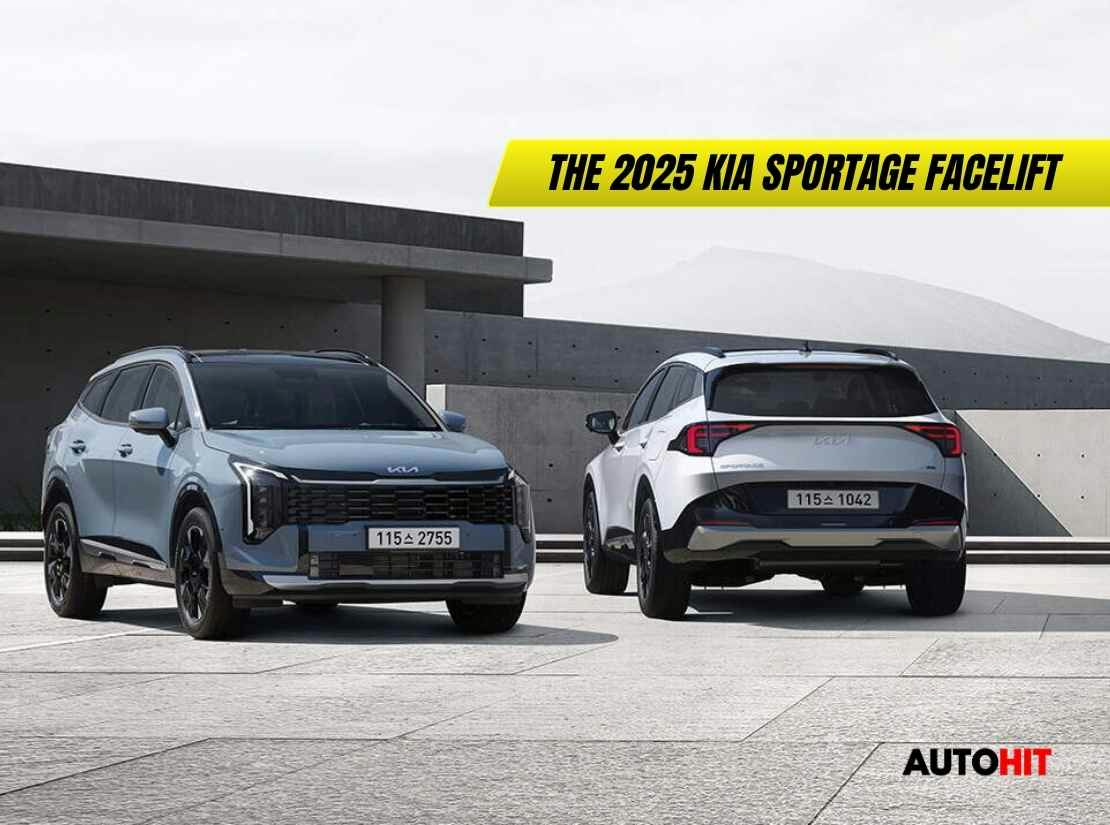
After dominating UK driveways as 2024’s second best-selling car, the Kia Sportage is preparing for a significant mid-life makeover that promises to keep it competitive in the increasingly fierce family SUV battleground. Set to arrive in British showrooms this summer, the facelifted Sportage brings dramatic styling changes, enhanced technology, and a more powerful hybrid powertrain to bear against rivals like the Nissan Qashqai, Hyundai Tucson, and Volkswagen Tiguan.
According to our analysis at AutoHit, this isn’t merely a gentle refresh. Kia has given the Sportage comprehensive exterior changes that bring it into line with the brand’s latest design language, as seen on the electric EV3, EV6, and EV9. Having tested the current Sportage extensively, we’re genuinely curious whether these updates can address some of the model’s minor shortcomings whilst maintaining the winning formula that’s made it such a sales success.
The updated Sportage will launch with a choice of petrol and hybrid powertrains, ditching the plug-in hybrid option temporarily while Kia recalibrates the lineup. With pricing expected to remain close to the current model’s £30,170 starting point, it’s positioning itself as an accessible family SUV that doesn’t compromise on style or technology.
Key Highlights: What Makes the 2025 Sportage Different
• Bold new design language: Adopts Kia’s latest “Star Map” lighting signature with column-like headlights and a blockier, more imposing front grille • Enhanced hybrid performance: Full hybrid system now produces 236bhp (up from 212bhp), offering improved power without sacrificing efficiency • Advanced technology suite: New 12.3-inch curved infotainment screen with updated ccNC operating system and improved voice recognition • Refined interior experience: Simplified dashboard design, new two-spoke steering wheel, and enhanced sound deadening for the “most refined Sportage ever” • Improved dimensions: Slightly longer at 4540mm (vs 4515mm previously) whilst maintaining the same width, height, and wheelbase • Competitive pricing strategy: Expected to start around £30,000-£31,000, maintaining its position as an accessible premium family SUV
Design Evolution: From Bold to Bolder
The aesthetic transformation represents the most comprehensive visual update the Sportage has received since its current generation launched in 2021. Kia has managed a clever trick here – simplifying the front end whilst simultaneously adding more drama and presence.
The most striking change comes via the new “Star Map” daytime running light arrangement, borrowed from the flagship EV9 and already seen on the EV3, Sorento, and even the humble Picanto. These distinctive LED strips, housed within new vertical headlight clusters, give the Sportage a more upright, purposeful stance that should appeal to families wanting something with genuine SUV character.
From our perspective, the new front grille is both wider and deeper than before, lending the Sportage additional 4×4 credibility whilst maintaining the sophisticated tiger-nose design language that’s become synonymous with modern Kias. The integration of fog lights into the lower central air intake, rather than separate side inlets, creates a cleaner, more cohesive appearance.
Side-on, the changes are more subtle but equally effective. New alloy wheel designs in 17-, 18-, and 19-inch sizes feature geometric patterns that echo the latest Kia EVs, whilst the side skirts receive minor updates. At the rear, fresh tail light clusters incorporate the Star Map signature, complemented by a redesigned bumper that adds visual width and substance.
Interior Revolution: Technology Meets Refinement
Perhaps the most significant improvements come inside, where Kia has addressed some of the current model’s more contentious design decisions. Gone are the vertically oriented air vents that flanked the dual-screen setup, replaced by a cleaner, more rectangular arrangement that immediately feels more premium.
The centrepiece remains the twin 12.3-inch curved displays – one for instrumentation, another for infotainment – but they now run Kia’s updated ccNC (Connected Car Navigation Cockpit) operating system. This promises improved responsiveness, over-the-air updates, and better integration with smartphone platforms including wireless Android Auto and Apple CarPlay.
We’re particularly pleased to see the introduction of a new two-spoke steering wheel, borrowed from Kia’s electric models, which should provide a more luxurious feel whilst maintaining ergonomic excellence. The addition of an LED mood light spanning the dashboard width adds ambient sophistication without feeling gimmicky.
One area where opinions may remain divided is the retention of the climate control touch panel beneath the main screen. Whilst Kia claims it’s now easier to use, we’ve found similar systems in other models can be distracting during driving. The good news is that it doubles as a shortcut bar for navigation and media functions, potentially improving overall usability.
Powertrain Updates: More Power, Same Efficiency
Under the bonnet, Kia has made thoughtful revisions to the Sportage’s powertrain lineup. The entry-level mild-hybrid setup receives a welcome power boost from 157bhp to 178bhp, whilst retaining the choice between a six-speed manual (front-wheel drive) and seven-speed dual-clutch automatic transmission.
More significantly, the full hybrid system – which we’ve previously identified as the sweet spot of the range – now produces 236bhp combined output, up from the current 212bhp. This uses the same turbocharged 1.6-litre petrol engine paired with electric motor assistance, but benefits from enhanced calibration and an upgraded eight-speed automatic transmission replacing the current seven-speed dual-clutch unit.
From our testing experience with similar Korean hybrid systems, this power increase should provide more confidence when overtaking on A-roads whilst maintaining the excellent fuel economy that makes the hybrid Sportage so appealing for company car drivers. The retention of all-wheel drive on higher trim levels ensures the Sportage remains genuinely capable off the beaten track.
The temporary absence of the plug-in hybrid variant is disappointing but understandable given market dynamics. Kia suggests it will return, likely with improved electric range to compete more effectively with rivals like the forthcoming Volkswagen Tiguan eHybrid.
Technology and Connectivity: Finally Competitive
The technology upgrades represent a significant step forward for the Sportage. The new ccNC infotainment system promises to address some of our frustrations with the current setup, particularly around responsiveness and menu structure. Over-the-air updates mean the system should improve continuously rather than becoming obsolete.
Feature-on-Demand functionality allows owners to add arcade games, video streaming services, and new themes – though we question how much families actually want to play games in their SUV. More practically, the improved voice recognition system and wireless smartphone connectivity should make daily use more seamless.
Safety technology receives comprehensive updates, with a head-up display joining the options list for the first time. Advanced driver assistance features now include improved lane-keeping assistance, adaptive cruise control with stop-and-go functionality, and enhanced automatic emergency braking with pedestrian and cyclist detection.
Market Position and Competition Analysis
The facelifted Sportage enters a marketplace that’s become increasingly competitive since the current model launched. Chinese manufacturers like BYD and MG are offering compelling alternatives at aggressive price points, whilst traditional European rivals continue to raise their games.
Against its closest competitors, the updated Sportage needs to justify its positioning carefully. The Hyundai Tucson offers similar mechanical credentials with slightly different styling priorities, whilst the Nissan Qashqai brings proven reliability and strong resale values. The Volkswagen Tiguan counters with premium brand cachet and typically Germanic build quality.
| Model | Starting Price | Power | Fuel Economy | Our Assessment |
|---|---|---|---|---|
| 2025 Kia Sportage | ~£30,170 | 148-236bhp | 38-44mpg* | Strong value with bold new styling |
| Hyundai Tucson | £31,895 | 150-230bhp | 37-42mpg | Mechanical twin with different priorities |
| Nissan Qashqai | £31,040 | 140-190bhp | 40-50mpg | Proven reliability, conservative styling |
| VW Tiguan | £34,995 | 150-245bhp | 35-45mpg | Premium feel but expensive |
| Ford Kuga | £29,995 | 150-225bhp | 36-42mpg | Value leader but aging platform |
*Estimated figures for facelifted model
UK Market Context: Perfect Timing
The Sportage’s summer 2025 arrival timing is astute. With the current model finishing 2024 as Britain’s second best-selling car, Kia has momentum to maintain whilst addressing areas where rivals have closed the gap.
For UK families, the Sportage offers a compelling proposition. The spacious interior easily accommodates child seats and sports equipment, whilst the generous boot space (587 litres in hybrid form, expandable to 1776 litres) handles the weekly Tesco shop with room to spare. The driving position suits our increasingly congested roads, providing excellent visibility whilst remaining manageable in tight car parks.
Company car drivers will appreciate the hybrid’s low BiK rating and impressive real-world fuel economy. At current fuel prices, the hybrid Sportage should cost around 8-10p per mile to run, significantly undercutting petrol equivalents whilst qualifying for various urban congestion charge exemptions.
Real-World Considerations for British Buyers
Urban Driving Excellence
For daily school runs and commuting, the updated Sportage should excel. The hybrid system’s electric-only capability at low speeds makes for silent operation in residential areas, whilst the improved sound deadening should enhance refinement on longer journeys. The relatively compact dimensions make it suitable for supermarket car parks and tight city streets.
Motorway Comfort
This is where the current Sportage impresses, and the facelifted version promises to build on these strengths. The enhanced hybrid powertrain should provide adequate overtaking performance, whilst the improved aerodynamics and additional sound deadening should reduce wind and road noise. For families planning holidays in Scotland or trips to Cornwall, the Sportage offers genuine long-distance comfort.
Running Costs and Practicality
The hybrid Sportage’s running costs remain compelling. Road tax is currently £10 annually for hybrid models under £40,000, whilst insurance groups (typically 15-18) represent reasonable premiums for family buyers. Kia’s seven-year warranty provides exceptional peace of mind, significantly exceeding most rivals’ coverage.
Service intervals remain at 12 months or 10,000 miles, with main dealer servicing costs typically competitive within the premium family SUV segment.
The Bigger Picture: Kia’s Strategic Evolution
The Sportage facelift represents more than aesthetic updates – it’s part of Kia’s broader transformation from value brand to premium mainstream player. The Korean manufacturer has successfully repositioned itself as a technology-forward, design-led brand that happens to offer excellent value rather than a budget alternative to German rivals.
This evolution is crucial as the automotive landscape shifts towards electrification. Whilst this generation Sportage will continue with conventional and hybrid powertrains, Kia is simultaneously developing dedicated electric platforms that will eventually replace cars like this entirely.
In this context, the facelift serves multiple purposes: maintaining sales momentum whilst Kia develops its electric future, demonstrating the brand’s commitment to continuous improvement, and reinforcing the design language that will carry forward to fully electric successors.
Frequently Asked Questions
When will the 2025 Kia Sportage facelift be available to order in the UK? The updated Sportage is expected to arrive in UK showrooms during summer 2025, with order books likely opening slightly earlier. We’d anticipate customer deliveries beginning around July or August 2025. Given the current model’s popularity, it’s worth registering interest with local dealers to secure early allocation, particularly for popular trim levels like the GT-Line.
How much will the facelifted Sportage cost compared to the current model? Kia hasn’t confirmed pricing, but we expect a modest increase over the current model’s £30,170 starting point – possibly rising to around £30,500-£31,000. The range-topping GT-Line S currently costs £45,885, and this could rise to around £46,500-£47,000. Despite the increases, the Sportage should remain competitively priced against rivals like the Nissan Qashqai and Hyundai Tucson.
Will the plug-in hybrid version return, and when? Kia has confirmed the plug-in hybrid will return but hasn’t specified timing. We expect it to rejoin the lineup within 12-18 months of the facelift launch, likely with improved electric range to compete more effectively with rivals. The current PHEV offers around 35 miles of electric range, but future versions may approach 50+ miles to meet evolving customer expectations.
How much more powerful is the new hybrid system? The updated full hybrid system produces 236bhp combined output, representing a useful 24bhp increase over the current 212bhp setup. More importantly, the switch to an eight-speed automatic transmission (from the current seven-speed dual-clutch) should provide smoother power delivery and improved refinement. Real-world performance should feel noticeably more confident, particularly when overtaking.
What’s different about the new infotainment system? The updated ccNC (Connected Car Navigation Cockpit) system promises significant improvements in responsiveness and functionality. Key upgrades include over-the-air updates, wireless Android Auto and Apple CarPlay, improved voice recognition, and Feature-on-Demand capabilities. The basic hardware – twin 12.3-inch curved screens – carries over, but the software experience should feel much more modern and intuitive.
Is the new Sportage still reliable, and what warranty does it come with? Kia continues to offer its industry-leading seven-year, 100,000-mile warranty, providing exceptional peace of mind. The brand has built a strong reputation for reliability, finishing 11th out of 31 manufacturers in recent customer satisfaction surveys. The hybrid drivetrain uses proven technology shared with the Hyundai Tucson, which has demonstrated excellent long-term reliability.
How does boot space compare to the current model? Boot capacity remains generous at 587 litres for hybrid models (562 litres for petrol variants) with the rear seats in place. With seats folded, this expands to 1776 litres (1751 litres for petrol). These figures are competitive within the family SUV segment, offering more space than a Nissan Qashqai (479/1598 litres) but slightly less than a Škoda Karoq (588/1605 litres). For most families, the Sportage provides ample luggage capacity.
Our Verdict: Evolution, Not Revolution – And That’s Perfectly Fine
The 2025 Kia Sportage facelift represents exactly the kind of thoughtful mid-life update that successful models require. Rather than dramatic reinvention, Kia has addressed specific areas where the current car could improve whilst preserving the winning formula that’s made it Britain’s second best-selling car.
The styling updates successfully bring the Sportage into line with Kia’s latest design language without alienating existing customers. The interior improvements address genuine usability concerns, whilst the powertrain upgrades provide meaningful performance benefits. Most importantly, the updates appear to maintain the Sportage’s exceptional value proposition in an increasingly competitive marketplace.
Our main reservation centres on the temporary absence of the plug-in hybrid, which limits options for buyers seeking maximum efficiency and company car tax benefits. However, for the vast majority of family buyers, the improved full hybrid system should provide an excellent balance of performance, economy, and practicality.
From a UK perspective, the facelifted Sportage should continue the current model’s success story. It addresses real family needs with a combination of space, technology, and value that few rivals can match. The bold new styling may not appeal to everyone, but it certainly won’t be ignored in the school car park.
We’ll reserve final judgement until we can test the production car on British roads, but the early signs suggest Kia has evolved a winning formula without compromising what made it successful in the first place. For families seeking a practical, well-equipped SUV that doesn’t break the bank, the 2025 Sportage should remain firmly on the shortlist.





