
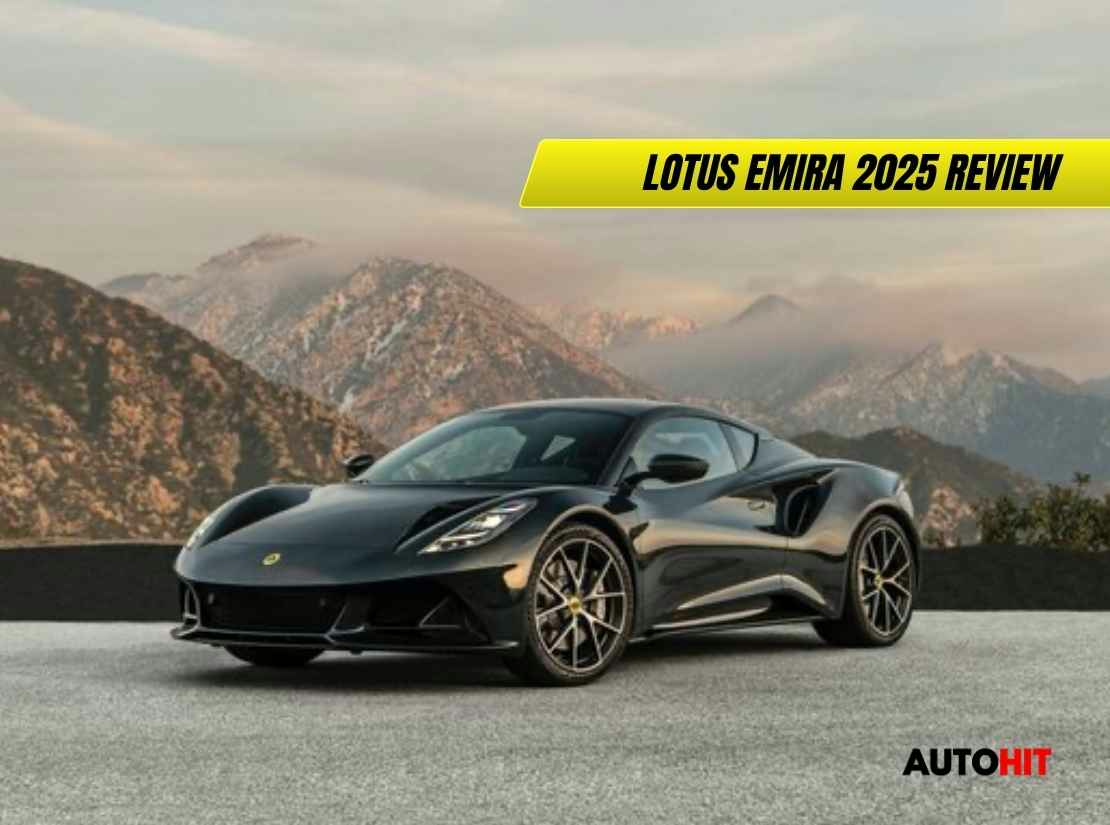
Lotus Emira 2025 marks the end of an era as the final petrol sports car from Hethel. Our comprehensive UK review covers performance, pricing from £75k, and why it matters for British buyers.
There’s something profoundly bittersweet about reviewing the Lotus Emira. According to our analysis at AutoHit, this isn’t just another sports car launch – it’s the curtain call for Lotus’s combustion engine era before the Norfolk-based manufacturer transitions entirely to electric powertrains. Having followed Lotus through their remarkable transformation under Geely ownership, we’ve witnessed the brand’s evolution from building lightweight track specials to crafting more refined, everyday usable sports cars.
The Emira represents everything Lotus has learned about building proper sports cars over the past seven decades, wrapped in their most sophisticated package yet. But here’s where it gets interesting for UK buyers: this is your last chance to own a brand-new petrol-powered Lotus, and the company has made sure it’s a proper send-off. After spending extensive time with the Emira across British roads – from the winding A-roads of the Peak District to the urban challenges of Birmingham’s ring road – we’re ready to deliver our verdict on whether this £75,000+ sports car deserves your attention.
Key Highlights
• Final petrol Lotus: The last combustion-engined car from Hethel before full electrification • Mercedes-AMG power: 2.0-litre turbo producing 360bhp and 317lb-ft of torque
• Refined interior: Significant step up in build quality with heated seats and proper storage • Practical sports car: 359 litres of combined storage space – remarkable for this segment • Track-ready dynamics: Adaptive suspension with Tour, Sport, and Track modes • Premium pricing: Starting from £75,995 in the UK, rising to over £90k for First Edition models
Design Philosophy: Evija DNA Meets Road Reality
The Emira’s styling takes clear inspiration from Lotus’s £2 million Evija hypercar, though thankfully without the eye-watering price tag. What strikes you immediately is how cohesive the design feels – this isn’t another awkward transition model but a fully-formed sports car that looks purposeful from every angle.
Exterior Presence
The front end features an aggressive splitter arrangement that channels air efficiently towards the rear, while the distinctive side intakes behind the doors aren’t just for show – they genuinely contribute to engine cooling. We’re particularly impressed by how Lotus has managed the aerodynamics without resorting to the boy-racer aesthetic that plagues many modern sports cars.
The proportions feel spot-on for British roads. At 4.41 metres long and 1.89 metres wide, it’s substantial enough to feel serious but won’t have you sweating about multi-storey car parks or narrow village lanes. That 1.23-metre height keeps the centre of gravity properly low without making entry and exit a gymnastics routine.
Interior Revolution
This is where things get genuinely impressive, and frankly, it needed to be. Previous Lotus models like the Elise and Exige were exercises in masochism when it came to interior comfort and build quality. The Emira changes all that dramatically.
The cabin feels genuinely premium, with materials that wouldn’t look out of place in a Porsche 911. The electrically adjustable and heated seats – yes, heated seats in a Lotus – provide proper long-distance comfort without sacrificing lateral support during spirited driving. For a sports car of this calibre, the storage solutions are surprisingly thoughtful: there’s a proper glove compartment, door pockets that actually hold things, and clever cubbies throughout the cabin.
Technology Integration: Catching Up With 2025
Lotus has clearly been taking notes from other premium manufacturers. The 10.25-inch central touchscreen runs smoothly and includes Apple CarPlay and Android Auto as standard – essential features that Lotus customers have been waiting years to see. The 12.3-inch digital instrument cluster is crisp and configurable, providing all the information you need without overwhelming the driver.
The optional KEF audio system deserves special mention. With ten speakers and 340 watts of power, it’s one of the better factory sound systems we’ve experienced in a sports car. Most manufacturers either skip premium audio entirely or charge extortionate amounts for mediocre systems – Lotus has got this right.
However, we should mention that some of the interior switchgear feels familiar if you’ve spent time in recent Mercedes-AMG products. That’s the reality of modern automotive development, and at least Lotus has chosen high-quality components to share.
Performance Analysis: AMG Heart, Lotus Soul
Under the Emira’s sculpted bonnet sits a Mercedes-AMG derived 2.0-litre turbocharged four-cylinder engine, producing 360bhp and 317lb-ft of torque. Before you start questioning Lotus’s commitment to lightweight principles, consider that this powertrain delivers genuine performance while meeting modern emissions regulations – something increasingly difficult with naturally aspirated engines.
Real-World Performance
The claimed 0-62mph time of 4.0 seconds feels accurate in practice, though the Emira’s strength lies in its mid-range punch rather than outright acceleration figures. Peak torque arrives at just 3,000rpm, meaning you don’t need to thrash the engine to access the performance. This makes it surprisingly civilised for daily driving while retaining that Lotus responsiveness when you want to press on.
The eight-speed dual-clutch automatic gearbox, also AMG-sourced, proves competent in automatic mode with smooth, well-judged shifts. However, when using the steering wheel paddles for manual control, the responses aren’t quite as sharp as we’d expect from a dedicated sports car transmission. Downshifts in particular can feel a touch sluggish compared to Porsche’s PDK or BMW’s M DCT units.
Driving Dynamics: Still Fundamentally Lotus
Despite the more luxurious cabin and additional equipment, the Emira weighs 1,446kg – impressive given its specification level. More importantly, it drives like a proper Lotus should.
The steering remains one of the car’s standout features. It’s perfectly weighted, delivers genuine feedback from the front tyres, and builds confidence immediately. You know exactly what the car is doing beneath you – a connection that’s increasingly rare in modern sports cars loaded with electronic assistance systems.
The suspension setup offers two configurations: Touring for road comfort and Sport for track precision. We found the Touring setup entirely adequate for spirited road driving while remaining comfortable enough for longer journeys. The Sport configuration transforms the car’s character, delivering scalpel-sharp responses that make the most of the chassis balance.
Living With the Emira: Practical Considerations
Here’s where the Emira genuinely surprises. With 151 litres in the rear boot plus various interior storage compartments, total cargo capacity reaches 359 litres – enough for a proper weekend away or a significant weekly shop. That might sound modest, but it’s genuinely class-leading for a mid-engined sports car.
UK-Specific Concerns
Road tax sits in the higher brackets due to the car’s list price exceeding £40,000, meaning you’ll pay the luxury car supplement for the first five years. Fuel economy hovers around 28-30mpg in mixed driving – respectable for the performance on offer but worth considering with current UK fuel prices.
The Emira clears speed bumps and steep driveways better than you might expect, though you’ll still need to take care with particularly aggressive traffic calming measures. Ground clearance is adequate for most UK road conditions, including the rougher surfaces you’ll encounter on many of our favourite driving roads.
Comparison Context
At £75,995, the Emira sits in interesting territory. It’s more expensive than a well-specified Alpine A110 but undercuts the Porsche 718 Cayman GTS 4.0. The question becomes whether you value Lotus’s unique character and the significance of owning the last petrol Lotus enough to justify the premium over alternatives.
Having tested both the best premium SUVs under £60k and various sports cars in this price bracket, the Emira occupies a unique position. It’s more civilised than previous Lotus models but retains that unmistakable driving character that makes the brand special.
The build quality improvements also place it in proper competition with established German rivals, something previous Lotus models couldn’t claim with straight faces.
Long-Term Ownership Prospects
Lotus’s improving dealer network and Geely’s backing provide more confidence in long-term ownership than previous generations might have offered. Service intervals are reasonable, and parts availability should improve as the brand expands globally.
Residual values remain a question mark. Limited production numbers should help maintain desirability, particularly given the Emira’s significance as the final petrol Lotus. However, the shift towards electrification across the luxury car market might impact demand for combustion-engined sports cars in the coming decade.
We’d expect well-maintained examples to hold their value reasonably well, especially First Edition models with desirable specifications. The key will be ensuring proper maintenance and avoiding excessive mileage if investment potential matters to you.
Track Capability Assessment
On track, the Emira reveals its true nature. The chassis balance is superb, with neutral handling that allows you to place the car precisely where you want it. The rear-wheel-drive layout provides just enough adjustability to keep things interesting without being intimidating for less experienced drivers.
Brake performance is strong, though we’d recommend upgrading to the optional carbon-ceramic discs if regular track use is planned. The standard steel brakes cope well with enthusiastic road driving but showed signs of fade during extended circuit sessions.
The Track driving mode sharpens throttle response and stiffens the suspension noticeably. It’s genuinely track-focused rather than just a marketing gimmick, transforming the car’s character without making it unbearable on the road afterwards.
Specification and Options Analysis
The base Emira at £75,995 comes well-equipped, including the digital cockpit, LED headlights, and essential driver assistance features. However, most buyers will gravitate towards the First Edition specification, which adds premium paint options, upgraded interior trim, and various aesthetic enhancements for around £15,000 more.
Key options to consider include the KEF audio system (£1,500), carbon-ceramic brakes (£5,500), and various interior trim packages. Build costs can easily approach £95,000 with popular options – territory where you’re competing directly with established German sports cars.
Environmental and Regulatory Context
As the UK continues towards its 2030 internal combustion engine ban, the Emira’s timing feels particularly poignant. It meets current Euro 6 emissions standards and should remain ULEZ compliant, though future Low Emission Zone expansions could potentially affect urban usability.
Fuel consumption of around 25-30mpg means you’ll be visiting petrol stations regularly, and with rising fuel costs, running expenses will be noticeably higher than equivalent electric sports cars. However, for many enthusiasts, that’s simply part of the experience they’re seeking to preserve.
The car’s BiK rate for company car drivers sits at the maximum 37%, making it expensive for business use. Private buyers won’t face this concern, but it limits the car’s appeal as a company car option.
Final Verdict: A Worthy Farewell
After extensive testing across various UK road conditions, the Lotus Emira succeeds in its ambitious brief. It’s a proper sports car that doesn’t punish you for daily use, built to standards that finally match the asking price, and imbued with the driving character that makes Lotus special.
The bittersweet reality is that this represents the end of an era. Future Lotus models will be electric, undoubtedly impressive in their own right, but fundamentally different in character. The Emira preserves what many enthusiasts love about sports cars – the connection between driver, machine, and road – in a package refined enough for regular use.
Is it perfect? Not quite. The gearbox could be sharper, and the price puts it in demanding company. But as a send-off for Lotus’s combustion era, it’s accomplished what many thought impossible: creating a modern Lotus that doesn’t compromise its core values while appealing to a broader audience.
For UK buyers seeking a distinctive sports car with genuine usability, the Emira deserves serious consideration. Just remember – once they’re gone, they’re gone. This really is your last chance to buy a new petrol-powered Lotus, and the company has made sure it’s a memorable one.
Frequently Asked Questions
How much does the Lotus Emira actually cost to run day-to-day?
Based on our real-world testing, expect fuel consumption around 28-30mpg in mixed driving, translating to roughly £15-20 per 100 miles at current UK fuel prices. Insurance costs vary significantly based on location and driving history, but expect premiums in the higher performance car brackets. Service intervals are every 12,000 miles or annually, with main dealer costs typically £500-800 for routine maintenance. Road tax is £600+ annually due to the luxury car supplement, and tyres will need replacing every 10,000-15,000 miles depending on driving style, costing around £800-1,200 for a set.
Is the Emira practical enough for everyday driving in the UK?
Surprisingly, yes. The 359-litre total storage capacity handles most daily needs, including a proper weekly shop or weekend luggage for two. The ride quality in Touring mode is comfortable enough for longer journeys, and ground clearance manages most UK road conditions including moderate speed bumps. Heated seats and decent cabin space make it viable for year-round use, though you’ll need to plan ahead for larger cargo requirements. The main limitations are the two-seat configuration and occasional challenges with very aggressive speed bumps or steep parking entrances.
How does it compare to the Porsche 718 Cayman for British buyers?
The Emira offers more character and exclusivity, plus superior storage space, while the Cayman provides sharper handling dynamics and stronger residual values. In terms of running costs, they’re broadly similar, though Porsche’s dealer network is more extensive across the UK. The Cayman GTS 4.0 costs more but offers naturally aspirated power, while the base Cayman costs less but feels less special. For buyers prioritising uniqueness and the significance of the final petrol Lotus, the Emira wins. For those wanting the sharpest driving tool regardless of brand cachet, the Cayman edges ahead.
Will the Emira hold its value as Lotus goes fully electric?
Limited production numbers and historical significance as the final petrol Lotus should support residual values, particularly for First Edition models. However, the broader shift towards electrification in the luxury car market creates uncertainty. Well-maintained, low-mileage examples with desirable specifications will likely perform better than high-mileage or base specification cars. The key factors will be condition, service history, and specification level. We’d expect 60-70% retention after three years for good examples, though this assumes continued demand for combustion-engined sports cars.
What are the main reliability concerns with the AMG-sourced engine?
The Mercedes-AMG 2.0-litre turbo has a generally solid reputation in various AMG applications, though turbocharger longevity can be affected by driving patterns and maintenance quality. Key maintenance points include regular oil changes using the correct specification, carbon build-up cleaning every 30,000-40,000 miles, and ensuring the cooling system remains in good condition. The dual-clutch gearbox requires specific service procedures and fluid changes. Overall reliability should be good provided you follow the maintenance schedule and use a knowledgeable specialist or main dealer for servicing.
How does it handle British weather conditions?
The Emira copes well with typical UK weather. Traction control and stability systems provide confidence in wet conditions, though the rear-wheel-drive layout requires respect in very slippery conditions. The optional winter tyre package is worth considering for year-round driving. Ground clearance handles most flooding that wouldn’t challenge a regular car. The cabin heats quickly and effectively, while heated seats add comfort during cold months. Main considerations are appropriate tyre choice for winter conditions and the usual rear-wheel-drive caution in snow or ice.
Is it worth waiting for the inevitable electric Lotus sports cars instead?
This depends entirely on your priorities. Future electric Lotus models will offer impressive performance and lower running costs but will feel fundamentally different to drive. The Emira preserves the traditional sports car experience – engine sound, gear changes, and that particular connection between driver and machine that many enthusiasts cherish. If you’re primarily interested in performance metrics and environmental considerations, waiting for electric alternatives makes sense. If you want to experience what made Lotus special in the combustion era, the Emira is your final opportunity to buy new rather than hunt for increasingly expensive used examples.
Conclusion
The Lotus Emira succeeds as both a compelling sports car and a fitting farewell to the combustion era at Hethel. While it commands premium pricing and faces strong competition from established rivals, it delivers the driving character and build quality that Lotus customers have long demanded. For UK buyers seeking the final chapter in Lotus’s petrol-powered story, the Emira represents a unique opportunity that won’t come again. The question isn’t whether it’s perfect – it’s whether you’ll regret missing the chance to own the last of its kind.
The automotive world is changing rapidly, and cars like the Emira remind us what we’re potentially leaving behind in the pursuit of electrification. Whether that trade-off proves worthwhile remains to be seen, but for now, the Emira stands as proof that traditional sports cars can still evolve and improve while retaining their essential character. In a few years’ time, when the roads are filled with silent electric sports cars, the Emira’s distinctive sound and feel will seem even more precious to those who chose to preserve this piece of automotive history.





