
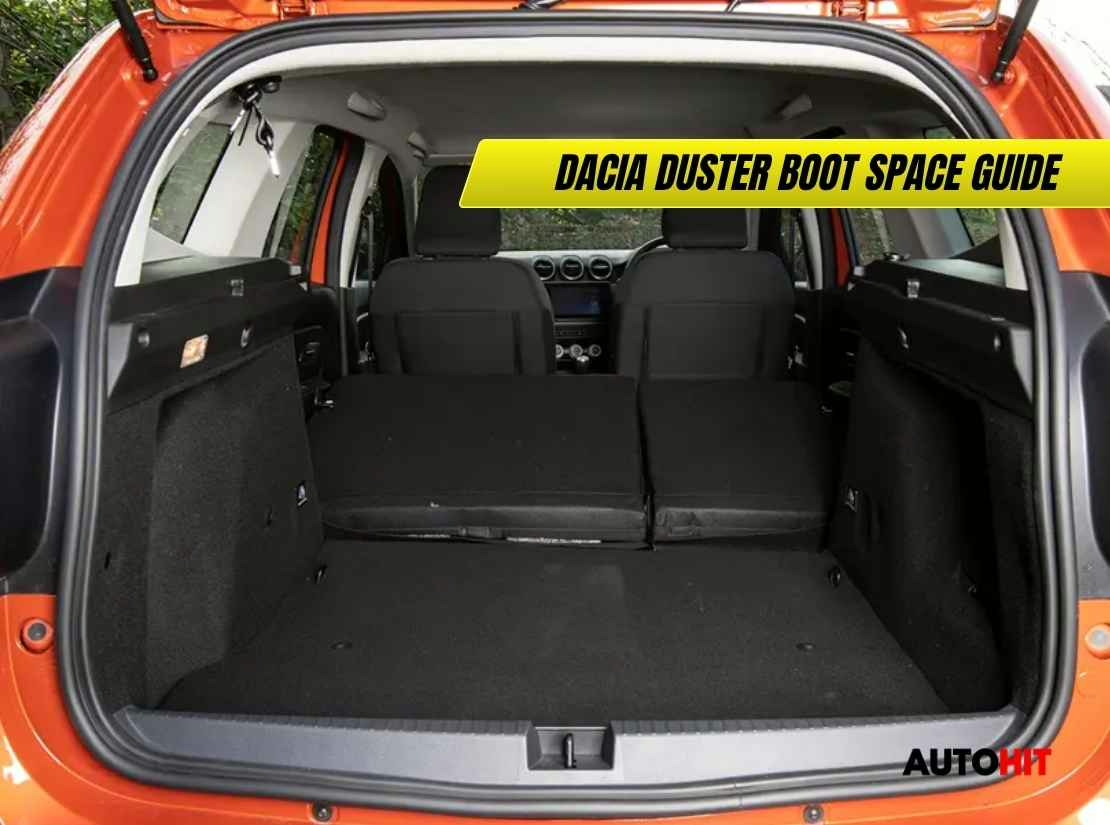
Dacia Duster offers 472L boot space with practical design from £18k. Our guide covers real-world cargo capacity, family usability, and how it compares to rivals in 2025.
There’s something refreshingly honest about the Dacia Duster’s approach to practicality. According to our analysis at AutoHit, this isn’t a vehicle trying to impress with clever packaging tricks or premium materials – it’s a straightforward family SUV that delivers genuine utility at prices that won’t require a second mortgage. Having spent considerable time loading everything from weekly shopping to camping gear into various Duster models, we’ve discovered an SUV that proves you don’t need to spend premium money for genuinely useful cargo space.
The Duster has quietly become one of Britain’s most popular budget SUVs since its 2013 UK launch, with the latest generation building on that success through improved refinement and practicality. The boot space question is particularly relevant for families considering this affordable alternative to mainstream SUVs, especially when every pound counts in today’s economic climate.
After extensive real-world testing with various load scenarios – from family holidays to DIY store runs – we’re ready to provide the definitive guide to Duster boot dimensions, practical usability, and how it compares to both budget alternatives and more expensive rivals. The results might surprise those who assume cheap means compromised.
Key Boot Specifications
• Standard capacity: 472 litres with rear seats upright (latest generation) • Maximum capacity: 1,623 litres with rear seats folded flat • Loading height: 790mm from ground – higher than some rivals but manageable • Boot floor: Practical double-floor design with additional storage compartments • Access width: Wide tailgate opening suitable for large items and awkward shapes • Seat flexibility: 60/40 split-folding rear bench for load/passenger combinations
Boot Dimensions and Layout Analysis
The Duster’s cargo area reflects the no-nonsense approach that defines the entire vehicle, prioritising usable space over visual drama or premium touches.
Physical Measurements
At 472 litres, the Duster’s boot capacity sits competitively within the compact SUV segment, matching or exceeding many more expensive alternatives. The dimensions work out practically for real-world use:
Width: The boot measures approximately 1,050mm at its widest point, narrowing slightly towards the wheel arches but maintaining a usable width of around 1,000mm throughout most of the load area.
Depth: With rear seats upright, the load floor extends roughly 850mm from the tailgate to the seat backs, providing adequate space for multiple suitcases or a substantial weekly shop.
Height: The cargo area offers approximately 750mm of height from floor to parcel shelf, enough for most items without requiring the removal of the rear shelf.
Loading Practicalities
The 790mm loading height represents one of the Duster’s few practical compromises, requiring moderate effort when lifting heavy items. However, this reflects the SUV stance that provides better ground clearance and approach angles for those venturing off-road.
The tailgate opening proves genuinely useful, with a wide aperture that accommodates large items and awkward shapes. Unlike some rivals with heavily sculpted rear ends, the Duster’s straightforward design maximises the usable opening.
Real-World Cargo Testing
We’ve subjected the Duster’s boot to various real-world scenarios to assess practical usability beyond the headline figures.
Family Holiday Scenario
For a typical family of four heading on a week-long UK holiday, the Duster accommodates:
- Four medium suitcases with space remaining
- Pushchair (medium size) with minimal rearrangement
- Holiday essentials (beach equipment, toys, food supplies)
- Small coolbox positioned on the boot floor
The double-floor design proves particularly useful for separating wet/dirty items from clean clothing, while the various storage compartments help organise smaller items that otherwise disappear into corners.
Weekly Shopping Test
The boot easily handles a major supermarket shop for a family of four, including:
- Multiple shopping bags positioned across the boot floor
- Bulk items (toilet rolls, pet food) utilizing the full depth
- Frozen goods in separate cool bags
- Household products (cleaning supplies, laundry items)
The square boot shape maximises space efficiency compared to more style-focused SUVs, while the relatively low sill height aids loading despite the elevated position.
DIY and Large Item Capability
With rear seats folded, the Duster reveals impressive capability:
- Flat-pack furniture (wardrobes, bookcases) up to 1.9m length
- Garden centre purchases (compost bags, plants, tools)
- Electrical appliances (washing machines require roof bars)
- Sports equipment (bicycles with front wheels removed)
The maximum length of approximately 1,850mm proves adequate for most flat-pack furniture, while the height and width accommodate bulky items that defeat smaller vehicles.
Storage Solutions and Organisation
The Duster’s boot includes several practical features that enhance day-to-day usability beyond raw capacity figures.
Double-Floor System
The boot floor incorporates a practical two-level design:
- Upper level: Main loading area for regular cargo
- Lower compartment: Hidden storage for valuable items, tools, or wet/dirty gear
- Flexibility: Removable panels allow configuration according to load requirements
This system proves particularly useful for families, keeping muddy sports equipment separate from clean clothing or securing valuable items out of sight.
Tie-Down Points and Accessories
Standard equipment includes:
- Multiple tie-down hooks for securing loose items
- YouClip attachment points for Dacia’s accessory system
- Parcel shelf that stores beneath the boot floor when removed
- 12V power outlet for portable appliances
The YouClip system deserves particular mention, allowing the addition of various organisers, barriers, and storage solutions to customise the space according to individual requirements.
Optional Sleep Pack
The innovative Sleep Pack accessory transforms the cargo area into a sleeping space:
- Dimensions: 1.9m long, 1.3m wide when fully deployed
- Capacity: Genuine double-bed accommodation for camping
- Storage: Removable box design doesn’t permanently compromise cargo space
- Integration: Works with existing boot layout and accessories
This option appeals to outdoor enthusiasts seeking affordable camping solutions without the complexity and cost of roof tents or caravans.
Comparison With Rivals
Understanding how the Duster’s boot compares with alternatives helps potential buyers assess whether the space meets their requirements.
Budget SUV Competition
Suzuki Vitara: 375 litres (97 litres less than Duster) The Vitara offers less cargo space but counters with lower loading height and more premium interior finish. For buyers prioritising maximum boot capacity, the Duster wins clearly.
Nissan Juke: 422 litres (50 litres less than Duster) The Juke provides comparable space in a more stylish package, though the irregular boot shape compromises usability compared to the Duster’s practical design.
Hyundai Kona: 361 litres (111 litres less than Duster) The Kona prioritises style over space, offering significantly less cargo capacity despite similar external dimensions.
Mainstream SUV Alternatives
Nissan Qashqai: 504 litres (32 litres more than Duster) The Qashqai offers marginally more space with superior build quality and refinement, though at significantly higher prices that may not justify the modest capacity advantage.
Kia Sportage: 591 litres (119 litres more than Duster) The Sportage provides meaningfully more space but costs considerably more, making the Duster attractive for budget-conscious buyers willing to accept less capacity for substantial savings.
Premium Alternatives
Against models featured in our guide to best affordable SUVs under £25,000, the Duster often provides comparable cargo space at lower prices, though with reduced refinement and equipment levels.
Practical Loading Tips
Based on extensive real-world testing, several strategies maximise the Duster’s cargo utility:
Optimising Space Usage
Weight Distribution: Place heavier items towards the rear axle for better handling balance, using the double-floor compartments for tools or emergency equipment.
Height Management: Utilise the full height available by stacking soft items, keeping the parcel shelf in place for security while maximising vertical space.
Shape Efficiency: The square boot shape favours regular-shaped items over irregularly-shaped loads that waste space in the corners.
Loading Sequence
Bottom Layer: Heavy, flat items form the base layer, utilising the full floor area efficiently.
Middle Layer: Irregular items fill gaps around the base layer, with soft items conforming to available spaces.
Top Layer: Light, valuable items positioned for easy access and security, utilising parcel shelf space where appropriate.
Security Considerations
The Duster’s boot design aids security through:
- Hidden Storage: Double-floor compartments conceal valuable items from casual observation
- Parcel Shelf: Standard shelf hides cargo from external view when properly positioned
- Quick Access: Design allows rapid loading/unloading in car parks or service areas
Family Usability Assessment
For families considering the Duster as primary transport, the boot performance in daily scenarios proves crucial.
School Run and Activities
Daily family transport requirements include:
- Sports Equipment: Football boots, tennis rackets, swimming gear easily accommodated
- School Bags: Multiple rucksacks and project materials fit comfortably
- Emergency Kit: Space for first aid supplies, breakdown equipment, seasonal items
The boot design facilitates quick loading/unloading during busy school run periods, while the wide opening accommodates bulky sports equipment.
Weekend and Holiday Use
Extended family use reveals the Duster’s versatility:
- Day Trips: Picnic equipment, outdoor clothing, entertainment for various weather conditions
- UK Holidays: Week-long accommodation for family of four with careful packing
- Visiting Family: Guest gifts, overnight bags, child equipment for various scenarios
The flexibility proves particularly valuable for families with varying transport requirements throughout the year.
Child Equipment Compatibility
The boot accommodates essential family equipment:
- Pushchairs: Standard and travel pushchairs fit with space remaining
- Baby Equipment: High chairs, travel cots, changing equipment
- Toy Storage: Organised toy storage for longer journeys and holidays
The practical design prioritises functionality over style, exactly what families need for daily transport duties.
Value Proposition Analysis
The Duster’s boot space must be considered within the broader value context that defines the model’s appeal.
Cost Per Litre Analysis
At approximately £18,000 starting price, the Duster offers roughly £38 per litre of boot space – exceptional value compared to premium alternatives that often exceed £80 per litre.
This calculation doesn’t account for the compromises in build quality and refinement, but for buyers prioritising cargo space per pound, the Duster represents outstanding value.
Long-Term Practicality
Dacia’s seven-year warranty provides confidence for families planning longer ownership periods, while the simple mechanical design should prove durable and economical to maintain.
The straightforward boot design without complex mechanisms or premium materials should age well, maintaining practical utility throughout typical ownership periods.
Future Developments and Updates
Dacia continues developing the Duster range, with potential updates affecting boot practicality:
Electrification Impact
Future electric or hybrid versions may compromise boot space slightly due to battery packaging, though Dacia’s commitment to affordability suggests any reduction will be minimised.
Accessory Expansion
The YouClip system continues expanding, offering increasing customisation options for cargo organisation and specialised equipment mounting.
Final Assessment: Practical Value Champion
The Dacia Duster’s boot space delivers exactly what the overall vehicle promises: honest, practical utility at prices that don’t require financial gymnastics. The 472-litre capacity proves genuinely useful for family transport, while the straightforward design maximises usability within the available space.
Minor compromises like the elevated loading height and basic trim materials reflect the budget positioning, but don’t significantly impact practical utility for most users. The double-floor system and accessory compatibility add genuine functionality that some premium rivals lack.
For UK families seeking maximum cargo space per pound, the Duster represents compelling value that’s difficult to match. The boot alone doesn’t justify purchase, but combined with the overall value proposition, it supports the Duster’s position as one of Britain’s most sensible family transport choices.
The key question isn’t whether the Duster’s boot matches premium alternatives – it’s whether the practical capability justifies the price differential compared to more expensive options. For many families, the answer remains a resounding yes.
Frequently Asked Questions
How does the Duster’s 472L boot compare to other family SUVs in real-world use?
The Duster’s boot space proves genuinely competitive in daily family use, offering more capacity than many style-focused rivals like the Nissan Juke (422L) or Hyundai Kona (361L). While premium alternatives like the Kia Sportage (591L) offer more space, the difference rarely matters for typical family requirements. The Duster’s square, practical shape often proves more useful than irregularly-shaped boots in more expensive SUVs. For weekly shopping, school runs, and UK family holidays, the 472L capacity handles everything most families need without the premium pricing of larger alternatives. The double-floor design adds effective organisation that maximises the usable space.
Is the 790mm loading height a significant practical problem for daily use?
The elevated loading height requires moderate effort when lifting heavy items, but most users adapt quickly and find it manageable for daily use. The height reflects the SUV stance that provides better ground clearance and approach angles compared to conventional cars. For elderly users or those with mobility concerns, the height might prove challenging, though the wide tailgate opening helps when sliding items rather than lifting. Consider the trade-off between higher loading position and improved ground clearance, off-road capability, and commanding driving position that the SUV design provides. Many families find the benefits outweigh the minor inconvenience of the elevated boot floor.
Can the Duster accommodate typical UK family holiday luggage for four people?
Yes, the Duster easily handles a week-long UK holiday for a family of four with careful but not obsessive packing. Four medium suitcases fit comfortably with space remaining for additional items like pushchairs, coolboxes, and holiday equipment. The double-floor design helps separate clean clothing from wet or dirty items, while the various storage compartments organise smaller essentials. For longer holidays or families requiring extensive equipment, the 60/40 split rear seats allow passenger/cargo combinations. The practical boot shape maximises space efficiency compared to more style-focused alternatives, often accommodating more than the headline figures suggest.
How does the optional Sleep Pack affect everyday boot usability?
The Sleep Pack integrates cleverly without permanently compromising daily cargo space since it’s a removable 3-in-1 box system. When not camping, the boot functions normally with full 472L capacity available. The Sleep Pack stores separately when not needed, avoiding the permanent space sacrifice of built-in camping equipment. When deployed, it provides genuine double-bed accommodation (1.9m x 1.3m) suitable for adult camping. This flexibility appeals to families wanting occasional camping capability without buying dedicated motorhomes or roof tents. The system works with existing boot accessories and organisation solutions, maintaining daily practicality while adding weekend adventure capability.
What are the main storage solutions beyond the basic cargo area?
The Duster includes several practical storage enhancements: the double-floor system provides hidden compartments for valuable items or wet/dirty gear; YouClip attachment points allow customised organisation accessories; multiple tie-down hooks secure loose items; and the removable parcel shelf stores beneath the boot floor when not needed. The 12V outlet powers portable appliances, while the wide tailgate provides excellent access. Optional accessories expand the system significantly – organisers, barriers, and specialised mounting systems customise the space for specific requirements. These features often prove more useful than raw capacity increases, helping families organise cargo efficiently and securely.
How does boot space change between the current and previous Duster generations?
The current generation actually offers slightly less capacity (472L) compared to some previous variants that claimed 478L, though real-world usability has improved through better space utilisation and organisation features. The reduction reflects more accurate measurement standards and the addition of practical features like the double-floor system. However, the current design maximises usable space through improved shape optimisation and better access. The practical differences are minimal – most users find the current generation more useful despite the marginal capacity reduction. Focus on the improved build quality, better materials, and enhanced organisation features rather than the small numerical difference.
Does the Duster’s budget positioning compromise boot build quality or durability?
The boot area reflects Dacia’s budget positioning through simpler materials and fewer premium touches, but build quality proves adequate for family use. The double-floor system uses lightweight but durable plastics, while the tailgate mechanism operates reliably without complex power assistance. Trim materials are basic but functional, designed for utility rather than luxury appeal. The straightforward design should prove durable throughout typical ownership periods, with fewer complex mechanisms to fail compared to premium alternatives. While lacking soft-touch materials or premium lighting, the essential functionality remains solid. For families prioritising practical utility over luxury presentation, the compromises rarely affect daily usability or long-term satisfaction.
Conclusion
The Dacia Duster’s boot space represents exactly what the brand promises: honest, practical utility that prioritises function over form while delivering genuine value for money. The 472-litre capacity, enhanced by thoughtful storage solutions and flexible configuration options, proves entirely adequate for typical family requirements without the premium pricing of more sophisticated alternatives.
For UK families seeking maximum practical capability per pound spent, the Duster’s cargo area supports the model’s position as one of the most sensible family transport choices available. While it lacks the premium touches and sophisticated packaging of expensive rivals, it delivers the essential functionality that matters for daily family life.
The key insight is that boot space alone doesn’t define vehicle suitability – it’s the combination of adequate capacity, practical design, and affordable pricing that makes the Duster compelling for budget-conscious families who refuse to compromise on essential utility.





