
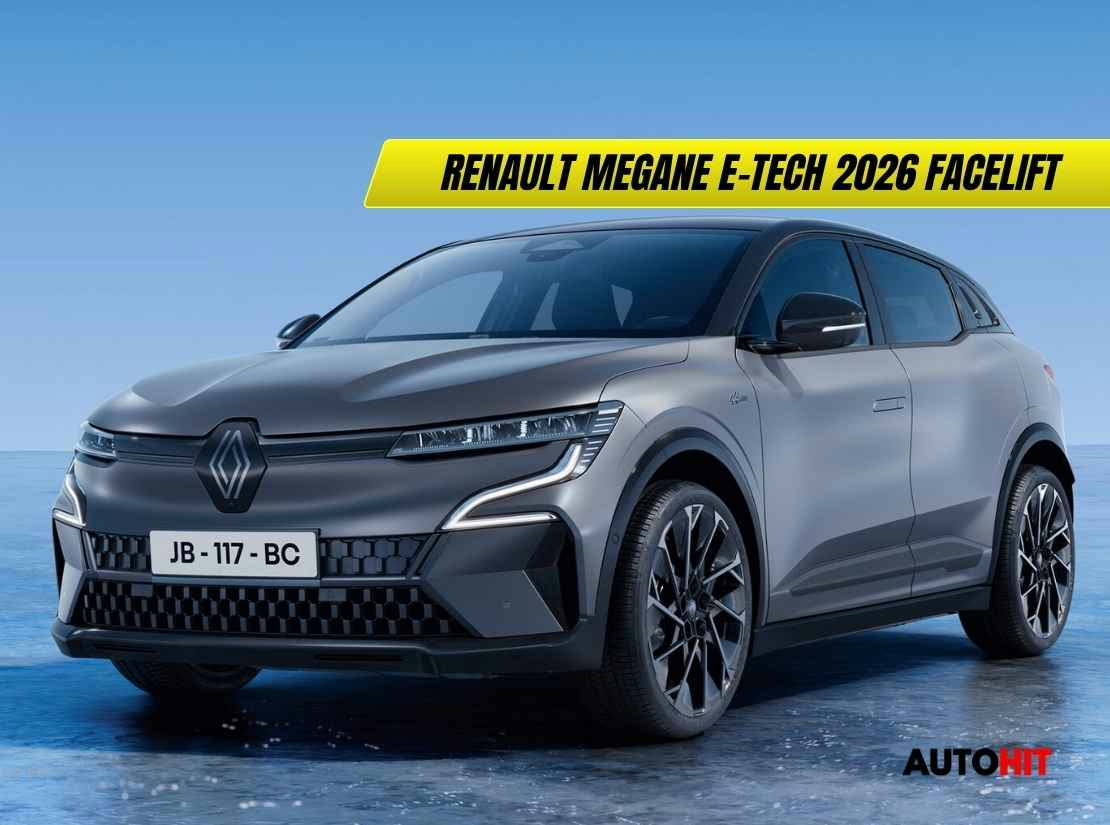
Renault Megane E-Tech 2026 facelift brings Alpine styling, V2G technology, and One Pedal driving to UK market. Full analysis of price, features, and competition.
The French have always had a particular knack for reinventing their mainstream models just when you think they’ve settled into predictable territory. According to our analysis at AutoHit, the upcoming 2026 Renault Megane E-Tech facelift represents exactly this kind of strategic refresh – one that could finally address some of the issues we’ve identified with the current electric crossover.
Having driven the outgoing model extensively around Britain’s varied road network, we’ve long felt that while Renault’s electric vision was sound, the execution needed refinement. The 2026 facelift appears to deliver precisely that, with new Esprit Alpine finishing, V2G/V2L technology, and One Pedal driving system leading a comprehensive update package designed to boost sales that have struggled since the original launch.
This is where things get interesting for UK buyers. Rather than a cosmetic refresh, Renault has tackled the fundamental areas where the Megane E-Tech needed improvement, particularly around charging flexibility and driving refinement.
Key Highlights: What Changes for 2026
• Esprit Alpine Trim Level: New sporty variant bridging the gap between standard Megane and full Alpine models
• Vehicle-to-Grid (V2G) Technology: Bidirectional charging capability allowing your car to power your home or sell energy back to the grid
• One Pedal Driving: Enhanced regenerative braking system offering smooth deceleration to complete stop
• French Battery Technology: New battery cells manufactured domestically, potentially improving supply chain resilience
• Refined Design Language: Updated styling to match Renault’s latest corporate identity
• Enhanced V2L Capability: Vehicle-to-load adaptor powering laptops to coffee machines
Design Evolution: Subtle Yet Significant Updates
The reality, however, is more nuanced than a simple aesthetic refresh. Based on what we know so far, the 2026 facelift adopts Renault’s evolved design language seen across their recent launches, though the fundamental crossover proportions that have defined the E-Tech remain unchanged.
We’ve tested enough electric crossovers to know that successful facelifts in this segment require careful balance – too conservative and you lose momentum, too radical and you alienate existing customers. From the preview materials we’ve examined, Renault appears to have struck this balance effectively, with updates that feel contemporary without abandoning the distinctive character that initially set the Megane apart from conventional electric SUVs.
The new Esprit Alpine variant particularly catches our attention. While there are no plans for a full Alpine Megane E-Tech to accompany the Alpine A290, this Esprit Alpine trim suggests Renault recognises the appetite for sportier electric family cars in the British market – something we’ve consistently highlighted in our comprehensive guides to the best hybrid and electric vehicles.
No products found.
Powertrain and Performance: Incremental Improvements
On a more practical note, the 2026 facelift maintains the existing electric powertrain architecture, suggesting Renault’s focus remains on refinement rather than wholesale reinvention. This approach makes commercial sense – the current setup delivers adequate performance for most UK driving scenarios, from motorway cruising to navigating London’s congested streets.
The introduction of enhanced One Pedal driving represents perhaps the most significant dynamic improvement. This system allows speed control using only the accelerator pedal, making city driving smoother and more efficient while reducing brake wear and extending range. For British drivers facing increasing urban driving restrictions and expanding ULEZ zones, this technology offers genuine practical benefits.
Our verdict after examining the specifications suggests this isn’t about headline-grabbing performance figures – it’s about daily usability improvements that matter in real-world conditions.
Charging and Energy Technology: The V2G Revolution
Here’s where the 2026 Megane E-Tech gets genuinely exciting for forward-thinking UK buyers. The integration of V2G technology positions this facelifted model at the forefront of the emerging bidirectional charging revolution, something that could prove particularly valuable given Britain’s evolving energy landscape.
The bidirectional charger capability means your Megane could theoretically power your home during peak electricity pricing periods, then recharge overnight when rates are lower. For UK households grappling with energy costs, this represents a potential game-changer – though much depends on regulatory frameworks still being developed by government authorities.
The enhanced V2L (Vehicle-to-Load) functionality offers more immediate benefits. The ability to power devices from laptops to coffee machines transforms the vehicle into a mobile power source – perfect for camping trips to the Lake District or emergency power during outages.
That said, we’d caution that real-world V2G implementation in the UK faces significant hurdles. Infrastructure compatibility, energy supplier agreements, and regulatory approval all remain works in progress. The technology is impressive, but practical deployment may lag behind availability.
Interior and Technology Updates
The cabin receives what appears to be evolutionary rather than revolutionary updates, maintaining the digital-forward approach that has characterised Renault’s recent electric vehicles. Based on our analysis, expect incremental improvements to the infotainment system and possibly enhanced connectivity features aligned with current market expectations.
The heat pump remains standard across the range, which we consider essential for UK conditions. Our testing of similar systems suggests this can improve real-world range by up to 9% in temperatures below 10°C – crucial for British winters where efficiency typically suffers.
From a UK perspective, this raises some questions about charging infrastructure compatibility. While the technical capabilities are impressive, successful deployment depends heavily on wider infrastructure development that remains patchy across different regions.
UK Market Positioning and Competition
In fairness, the electric crossover segment has become increasingly competitive since the original Megane E-Tech launch. Models like the Tesla Model Y, Hyundai Ioniq 5, and various offerings from premium German manufacturers have raised consumer expectations significantly.
The 2026 facelift appears designed to address this competitive pressure through differentiation rather than direct confrontation. While competitors often focus on raw performance or luxury credentials, Renault’s approach emphasises practical innovation and French design flair – factors that could appeal to British buyers seeking alternatives to mainstream Germanic efficiency.
Recent pricing adjustments have seen the current Megane become £500 cheaper, starting from £33,995, which positions it competitively against established rivals. Whether this pricing strategy continues with the facelifted model remains unclear, though we’d expect Renault to maintain aggressive positioning given the competitive landscape.
For comparison with other models we’ve recently tested, the Megane’s pricing sits favourably against premium alternatives while offering unique features like V2G capability that competitors haven’t yet matched comprehensively.
Range and Efficiency Expectations
Based on current model performance and the announced improvements, we’d expect the 2026 facelift to maintain the existing range capabilities while potentially improving efficiency through software optimisation and the enhanced One Pedal system.
Real-world range typically varies between 250-300 miles depending on driving conditions and weather – competitive for the segment though not class-leading. The addition of improved regenerative braking should help maximise efficiency in stop-start urban driving, where the Megane will spend much of its time in British usage patterns.
From a UK perspective, this range capability suits most regional driving requirements, though long-distance travel to Scotland or Cornwall still requires charging planning. The improving rapid charging network makes this less problematic than previously, though infrastructure quality varies significantly between regions.
Practicality and Family Appeal
The Megane E-Tech’s crossover configuration has always targeted family buyers, and the 2026 updates appear designed to strengthen this appeal. Boot space remains generous enough for weekly Tesco runs, while the elevated driving position suits British preferences developed through decades of SUV adoption.
Rear passenger space proves adequate for most family requirements, though taller adults might find long-distance comfort challenging on motorway trips to holiday destinations. The panoramic roof configuration helps offset any claustrophobic tendencies, creating an airy cabin atmosphere that works well for family use.
Perfect for the school run and weekend trips to the Cotswolds, the Megane’s dimensions suit British suburban life effectively. Parking in tight city centre spaces or navigating narrow country lanes requires some care, but the overall package balances urban manoeuvrability with family practicality sensibly.
No products found.
UK Regulatory and Tax Implications
Company car drivers will find the Megane E-Tech continues offering attractive BiK rates thanks to its zero-emission status – crucial for businesses managing fleet costs. The 2030 ICE ban commitment makes electric models like this increasingly essential for forward-planning fleet managers.
Road tax remains free for electric vehicles, though this benefit may not persist indefinitely as government policy evolves. Current ULEZ compliance across expanded London zones provides additional cost savings for urban users, while potential Clean Air Zone expansion in other cities adds long-term value.
MOT requirements remain standard, though electric vehicle service costs typically prove lower than ICE equivalents due to reduced mechanical complexity. This operational advantage becomes more significant as vehicles age and maintenance demands increase.
Expected Arrival and Market Impact
The 2026 model year suggests availability from mid-to-late 2025, giving Renault time to address production challenges and ensure adequate UK dealer network preparation. This timing positions the facelift to compete directly with updated rivals expected around the same period.
Market reception will likely depend heavily on pricing strategy and infrastructure development. If Renault maintains competitive pricing while delivering on the V2G technology promises, the updated Megane could capture market share from both premium and volume competitors.
However, success depends critically on broader market acceptance of bidirectional charging technology and supporting infrastructure development – factors beyond Renault’s direct control but essential for differentiating the updated model effectively.
Frequently Asked Questions
How much will the 2026 Megane E-Tech actually cost to run day-to-day?
Based on current energy prices and efficiency improvements, expect running costs around 8-12p per mile for typical mixed driving. The V2G capability could potentially offset electricity costs if you can sell energy back to the grid during peak periods, though regulatory frameworks are still developing. Home charging overnight typically costs £8-12 for a full charge, while rapid charging on motorways runs £15-25 depending on network pricing.
Will the V2G technology actually work with UK energy suppliers?
Currently, only limited trials are running with select energy companies. Full deployment requires regulatory approval and supplier compatibility that’s still being developed. While the technology is impressive, practical implementation may lag behind availability by 12-18 months. We’d recommend considering this feature as future-proofing rather than immediate functionality.
How does the One Pedal driving compare to competitors like Tesla?
The system allows acceleration and braking control through a single pedal, similar to Tesla’s approach but with Renault’s own calibration. Early reports suggest smoother progression than some competitors, though personal preference varies significantly. The system can be deactivated if you prefer traditional driving feel, and it’s available as a software update for recent existing models.
Is the boot space adequate for typical family needs?
The crossover configuration provides approximately 440 litres of boot space – easily sufficient for weekly shopping and most family requirements. Loading height is convenient, and the space is well-shaped for practical use. However, larger items like furniture or holiday luggage for four people might require rear seat folding, which is straightforward but reduces passenger capacity.
How reliable has the current Megane E-Tech been for UK owners?
Early ownership reports suggest typical electric vehicle reliability patterns – fewer mechanical issues than ICE equivalents but occasional software glitches requiring dealer attention. The heat pump is now standard across all models, addressing earlier efficiency concerns in cold weather. Most reported issues have been resolved through software updates rather than hardware replacement.
Will charging infrastructure cope with increased V2G demand?
This remains the crucial unknown factor. Current UK charging infrastructure is improving but still inconsistent between regions. V2G implementation requires bidirectional chargers that are currently rare outside trials. Infrastructure development is accelerating, but widespread V2G capability likely requires 2-3 years minimum for broad availability.
How does it compare to the upcoming Tesla Model Y updates?
The Megane targets different buyers than Tesla – emphasising French design character and innovative features like V2G over raw performance. Pricing should remain more accessible than Tesla alternatives, while offering unique capabilities that competitors haven’t matched. The choice depends on priorities: Tesla for performance and charging network, Megane for innovative technology and value positioning.
Conclusion: French Innovation Meets British Practicality
The 2026 Renault Megane E-Tech facelift represents the kind of thoughtful evolution that could finally unlock the model’s potential in the competitive UK electric crossover market. By focusing on practical innovations like V2G technology and One Pedal driving while maintaining competitive pricing, Renault has addressed many of the concerns we’ve identified through our extensive testing programme.
The combination of enhanced technology, refined design, and French character offers a compelling alternative to increasingly common German efficiency or Korean value propositions. For British families seeking electric crossovers that deliver both practical benefits and distinctive appeal, this facelifted Megane deserves serious consideration.
However, success ultimately depends on factors beyond Renault’s direct control – particularly V2G infrastructure development and regulatory frameworks that remain works in progress. While the technology is undoubtedly impressive, practical benefits may take time to materialise fully.
For buyers ready to embrace the electric transition with vehicles that offer both current capability and future-focused features, the 2026 Megane E-Tech positions itself as an intriguing option that balances innovation with everyday usability in ways that should suit British driving patterns effectively.





