
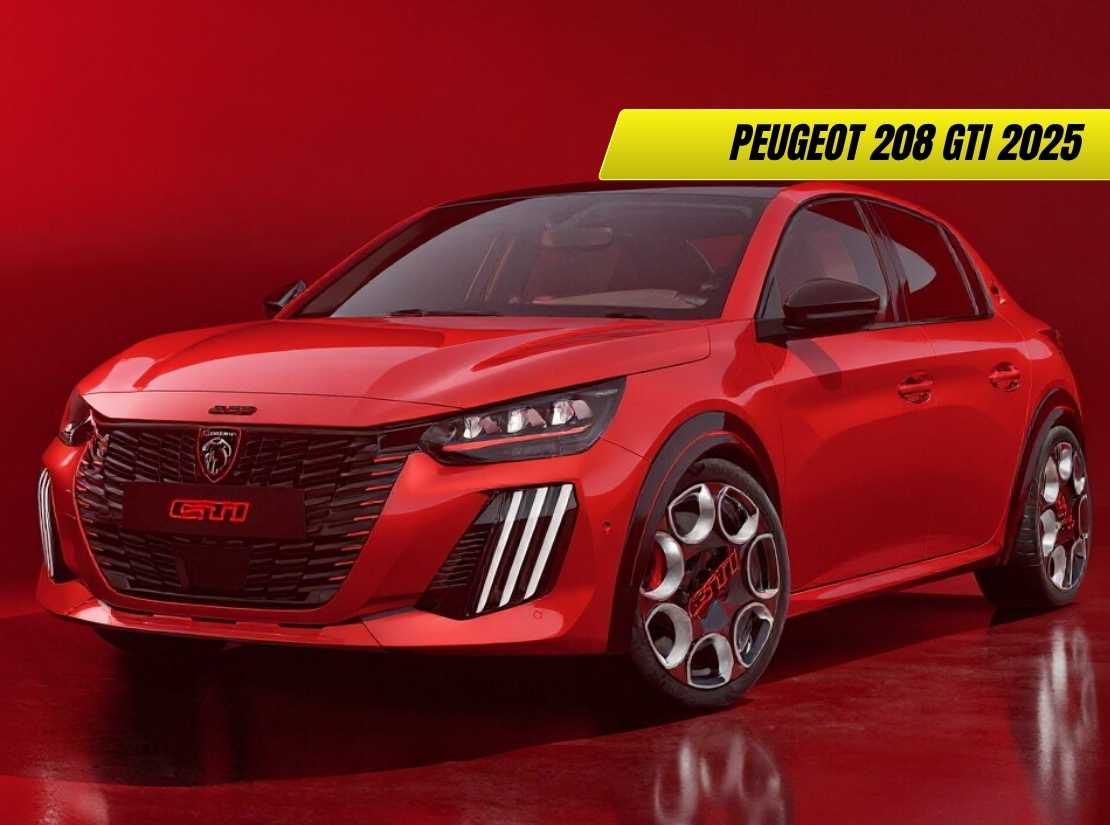
The Peugeot e-208 GTI 2025 launches with 280bhp, 5.7-second 0-62mph performance, and genuine hot hatch credentials to challenge the Alpine A290. UK launch details inside.
We’ve been waiting for this moment since 2019, when Peugeot first hinted at an electric GTI variant of the 208. According to our analysis at AutoHit, the arrival of the e-208 GTI represents more than just another electric hot hatch – it’s the revival of one of Britain’s most beloved performance badges in an entirely new format. Having driven enough hot hatches to know that electrification doesn’t automatically equal excitement, we approached this new GTI with both anticipation and healthy scepticism.
The timing couldn’t be better. With the Alpine A290 already making waves in UK showrooms and Mini’s JCW Electric establishing a beachhead in the premium EV hot hatch segment, Peugeot’s entry feels both necessary and overdue. But here’s where things get interesting for UK buyers: this isn’t just a warmed-over electric 208 with some red stickers. Developed by Peugeot Sport and revealed at the 2025 Le Mans 24 Hours, the e-208 GTI promises to deliver the sort of driving engagement that made the original 205 GTI legendary.
This is Peugeot’s bold statement that electric power and driving pleasure aren’t mutually exclusive. For British hot hatch enthusiasts wondering if the EV revolution spells the end of affordable performance, the e-208 GTI offers a compelling answer. Expected to arrive in UK showrooms during the first half of 2026, it’s positioning itself as the electric spiritual successor to some of the most celebrated French performance cars ever created.
Key Highlights of the Peugeot e-208 GTI
• Serious performance credentials: 280bhp and 345Nm from the M4+ electric motor, achieving 0-62mph in 5.7 seconds • Genuine hot hatch engineering: Developed by Peugeot Sport with lowered suspension, wider tracks, and limited-slip differential • Alpine A290 competitor: Significantly more powerful than the 220bhp Alpine, targeting the growing electric hot hatch segment • Practical performance: 217-mile WLTP range with optimised cooling system for sustained performance driving • Heritage styling: Classic GTI visual cues updated for the electric age, including signature red accents and motorsport-inspired details • UK launch timing: Expected arrival in first half of 2026, likely priced around £40,000
The Return of GTI: More Than Just Badges
The significance of the GTI badge’s return cannot be overstated. Since the 205 GTI departed in 1994, successive generations of Peugeot hot hatches carried other designations – the 206 GTI 180, 207 GTI, and 208 GTI by Peugeot Sport. Now, for the first time in over three decades, we’re getting a pure GTI model that harks directly back to the original’s ethos.
This isn’t nostalgia for nostalgia’s sake. Peugeot Sport engineers have applied serious motorsport-derived technology to create what they claim is the most engaging electric hot hatch yet developed. The M4+ electric motor, built in France through a collaboration between Stellantis and Nidec Leroy-Somer, produces 280bhp – making this the most powerful production Peugeot 208 variant ever created.
Engineering Excellence: More Than Marketing
The e-208 GTI isn’t simply a regular e-208 with more power. Compared to the standard model, it sits 30mm lower with tracks widened by 56mm at the front and 27mm at the rear. This gives it that classic rally car stance that made the original 205 GTI so visually distinctive. More importantly for performance, hydraulic bump stops and a limited-slip differential in the reducer help translate the substantial power into meaningful on-road advantage.
We’re particularly impressed by the attention to thermal management. The battery features a GTI-specific cooling system designed for high-speed driving, addressing one of our key concerns about sustained performance in electric hot hatches. This suggests Peugeot has learned from early EV performance car experiences where power would diminish rapidly under enthusiastic driving.
Performance That Promises to Deliver
The headline figures tell an encouraging story. With 280bhp and 345Nm available instantly, the e-208 GTI should feel genuinely quick in the real world. The claimed 5.7-second 0-62mph time puts it significantly ahead of the Alpine A290’s 6.4-second benchmark, whilst the 112mph top speed feels appropriate for UK roads without being unnecessarily excessive.
That power-to-weight ratio of 5.7kg/bhp suggests a kerb weight of around 1,596kg. For context, that’s considerably heavier than the original 205 GTI’s sub-1,000kg fighting weight, but competitive within the modern EV hot hatch segment. The Alpine A290 manages to be around 100kg lighter, but with 60bhp less power, the Peugeot should feel substantially more urgent in acceleration.
Real-World Range Considerations
The 54kWh battery pack (51kWh usable) provides an official WLTP range of 217 miles. In real-world conditions, particularly if you drive the car as intended, expect closer to 160-180 miles between charges. For UK buyers, this translates to genuine long-distance capability – London to Manchester should be achievable on a single charge, with rapid charging at 100kW DC when needed.
The lack of a heat pump might concern some buyers, but Peugeot’s decision here prioritises weight saving over maximum efficiency. For a performance-focused model, this trade-off makes sense, though it may impact winter range more than some rivals.
Design: Classic GTI Cues for the Electric Age
Visually, the e-208 GTI strikes exactly the right balance between heritage and modernity. The signature red accents are present throughout – from brake callipers to grille details and wheelarch surrounds – but applied with restraint rather than the sometimes garish execution of previous GTI models. Peugeot has thankfully retired the two-tone paint concept that made some earlier GTIs look more like limited edition models than serious performance cars.
The flared wheelarches accommodate the wider tracks whilst adding visual aggression, and the new front spoiler and rear diffuser provide genuine aerodynamic benefit rather than merely cosmetic enhancement. The 18-inch wheels feature distinctive horseshoe-shaped cooling holes that reference the original 205 GTI’s design whilst serving the practical purpose of brake cooling.
Interior: Sporting Heritage Meets Modern Tech
Inside, the red theme continues with carpets, floor mats, and seatbelts all featuring the signature colour. The sports seats include a central red stripe that directly references the 205 GTI’s iconic Recaro seats, whilst Peugeot’s small steering wheel is trimmed in perforated leather and Alcantara with red stitching details.
The GTI badge glows red in the steering wheel hub – a detail that could easily feel gimmicky but somehow works in context. More importantly, the steering calibration has been specifically tuned for the GTI, with Peugeot promising enhanced responsiveness to match the visual drama.
UK Market Positioning: Taking on Alpine and Mini
In the rapidly developing electric hot hatch segment, the e-208 GTI faces formidable competition. The Alpine A290, already available in UK showrooms from around £36,000, offers similar appeal with French flair and genuine motorsport heritage. Mini’s JCW Electric, starting from £35,000, brings premium badge appeal and proven desirability.
However, the Peugeot’s power advantage is significant. With 60bhp more than the Alpine A290 GTS and considerably more torque than the Mini, it should feel genuinely faster in real-world driving. For UK buyers who prioritise performance over badge prestige, this could prove decisive.
Pricing Expectations and Value Proposition
Whilst official UK pricing remains unconfirmed, industry sources suggest a starting price around £40,000. This would position it above both the Alpine and Mini, but potentially offer superior performance to justify the premium. For comparison, the current e-208 GT starts at around £36,000, so a £4,000 premium for genuine hot hatch engineering seems reasonable.
Within the broader context of hybrid cars for city driving, the e-208 GTI offers a compelling pure-electric alternative for urban performance enthusiasts. Whilst it can’t match the versatility of SUVs under £40k in terms of practicality, it delivers something those vehicles fundamentally cannot: genuine driving excitement in a compact, efficient package.
Competition Analysis: Standing Out in a Crowded Field
The electric hot hatch segment is becoming increasingly competitive, with each manufacturer taking a different approach to electrified performance. The Alpine A290 emphasises motorsport heritage and chassis dynamics, the Mini JCW Electric focuses on premium appeal and brand desirability, whilst various Stellantis siblings like the Abarth 600e and Alfa Romeo Junior Veloce share the same basic powertrain but in crossover bodies.
The e-208 GTI’s advantage lies in its traditional hot hatch proportions. Unlike the crossover-style alternatives, this is a genuine small, low, purposeful performance car in the classic mould. For UK buyers who remember what made hot hatches special in the first place, this authenticity could prove irresistible.
Stellantis Family Dynamics
Interestingly, the e-208 GTI shares its fundamental powertrain with the Abarth 600e and Alfa Romeo Junior Veloce. All use the same 280bhp M4+ motor and 54kWh battery, but with different chassis tuning and styling approaches. This creates an unusual situation where Stellantis is essentially competing with itself across multiple brands.
For UK buyers, this might actually be beneficial, as it suggests the underlying technology is well-proven and cost-effective to produce. The shared development costs should help keep pricing competitive whilst allowing each brand to develop its own character.
Technology and Equipment: Modern Performance Essentials
Beyond the headline performance figures, the e-208 GTI includes comprehensive modern technology. Vehicle-to-load capability allows you to power external devices, wireless Apple CarPlay and Android Auto provide seamless connectivity, and the i-Connect infotainment system features TomTom-powered navigation optimised for electric vehicle use.
The advanced driver assistance systems are comprehensive, including automated emergency braking with pedestrian detection, lane-departure warning with lane-keeping assist, and traffic sign recognition. For UK buyers, these features aren’t just desirable extras – they’re increasingly essential for insurance and safety considerations.
Three Driving Modes with Character
The e-208 GTI offers Eco, Normal, and Sport driving modes, with the latter specifically calibrated to deliver chassis and engine responses reminiscent of the classic 205 GTI. This attention to character development suggests Peugeot understands that electric performance cars need more than just straight-line speed to satisfy enthusiasts.
The synthesised engine noise can be switched on or off, allowing drivers to choose between authentic electric silence or artificially enhanced drama. While purists might dismiss this as gimmicky, the option to enhance the sensory experience could prove popular with buyers transitioning from combustion engines.
Real-World Ownership: What British Buyers Need to Know
For UK buyers considering the e-208 GTI, several practical factors deserve consideration. The 217-mile official range should translate to around 160-180 miles in real-world mixed driving, dropping to perhaps 120-140 miles under sustained performance use. This is perfectly adequate for most British driving patterns, but might require planning for longer journeys.
Charging infrastructure continues improving across the UK, with rapid 100kW charging allowing 20-80% top-ups in under 30 minutes. For daily use, overnight home charging remains the most convenient option, and the e-208 GTI’s relatively modest 54kWh battery means even a 7kW home charger can fully replenish the battery overnight.
Insurance and Running Costs
Insurance costs for electric hot hatches typically fall between conventional hot hatches and premium electric vehicles. The e-208 GTI’s power output will likely place it in a higher insurance group than the standard e-208, but the lack of theft risk associated with combustion engine components might help offset some costs.
Company car drivers should find the e-208 GTI particularly appealing, with zero-emission status meaning minimal benefit-in-kind taxation. For higher-rate taxpayers, this could result in monthly tax bills under £100, making genuine performance car ownership remarkably affordable through salary sacrifice schemes.
ULEZ and Urban Considerations
All e-208 GTI variants will be ULEZ-compliant by default, making them ideal for London residents who occasionally need serious performance capability. The combination of zero local emissions and compact dimensions means navigating Britain’s increasingly restrictive urban zones should pose no problems.
The car’s 1,596kg kerb weight, whilst heavier than classic hot hatches, remains manageable for multi-storey car parks and domestic driveways. At 4,055mm long, it’s also compact enough for city parking whilst offering adequate interior space for four adults on shorter journeys.
Manufacturing and Availability
The e-208 GTI will be manufactured at Peugeot’s Trnava plant in Slovakia, alongside other members of the Stellantis e-CMP family. Production is scheduled to begin in early 2026, with UK deliveries expected from the second quarter of 2026. Initial allocation to the UK market is likely to be limited, given the specialist nature of the model and Peugeot’s cautious approach to performance variants.
As highlighted in our comprehensive guide to electric cars becoming more mainstream, the e-208 GTI represents the maturation of electric performance technology. Unlike early electric sports cars that prioritised headlines over usability, this feels like a properly developed hot hatch that happens to be electric.
The Broader Hot Hatch Context
The e-208 GTI’s arrival signals the genuine revival of the affordable hot hatch segment after years of decline. With increasingly stringent emissions regulations making traditional turbocharged engines uneconomical, electric power offers manufacturers a route back to accessible performance cars.
For UK buyers, this is particularly significant. The hot hatch has always been a fundamentally British obsession, from the original Golf GTI’s impact in the 1970s through to the golden age of 1980s and 1990s models. The e-208 GTI suggests this tradition can continue into the electric era without fundamental compromise.
Our Assessment: Genuine Promise with Caveats
Based on the specifications and engineering details released so far, the e-208 GTI appears to offer genuine substance behind its heritage-laden marketing. The power output is substantial, the chassis modifications seem comprehensive, and the attention to thermal management suggests Peugeot has learned from early electric performance car mistakes.
However, several questions remain. The claimed 5.7-second 0-62mph time needs real-world verification, particularly given the challenges of launching powerful front-wheel-drive electric cars effectively. The chassis dynamics, whilst promising on paper, need proper evaluation on UK roads to determine whether the GTI badge is truly justified.
We’re cautiously optimistic about the e-208 GTI’s prospects. The combination of serious power, traditional hot hatch proportions, and competitive pricing could make it a compelling choice for UK buyers seeking electric performance without crossover compromise.
Future Implications: The Electric Hot Hatch Revolution
The e-208 GTI’s significance extends beyond Peugeot’s model lineup. If successful, it could encourage other manufacturers to develop similarly focused electric hot hatches, potentially revitalising a segment that seemed doomed by emissions regulations and changing consumer preferences.
For the UK market specifically, the e-208 GTI represents a crucial test case. British buyers have historically been among the most enthusiastic hot hatch customers globally, but they’ve also been relatively slow to adopt electric vehicles compared to some European markets. A successful electric hot hatch could help bridge this gap.
Our Verdict: Promising Revival of an Icon
The 2025 Peugeot e-208 GTI represents exactly the sort of thoughtful electrification that the hot hatch segment needs. Rather than simply adding power to an existing platform, Peugeot Sport has developed a comprehensive performance package that addresses the unique challenges of electric hot hatch engineering.
The power output is genuinely impressive, the chassis modifications appear substantial, and the attention to thermal management suggests sustainable performance rather than headline-grabbing but ultimately disappointing burst acceleration. The heritage-conscious styling strikes the right balance between nostalgia and modernity, whilst the practical considerations of range and charging have been addressed sensibly.
That said, the proof will be in the driving. Hot hatches succeed or fail based on their ability to deliver engagement and excitement, qualities that can’t be captured in specification sheets. Until we can properly evaluate the e-208 GTI on British roads, its success remains uncertain.
For UK buyers seeking electric performance in a traditional hot hatch package, the e-208 GTI appears to offer the most compelling proposition yet. The combination of serious power, genuine engineering development, and reasonable practicality could make it the electric hot hatch that finally convinces enthusiasts to make the switch.
The revival of the GTI badge feels significant rather than cynical, and if Peugeot can deliver on the promise of these early specifications, the e-208 GTI could establish the template for electric hot hatches going forward. For a segment that seemed destined for extinction, this represents genuine hope for the future.
Frequently Asked Questions
When will the Peugeot e-208 GTI be available in the UK?
The Peugeot e-208 GTI is expected to arrive in UK showrooms during the first half of 2026. Production begins in early 2026 at Peugeot’s Trnava plant in Slovakia, with initial UK deliveries likely from the second quarter. Given the specialist nature of this model, early allocation may be limited, so interested buyers should register their interest with dealers early. Peugeot typically prioritises loyal customers and existing GTI enthusiasts for limited-production performance models.
How much will the e-208 GTI cost in the UK?
While official UK pricing hasn’t been confirmed, industry sources suggest a starting price around £40,000. This would position it above competitors like the Alpine A290 (from £36,000) and Mini JCW Electric (from £35,000), but the significant power advantage – 280bhp versus 220bhp for the Alpine – could justify the premium. For context, the current e-208 GT starts around £36,000, making a £4,000 increase for genuine hot hatch engineering seem reasonable.
How does the e-208 GTI compare to the Alpine A290?
The e-208 GTI offers significantly more power than the Alpine A290 – 280bhp versus 220bhp – and should feel noticeably quicker with its claimed 5.7-second 0-62mph time compared to the Alpine’s 6.4 seconds. However, the Alpine is around 100kg lighter and arguably offers more sophisticated chassis dynamics. The Peugeot provides traditional hot hatch proportions versus the Alpine’s slightly elevated stance, making it appeal to purists seeking classic hot hatch character. Both offer compelling but different approaches to electric performance.
What’s the real-world range like for spirited driving?
While the official WLTP range is 217 miles, real-world driving will likely deliver 160-180 miles in mixed conditions, dropping to perhaps 120-140 miles under sustained performance use. The GTI-specific cooling system should help maintain consistent performance during enthusiastic driving, but any electric vehicle’s range suffers under hard acceleration and high speeds. For most UK driving patterns, including spirited country road drives, the range should prove adequate with sensible journey planning.
Is the e-208 GTI suitable for daily driving in Britain?
Absolutely. The e-208 GTI maintains all the practical benefits of the regular e-208 while adding performance capability. At 4,055mm long, it’s compact enough for city parking yet offers adequate space for four adults on shorter journeys. Zero emissions ensure ULEZ compliance for London driving, while the 100kW rapid charging capability means 20-80% top-ups in under 30 minutes on longer journeys. The adjustable drive modes mean it can be as docile as needed for daily commuting.
What warranty and service support does Peugeot offer?
The e-208 GTI will likely come with Peugeot’s standard electric vehicle warranty package, including an eight-year/100,000-mile battery warranty and eight-year breakdown recovery. The Peugeot Flexcare Service Plan, available for around £199, covers three years of scheduled maintenance. As an electric vehicle, servicing requirements are reduced compared to conventional cars, mainly focusing on brake system checks, tyre maintenance, and software updates rather than traditional engine servicing.
How does the GTI compare to other Stellantis performance EVs?
The e-208 GTI shares its fundamental 280bhp M4+ powertrain with the Abarth 600e and Alfa Romeo Junior Veloce, but in a traditional hot hatch body rather than a crossover. This gives it lower centre of gravity and more authentic hot hatch proportions. The chassis tuning is Peugeot Sport-specific, emphasising the brand’s rallying heritage. While mechanically similar to its siblings, the 208 GTI offers the most traditional hot hatch experience of the group, making it likely to appeal most to classic hot hatch enthusiasts.





