
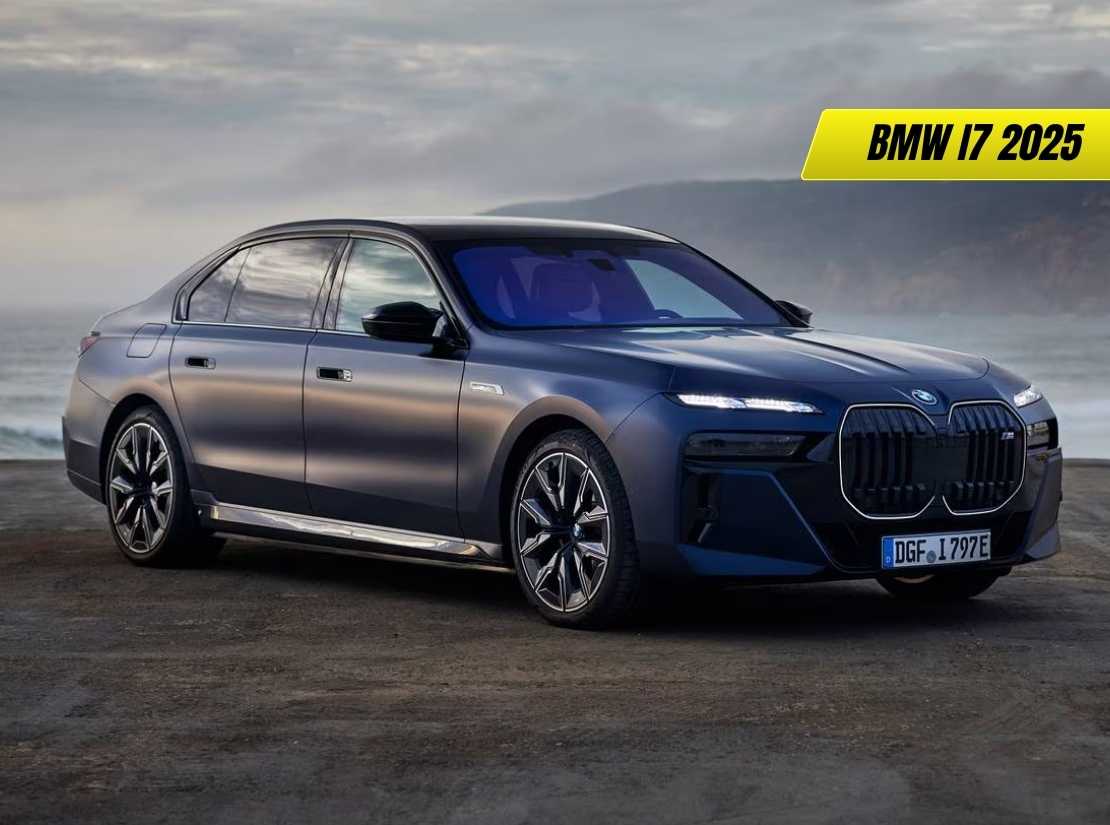
BMW tests revolutionary solid-state battery technology in i7 prototype on Munich roads, promising higher energy density and extended range. Here’s what this means for UK luxury EV buyers.
According to our analysis at AutoHit, BMW’s decision to begin real-world testing of solid-state battery technology in a production-based i7 prototype represents one of the most significant developments in electric vehicle technology since Tesla popularised lithium-ion EVs. Having closely followed the evolution of electric luxury cars for British buyers, we’re particularly intrigued by the implications of this technology for the UK premium EV market.
We’ve driven the current BMW i7 extensively across British roads, from London’s congested streets to the Scottish Highlands, and whilst it’s already one of the most accomplished luxury EVs available to UK buyers, the promise of solid-state technology addresses several key limitations that currently affect all electric vehicles. The prototype currently undergoing testing around BMW’s Munich headquarters could preview a fundamental shift in electric vehicle capability – one that UK buyers have been eagerly awaiting.
This isn’t just another concept car or laboratory experiment. BMW has fitted genuine solid-state battery cells from American specialist Solid Power into a working i7 that’s conducting real-world testing on public roads. For British luxury car buyers who’ve been weighing the compromises of current electric vehicles against traditional powertrains, this development could prove decisive in the ongoing transition to electric mobility.
Key Highlights of BMW’s Solid-State i7 Testing
• Revolutionary battery technology: Pure all-solid-state battery (ASSB) cells replacing conventional lithium-ion technology • Real-world validation: Live testing on Munich roads rather than laboratory conditions only • Energy density breakthrough: Potential for significantly longer range without weight penalties • Safety improvements: Non-flammable sulfide electrolyte eliminates fire risk associated with liquid electrolytes • Timeline implications: Testing phase suggests production reality still years away, but development accelerating • UK market impact: Could transform luxury EV ownership proposition for British buyers demanding maximum range and refinement
Understanding Solid-State Battery Technology
The fundamental difference between conventional lithium-ion batteries and solid-state variants lies in the electrolyte – the medium that allows ions to move between the positive and negative electrodes. Current EV batteries use liquid or gel electrolytes, which whilst effective, present limitations in terms of energy density, safety, and thermal management.
Solid-state batteries replace this liquid with a solid sulfide-based electrolyte that acts as both separator and conductor. This seemingly simple change delivers profound benefits: higher energy density, improved safety through non-flammable materials, better thermal stability, and potentially faster charging capabilities.
The Promise for UK Drivers
For British buyers, these improvements translate into tangible real-world benefits. Higher energy density means longer range without additional weight – crucial for a luxury sedan that must balance performance with efficiency. The improved safety characteristics address one of the lingering concerns about EV ownership, particularly for buyers considering garage charging or urban parking situations.
The enhanced thermal stability could prove particularly valuable in British conditions, where battery performance can suffer during cold winters. Current lithium-ion technology loses efficiency in low temperatures, but solid-state systems show better cold-weather performance characteristics.
BMW’s Partnership with Solid Power: A Strategic Alliance
BMW’s collaboration with Colorado-based Solid Power represents more than a typical supplier relationship. The partnership, which began in 2016, has evolved into a comprehensive technology transfer agreement that allows BMW to license Solid Power’s manufacturing processes and intellectual property.
This arrangement culminated in BMW establishing a prototype production line at its Cell Manufacturing Competence Centre (CMCC) in Parsdorf, Germany. This facility allows BMW to manufacture solid-state cells using Solid Power’s technology whilst developing its own expertise in this crucial future technology.
Investment and Commitment
BMW’s strategic investment in Solid Power during the company’s 2021 public offering demonstrates genuine commitment rather than casual experimentation. The investment, alongside Ford’s participation in the same funding round, reflects the automotive industry’s recognition that solid-state technology represents the next major evolutionary step in electric vehicle development.
For UK buyers, this level of commitment suggests solid-state BMW vehicles will eventually reach British showrooms, rather than remaining perpetual concept technology.
Real-World Testing: What It Means
The significance of BMW conducting actual road testing with solid-state batteries cannot be overstated. Previous solid-state battery announcements from various manufacturers have typically involved laboratory demonstrations or static testing. BMW’s decision to integrate these cells into a working i7 and conduct extensive road testing around Munich represents a crucial validation milestone.
The testing protocol focuses on three critical areas: cell expansion management, operating pressure control, and temperature regulation. These factors represent the primary challenges in translating solid-state technology from laboratory to real-world application.
Current Generation Integration
The prototype combines Solid Power’s advanced cells with BMW’s proven Gen5 battery architecture, using prismatic cell modules alongside new integration concepts specifically developed for solid-state technology. This hybrid approach allows BMW to leverage existing manufacturing knowledge whilst gaining experience with revolutionary new battery chemistry.
Martin Schuster, BMW’s Vice President of Battery Cell and Cell Module, emphasised that this represents “a perfect example of the BMW Group’s technology-open mindset,” highlighting the company’s commitment to advancing battery technology through strategic partnerships.
Performance Implications for UK Buyers
Whilst BMW hasn’t disclosed specific performance figures for the solid-state i7 prototype, industry knowledge of Solid Power’s technology provides strong indications of its potential. Solid Power’s cells typically achieve around 390Wh/kg energy density – significantly higher than the 220Wh/kg typical of current lithium-ion technology.
For context, the current i7 M70 achieves 285 miles EPA range, whilst the longest-range eDrive50 variant manages 314 miles. With solid-state technology’s superior energy density, range figures approaching 400-450 miles become realistic without increasing vehicle weight or battery pack size.
UK Driving Context
Such range improvements would transform the UK ownership experience. London to Edinburgh – currently requiring careful planning and charging stops – could become a single-charge journey. More importantly for daily use, the improved efficiency would provide substantial range buffers for cold weather, aggressive driving, or simply the peace of mind that many UK buyers currently find lacking in electric vehicles.
The enhanced charging capabilities of solid-state technology could also address one of the primary concerns of British EV buyers: charging infrastructure anxiety. Faster charging times mean less dependence on the specific location and availability of rapid chargers across the UK’s expanding but still developing charging network.
Timeline Reality: When Will UK Buyers Benefit?
Despite the encouraging progress demonstrated by real-world testing, BMW has been clear that solid-state technology won’t appear in production vehicles during this decade. Martin Schuster previously stated that BMW doesn’t anticipate needing solid-state batteries in production EVs until the mid-2030s.
This timeline reflects the substantial engineering challenges that remain. Whilst the i7 prototype proves the technology works, scaling to mass production whilst maintaining quality and cost competitiveness requires additional development time.
Gen6 Technology Bridge
In the interim, BMW’s upcoming Gen6 batteries for the Neue Klasse platform promise significant improvements over current technology. These cylindrical cells offer 20% higher energy density than current generation batteries, with some Neue Klasse models expected to achieve over 373 miles range, with flagship variants potentially exceeding 559 miles.
For UK buyers, this suggests a two-stage evolution: meaningful improvements with Gen6 technology arriving later this decade, followed by revolutionary solid-state capabilities in the following decade.
Competition Landscape: The Solid-State Race
BMW isn’t alone in pursuing solid-state battery technology. Mercedes-Benz recently announced successful testing of lithium-metal solid-state batteries through its partnership with Factorial Energy, whilst Stellantis plans prototype Dodge Charger Daytona EVs with solid-state technology by year-end.
However, BMW’s approach appears more comprehensive than many competitors. Rather than relying solely on external suppliers, the partnership with Solid Power provides manufacturing expertise and intellectual property access that could prove crucial for long-term competitiveness.
Chinese Competition
Chinese manufacturers are also advancing rapidly in solid-state technology, with several companies claiming near-production readiness. For European luxury manufacturers like BMW, maintaining technological leadership against increasingly capable Chinese competition represents an existential challenge.
The solid-state development programme positions BMW well for this competition, particularly in the luxury segment where British buyers often prioritise technological sophistication alongside traditional luxury attributes.
UK Market Implications: Transforming Electric Luxury
For the UK luxury car market, successful solid-state implementation could resolve many of the current compromises associated with electric vehicles. British buyers of premium cars typically demand uncompromised capability – whether that’s long-distance comfort, performance on demand, or simply the confidence that their vehicle won’t leave them stranded.
Current electric luxury cars, including the i7, require careful consideration of journey planning, charging infrastructure, and seasonal efficiency variations. Solid-state technology could eliminate most of these concerns, making electric luxury cars as convenient as their combustion counterparts.
Urban vs Rural Considerations
The UK’s unique geography – with dense urban areas connected by substantial rural distances – particularly benefits from extended range capability. Solid-state technology could make electric luxury cars viable for buyers in Scotland, Wales, or rural England who currently find EV infrastructure inadequate for their needs.
As highlighted in our comprehensive guide to the best SUVs under £50k, many UK buyers are already considering electric alternatives but remain concerned about range and charging convenience. Solid-state technology could remove these barriers entirely.
Manufacturing Strategy: Bringing Technology to Market
BMW’s approach to solid-state development reflects lessons learned from the broader EV transition. Rather than depending entirely on external suppliers, the company is developing internal manufacturing capability whilst maintaining strategic partnerships with technology specialists.
The prototype production line at Parsdorf represents more than research and development – it’s a pathway to eventual mass production. By understanding solid-state manufacturing processes now, BMW positions itself to scale quickly when market conditions and technology maturity align.
Supply Chain Security
For UK buyers, BMW’s manufacturing strategy provides reassurance about long-term parts availability and service support. The company’s network of around 300 development partners, including universities, startups, and established manufacturers, suggests a robust ecosystem for ongoing development and support.
This comprehensive approach contrasts with some manufacturers’ reliance on single-source suppliers, potentially providing better long-term reliability and service availability across the UK market.
Safety Advantages: Addressing EV Concerns
One of solid-state technology’s most significant advantages lies in safety improvements. The sulfide-based solid electrolyte is inherently non-flammable, eliminating the fire risk associated with liquid electrolyte damage or thermal runaway conditions.
For UK buyers, this addresses one of the persistent concerns about EV ownership – particularly for those considering home charging in garages, urban parking, or situations where emergency services access might be limited.
Insurance and Regulatory Implications
The improved safety characteristics could influence insurance costs and regulatory requirements for solid-state EVs. UK insurers currently factor battery fire risk into EV premiums, and solid-state technology’s safety improvements might reduce these costs.
Additionally, the enhanced safety profile could simplify regulations around EV parking in underground car parks, ferry transport, and other situations where current EVs face restrictions due to fire risk concerns.
Environmental Impact: Beyond Zero Emissions
Solid-state batteries offer environmental advantages beyond their role in electric vehicles. The technology typically uses more sustainable materials than conventional lithium-ion batteries, with reduced reliance on cobalt and other conflict minerals.
Additionally, solid-state batteries show promise for enhanced recyclability. Solid Power’s technology achieves 96% recyclability, significantly higher than conventional lithium-ion systems. For environmentally conscious UK buyers, this addresses lifecycle environmental concerns that extend beyond tailpipe emissions.
Grid Integration Benefits
The improved thermal stability and charging characteristics of solid-state batteries could enhance their suitability for vehicle-to-grid applications. As the UK continues expanding renewable energy generation, EVs capable of grid storage and stabilisation become increasingly valuable.
Solid-state technology’s durability and cycle life advantages make vehicles more suitable for frequent charging and discharging cycles required for effective grid integration.
Our Assessment: Revolutionary Potential with Realistic Timeline
BMW’s solid-state i7 testing represents genuine progress toward transformational EV technology, but UK buyers should maintain realistic expectations about timeline and availability. The current testing phase demonstrates viability, but substantial development work remains before production implementation.
However, the comprehensive approach BMW has taken – from strategic partnerships to internal manufacturing capability development – suggests solid-state technology will eventually reach UK showrooms in BMW vehicles. The question isn’t whether, but when.
For UK luxury car buyers, this timeline actually provides advantages. Early solid-state implementations will likely be expensive and potentially problematic. BMW’s measured approach suggests they’ll introduce the technology when it’s genuinely ready for luxury car standards of reliability and refinement.
Industry Implications: Accelerating Development
BMW’s real-world testing could accelerate broader industry adoption of solid-state technology. Successful road testing provides validation that encourages other manufacturers to accelerate their own programmes, potentially bringing production reality closer than current timelines suggest.
The testing also provides valuable data about real-world behaviour that benefits the entire industry. Understanding how solid-state batteries perform in actual driving conditions – rather than laboratory simulations – helps refine the technology for eventual production implementation.
Future BMW Strategy: Solid-State and Beyond
The i7 testing programme represents just one element of BMW’s broader battery technology strategy. The company continues developing multiple battery technologies simultaneously, ensuring they can adapt to changing market conditions and technological breakthroughs.
This diversified approach protects BMW against the risk of betting entirely on a single technology path. For UK buyers, it suggests BMW will offer genuinely competitive electric vehicles regardless of which specific battery technology ultimately proves most successful.
Frequently Asked Questions
When will solid-state battery BMWs be available to buy in the UK?
BMW hasn’t provided specific production timelines for solid-state vehicles, but industry estimates suggest the technology won’t reach production until the mid-2030s. Martin Schuster, BMW’s battery technology chief, previously indicated BMW doesn’t anticipate needing solid-state batteries in production EVs this decade. The current i7 testing represents important validation, but substantial development work remains before mass production. UK buyers should expect the technology to appear first in flagship models before trickling down to mainstream electric BMWs.
How much better will solid-state batteries be compared to current BMW i7 range?
While BMW hasn’t released specific figures for the solid-state prototype, Solid Power’s technology typically achieves around 390Wh/kg energy density versus 220Wh/kg for current lithium-ion batteries. This suggests potential range improvements of 50-70% without weight increases. The current i7’s maximum range of 314 miles could theoretically extend to 400-450 miles with solid-state technology, making journeys like London to Edinburgh possible on a single charge. However, real-world improvements will depend on final production specifications.
Are solid-state batteries safer than current electric car batteries?
Yes, significantly safer. Solid-state batteries use non-flammable sulfide-based solid electrolytes instead of the liquid electrolytes found in current lithium-ion batteries. This eliminates fire risk from battery damage or thermal runaway conditions that can affect conventional EV batteries. For UK buyers, this addresses one of the primary safety concerns about electric vehicle ownership, particularly for home charging, urban parking, or emergency situations. The improved safety profile could also positively impact insurance costs and parking regulations.
Will solid-state BMWs charge faster than current electric cars?
Solid-state technology promises improved charging capabilities, though BMW hasn’t specified exact figures for their system. The enhanced thermal stability and different chemistry of solid-state batteries typically allow higher charging rates without the heat management issues that limit current lithium-ion systems. This could mean significantly faster charging times, reducing dependence on charging infrastructure availability – a key concern for UK buyers. However, charging speed will also depend on the charging infrastructure development across Britain.
How much will solid-state battery BMWs cost compared to current models?
BMW hasn’t announced pricing for solid-state vehicles, but the technology will initially be expensive. Early solid-state systems will likely appear in flagship models like the i7 before becoming more affordable. Production costs should decrease as manufacturing scales up, but initially expect solid-state BMWs to command premium pricing over conventional electric models. For UK buyers, the technology will probably debut in the £100,000+ luxury segment before becoming available in more accessible models. The enhanced capability may justify higher prices for buyers prioritising maximum range and convenience.
Should I wait for solid-state technology or buy a current BMW i7?
This depends on your timeline and priorities. Current BMW i7 models are excellent vehicles that will serve effectively for years. With solid-state production still likely a decade away, waiting means missing years of electric luxury car ownership. The current i7’s 314-mile range already handles most UK driving requirements effectively. However, if you can wait and prioritise having the latest technology, solid-state BMWs will offer substantially improved capability. Consider that BMW’s upcoming Gen6 batteries in Neue Klasse models will provide significant improvements as an interim step before solid-state arrival.
Will solid-state batteries work better in British weather conditions?
Yes, solid-state batteries typically perform better in cold weather than conventional lithium-ion systems. Current EVs lose range in British winter conditions due to battery chemistry and heating requirements. Solid-state technology’s improved thermal stability and efficiency should reduce these seasonal range penalties. This addresses a key concern for UK buyers who’ve experienced disappointing winter EV performance. The enhanced cold-weather capability could make electric luxury cars more practical for Scottish Highland touring or winter driving across Britain’s varied climate conditions.
Our Verdict: Progress Worth Watching
The BMW i7 solid-state battery testing represents authentic progress toward revolutionary EV technology that could transform the ownership proposition for UK luxury car buyers. While production implementation remains years away, the real-world validation demonstrates that solid-state technology is moving from laboratory curiosity to engineering reality.
For British buyers currently considering electric luxury cars, the current i7 remains an excellent choice that will serve effectively until solid-state technology arrives. However, those with flexibility in timing might benefit from waiting for the next generation of electric luxury cars that will incorporate these breakthrough technologies.
The testing programme also reinforces BMW’s position as a technology leader in the electric luxury segment. For UK buyers prioritising cutting-edge technology alongside traditional luxury attributes, BMW’s comprehensive approach to solid-state development suggests they’ll remain competitive as the EV landscape continues evolving.
Ultimately, whilst solid-state batteries won’t revolutionise UK EV ownership immediately, BMW’s testing programme demonstrates that such revolutionary improvements are coming. For the luxury car segment specifically, solid-state technology could eliminate the final compromises that currently distinguish electric luxury cars from their combustion counterparts.





