
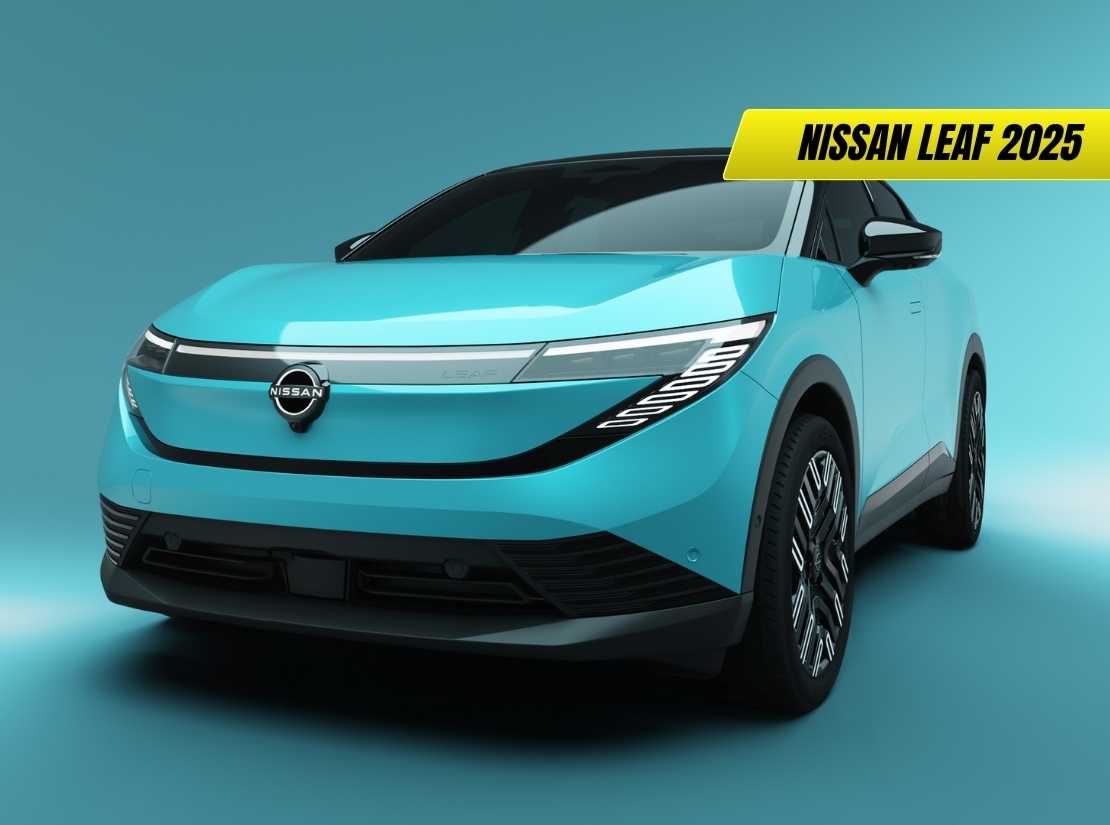
The all-new Nissan Leaf 2025 transforms into a sleek crossover with 373-mile range, built at Sunderland. UK launch details, pricing from £33,000, and full specifications revealed.
According to our analysis at AutoHit, the transformation of the Nissan Leaf from pioneering electric hatchback to sophisticated crossover represents one of the most significant reinventions in modern automotive history. Having followed the Leaf’s journey since its groundbreaking 2010 debut, we’re convinced this third-generation model addresses every criticism that has been leveled at its predecessors whilst positioning Nissan firmly back in the mainstream EV conversation.
We’ve driven virtually every generation of Leaf on British roads, from the original’s modest 73-mile range through to the current model’s more respectable but still limiting capabilities. This new crossover iteration promises to eliminate the compromises that have prevented the Leaf from reclaiming its position as the world’s best-selling EV. For UK buyers, there’s additional significance: this revolutionary new Leaf will be built right here in Sunderland, reinforcing Britain’s position in the global electric vehicle supply chain.
The timing couldn’t be more crucial for Nissan. With incoming CEO Ivan Espinosa describing this as “an important moment” for the company, the new Leaf carries the weight of expectation for a brand that pioneered mass-market EVs but has watched competitors surge ahead. For British buyers considering their next electric vehicle, this represents a compelling proposition that combines proven heritage with cutting-edge technology – all built on home soil.
Key Highlights of the New Nissan Leaf Crossover
• Dramatic transformation: Evolution from compact hatchback to sleek crossover with contemporary appeal • Impressive range: Up to 373 miles (600km) WLTP, addressing the key limitation of previous generations • British manufacturing: Continued production at Nissan’s Sunderland plant as part of the EV36Zero project • Advanced aerodynamics: Class-leading 0.25 drag coefficient for maximum efficiency • Competitive pricing: Expected UK starting price around £33,000, positioning against VW ID.4 and Tesla Model Y • Summer 2025 debut: Full reveal scheduled for June, with deliveries beginning late 2025
Platform Revolution: CMF-EV Architecture Transforms Everything
The new Leaf’s transformation goes far deeper than visual changes. Built on the Renault-Nissan-Mitsubishi Alliance’s CMF-EV platform – the same foundation that underpins the larger Nissan Ariya – this represents a fundamental shift from the bespoke architecture of previous Leaf generations to a sophisticated, scalable electric vehicle platform.
This platform choice delivers immediate benefits for UK buyers. The CMF-EV architecture was designed from the ground up for electric vehicles, allowing for optimal battery packaging, superior space efficiency, and the flexibility to accommodate different battery sizes without compromising structural integrity. Unlike the previous Leaf’s adapted conventional platform, this purpose-built EV architecture enables the sort of long-range capability that modern British drivers demand.
Engineering Excellence: The 3-in-1 Powertrain
Central to the new Leaf’s improved efficiency is Nissan’s innovative 3-in-1 powertrain system, which integrates the motor, inverter, and reducer into a single compact unit. This modular approach reduces weight, improves packaging efficiency, and enhances overall system reliability – crucial factors for achieving the projected 373-mile range.
The system produces up to 214bhp and 261lb-ft of torque in select variants, while being 10% smaller than the previous generation’s motor. For UK drivers, this translates into Tesla Model 3-rivaling performance with the sort of refinement that British buyers expect from their daily drivers.
Design Evolution: From Quirky to Sophisticated
The visual transformation from the current Leaf’s conventional hatchback form to a sleek crossover silhouette addresses one of the model’s long-standing challenges: mainstream appeal. The new design takes clear inspiration from Nissan’s Chill Out concept whilst incorporating practical elements that make it suitable for British family life.
The lifted sedan-like profile, reminiscent of the Polestar 4 or Peugeot 408, gives the Leaf a contemporary appearance that aligns with current market preferences for higher-riding vehicles. The floating roof design, clean lines, and sophisticated LED lighting signature create a premium appearance that should appeal to buyers considering premium SUVs in the £60k range but seeking better value and environmental credentials.
Aerodynamic Achievement
Perhaps the most significant technical achievement is the new Leaf’s aerodynamic efficiency. With a drag coefficient of just 0.25 in European specification (0.26 in other markets due to regional requirements), this becomes the most aerodynamically efficient production Nissan ever created.
This improvement from the previous generation’s 0.28 Cd might seem modest, but the impact on real-world range is substantial. Combined with the new platform’s efficiency gains, this aerodynamic achievement is instrumental in delivering the projected 373-mile range without requiring an impractically large battery pack.
Range Revolution: Addressing the UK’s Key EV Concern
The 373-mile maximum range represents a transformational improvement over the current Leaf’s 239-mile maximum capability. For UK buyers, this addresses the single biggest barrier to Leaf ownership: range anxiety. London to Edinburgh, currently requiring careful planning and charging stops, becomes achievable on a single charge with appropriate reserves.
Nissan’s focus on “real-world range” reflects understanding of British driving patterns. Vehicle programme boss François Bailly emphasized that highway driving capability was central to the development process, specifically addressing the concern that official WLTP figures often don’t translate to confident long-distance driving.
Battery Technology and Charging
While Nissan hasn’t confirmed specific battery specifications, industry analysts expect options similar to the Ariya’s 63kWh and 87kWh usable capacity packs. The larger battery, combined with the improved aerodynamics and platform efficiency, should deliver the headline 373-mile range.
Charging capabilities represent another significant improvement. The new Leaf will feature NACS compatibility in the US market, allowing access to Tesla’s Supercharger network. For the UK, this suggests compatibility with the rapidly expanding rapid charging infrastructure, addressing another traditional Leaf limitation.
UK Manufacturing: Sunderland’s EV Renaissance
For British buyers, the new Leaf’s continued production at Nissan’s Sunderland plant carries particular significance. The facility is being transformed into what Nissan terms a “flagship EV hub” as part of the ambitious EV36Zero project, which aims to create a complete ecosystem combining electric vehicle production, renewable energy generation, and battery manufacturing.
This investment demonstrates Nissan’s long-term commitment to UK manufacturing whilst providing British buyers with the confidence that comes from local production: shorter supply chains, reduced environmental impact from shipping, and the assurance of ongoing support and parts availability.
Economic Impact and British Pride
The continued Leaf production supports thousands of direct and indirect jobs across the North East, reinforcing the region’s position as a center of automotive excellence. For UK buyers, choosing the new Leaf supports British manufacturing whilst accessing cutting-edge electric vehicle technology.
The Sunderland plant’s transformation also positions it to produce other Alliance electric vehicles, including the upcoming electric Juke and the revolutionary new Micra EV, creating a comprehensive electric vehicle production hub that rivals any facility globally.
Market Positioning: Challenging the Premium EV Status Quo
With expected pricing around £33,000, the new Leaf positions itself strategically within the UK’s burgeoning crossover EV market. This places it alongside the Volvo EX30, Renault Megane E-Tech, and MG4, whilst undercutting premium options like the Tesla Model Y and VW ID.4.
For UK buyers, this pricing strategy is particularly compelling. The combination of 373-mile range, crossover practicality, and competitive pricing addresses the three key factors that British consumers prioritize when considering electric vehicle adoption: capability, usability, and value.
Competition Analysis
The new Leaf faces formidable competition in the UK market. Models we’ve recently tested in the best SUVs under £40k category include several compelling electric alternatives, but few offer the Leaf’s combination of range, British manufacturing, and proven reliability heritage.
The Tesla Model Y remains the segment benchmark, but the Leaf’s lower pricing and local production could appeal to buyers seeking similar capability without the premium price tag. Against traditional European competitors like the VW ID.4, the Leaf’s superior range and competitive pricing create a compelling value proposition.
Technology Integration: Modern EV Essentials
The new Leaf incorporates Nissan’s latest connectivity and assistance technologies, built around Google’s automotive software platform. This represents a significant advancement over the current model’s somewhat dated infotainment system, bringing the Leaf into line with contemporary expectations for digital integration.
Advanced driver assistance systems will be comprehensive, reflecting Nissan’s ProPILOT heritage whilst incorporating the latest safety technologies. For UK buyers, this addresses the expectation that modern EVs should match or exceed the safety and convenience features available in conventional premium vehicles.
Practical Features for British Families
The crossover format delivers enhanced practicality for UK family use. The higher driving position improves visibility in traffic, whilst the increased ground clearance provides confidence on Britain’s varied road surfaces. The panoramic electrochromic roof with thermal protection offers openness without compromising rear headroom – crucial for family use.
Interior space benefits from the CMF-EV platform’s optimization, with the repositioned air conditioning unit freeing up front passenger space. This attention to practical details reflects Nissan’s understanding of real-world use patterns developed through 15 years of Leaf ownership data.
Environmental Credentials: Beyond Zero Emissions
The new Leaf’s environmental benefits extend beyond zero tailpipe emissions. The liquid-cooled battery features a new thermal recovery system that improves efficiency whilst extending battery life. The focus on aerodynamic efficiency reduces energy consumption, maximizing the environmental benefits of electric driving.
UK production using renewable energy sources further enhances the environmental credentials. Nissan’s EV36Zero project incorporates wind and solar power generation, creating a genuinely sustainable production process that appeals to environmentally conscious British buyers.
Real-World Ownership: UK-Specific Considerations
For British buyers, the new Leaf’s improved capabilities address many of the practical concerns that have limited EV adoption. The 373-mile range provides substantial buffer for cold weather efficiency loss, aggressive driving, or simply the peace of mind that many UK drivers find essential.
Urban driving should yield even better efficiency than WLTP figures suggest, making the Leaf particularly attractive for city dwellers who occasionally need long-distance capability. The crossover format suits British preferences for versatile vehicles that handle everything from school runs to weekend adventures.
Charging Infrastructure and Daily Use
The UK’s expanding rapid charging network makes long-distance Leaf ownership increasingly viable. The improved charging capabilities should align well with typical break patterns for British drivers, whilst home charging can handle daily urban requirements effectively.
For fleet buyers and company car users, the zero-emission status means minimal benefit-in-kind taxation, making the Leaf particularly attractive for business use. The combination of low running costs, competitive purchase price, and strong residual values should make it appealing for both private and fleet buyers.
Launch Timeline: Summer Debut, Late 2025 Delivery
Nissan has confirmed a full reveal in June 2025, with production beginning later in the year and first deliveries expected by late 2025. This timeline positions the Leaf perfectly for the crucial 2026 selling season, when many current EV leases will be coming to an end.
For UK buyers, this timeline allows for proper evaluation against competitors whilst ensuring access to the latest technology and any potential government incentives that may be available for British-built EVs.
Pre-Launch Interest
Early interest in the new Leaf has been substantial, with Nissan dealers reporting significant inquiry levels despite limited information availability. This suggests strong pent-up demand for a credible, long-range Leaf that addresses the limitations of previous generations.
Nissan’s Strategic Importance: Beyond a Single Model
The new Leaf represents more than just another electric vehicle launch; it’s central to Nissan’s broader turnaround strategy under incoming CEO Ivan Espinosa. The success of this model could determine Nissan’s competitiveness in the crucial European EV market for the next decade.
For UK buyers, this strategic importance provides confidence in ongoing development and support. A successful Leaf launch should encourage continued investment in the model line and the broader UK operations, ensuring long-term parts availability and service support.
Our Assessment: Addressing Every Previous Limitation
Based on the available information, the new Leaf appears to address every significant criticism of previous generations: limited range, dated design, platform constraints, and charging limitations. The transformation to a crossover format aligns with market preferences whilst the British manufacturing adds appeal for patriotic buyers.
The projected 373-mile range, if achieved in real-world conditions, eliminates the range anxiety that has limited Leaf appeal. The competitive pricing maintains the model’s value proposition whilst the improved technology brings it into line with contemporary expectations.
However, success will depend on execution. The current Leaf’s reputation for reliability needs to be maintained whilst delivering the promised range and refinement improvements. The crossover transformation also needs to avoid the handling compromises that sometimes affect higher-riding vehicles.
Industry Context: The EV Market Evolution
The new Leaf’s launch comes at a crucial time for the UK EV market. With government incentives evolving and charging infrastructure rapidly expanding, mainstream buyers are increasingly ready to consider electric vehicles as primary transport. The Leaf’s combination of proven heritage and modern capability positions it well for this expanding market.
As highlighted in our comprehensive guide to the best hybrid cars for city driving, many UK buyers are already considering electrification but remain concerned about range and practicality. The new Leaf directly addresses these concerns whilst maintaining the value proposition that has always been central to the model’s appeal.
Our Verdict: A Compelling Return to Relevance
The 2025 Nissan Leaf crossover represents exactly the sort of fundamental reimagining that the model needed to regain mainstream relevance. By addressing the range, design, and practicality limitations of previous generations whilst maintaining competitive pricing and British manufacturing, Nissan has created what could be the most appealing Leaf ever.
For UK buyers seeking an electric crossover that combines capability with value, the new Leaf presents a compelling proposition. The 373-mile range eliminates range anxiety, the crossover format provides family practicality, and the British manufacturing adds both patriotic appeal and practical benefits.
The transformation from quirky hatchback to sophisticated crossover signals Nissan’s understanding that successful EVs must appeal to mainstream buyers rather than just early adopters. If the execution matches the promise, the new Leaf could reclaim its position as one of the world’s most important electric vehicles.
However, the proof will be in the driving. Range claims need real-world validation, build quality must match Nissan’s reputation for reliability, and the crossover format must deliver the handling refinement that British buyers expect. Until we can properly evaluate the finished product, its success remains promising rather than certain.
For UK buyers with flexibility in timing, the new Leaf deserves serious consideration. The combination of impressive range, practical design, competitive pricing, and British manufacturing creates a unique proposition in the expanding EV crossover market. If Nissan has executed this transformation successfully, the Leaf could return to its position as the electric vehicle of choice for mainstream British buyers.
Frequently Asked Questions
When will the new Nissan Leaf crossover be available in the UK?
Nissan will fully reveal the new Leaf in June 2025, with production beginning at the Sunderland plant later in 2025 and first deliveries expected by late 2025. UK buyers should be able to place orders following the June reveal, with the first customer cars arriving in time for the crucial early 2026 selling season. Nissan dealers are already taking expressions of interest, though final specifications and pricing won’t be confirmed until the official launch.
How much will the new Nissan Leaf cost in the UK?
While official pricing hasn’t been announced, industry estimates suggest a starting price around £33,000 for the new Leaf crossover. This positions it competitively against rivals like the Volvo EX30, Renault Megane E-Tech, and MG4, while undercutting premium alternatives like the Tesla Model Y and VW ID.4. For salary sacrifice schemes, higher-rate taxpayers could see monthly payments from approximately £330-£370 after tax savings, making it an attractive company car option.
What’s the real-world range of the new 373-mile Leaf?
The claimed 373-mile range is based on WLTP testing, which typically overstates real-world performance. However, Nissan has specifically focused on “real-world range” and highway driving capability during development. Expect around 280-320 miles in mixed UK driving conditions, with potential for better efficiency in urban use and reduced range in cold weather or aggressive driving. This still represents a substantial improvement over the current Leaf’s real-world capabilities.
How does the new Leaf compare to the Tesla Model Y?
The new Leaf offers several advantages over the Tesla Model Y: significantly lower pricing (estimated £10,000+ difference), British manufacturing, and potentially superior range. The Model Y currently offers more advanced technology integration, better charging infrastructure access, and stronger brand prestige. For UK buyers prioritizing value and supporting British manufacturing, the Leaf presents a compelling alternative, though Tesla’s Supercharger network and software updates remain significant advantages.
Will the new Leaf be more reliable than previous generations?
The new CMF-EV platform should improve reliability over previous Leaf generations, as it’s a purpose-built EV architecture rather than an adapted conventional platform. Nissan has 15 years of EV experience and data from 700,000 Leaf owners to inform improvements. The liquid-cooled battery with thermal recovery system should enhance durability compared to the current air-cooled system. However, as with any new model, long-term reliability will only be proven through real-world use over several years.
Why did Nissan change the Leaf from a hatchback to a crossover?
The transformation reflects changing UK market preferences, where crossovers and SUVs now dominate sales. The higher-riding crossover format provides better visibility, increased practicality, and broader mainstream appeal compared to the previous hatchback design. The change also allows Nissan to compete directly against popular electric crossovers like the Tesla Model Y and VW ID.4, rather than the declining traditional hatchback segment. The crossover format also enables better aerodynamics and space efficiency for the new platform.
Is the new Leaf still made in Sunderland, and what does this mean for UK buyers?
Yes, the new Leaf will continue to be manufactured at Nissan’s Sunderland plant, which is being transformed into a flagship EV hub as part of the EV36Zero project. For UK buyers, this means shorter supply chains, reduced environmental impact from shipping, support for British jobs, and confidence in ongoing parts availability and service support. The investment in Sunderland also demonstrates Nissan’s long-term commitment to the UK market, providing assurance about future model development and support.





