
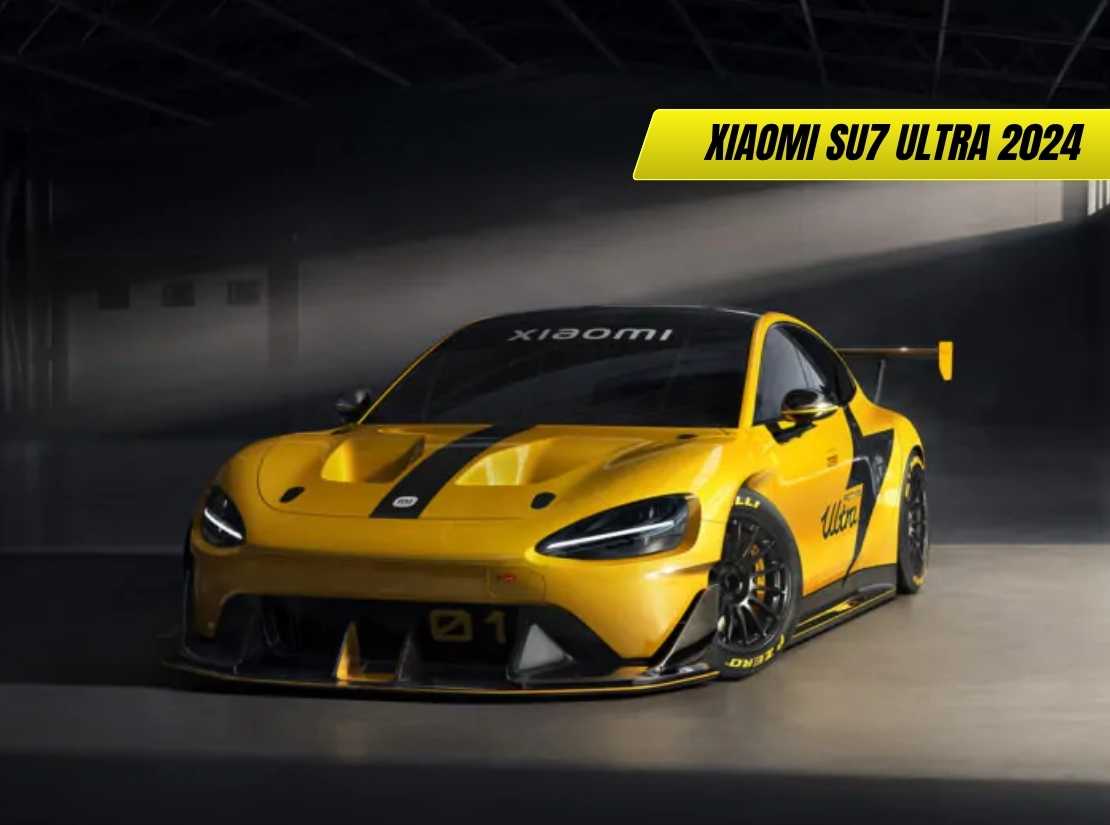
The Xiaomi SU7 Ultra sets new Nürburgring production EV record at 7:04.957, beating Porsche Taycan by 3 seconds with 1,527bhp for just £57,000. Full analysis of China’s supercar revolution.
According to our analysis at AutoHit, the Xiaomi SU7 Ultra’s conquest of the Nürburgring Nordschleife represents more than just another lap record – it’s a seismic shift in the global automotive hierarchy that UK enthusiasts need to understand. When a smartphone manufacturer can create an electric sedan that outpaces Porsche’s finest on Germany’s most demanding circuit, the implications extend far beyond mere bragging rights.
We’ve been tracking the emergence of Chinese automotive technology with increasing fascination, but the SU7 Ultra’s 7:04.957 production car lap time at the Nürburgring fundamentally changes the conversation. This isn’t just about Chinese manufacturers catching up with European excellence; it’s about them surpassing it whilst offering value propositions that would have seemed impossible just five years ago.
For UK performance car enthusiasts who’ve watched Chinese manufacturers evolve from copyists to innovators, the SU7 Ultra represents a watershed moment. That a company best known for smartphones has created the world’s fastest production electric sedan – whilst undercutting established rivals by over £100,000 – suggests the automotive landscape is undergoing revolutionary change rather than evolutionary development.
Key Highlights of the Xiaomi SU7 Ultra Achievement
• Nürburgring supremacy: 7:04.957 lap time beats Porsche Taycan Turbo GT by nearly 3 seconds • Hypercar performance: 1,527bhp from tri-motor setup, 0-62mph in 1.98 seconds, 217mph top speed
• Unprecedented value: Starting price around £57,000 ($72,800) – less than half a Porsche Taycan Turbo GT • Production reality: Unlike prototype stunts, this was achieved with a road-legal, production-specification vehicle • Global implications: First Chinese manufacturer to hold the production EV Nürburgring record • UK relevance: Demonstrates Chinese automotive capability reaching supercar standards at mainstream prices
The Record That Stunned Germany
The significance of the SU7 Ultra’s Nürburgring triumph cannot be overstated. The 12.9-mile Nordschleife has long been considered the ultimate proving ground for automotive excellence, where European manufacturers have traditionally demonstrated their engineering superiority. For a Chinese company – particularly one primarily known for consumer electronics – to claim the production EV lap record represents an unprecedented achievement.
Professional driver Vincent Radermecker piloted the production-specification SU7 Ultra to its 7:04.957 lap time, beating the previous record held by Porsche’s Taycan Turbo GT (7:07.55) by almost three seconds. More remarkably, the Xiaomi also outpaced the £2.2 million Rimac Nevera hypercar, which managed 7:05.298 in its official record attempt.
Context: A David vs Goliath Moment
The achievement becomes even more extraordinary when considering the cost disparity. The Porsche Taycan Turbo GT with Weissach package costs approximately £180,000, whilst the Rimac Nevera commands over £2 million. The SU7 Ultra, delivering superior track performance, retails for around £57,000 – making it faster than cars costing three to forty times more.
This value proposition fundamentally challenges established automotive hierarchies. UK buyers accustomed to paying premium prices for German engineering excellence must now confront the reality that a Chinese smartphone manufacturer has created a more capable track car for significantly less money.
Engineering Excellence: The 1,527bhp Tri-Motor Marvel
The SU7 Ultra’s performance credentials justify its Nürburgring success. The tri-motor configuration combines two ‘V8s’ motors (570bhp each) at the rear with a single ‘V6s’ motor (387bhp) at the front, delivering a combined 1,527bhp and 1,135Nm of torque. These aren’t just impressive numbers on paper – they translate into real-world performance that embarrasses established supercars.
The 0-62mph acceleration time of 1.98 seconds places the SU7 Ultra among the quickest production cars ever created, whilst the 5.86-second 0-124mph time demonstrates sustained acceleration that few vehicles can match. The 217mph top speed ensures autobahn capability that rivals traditional German performance cars.
Advanced Battery Technology
The powerplant relies on a cutting-edge CATL Qilin 2.0 battery pack with 93.7kWh capacity, capable of 10-80% charging in just 11 minutes under optimal conditions. The maximum discharge rate of 1,330kW enables the sustained high-power output necessary for track driving without the thermal limitations that affect many EVs during extended performance use.
For UK track day enthusiasts, this addresses one of the primary concerns about electric performance cars: the ability to maintain full power throughout multiple hot laps. The SU7 Ultra’s thermal management system ensures consistent performance even under extreme conditions.
Track-Focused Engineering: More Than Raw Power
The SU7 Ultra’s Nürburgring success stems from comprehensive engineering beyond just motor output. The aerodynamic package generates up to 630 pounds of downforce – exceeding the Porsche Taycan Turbo GT’s 485 pounds – whilst maintaining efficiency for road driving.
The carbon-ceramic brake system, featuring 430mm front discs with high-performance brake pads, achieves 62-0mph stopping distances of just 101 feet. The AP Racing calipers can withstand temperatures exceeding 800°C, ensuring consistent performance during demanding track sessions.
Suspension and Handling
The track-tuned suspension utilizes dual-chamber air springs paired with adaptive dampers, providing the adjustability necessary for both road comfort and track precision. The torque vectoring system across all three motors enables precise handling characteristics that traditional rear-wheel-drive performance cars struggle to match.
UK buyers familiar with European sports cars will recognize the sophistication of this approach. The SU7 Ultra doesn’t rely solely on power to achieve its lap times but demonstrates the sort of comprehensive engineering typically associated with established performance car manufacturers.
Market Disruption: Redefining Value Propositions
The SU7 Ultra’s pricing strategy represents potential disruption to established premium performance car markets. At approximately £57,000, it delivers performance that matches or exceeds vehicles costing several times more, whilst offering the practicality of a four-door sedan.
For UK buyers considering performance cars in the £100,000+ bracket, the SU7 Ultra’s capabilities demand serious consideration. Whilst it’s currently unavailable in European markets, its existence proves that Chinese manufacturers can deliver cutting-edge performance at prices that fundamentally challenge traditional value equations.
Comparison with Established Rivals
Against the Porsche Taycan Turbo GT’s £180,000 price tag, the SU7 Ultra offers superior performance for less than one-third the cost. The BMW i4 M50, Audi RS e-tron GT, and Mercedes EQS AMG all cost significantly more whilst delivering substantially less performance.
This value proposition extends beyond pure performance metrics. Models we’ve recently tested in premium SUVs under £60k demonstrate that UK buyers are increasingly price-conscious even in the premium segment. The SU7 Ultra’s combination of hypercar performance and reasonable pricing could reshape buyer expectations across multiple market segments.
Technology Integration: Smartphone Expertise Applied
Xiaomi’s background in consumer electronics manifests throughout the SU7 Ultra’s technology integration. The vehicle features comprehensive connectivity, over-the-air updates, and user interface design that reflects smartphone industry standards rather than traditional automotive approaches.
The integration of autonomous driving features – even in a 1,500bhp track car – demonstrates Xiaomi’s commitment to technology leadership. While the practical application of self-driving capability in a performance vehicle might seem questionable, it showcases the comprehensive approach Chinese manufacturers take toward automotive development.
Manufacturing Quality and Reliability
Initial reports from Chinese media suggest build quality that matches established premium manufacturers. The attention to detail, material selection, and assembly precision demonstrate that Chinese automotive manufacturing has evolved far beyond the stereotypes that UK buyers might retain from previous decades.
The fact that Ford CEO Jim Farley has been driving a standard SU7 for months and “doesn’t want to give it up” provides additional credibility to Xiaomi’s automotive capabilities. When the head of a major American automaker endorses a Chinese rival’s product, it signals genuine competitive threat rather than mere curiosity.
Global Automotive Implications
The SU7 Ultra’s success represents more than just one manufacturer’s achievement – it signals China’s emergence as a serious force in high-performance automotive engineering. This has profound implications for established European and American manufacturers who’ve traditionally dominated premium performance segments.
For UK buyers, this development suggests dramatically expanded choice in the performance car market. Chinese manufacturers are no longer content to compete solely on price but are demonstrating technological and engineering capabilities that rival or exceed traditional industry leaders.
The Smartphone Manufacturer Advantage
Xiaomi’s success highlights how tech companies approach automotive development differently from traditional manufacturers. The rapid iteration cycles, software-first thinking, and systems integration expertise from the electronics industry translate surprisingly well to automotive applications.
This approach enables Chinese manufacturers to develop competitive products remarkably quickly. Xiaomi entered automotive production only in 2021 yet has already created a vehicle that outperforms rivals with decades of experience. This accelerated development timeline suggests established manufacturers may struggle to maintain competitive advantage based solely on heritage and experience.
UK Market Context: What This Means for British Buyers
While the SU7 Ultra isn’t currently available in UK markets, its existence has immediate implications for British performance car buyers. The demonstration that Chinese manufacturers can create world-class performance vehicles at competitive prices will influence buyer expectations and manufacturer strategies across the industry.
Established premium brands will need to justify their pricing against the new reality of Chinese capability. UK buyers may increasingly question whether traditional European engineering excellence justifies significant price premiums when Chinese alternatives offer superior performance for less money.
Future Availability and Import Considerations
Current trade relationships and safety certification requirements mean Chinese performance cars remain largely unavailable in UK markets. However, the SU7 Ultra’s capabilities suggest that European availability might be worth pursuing for UK enthusiasts willing to navigate import procedures.
As highlighted in our comprehensive guide to the best hybrid cars for city driving, UK buyers are increasingly open to non-traditional manufacturers when they offer compelling value propositions. The SU7 Ultra’s performance credentials could overcome brand loyalty barriers that have traditionally favored European manufacturers.
Competitive Response: How Will Established Manufacturers React?
The SU7 Ultra’s Nürburgring success will likely accelerate competitive responses from established manufacturers. Porsche, in particular, faces the embarrassment of losing its electric vehicle lap record to a Chinese smartphone company on German soil.
This pressure could benefit UK buyers through accelerated development of more capable and competitively priced performance EVs. Manufacturers may be forced to offer greater value and more aggressive specifications to maintain market position against emerging Chinese competition.
Innovation Acceleration
The challenge posed by Chinese manufacturers like Xiaomi could drive innovation across the industry. Established brands may need to fundamentally rethink their approach to development timelines, feature integration, and pricing strategies to remain competitive.
For UK enthusiasts, this competitive pressure should result in better performance cars at more reasonable prices across all manufacturers. The traditional premium associated with European engineering excellence may become harder to justify when Chinese alternatives offer superior capability.
Environmental and Efficiency Considerations
Despite its extreme performance, the SU7 Ultra maintains practical electric vehicle characteristics including a claimed 391-mile range under Chinese testing conditions. While UK range would likely be lower, the combination of hypercar performance with genuine long-distance capability addresses traditional EV limitations.
The 11-minute charging capability, whilst requiring suitable infrastructure, demonstrates the potential for high-performance EVs to function as practical long-distance vehicles. For UK buyers, this suggests that track-capable EVs need not compromise on real-world usability.
Track Day Revolution: Implications for UK Enthusiasts
The SU7 Ultra’s capabilities could revolutionize the UK track day scene. A four-door sedan offering Nürburgring-record performance for under £60,000 would attract enthusiasts currently priced out of serious track cars by European alternatives.
The instant torque delivery and torque vectoring capabilities of electric powertrains offer advantages over traditional combustion engines on technical circuits. UK track day regulars familiar with the limitations of conventional performance cars might find the SU7 Ultra’s capabilities transformational.
Accessibility and Democracy
The SU7 Ultra’s pricing democratizes extreme performance in ways previously impossible. UK enthusiasts who couldn’t justify £200,000+ for a track-capable hypercar might consider £60,000 for similar capability, particularly when it includes four-door practicality.
This accessibility could expand the UK track day community whilst challenging established hierarchies based on vehicle cost rather than capability. The fastest car on track might no longer be the most expensive.
Our Assessment: A Paradigm Shift in Progress
The Xiaomi SU7 Ultra’s Nürburgring achievement represents genuine paradigm shift rather than isolated success. The combination of world-class performance, competitive pricing, and comprehensive engineering demonstrates that Chinese manufacturers have evolved far beyond expectations.
For UK buyers, this development demands serious consideration of assumptions about brand hierarchy, engineering excellence, and value propositions in the performance car market. The SU7 Ultra proves that cutting-edge automotive capability can come from unexpected sources at unprecedented prices.
However, questions remain about long-term reliability, service support, and availability in European markets. The SU7 Ultra’s impressive specifications and track performance don’t automatically translate to successful UK ownership experience without proper support infrastructure.
Industry Implications: The New Reality
The automotive industry is experiencing fundamental change as traditional boundaries between tech companies and automakers dissolve. Xiaomi’s success suggests that expertise in electronics, software, and systems integration may be more valuable than traditional automotive engineering experience in the EV era.
For established manufacturers, the SU7 Ultra’s achievement represents an existential challenge. Competing against companies with different cost structures, development approaches, and market expectations requires fundamental strategic reassessment.
Frequently Asked Questions
How did the Xiaomi SU7 Ultra beat Porsche’s Nürburgring record?
The Xiaomi SU7 Ultra achieved a production car lap time of 7:04.957 at the Nürburgring Nordschleife, beating the Porsche Taycan Turbo GT’s previous record of 7:07.55 by nearly three seconds. The achievement was accomplished with a road-legal production specification vehicle driven by professional driver Vincent Radermecker. The SU7 Ultra’s 1,527bhp tri-motor powertrain, advanced aerodynamics generating 630 pounds of downforce, and sophisticated torque vectoring system enabled the record-breaking performance on Germany’s most demanding circuit.
What makes the SU7 Ultra so much faster than established supercars?
The SU7 Ultra combines several technological advantages: a tri-motor setup producing 1,527bhp with instant torque delivery, advanced torque vectoring across all wheels for precise handling, superior aerodynamics generating more downforce than the Porsche Taycan Turbo GT, and a sophisticated thermal management system that maintains full power during extended track use. The electric drivetrain’s instant response and the ability to precisely control power to each wheel provides advantages over traditional combustion engines, particularly on technical circuits like the Nürburgring.
How much does the Xiaomi SU7 Ultra cost compared to its rivals?
The SU7 Ultra starts at approximately £57,000 ($72,800), making it dramatically cheaper than its performance rivals. The Porsche Taycan Turbo GT costs around £180,000, the Rimac Nevera (which the SU7 Ultra also outpaced) costs over £2 million, and other high-performance EVs like the Audi RS e-tron GT and BMW i4 M50 cost significantly more while delivering less performance. This represents unprecedented value in the performance car segment, offering hypercar capability at sports car pricing.
Is the Xiaomi SU7 Ultra available to buy in the UK?
Currently, the SU7 Ultra is only available in the Chinese market, with no official plans for UK or European sales announced. Chinese automotive imports face various regulatory, certification, and trade considerations that complicate European availability. However, the vehicle’s impressive capabilities and competitive pricing suggest there could be demand for Chinese performance cars in UK markets if regulatory and commercial barriers were addressed. UK buyers interested in similar performance must currently look to much more expensive European alternatives.
How reliable are Chinese electric vehicles like the SU7 Ultra?
While long-term reliability data for the SU7 Ultra specifically isn’t available given its recent launch, Chinese EV manufacturers have generally improved quality significantly in recent years. Xiaomi benefits from extensive experience in electronics manufacturing and quality control from its smartphone business. Early reports from Chinese media suggest build quality and materials that match established premium manufacturers. However, UK buyers would need to consider service support, parts availability, and warranty coverage if considering Chinese vehicles through import channels.
What does the SU7 Ultra’s success mean for traditional luxury car brands?
The SU7 Ultra’s achievement represents a fundamental challenge to traditional luxury automotive brands, particularly those commanding premium prices based on heritage and engineering reputation. When a Chinese smartphone manufacturer can create a vehicle that outperforms established rivals at a fraction of the cost, it questions the value proposition of traditional luxury brands. This pressure could benefit consumers through more competitive pricing and accelerated innovation from established manufacturers forced to justify their premium positioning against Chinese alternatives.
Could the SU7 Ultra’s technology appear in other vehicles?
Xiaomi’s success with the SU7 Ultra demonstrates technologies and approaches that other manufacturers will likely adopt. The tri-motor torque vectoring, advanced thermal management, rapid charging capabilities, and integrated electronics represent technological directions that the broader industry is pursuing. However, the specific combination of performance, pricing, and capability that Xiaomi has achieved may force other manufacturers to fundamentally rethink their development and pricing strategies to remain competitive in the evolving EV performance market.
Our Verdict: Respect Where It’s Due
The Xiaomi SU7 Ultra deserves recognition as a genuine achievement in automotive engineering. The combination of 1,527bhp output, Nürburgring-record performance, and £57,000 pricing represents unprecedented value in the performance car segment.
Whilst UK buyers cannot currently purchase the SU7 Ultra, its existence should influence expectations and purchasing decisions across the performance car market. The demonstration that Chinese manufacturers can exceed established benchmarks at competitive prices suggests the global automotive hierarchy is undergoing permanent change.
For UK enthusiasts, the SU7 Ultra serves as proof that the future of performance cars may come from unexpected sources. Traditional assumptions about brand prestige, engineering excellence, and value propositions need updating to reflect new realities in global automotive development.
The smartphone manufacturer has built a supercar that beats Porsche at its own game. That sentence alone captures the magnitude of change occurring in the automotive industry and explains why UK buyers need to pay attention to developments far beyond traditional European manufacturers.
Whether or not the SU7 Ultra ever reaches UK showrooms, its impact on the global performance car landscape has already been profound. The automotive world has changed, and the change appears permanent.





