
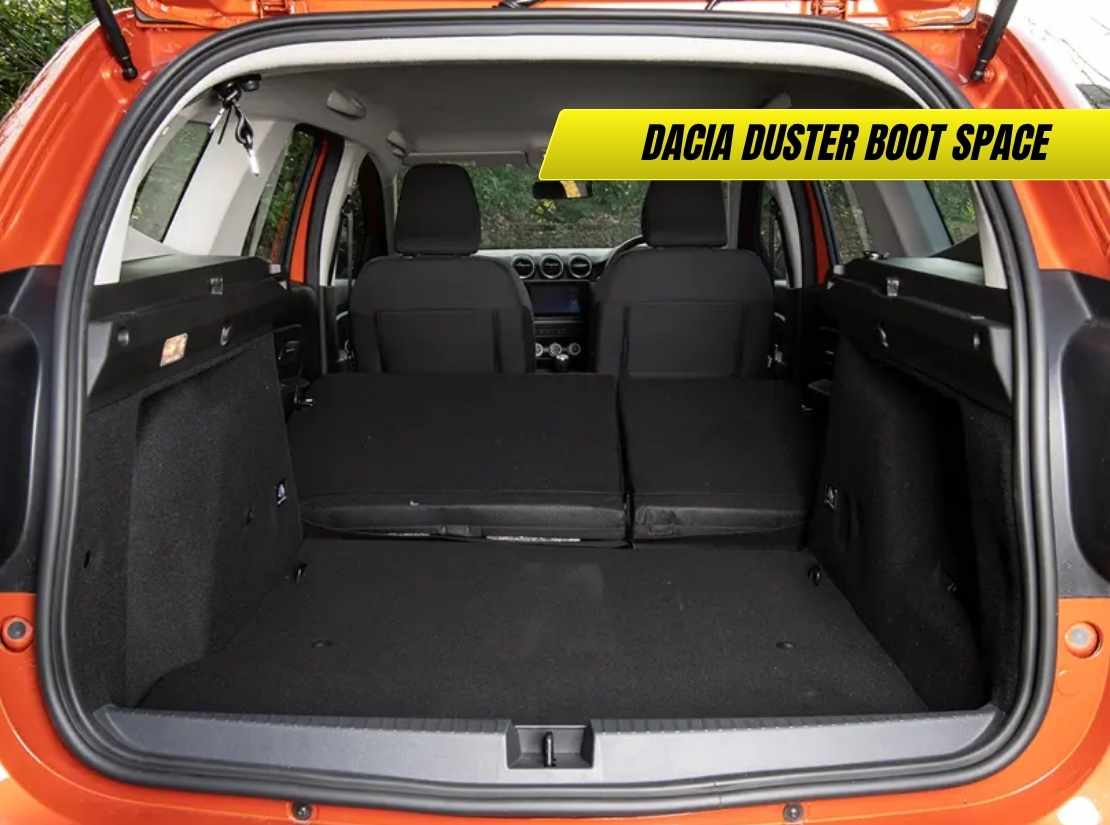
Complete guide to Dacia Duster boot space: 472-litre capacity, loading dimensions, family practicality and how it compares to rivals in the UK market.
The Dacia Duster has carved out a unique position in the UK SUV market by offering impressive practicality at budget-friendly prices, with boot space representing a key consideration for families evaluating this Romanian SUV. According to our analysis at AutoHit, the Duster’s 472-litre cargo capacity positions it competitively within the compact SUV segment while delivering the generous space that British families increasingly demand.
Recent updates to the Duster range have refined both exterior dimensions and interior packaging, with boot space optimisation reflecting Dacia’s understanding of real-world family requirements. We’ve examined the Duster’s cargo capabilities, loading characteristics, and practical considerations that affect daily usability for everything from weekly shopping to extended family holidays.
The challenge lies in understanding that raw boot volume figures only tell part of the practicality story, with access height, loading shape, and seat flexibility often proving more important than headline capacity numbers. Understanding the Duster’s real-world cargo capabilities and how they compare to alternatives has become essential knowledge for families considering this increasingly popular budget SUV option.
Key Highlights: Dacia Duster Boot Facts
• 472-litre boot capacity with seats up, competitive within compact SUV segment • 79cm loading height may challenge shorter users but typical for SUV category • Split-folding rear seats expand capacity significantly for larger items • Regular boot shape maximises usable space compared to sloped alternatives • Practical accessories including double floor and load organisation systems • Budget positioning offers impressive space per pound compared to premium rivals
Duster Boot Dimensions and Capacity
Official Capacity Figures
The current generation Dacia Duster offers a practical 472-litre boot capacity with all seats in use, positioning it competitively within the compact SUV segment while delivering the space that UK families require for daily and holiday use.
Standard Boot Volume:
- Seats up: 472 litres VDA measurement
- Previous generation: 478 litres (slight reduction due to updated design)
- 4WD variants: Potentially reduced due to spare wheel accommodation
- Hybrid models: Similar capacity maintained despite electrification
Extended Capacity: With rear seats folded, the Duster provides substantially increased cargo space:
- Maximum capacity: Approximately 1,600+ litres with seats down
- Loading length: Nearly 1.8 metres from boot floor to dashboard
- Load floor width: Consistent width maintaining usability
- Height clearance: Generous vertical space for bulky items
Segment Comparison: The Duster’s boot capacity compares favourably within its price segment:
- Larger than: Nissan Juke (422 litres), Renault Captur (422 litres)
- Similar to: Ford Puma (456 litres), Skoda Kamiq (400 litres)
- Smaller than: Skoda Karoq (521 litres), SEAT Ateca (510 litres)
From a UK perspective, this positions the Duster as offering excellent space value, particularly considering its significantly lower purchase price compared to most rivals.
Practical Loading Dimensions
Understanding the Duster’s loading dimensions helps assess real-world practicality beyond simple volume figures that may not reflect actual usability for common cargo requirements.
Boot Opening Dimensions:
- Width: 1,050mm between wheel arches
- Height: 730mm from floor to parcel shelf
- Depth: 870mm from boot opening to rear seats
- Loading sill height: 790mm from ground level
Usable Space Characteristics:
- Regular shape: Rectangular boot floor maximising space utilisation
- Minimal intrusion: Wheel arches don’t significantly reduce loading width
- Double floor: Additional storage beneath main cargo area
- Side storage: Door pockets and nets for smaller items
Access Considerations: The 79cm loading height represents typical SUV territory but may challenge shorter users:
- Adult accessibility: Comfortable for most adults loading heavy items
- Child access: May require assistance for children loading school bags
- Shopping practicality: Standard supermarket trolley unloading manageable
- Heavy items: Loading height affects lifting requirements for heavy cargo
Real-World Family Practicality
Weekly Shopping and Daily Use
The Duster’s boot design prioritises the practical requirements of British family life, from weekly supermarket shops to school run equipment storage.
Supermarket Shopping: The Duster accommodates typical UK family shopping requirements effectively:
- Large shop: Full weekly shop for family of four fits comfortably
- Trolley compatibility: Standard shopping trolley contents transfer easily
- Bag organisation: Double floor and hooks enable organised loading
- Fragile items: Stable loading prevents damage during transport
School Run Practicality: Daily school requirements benefit from the Duster’s generous and accessible space:
- Sports equipment: Football boots, cricket bats, and sports bags fit easily
- Musical instruments: Guitar cases and larger instruments accommodate
- Project materials: School project supplies and materials storage
- Multiple children: Equipment for several children organises effectively
Work and Business Use: Professional requirements often benefit from the Duster’s practical boot design:
- Tool storage: Trades equipment and tool boxes fit securely
- Sample transport: Sales samples and demonstration materials
- Document storage: Files and business materials remain organised
- Mixed cargo: Personal and professional items compartmentalise effectively
Holiday and Travel Capacity
Extended family travel reveals the Duster’s capacity for accommodating holiday luggage and travel equipment that British families require for both domestic and international trips.
Domestic Holiday Packing: UK family holidays benefit from the Duster’s generous and flexible space:
- Four large suitcases: Family luggage for week-long holidays
- Additional bags: Hand luggage, toiletry bags, and travel accessories
- Travel equipment: Travel cots, pushchairs, and child equipment
- Entertainment: Books, games, and in-car entertainment systems
International Travel: Airport runs and longer journeys demonstrate the Duster’s travel capabilities:
- Multiple suitcases: International baggage allowances accommodate easily
- Duty-free shopping: Return journey capacity for additional purchases
- Gift transport: Holiday souvenirs and presents for extended family
- Equipment variety: Mix of hard and soft luggage types organise effectively
Camping and Outdoor Activities: The Duster’s outdoor credentials extend to cargo capacity for recreational activities:
- Camping equipment: Tents, sleeping bags, and outdoor cooking gear
- Sports equipment: Bicycles (with seats down), skiing equipment, water sports gear
- Festival supplies: Multiple days’ worth of clothing, food, and equipment
- Walking gear: Boots, rucksacks, and outdoor clothing for family hiking
Boot Features and Storage Solutions
Practical Design Elements
The Duster incorporates thoughtful design features that enhance cargo practicality beyond simple volume provision, addressing real-world loading and organisation requirements.
Double Floor System: The Duster’s double floor provides valuable additional storage and organisation:
- Hidden storage: Valuable items storage beneath main cargo area
- Level loading: Creates flat loading surface for awkward items
- Organisation: Separates different cargo types effectively
- Flexibility: Adjustable height accommodates varying requirements
Load Organisation: Multiple features support organised cargo management:
- YouClip system: Configurable attachment points for bags and equipment
- Load hooks: Multiple fixing points for securing loose items
- Side storage: Door pocket storage for frequently accessed items
- Parcel shelf: Removable shelf enables vertical space maximisation
Access and Security: Practical features enhance daily usability and cargo security:
- Wide opening: Generous tailgate opening eases loading/unloading
- Low threshold: Despite SUV height, internal loading step remains manageable
- Tonneau cover: Retractable cover provides cargo privacy and security
- Load space lighting: Interior lighting enables evening loading
Innovative Storage Solutions
Modern Duster variants incorporate clever storage solutions that maximise space utilisation while addressing specific user requirements.
Sleep Pack Option: The 2024 Duster introduces innovative camping-focused storage:
- 3-in-1 design: Removable storage box incorporating sleeping accommodation
- Double bed: 1.9m x 1.3m sleeping surface for two adults
- Quick setup: Rapid conversion from cargo to sleeping space
- Integrated storage: Box provides organised equipment storage when not sleeping
Modular Systems: Aftermarket and dealer accessories expand organisation options:
- Cargo dividers: Adjustable partitions preventing load movement
- Boot mats: Protective surfaces for wet or dirty cargo
- Storage boxes: Rigid containers maintaining organisation
- Bike racks: Internal bicycle storage solutions
Technology Integration: Modern convenience features support practical cargo management:
- Power outlets: 12V and USB charging for equipment
- Hands-free opening: Proximity sensors enabling hands-free access
- Loading assistance: Automatic height adjustment for ease of loading
Comparison with UK Market Rivals
Compact SUV Segment Analysis
Understanding how the Duster’s boot space compares to key UK market rivals helps families assess whether its cargo capacity meets their specific requirements.
Direct Competitors: Popular compact SUVs in the UK market show varying boot capacity approaches:
Nissan Qashqai: 504 litres
- Advantage: 32 litres more capacity, premium interior quality
- Disadvantage: Significantly higher purchase price, complex loading shape
Ford Puma: 456 litres + 80-litre underfloor space
- Advantage: Innovative MegaBox system, excellent driving dynamics
- Disadvantage: 16 litres less standard capacity, higher running costs
Skoda Kamiq: 400 litres
- Advantage: Superior interior quality, excellent build standards
- Disadvantage: 72 litres less capacity, limited off-road capability
Renault Captur: 422 litres
- Advantage: Related platform, similar mechanical reliability
- Disadvantage: 50 litres less capacity, higher purchase price
Value Proposition Analysis
The Duster’s boot space becomes particularly impressive when considered alongside its competitive pricing and total ownership proposition.
Space Per Pound Value: Calculating cargo capacity relative to purchase price reveals the Duster’s exceptional value:
- Duster: Approximately 22-25 litres per £1,000 of purchase price
- Premium rivals: Typically 12-15 litres per £1,000 of purchase price
- Value advantage: Often 50-70% more space per pound spent
- Total cost consideration: Lower insurance and running costs enhance value further
Practical Priorities: For families prioritising practical space over premium features:
- Cargo priority: Families valuing space over luxury find exceptional value
- Budget constraints: Limited budgets achieve maximum practical benefit
- Simplicity preference: Uncomplicated design appeals to practical users
- Value consciousness: Price-sensitive buyers achieve premium space at budget cost
| Model | Boot Capacity | Starting Price | Space per £1,000 | Our Value Rating |
|---|---|---|---|---|
| Dacia Duster | 472 litres | £18,995 | 24.8 litres | Excellent |
| Nissan Qashqai | 504 litres | £26,395 | 19.1 litres | Good |
| Ford Puma | 456 litres | £23,945 | 19.0 litres | Good |
| Skoda Kamiq | 400 litres | £22,990 | 17.4 litres | Average |
| SEAT Ateca | 510 litres | £25,915 | 19.7 litres | Good |
The Duster consistently delivers exceptional space value while maintaining competitive absolute capacity figures.
Loading and Access Practicality
Daily Use Scenarios
Real-world loading scenarios reveal how the Duster’s design affects daily family life and practical cargo management requirements.
Supermarket Loading: Weekly shopping represents the most common cargo challenge for UK families:
- Trolley height: Standard supermarket trolley height aligns reasonably with boot floor
- Bag organisation: Multiple shopping bags organise effectively using boot features
- Heavy items: Loading height manageable for most adults lifting heavy shopping
- Frozen goods: Quick loading access supports frozen food transport
Child Equipment: Families with young children face specific loading requirements:
- Pushchair storage: Standard pushchairs fit easily with seats up
- Car seat transport: Additional car seats store securely for grandparent visits
- Nappy bags: Large changing bags and equipment organise effectively
- Toy transport: Bulky toys and outdoor equipment accommodate easily
Sports and Activities: Active families benefit from the Duster’s generous and accessible cargo space:
- Football equipment: Multiple children’s sports gear fits easily
- Cycling equipment: Bikes fit with seats folded, helmets and accessories in compartments
- Swimming gear: Wet equipment separates from dry items using organisation features
- Outdoor activities: Walking boots, waterproofs, and outdoor equipment store securely
Accessibility Considerations
The Duster’s SUV proportions create both advantages and challenges for different users accessing cargo space.
Adult Access: Most adults find the Duster’s loading height manageable:
- Average height users: 790mm loading height suits most adults comfortably
- Taller users: Generous opening height prevents stooping during loading
- Physical limitations: Higher loading position may challenge users with back problems
- Loading assistance: Boot design enables leverage for lifting heavy items
Elderly User Considerations: Older drivers may face specific challenges with SUV loading heights:
- Lifting requirements: Higher loading may strain backs and shoulders
- Step assistance: Running boards or steps may improve access
- Loading aids: Trolleys and loading ramps can assist with heavy items
- Alternative strategies: Multiple smaller loads may prove more manageable
Child Independence: School-age children’s ability to manage their own equipment loading:
- Height challenges: 790mm loading height exceeds many children’s comfortable reach
- Independence impact: May require adult assistance longer than saloon car alternatives
- Safety considerations: Children may need step assistance for safe loading
- Training opportunities: Can teach children proper lifting and loading techniques
Future Developments and Updates
Upcoming Model Changes
Dacia continues developing the Duster platform with updates that may affect cargo capacity and practical features in future model years.
Platform Evolution: The CMF-B platform underlying the Duster enables various cargo enhancements:
- Structural optimisation: Improved packaging efficiency maintaining capacity
- Weight reduction: Lighter construction potentially improving fuel economy without space penalty
- Modular design: Platform flexibility enabling variant-specific cargo solutions
- Technology integration: Enhanced cargo management through digital systems
Electrification Impact: Future hybrid and electric Duster variants may affect cargo space:
- Battery packaging: Careful integration maintaining cargo capacity
- Weight distribution: Improved balance potentially enhancing load carrying
- Charging infrastructure: Cable storage solutions integrated into cargo area
- Range optimisation: Cargo capacity maintained despite electrification
Market Response: Dacia’s response to UK market feedback may influence future cargo developments:
- Capacity increases: Potential size increases responding to family requirements
- Feature enhancement: Additional organisation and convenience features
- Accessory expansion: Broader range of cargo management accessories
- Value maintenance: Continued focus on space value despite feature additions
Technology Integration
Emerging cargo management technologies may enhance the Duster’s practical capabilities while maintaining its value positioning.
Smart Loading Systems: Future developments may include intelligent cargo features:
- Load monitoring: Sensors monitoring cargo weight and distribution
- Space optimisation: Digital systems suggesting optimal loading configurations
- Security enhancement: Advanced alarm systems protecting cargo
- Convenience features: Automated loading assistance and organisation
Connectivity Solutions: Digital integration enhancing cargo management:
- Mobile apps: Smartphone applications supporting loading planning and organisation
- Inventory tracking: Digital systems tracking cargo contents and location
- Sharing capabilities: Family coordination of cargo space and requirements
- Maintenance reminders: Automated cargo area cleaning and maintenance alerts
Frequently Asked Questions
How much boot space does the Dacia Duster have?
The current Dacia Duster offers 472 litres of boot space with all seats up, making it competitive within the compact SUV segment. With the rear seats folded down, capacity expands to approximately 1,600+ litres. This provides excellent space for a family of four’s weekly shopping, holiday luggage, or sports equipment. The regular-shaped boot maximises usable space compared to some rivals with sloped designs.
Is the Dacia Duster boot space suitable for family holidays?
Yes, the Duster’s 472-litre boot easily accommodates a family of four’s holiday luggage. Four large suitcases fit comfortably with additional space for hand luggage and travel accessories. For longer holidays or camping trips, the split-folding rear seats provide massive additional capacity. The regular boot shape and wide opening make loading and organising holiday gear straightforward.
How does the Duster’s boot compare to other compact SUVs?
The Duster offers competitive space within its segment: larger than the Nissan Juke (422L) and Ford Puma (456L), similar to the Renault Captur (422L), but smaller than the Skoda Karoq (521L). However, when considering price, the Duster offers exceptional value with approximately 25 litres per £1,000 spent – significantly better than most rivals. The practical, regular-shaped boot often proves more useful than larger but awkwardly shaped alternatives.
Can you fit a pushchair in the Dacia Duster boot?
Standard pushchairs fit easily in the Duster’s boot with all seats up, leaving room for additional shopping or baby equipment. The 472-litre capacity and regular boot shape accommodate most pushchair types without difficulty. The wide opening and relatively low internal loading lip make getting pushchairs in and out straightforward. For larger or multiple pushchairs, the split-folding rear seats provide additional space.
What’s the loading height of the Dacia Duster?
The Duster has a loading sill height of 79cm from the ground, which is typical for compact SUVs but higher than traditional saloons or estates. Most adults find this manageable for regular loading, though it may challenge shorter users or those with mobility issues. The height does provide good ground clearance for rough terrain and gives a commanding driving position. Loading aids like small steps can help if accessibility is a concern.
Does the Dacia Duster have useful boot storage features?
Yes, the Duster includes several practical features including a double floor system for hidden storage, YouClip attachment points for securing bags, multiple load hooks, and side storage pockets. The tonneau cover provides security and privacy for valuables. Higher trim levels may include additional features like boot lighting and load area protection. The 2024 model introduces an innovative Sleep Pack option that converts the cargo area into sleeping accommodation.
Can you fit bikes in the Dacia Duster boot?
Adult bikes won’t fit in the boot with seats up, but with the rear seats folded down, the Duster can accommodate bicycles. The nearly 1.8-metre loading length with seats down provides sufficient space for most adult bikes with front wheels removed. Children’s bikes may fit with seats up depending on size. For regular bike transport, roof or towbar-mounted bike carriers are often more practical solutions.
Conclusion: Practical Space at Exceptional Value
The Dacia Duster’s boot space represents one of its strongest selling points, delivering generous, practical cargo capacity at a price point that makes it accessible to budget-conscious families seeking SUV versatility. The 472-litre capacity, combined with intelligent storage solutions and flexible seating, creates a cargo area that punches well above its weight class.
Our Bottom Line: For families prioritising practical space over premium features, the Duster delivers exceptional value with cargo capacity that rivals significantly more expensive alternatives. The regular boot shape, wide opening, and clever storage features maximise real-world usability beyond simple volume figures.
The key lies in understanding that the Duster targets practical families who need space without paying premium prices for luxury features they don’t require. This focus on essentials rather than refinement creates outstanding space value that few rivals can match.
Perfect for the school run and weekend trips to the Cotswolds, the Duster’s generous boot space accommodates family life’s varying demands while maintaining the budget-friendly pricing that makes SUV practicality accessible to more UK families. The investment in practical design over premium materials delivers space where it matters most.
Looking ahead, future Duster developments will likely maintain this space priority while adding modern convenience features, ensuring that practical families continue finding exceptional value in Dacia’s no-nonsense approach to family transport.





