
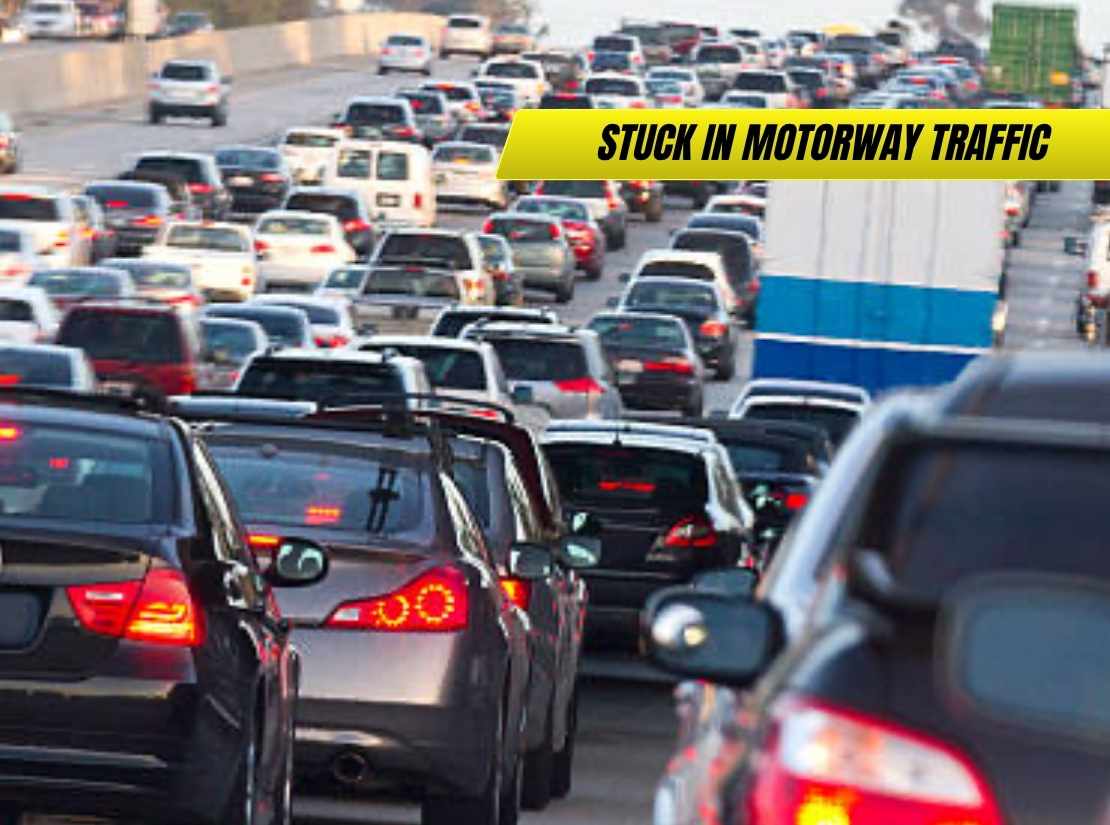
Essential guide for UK drivers stuck in motorway traffic jams. Learn safety protocols, fuel-saving techniques, smart motorway rules, and when to call for help during extended delays.
Every British driver knows the frustration of watching the M25 transform into what locals call “the world’s largest car park” during peak hours. Motorway traffic jams have become an inevitable part of UK driving, with major routes like the M6 through Birmingham or the M8 around Glasgow regularly experiencing delays that can extend journeys from hours to entire afternoons.
According to our analysis at AutoHit, understanding how to manage extended motorway delays has become essential knowledge for UK drivers, particularly as smart motorway technology changes traditional traffic management approaches. INRIX data shows British drivers lose an average of 80 hours annually to traffic congestion, with costs extending beyond time to include fuel waste, vehicle wear, and stress-related health impacts. We’ve gathered insights from traffic officers, driving instructors, and breakdown specialists to provide comprehensive guidance for navigating these challenging situations safely and efficiently.
The reality is that motorway traffic jams aren’t simply inconveniences to endure – they’re complex situations requiring specific skills and decision-making that can significantly impact your safety, comfort, and costs. From understanding when it’s safe to switch off your engine to knowing how to respond if you run low on fuel, the choices you make during extended delays can prevent dangerous situations and reduce the financial impact of unexpected delays.
Key Highlights:
- Safety First: Stay in your vehicle unless you can safely reach the hard shoulder or emergency refuge area – never exit onto the carriageway during slow-moving traffic
- Fuel Conservation: Modern engines can idle for 2-4 hours on a quarter tank, but strategic engine management can extend this significantly during extended delays
- Smart Motorway Rules: Red X signals mean absolute lane closure – using closed lanes results in £100 fines and 3 penalty points under current enforcement
- Emergency Procedures: Call 999 for medical emergencies, 0300 123 5000 for National Highways for breakdowns, and use SOS buttons where available
- Legal Requirements: You must remain with your vehicle or in a position of safety – walking along motorways is illegal and extremely dangerous
- Cost Impact: Proper jam management can save £50+ per incident in fuel costs and prevent expensive breakdown callouts
Understanding Why UK Motorway Traffic Jams Form
Motorway traffic jams develop through complex interactions between traffic volume, road capacity, and driver behaviour that create cascading delays across entire networks. The phenomenon, studied extensively by transport engineers, shows that even minor speed variations in high-density traffic can trigger “phantom jams” that propagate backward through traffic flow for miles.
Research from Vanderbilt University, replicated on UK motorways, demonstrates that adaptive cruise control systems can significantly reduce jam formation by maintaining consistent following distances. However, the majority of vehicles on British roads still rely on human drivers whose natural tendency to brake unnecessarily or follow too closely creates the stop-start patterns that evolve into major congestion.
The M25’s notorious reputation stems from its design challenges and traffic volume, with sections like Junction 8-10 experiencing over 196,000 vehicles daily. When traffic flow approaches road capacity limits, any disruption – from lane closures to minor accidents – can trigger congestion that takes hours to clear even after the original cause is removed.
Smart Motorway Impact on Traffic Flow
Smart motorways across the UK use variable speed limits and dynamic hard shoulder allocation to manage traffic flow, but they create new challenges during congestion periods. The technology can prevent jams by controlling traffic speed, but when congestion does occur, the loss of permanent hard shoulders complicates breakdown management and emergency access.
Variable mandatory speed limits shown on overhead gantries must be obeyed even when traffic appears to be moving faster, as these systems anticipate congestion development and attempt to smooth traffic flow before jams form. Understanding these systems helps drivers work with traffic management rather than against it.
Red X signals indicating lane closures are legally enforceable, with automatic number plate recognition systems issuing £100 fines and 3 penalty points for violations. During traffic jams, these signals often indicate accident sites or broken-down vehicles ahead, making compliance essential for safety as well as legal reasons.
Immediate Actions When Traffic Stops
When traffic suddenly slows or stops on UK motorways, your immediate response can prevent accidents and position you safely for extended delays. The first priority is ensuring adequate following distance – in slow-moving traffic, maintain at least a 2-second gap to the vehicle ahead, allowing room for gentle acceleration and braking.
Switch on hazard warning lights immediately if traffic comes to a complete stop, particularly on curves or hills where following drivers may not see the congestion until the last moment. This warning helps prevent the rear-end collisions that often worsen motorway incidents and create secondary blockages.
Assess your lane position and surrounding traffic to identify the safest positioning for extended delays. If possible, avoid positioning directly alongside heavy goods vehicles, as their size can limit visibility and create additional risks if emergency vehicles need access through the traffic.
Initial Safety Checks
Check your fuel level immediately – if you have less than a quarter tank and traffic appears severely congested, consider your options for fuel conservation or alternative routes before becoming committed to extended idling. Running out of fuel on a motorway creates dangerous situations that require emergency response.
Ensure all passengers, particularly children, understand they must remain in the vehicle unless specifically instructed otherwise. The temptation to exit vehicles during traffic jams is natural but extremely dangerous, as traffic can resume moving with little warning.
Switch your mobile phone to low power mode and ensure it’s accessible for emergency calls. In extended jams, preserving battery life becomes important for maintaining communication with emergency services or traffic information sources.
Fuel Management During Extended Delays
Modern vehicles consume approximately 0.5-1 litre of fuel per hour while idling, meaning a quarter tank can sustain 2-4 hours of stationary traffic depending on engine size and condition. However, strategic engine management can significantly extend this duration while maintaining essential vehicle functions.
During stop-start traffic moving slower than 10mph, consider switching off the engine during stationary periods longer than 30 seconds, particularly if you have stop-start technology that automates this process. Manual restarts use minimal fuel compared to extended idling, and modern engines handle frequent starts without damage.
Air conditioning systems consume significant additional fuel during idling – up to 50% more than engine-only operation. During extended delays, use ventilation fans instead of air conditioning, or open windows if external air quality permits, to reduce fuel consumption substantially.
Engine Temperature Management
Monitor engine temperature gauges during extended idling, particularly in hot weather or if air conditioning use is necessary. If temperature begins rising, turn off air conditioning and switch on cabin heating to full power, which helps draw heat away from the engine cooling system.
If engine temperature continues rising despite these measures, you may need to switch off the engine periodically to allow cooling. Plan these shutdowns during stationary traffic periods, and restart before traffic begins moving to avoid disrupting flow.
Never attempt to add coolant or remove radiator caps during traffic jams, as engine components remain extremely hot and pressurized. If overheating persists, move to the hard shoulder or emergency refuge area if safely possible, or call for breakdown assistance.
Smart Motorway Protocols and Safety
Smart motorways require different approaches to traditional motorway traffic management, particularly regarding hard shoulder usage and emergency procedures. Understanding these systems prevents dangerous situations and ensures compliance with traffic regulations that carry significant penalties.
Emergency refuge areas (ERA) replace traditional hard shoulders on many smart motorways, positioned approximately every 1.5 miles but sometimes with gaps of up to 2.5 miles. During traffic jams, these areas provide the only safe locations for vehicle breakdowns or medical emergencies, making their identification crucial for journey planning.
Variable mandatory speed limits displayed on overhead gantries remain legally enforceable even during traffic jams. These limits often appear to be unnecessarily low when traffic is moving slowly, but they’re designed to prevent traffic waves and maintain flow efficiency across the network.
Lane Closure Management
Red X signals indicate absolute lane closures that must not be entered under any circumstances. During traffic jams, these closures often protect accident sites, broken-down vehicles, or emergency service operations, making compliance essential for responder safety.
If traffic is directed to use the hard shoulder (indicated by speed limit signs above the hard shoulder), this temporarily becomes a running lane with the same legal status as other traffic lanes. However, emergency vehicles may still need access, so remain alert for sirens and blue lights.
When exiting a closed lane, indicate early and merge when safe rather than continuing to the closure point. Late merging during traffic jams creates additional congestion and increases accident risk as vehicles compete for limited space.
When and How to Seek Help
Breakdown situations during motorway traffic jams require careful assessment of safety risks versus waiting for traffic to clear. If your vehicle develops mechanical problems but remains safe to drive slowly, consider whether continuing in traffic is safer than attempting to reach the hard shoulder through multiple traffic lanes.
For mechanical breakdowns on smart motorways without hard shoulders, attempt to reach an emergency refuge area if within reasonable distance. If this isn’t possible, move to the leftmost lane, switch on hazard warnings, and call National Highways immediately on 0300 123 5000 to request traffic management assistance.
Medical emergencies during traffic jams require immediate response regardless of traffic conditions. Call 999 and provide your exact location including motorway designation, direction of travel, and nearest junction numbers. Emergency services can coordinate with traffic management to create access routes through congested traffic.
Communication Procedures
Use SOS call boxes where available rather than mobile phones when possible, as these automatically provide location information to emergency operators. If using mobile phones, provide detailed location information including motorway number, direction, nearest junction numbers, and distinctive landmarks.
Keep emergency numbers readily accessible: 999 for life-threatening emergencies, 0300 123 5000 for National Highways (traffic incidents and breakdowns), and your breakdown service number if you have coverage. Program these numbers before travelling to avoid searching during stressful situations.
If calling emergency services from a traffic jam, remain with your vehicle unless specifically instructed otherwise by emergency operators. They can provide guidance about whether it’s safer to stay in your vehicle or move to a position of safety based on current traffic conditions.
Managing Passenger Comfort and Safety
Extended motorway delays can create significant discomfort and stress, particularly for children, elderly passengers, or those with medical conditions. Planning comfort management strategies helps maintain safety and reduces the impact of unexpected delays on all occupants.
Maintain adequate ventilation without compromising security or safety. If using windows for airflow, open them only partially and ensure children cannot lean out or drop objects. Consider carrying a battery-powered fan for extended delays during hot weather.
Keep emergency supplies accessible, including water, snacks, medications, and items for passenger comfort. These supplies become particularly important during winter delays when heating systems must be managed carefully to conserve fuel while preventing dangerous cooling.
Child and Pet Safety
Children may not understand the dangers of motorway environments and require constant supervision during traffic delays. Explain clearly why they must remain in their seats and avoid creating opportunities for them to exit the vehicle accidentally.
If children need toilet facilities during extended delays, this creates particularly challenging situations on motorways where no safe exit options exist. Consider keeping emergency facilities in the vehicle for extended journey situations, and plan regular stops on known congestion-prone routes.
Pets should remain secured during traffic delays just as during normal driving. However, ensure adequate ventilation and watch for signs of overheating, particularly in hot weather when air conditioning use conflicts with fuel conservation needs.
Different Motorway-Specific Challenges
Individual UK motorways present unique challenges during congestion periods based on their design, traffic patterns, and alternative route availability. Understanding these characteristics helps with both prevention and management strategies when delays occur.
The M25 experiences some of Britain’s most severe and unpredictable congestion, with particular bottlenecks at junction interactions like the M20/A3 interchange and complex traffic flows around Heathrow Airport. The orbital design means alternative routes often involve significant detours through urban areas that may be equally congested.
Northern motorways like the M6 through the Midlands and M8 around Glasgow face different challenges, including elevation changes that affect vehicle performance during slow traffic and weather-related issues that can extend delays significantly during winter months.
Regional Considerations
Scottish motorways often involve longer distances between services and emergency facilities, making fuel management and emergency preparedness more critical during delays. Weather conditions can change rapidly, particularly in Highland areas, affecting both traffic flow and passenger comfort requirements.
Motorways around major cities like Manchester, Birmingham, and Leeds experience predictable rush-hour patterns but can be severely affected by event traffic from sports venues, airports, or entertainment districts. Understanding these patterns helps avoid predictable delay periods.
Welsh motorways like the M4 around Cardiff and Newport have limited alternative route options due to geographical constraints, making advance planning particularly important when delays are forecast or likely due to weather conditions.
| Situation | Immediate Action | Long-term Strategy | Emergency Contact | Our Take |
|---|---|---|---|---|
| Complete Stop | Hazard lights, 2-second gap | Assess fuel, monitor traffic apps | None initially | Stay alert but don’t panic |
| Mechanical Problem | Move left if safe, hazards on | Reach hard shoulder/ERA | National Highways: 0300 123 5000 | Don’t risk unsafe lane changes |
| Medical Emergency | Hazard lights, call immediately | Support patient until help arrives | 999 Emergency Services | Traffic can wait – health cannot |
| Low Fuel | Engine management, reduce consumption | Navigate to nearest services | Breakdown service if stranded | Prevention better than emergency |
| Overheating | A/C off, heater on full | Cool engine periodically | Breakdown if temperature persists | Never ignore temperature warnings |
Technology and Communication During Delays
Modern technology provides valuable tools for managing motorway delays, from traffic information apps to vehicle systems that optimize performance during extended idling. However, effective use requires understanding capabilities and limitations, particularly regarding battery life and data usage.
Traffic information apps like Waze, Google Maps, and official National Highways sources provide real-time updates about delay duration and alternative routes. However, their effectiveness during major incidents varies, and estimated delay times often prove optimistic during complex situations involving multiple carriageway closures.
Vehicle-integrated systems including satellite navigation, emergency calling, and breakdown assistance can provide advantages during delays, but their effectiveness depends on mobile network coverage and system reliability. Understanding how to access these features before needing them prevents confusion during stressful situations.
Social Media and Information Sources
Official traffic information sources including National Highways social media accounts, local radio traffic bulletins, and BBC travel information provide authoritative updates about major incidents and realistic delay estimates. These sources often provide more accurate information than crowd-sourced apps during significant events.
Avoid relying solely on social media for traffic information, as unofficial reports can be inaccurate or outdated. Cross-reference information from multiple sources before making significant route changes, particularly when considering leaving motorways for unfamiliar alternative routes.
Consider downloading offline maps for frequently traveled routes before journeys, as mobile network congestion during major traffic incidents can affect data connectivity when information is most needed.
Legal and Insurance Implications
Traffic jam situations can create various legal and insurance complications that drivers should understand before problems arise. From liability during slow-moving accidents to compliance with emergency service instructions, knowing your responsibilities and rights helps prevent additional complications during already stressful situations.
Insurance coverage during traffic delays typically continues as normal, but certain situations may affect claims processing. If you’re instructed to abandon your vehicle by emergency services during severe incidents, document the instructions and circumstances for insurance purposes.
Highway Code compliance remains mandatory during traffic delays, with particular importance attached to emergency vehicle access, lane discipline, and passenger safety. Violations during traffic incidents often carry enhanced penalties due to the additional risks involved.
Employer and Schedule Obligations
Extended delays can significantly impact work schedules and appointment obligations, potentially creating employment or contractual issues. Understanding your obligations and rights regarding unavoidable delays helps manage these complications effectively.
Document delay circumstances including traffic information sources, departure times, and any official incident references for employer or client communications. Most reasonable employers understand that major traffic incidents are beyond individual control, but evidence helps support explanations.
Consider communicating potential delays as early as possible when traffic conditions suggest significant delays are likely, rather than waiting until deadlines are missed. Proactive communication often produces better outcomes than reactive explanations.
Recovery and Post-Jam Procedures
When traffic begins moving after extended delays, the transition period requires careful attention to safety and vehicle performance. Engines that have been idling for extended periods may not respond normally initially, and drivers often experience reduced alertness after prolonged stationary periods.
Allow additional time for engine warm-up if your vehicle has been switched off during delays, particularly in cold weather. Modern engines typically don’t require extended warm-up periods, but brief operation at moderate RPM helps ensure all systems are functioning properly before resuming normal driving.
Monitor fuel levels carefully after extended delays, as consumption during idling often exceeds drivers’ expectations. Plan fuel stops at the next available services rather than hoping to reach your originally planned stopping point, particularly if you used fuel conservation techniques that reduced consumption tracking accuracy.
Vehicle System Checks
Check all vehicle systems briefly once traffic resumes normal speed, including lights, indicators, air conditioning, and engine temperature. Extended idling can affect various systems differently, and identifying problems early prevents breakdowns during resumed travel.
If your vehicle overheated during delays, monitor temperature gauges carefully for the remainder of your journey. Engine cooling problems often recur after apparent resolution, and secondary failures can cause serious engine damage if ignored.
Update your estimated arrival time and communicate changes to people expecting you, as traffic delays often have cascading effects on schedules and arrangements. Realistic time estimates help prevent pressure to make up time through inappropriate speed or risk-taking.
Frequently Asked Questions
How long can I safely idle my car in a traffic jam before running out of fuel?
Most modern cars consume 0.5-1 litre per hour while idling, meaning a quarter tank typically provides 2-4 hours of stationary running. However, you can extend this significantly by switching off the engine during stationary periods longer than 30 seconds and avoiding air conditioning. Monitor your fuel gauge regularly and consider seeking the nearest services if you drop below one-eighth of a tank during extended delays.
Is it legal to walk along the motorway to reach services during a traffic jam?
No, pedestrians are absolutely prohibited on motorways at all times, including during traffic jams. Walking along motorways is illegal and extremely dangerous, as traffic can resume moving with little warning. If you need assistance, call emergency services or National Highways who can coordinate safe assistance. Only exit your vehicle if you can safely reach the hard shoulder or emergency refuge area.
What should I do if my engine starts overheating during a traffic jam?
Turn off air conditioning immediately and switch the heater to full power to draw heat away from the engine. If the temperature gauge continues rising, try to reach the hard shoulder or emergency refuge area safely, then switch off the engine and wait at least 30 minutes for cooling. Never remove the radiator cap while hot. If you can’t exit safely, call National Highways for assistance and consider switching the engine off periodically while stationary.
Can I use my phone to call for help during a motorway traffic jam?
Yes, mobile phones are permitted for emergency calls while stationary in traffic, but use hands-free systems if available. Call 999 for medical emergencies or serious accidents, and 0300 123 5000 for National Highways regarding breakdowns or traffic incidents. Provide detailed location information including motorway number, direction, and nearest junction. Use SOS call boxes where available as they automatically provide location data.
Should I try to change lanes to reach an exit during a long traffic jam?
Only attempt lane changes if you can do so safely and legally, with proper indication and adequate gaps. Never force merges or use closed lanes marked with red X signals. If you’re already in inside lanes during a jam, it’s often safer to wait for traffic to improve rather than risk accidents trying to reach exits through multiple lanes of congested traffic. Plan alternative routes in advance rather than making reactive decisions during delays.
What emergency supplies should I keep in my car for extended motorway delays?
Essential items include water (at least 1 litre per person), non-perishable snacks, basic medications, warm blankets, high-visibility vests, torch with batteries, first aid kit, and phone charger. For families, include items for children’s comfort and emergency toilet facilities. In winter, add extra warm clothing, emergency blankets, and possibly sand or cat litter for traction if you need to exit onto grass verges safely.
How do smart motorways affect what I should do during traffic jams?
Smart motorways change hard shoulder usage and emergency procedures significantly. Emergency refuge areas replace permanent hard shoulders, so identify their locations on your route. Red X signals over lanes indicate absolute closures that must not be used. If you break down and cannot reach an emergency refuge area, move to the leftmost lane and call National Highways immediately for traffic management assistance. Variable speed limits remain enforceable even during jams.
Conclusion
Motorway traffic jams are an unavoidable reality of modern UK driving, but understanding proper management techniques transforms these situations from dangerous ordeals into manageable inconveniences. The key to safe and efficient jam navigation lies in preparation, appropriate responses, and maintaining situational awareness throughout extended delays.
The most critical insight from our comprehensive analysis is that safety always outweighs time considerations during motorway delays. The temptation to take risks – whether attempting dangerous lane changes, exiting vehicles inappropriately, or pushing mechanical limits – creates far greater problems than the delays themselves. Patience and proper procedures protect both immediate safety and long-term costs.
Smart motorway technology has fundamentally changed how UK drivers must approach traffic management, with new rules and procedures that require understanding and compliance. As these systems expand across the motorway network, familiarity with emergency refuge areas, variable speed limits, and lane closure signals becomes essential rather than optional knowledge.
For UK families managing the stress and practical challenges of extended delays, preparation makes the crucial difference between manageable situations and genuine emergencies. Whether you’re driving a family SUV packed for holiday travel or commuting in an efficient hybrid during peak hours, understanding fuel management, passenger safety, and communication procedures helps maintain control during unpredictable situations.
Looking ahead, connected vehicle technology and improved traffic management systems promise to reduce both the frequency and severity of motorway congestion. However, current conditions require drivers to master traditional traffic management skills while adapting to evolving smart motorway protocols that will define UK highway travel for years to come.
Essential guide for UK drivers stuck in motorway traffic jams. Learn safety protocols, fuel-saving techniques, smart motorway rules, and when to call for help during extended delays.





