
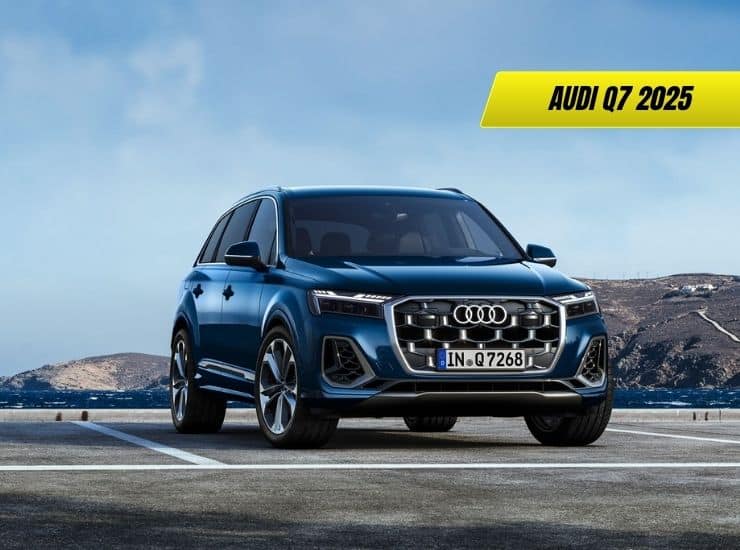
The Audi Q7 2025 combines luxury, technology and space in a plug-in hybrid SUV. Our review covers the £104,700 flagship’s refinement and real-world practicality.
In an era when most manufacturers are shrinking their largest SUVs or electrifying them beyond recognition, Audi has chosen a different path with the Q7. The 2025 model represents evolutionary refinement rather than revolutionary change, maintaining the fundamental character that made it a benchmark in the luxury SUV segment whilst adding contemporary technology and mild efficiency improvements. For better or worse, this remains uncompromisingly large, unapologetically luxurious transportation.
According to our analysis at AutoHit, the Q7 continues serving a very specific demographic: families requiring genuine seven-seat capability wrapped in premium German engineering. We’ve tested enough luxury SUVs to recognise that most prioritise image over substance, but the Q7 reverses this formula by delivering genuine utility alongside its premium positioning. The question for UK buyers isn’t whether it’s impressive – that’s immediately apparent – but whether such impressive capability justifies the environmental and financial costs.
The reality of today’s automotive landscape is that vehicles like the Q7 increasingly face scrutiny over their environmental impact and urban suitability. The plug-in hybrid system addresses efficiency concerns partially, though real-world economics depend entirely on charging discipline. For families genuinely requiring this level of space and luxury, few alternatives offer comparable capability – though that exclusivity comes at considerable cost.
Key Highlights
• Commanding Physical Presence: At 5.07m long and 1.97m wide, the Q7 delivers imposing road presence whilst maintaining the refined proportions that define luxury SUV design • Sophisticated Plug-In Hybrid System: 489bhp V6 combined with electric motor provides serious performance alongside claimed 80km+ electric range for urban efficiency • Exceptional Interior Space: Seven-seat configuration with sliding middle row provides genuine adult accommodation, whilst 563-litre boot expands to 1,863 litres • Advanced Technology Integration: Triple-screen dashboard layout with Virtual Cockpit, MMI infotainment and climate control creates comprehensive digital environment • Comprehensive Luxury Equipment: Matrix LED headlights, OLED rear lights, adaptive suspension and premium materials throughout justify flagship positioning • Substantial Investment Requirement: Starting from £78,950 for diesel variants, rising to £104,700 for the plug-in hybrid S Line Plus tested, reflecting premium positioning
Design Evolution: Refined Authority
The 2024 facelift has enhanced the Q7’s already commanding presence without resorting to aggressive styling gimmicks. The enlarged octagonal single-frame grille provides immediate recognition whilst maintaining the sophisticated restraint that distinguishes Audi design from more ostentatious rivals.
Matrix LED headlights with laser technology create distinctive lighting signatures whilst improving practical illumination for night driving. The optional OLED rear lights offer selectable signatures that personalise the vehicle’s appearance whilst enhancing visibility to following traffic.
Proportions That Work
Despite its substantial dimensions, the Q7 avoids the ungainly proportions that plague some large SUVs. The extended wheelbase creates visual balance whilst providing the interior space that justifies the overall footprint. Short overhangs and appropriately sized wheel options maintain elegance despite the considerable mass.
Body-coloured lower sections and subtle protective cladding acknowledge the vehicle’s SUV categorisation without resorting to the plastic-heavy approach that cheapens some rivals. The overall effect suggests capability without compromising on sophistication.
Interior Excellence: First-Class Experience
The Q7’s cabin delivers the luxury experience that premium pricing promises. High-quality leather upholstery, genuine wood or carbon fibre trim options, and precise build quality create an environment that rivals executive saloons whilst providing superior space and versatility.
The three-screen dashboard layout comprises Virtual Cockpit instrumentation, central MMI infotainment, and dedicated climate control displays. The system provides comprehensive functionality, though the touch-sensitive climate controls prove less intuitive than traditional physical switches for simple adjustments.
Technology Integration Challenges
Whilst the technology package impresses with its scope and responsiveness, some functions require multiple menu interactions that distract from driving concentration. Voice control helps, though the system occasionally struggles with regional accents or complex commands.
Wireless smartphone connectivity works reliably, whilst the premium Bang & Olufsen audio system delivers concert-hall acoustics that justify its prominent placement. USB-C ports throughout the cabin ensure device connectivity for all occupants.
Space and Practicality: Genuine Seven-Seater
The Q7’s interior space represents one of its strongest advantages over rivals. Seven-seat configuration provides genuine adult accommodation in all three rows, whilst the middle row slides 130mm to optimise either passenger space or cargo capacity depending on requirements.
Access to the third row proves manageable thanks to wide door openings and the sliding middle seats, important considerations for families with elderly passengers or children requiring assistance. All seats provide adequate space for extended journeys, unlike many seven-seaters that offer token rear accommodation.
Cargo Flexibility
Boot capacity ranges from 563 litres in seven-seat mode to 1,863 litres with rear seats folded, competitive figures that accommodate everything from weekly shopping to holiday luggage for seven occupants. The plug-in hybrid’s battery location eliminates the double-floor storage of conventional models, though overall capacity remains impressive.
Loading height sits appropriately for the SUV format whilst the square aperture maximises usable volume. Additional 12V outlets and courtesy lighting enhance practical utility for everyday use.
Plug-In Hybrid Performance: Power with Compromise
The 60 TFSI e drivetrain combines a 3.0-litre V6 petrol engine with electric motor assistance for 489bhp total output and 700Nm of torque. Performance proves impressive despite the 2,385kg kerb weight, though the system occasionally lacks the immediate response expected from such substantial power figures.
The eight-speed tiptronic transmission operates smoothly in automatic mode whilst providing satisfying manual control through steering wheel paddles. Drive mode selection alters character significantly, from relaxed comfort through to surprisingly engaging dynamic settings.
Electric Capability and Real-World Range
The 22kWh battery provides claimed electric range exceeding 80km, though real-world testing suggests 40-50km represents more realistic expectations in typical UK conditions. Urban driving maximises electric capability, whilst longer journeys inevitably rely primarily on petrol propulsion.
Charging via domestic wallbox takes several hours for complete replenishment, whilst rapid charging capability remains limited compared with pure electric alternatives. The system works best for users with predictable daily routines allowing regular charging opportunities.
Driving Dynamics: Comfort-Focused Excellence
The Q7 prioritises refinement over sporting character, delivering exceptional ride comfort that makes light work of UK road surfaces. The optional adaptive suspension further enhances comfort whilst maintaining reasonable body control during more enthusiastic driving.
Quattro all-wheel drive provides confidence-inspiring traction in all weather conditions, though the substantial weight inevitably affects handling precision compared with smaller alternatives. Most buyers will appreciate the stability and composure rather than seeking track-focused dynamics.
Urban Versus Highway Character
City driving reveals the benefits of electric assistance most clearly, providing silent operation and instant torque for confident progress through traffic. The elevated driving position aids visibility whilst parking sensors and cameras assist with manoeuvring despite the considerable dimensions.
Highway cruising showcases the Q7’s refinement credentials with excellent noise suppression and comfortable seating for extended journeys. Wind and road noise remain well-controlled even at motorway speeds.
UK Market Context: Premium Positioning
Starting from £78,950 for diesel variants, rising to £104,700 for the plug-in hybrid S Line Plus tested, the Q7 positions itself firmly in luxury territory. The pricing reflects comprehensive equipment levels and premium materials throughout, though buyers should expect additional costs for desired options.
UK company car taxation favours the plug-in hybrid’s low official emissions figures, making it attractive for business users despite the substantial list price. Private buyers face significant depreciation, though Audi’s strong brand reputation should support residual values better than some alternatives.
For families genuinely requiring seven-seat luxury capability, few rivals offer comparable space and refinement. The Range Rover provides superior off-road capability but at even higher cost, whilst BMW X7 offers similar luxury but less distinctive character.
Technology Assessment: Comprehensive but Complex
The Q7’s technology package impresses with its scope whilst occasionally overwhelming with complexity. The Virtual Cockpit provides extensive customisation options, whilst the MMI system responds quickly to inputs and includes comprehensive connectivity features.
Driver assistance systems include adaptive cruise control, lane keeping assistance and traffic jam assist that work effectively on UK roads. The systems remember user preferences between journeys, reducing setup requirements.
Infotainment and Connectivity
Wireless Apple CarPlay and Android Auto integration works reliably, whilst the navigation system includes real-time traffic updates and Google Earth imagery. Over-the-air updates ensure continued functionality improvements without dealer visits.
The premium audio system delivers exceptional sound quality that justifies its cost, whilst multiple zone climate control ensures passenger comfort throughout the cabin.
Comparison with Luxury SUV Rivals
| Feature | Audi Q7 PHEV | BMW X7 | Range Rover |
|---|---|---|---|
| Power Output | 489bhp | 381-530bhp | 400-565bhp |
| Electric Range | 40-50km real | N/A (mild hybrid) | 113km (PHEV) |
| Seating Capacity | 5 or 7 | 7 | 5 or 7 |
| Boot Space | 563-1,863 litres | 326-2,120 litres | 472-1,686 litres |
| Starting Price | £78,950 | £82,950 | £98,700 |
| Our Take | Best balance of luxury and space | Sportier character, less efficient | Superior off-road, highest cost |
Real-World Ownership: Luxury Living
Extended testing reveals the Q7’s exceptional refinement and genuine practicality for large families. The combination of luxury appointments and serious utility creates genuine appeal for buyers requiring both comfort and capability.
Fuel economy depends entirely on charging discipline – regular charging enables impressive efficiency figures, whilst neglecting electric capability results in thirsty V6 consumption. Most users should achieve 25-35mpg in mixed use with occasional charging.
The substantial dimensions require consideration for UK parking and urban use, though the comprehensive camera system aids manoeuvring. Rural use showcases the Q7’s comfort and stability advantages most clearly.
Efficiency Reality: PHEV Promises and Compromises
The plug-in hybrid system delivers genuine benefits when used appropriately, though the official 1.3 litres/100km consumption figure requires daily charging discipline that many buyers won’t maintain. Real-world efficiency varies dramatically based on usage patterns.
Urban commuting within electric range proves remarkably efficient, whilst longer journeys revert to conventional hybrid operation with reasonable but unspectacular consumption. The system works best for buyers with predictable routines allowing regular charging.
Frequently Asked Questions
How practical is the seven-seat configuration for UK families? Very practical. All three rows provide genuine adult accommodation rather than token seating, whilst access to the third row proves manageable thanks to sliding middle seats. The Q7 offers one of the most usable seven-seat layouts in the luxury SUV segment.
What’s the real-world electric range and fuel economy? Expect 40-50km electric range in typical conditions rather than the claimed 80km+. Overall fuel economy ranges from 25-35mpg depending on charging frequency – regular charging dramatically improves efficiency, whilst ignoring electric capability results in thirsty V6 consumption.
How does the plug-in hybrid system work in practice? The system operates seamlessly, prioritising electric power for urban use whilst the V6 engine assists during acceleration or longer journeys. The transition between modes is generally smooth, though the petrol engine can feel sluggish initially compared with pure electric response.
Is the technology package worth the complexity? The comprehensive technology impresses whilst occasionally overwhelming. Core functions work well, though some climate controls require multiple touchscreen interactions. Most buyers adapt quickly, though traditionalists might prefer simpler physical controls for routine adjustments.
How does it compare with the BMW X7 for UK families? The Q7 offers better interior space utilisation and more refined ride comfort, whilst the X7 provides sportier dynamics and arguably superior build quality. Both deliver excellent luxury experiences – the choice depends on whether you prioritise comfort or engagement.
What about running costs and depreciation? Running costs vary dramatically based on charging discipline. Company car users benefit from low BiK rates, whilst private buyers face substantial depreciation. Service costs reflect premium positioning, though Audi’s strong brand reputation should support residual values.
Should I consider the diesel alternative? The diesel offers superior real-world fuel economy and lower purchase price, though lacks the plug-in hybrid’s company car tax advantages. For high-mileage users without charging facilities, the diesel provides more consistent efficiency.
The AutoHit Verdict: Refined Excellence with Environmental Compromises
The Audi Q7 2025 succeeds brilliantly at its intended mission: providing uncompromising luxury and space for families requiring genuine seven-seat capability. The plug-in hybrid system addresses efficiency concerns partially, though real-world benefits depend entirely on user charging discipline. For buyers seeking maximum refinement and utility regardless of environmental impact, few alternatives offer comparable appeal.
Our verdict after comprehensive evaluation is that the Q7 represents evolutionary excellence rather than revolutionary advancement. The combination of interior space, build quality and driving refinement creates genuine appeal for buyers prioritising comfort over efficiency or environmental considerations.
The plug-in hybrid technology provides environmental credibility without compromising the fundamental character that Q7 buyers expect. However, the substantial weight, dimensions and complexity create ownership challenges that buyers must consider carefully.
At £104,700 for the flagship tested, the Q7 demands significant financial commitment whilst delivering comprehensive luxury and capability in return. For families genuinely requiring this level of space and refinement, the investment may prove justified. However, buyers should honestly assess whether such capability is necessary given the environmental and financial costs.
The Q7 succeeds because it doesn’t compromise its core mission for fashionable trends. As a luxury seven-seater with genuine capability, it remains unmatched in the UK market – though that exclusivity comes with considerable responsibility for both environmental impact and financial commitment.





