
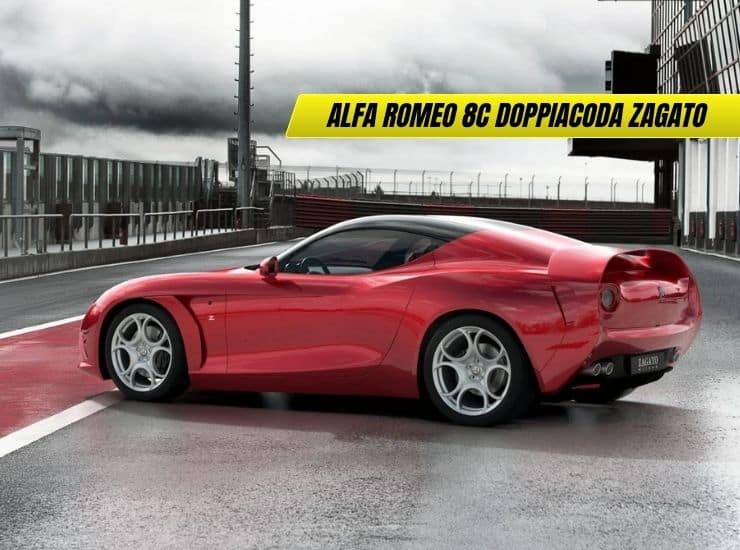
The unique Alfa Romeo 8C DoppiaCoda Zagato debuts at Villa d’Este 2025. Our exclusive review of the one-off that enhances automotive perfection.
In the rarified world of automotive collecting, few challenges prove more daunting than improving upon perfection. Yet at the 2025 Concorso d’Eleganza Villa d’Este, Italian design house Zagato achieved precisely this seemingly impossible feat with the 8C DoppiaCoda – a unique reinterpretation of Alfa Romeo’s already sublime 8C Competizione that somehow manages to enhance rather than diminish one of the 21st century’s most beautiful automobiles.
According to our analysis at AutoHit, the DoppiaCoda represents the ultimate expression of coachbuilding artistry applied to modern foundations. We’ve witnessed enough automotive interpretations to recognise genuine artistic achievement when it appears, and this creation transcends mere customisation to achieve something approaching automotive sculpture. The question isn’t whether it’s desirable – that’s immediately obvious to anyone with functioning aesthetic sensibilities – but whether such artistic expression justifies altering an already perfect design.
The reality is that only one automotive designer in history possessed the confidence and capability to enhance Wolfgang Egger’s 2007 masterpiece: Zagato. With over a century of Alfa Romeo collaboration and an unmatched understanding of aerodynamic beauty, the Milanese atelier has created something that honours the original whilst establishing new aesthetic territory entirely.
Key Highlights
• Unique Artistic Achievement: Single example commissioned by visionary Italian collector, ensuring eternal exclusivity and immediate classic status • Revolutionary “Double Tail” Design: Fusion of Kamm-tail aerodynamics with traditional rounded forms creates entirely new aesthetic philosophy • Preserved Mechanical Excellence: Retains original Ferrari-Maserati 4.7-litre V8 producing 444bhp, maintaining authentic performance character • Zagato Heritage Connection: Continues century-long collaboration between Milan design house and Alfa Romeo, honouring both brands’ sporting legacies • Villa d’Este Recognition: Winner of Concept Cars and Prototypes category at automotive culture’s most prestigious concours event • Shortened Wheelbase Architecture: Incorporates Zagato’s signature “Monza” proportions whilst maintaining original’s elegant stance
Design Philosophy: Harmonious Revolution
To appreciate the DoppiaCoda’s significance, one must understand the original 8C Competizione’s status as perhaps the most beautiful car of the modern era. Conceived by Alfa Romeo’s Centro Stile under Wolfgang Egger and Daniele Gaglione, the 2007 masterpiece captured six decades of Italian automotive passion in carbon fibre and aluminium.
Yet Zagato has managed to enhance this perfection through what company president Andrea Michele Zagato describes as “the final missing link to Zagato’s modern interpretations of the most legendary Alfa Romeo models.” The DoppiaCoda name translates as “Double Tail,” referencing the fusion of two distinct aerodynamic philosophies into singular aesthetic cohesion.
The Aerodynamic Poetry
Chief designer Norihiko Harada explains the philosophical foundation: “When I draw a side view of a car, I imagine it rippling through the air. This car is a harmonious, repeating wave, like a Bach cantata – and cutting off that wave at the rear is Zagato’s traditional Coda Tronca.”
The revolutionary rear treatment combines the sharp-cut Kamm tail traditionally used in extreme racing applications with the rounded forms of classical grand touring design. Harada notes that applying a pure Kamm tail to a luxury GT would feel “visually heavy,” necessitating the development of this bespoke “wing tronca” solution.
From profile view, the integrated spoiler creates the illusion of separation from the body, yet maintains perfect visual unity when observed from rear three-quarter angles. It’s sophisticated design thinking that distinguishes genuine coachbuilding artistry from mere styling exercises.
Heritage and Provenance: A Century of Collaboration
The DoppiaCoda’s significance extends beyond immediate aesthetic impact through its connection to automotive history’s greatest partnership. Zagato’s relationship with Alfa Romeo dates to 1921, producing legendary racing machines that dominated circuits from Mille Miglia to Le Mans throughout the 1930s.
The original 8C models of that era, engineered by Vittorio Jano, established the template for high-performance grand touring that influences automotive design even today. Zagato’s body designs for these machines created aesthetic standards that continue inspiring contemporary interpretations.
Modern Trilogy Completion
The DoppiaCoda completes Zagato’s trilogy of modern Alfa Romeo tributes, following the 2023 Giulia SWB that celebrated the 6C lineage and earlier projects honouring the 1900 heritage. Each creation demonstrates how historical inspiration translates into contemporary relevance without compromising artistic integrity.
This latest creation specifically honours the 8C tradition whilst incorporating lessons learned from the 2024 AGTZ Twin Tail project. However, where the Alpine-based Twin Tail explored modular rear design, the DoppiaCoda represents fixed integration of seemingly opposing aerodynamic elements.
Technical Foundation: Preserving Mechanical Poetry
Crucially, Zagato chose to preserve the original’s mechanical excellence rather than pursuing unnecessary performance modifications. The Ferrari-Maserati sourced 4.7-litre V8 remains untouched, producing 444bhp at 7,000rpm and 354lb-ft of torque at 4,750rpm – figures that sound magnificent whilst providing entirely adequate performance.
The naturally aspirated soundtrack represents one of automotive history’s greatest symphonies, combining Ferrari’s high-revving intensity with Maserati’s patrician refinement. The 0-62mph time of 4.2 seconds provides serious performance without compromising the grand touring character that defines the 8C’s essential appeal.
Chassis and Dynamics
The original’s carbon fibre monocoque construction provides exceptional rigidity whilst maintaining relatively modest weight, crucial attributes for the sort of precise handling that distinguishes great sports cars from merely fast ones. The six-speed automated manual transmission delivers engaging gear changes without the complexity of modern dual-clutch systems.
Zagato’s modifications focus entirely on aerodynamic enhancement rather than mechanical alteration, acknowledging that the original’s engineering required no improvement. This restraint demonstrates genuine understanding of what made the 8C Competizione exceptional.
Craftsmanship Excellence: Hand-Built Perfection
Every surface of the DoppiaCoda receives individual attention through traditional coachbuilding techniques enhanced by modern precision. The complete bodywork redesign required integration of cutting-edge aerodynamic understanding with classical aesthetic principles, creating forms impossible through mass production methods.
Zagato’s approach combines advanced CAD design with traditional hand-forming techniques, achieving tolerances impossible during the golden age of coachbuilding whilst maintaining the subtle irregularities that distinguish genuine craft from industrial precision.
Materials and Construction
The carbon fibre construction enables design freedom whilst reducing weight compared with traditional materials. However, the real artistry lies in the surface development, where traditional Italian coachbuilding expertise creates the flowing forms that define automotive beauty.
Each panel receives individual forming and finishing, creating the subtle variations that distinguish handcrafted excellence from machine-produced uniformity. The process requires master craftsmen whose skills represent generations of accumulated knowledge.
Villa d’Este Triumph: Recognition Among Peers
The DoppiaCoda’s victory in the Concept Cars and Prototypes category at Villa d’Este carries particular significance given the competition’s prestige and the calibre of competing entries. Judged against creations from Kimera, Lotus, Pagani and SCG, the Alfa’s success demonstrates peer recognition of genuine artistic achievement.
Villa d’Este represents automotive culture’s highest expression, where the world’s most discerning collectors and industry experts gather to celebrate exceptional automobiles. Victory in this environment provides validation that transcends mere aesthetic preference.
Cultural Impact and Legacy
The award ceremony took place against the backdrop of a 1934 Alfa Romeo Tipo B (P3) race car taking Best of Show honours, creating poetic connection between historical achievement and contemporary interpretation. Both vehicles demonstrate how Italian automotive artistry continues inspiring new generations of enthusiasts.
The DoppiaCoda’s presence among nearly 200 historic 8-cylinder models from the 1930s provided perfect context for understanding its significance within Alfa Romeo’s sporting heritage.
Collecting Perspective: Investment in Artistry
While monetary valuation seems almost vulgar when discussing such artistic achievement, the DoppiaCoda’s unique status ensures instant collectibility transcending normal market considerations. Original 8C Competizione values have appreciated consistently as collectors recognise the model’s design significance, with pristine examples now commanding substantial premiums.
The DoppiaCoda amplifies this appeal through genuine uniqueness and Zagato provenance, creating an automotive artwork that happens to possess functional capability. For the Italian collector who commissioned this creation, value exists entirely beyond monetary consideration.
Market Context
Only 829 8C Competizione models were produced between 2007 and 2010 (500 coupes and 329 Spiders), establishing immediate rarity that collector markets appreciate. The DoppiaCoda’s singular status places it beyond normal collecting categories entirely.
Contemporary coachbuilt one-offs from established houses like Zagato, Pininfarina or Touring typically command seven-figure valuations, though the DoppiaCoda’s artistic significance and mechanical foundation suggest appreciation potential exceeding normal parameters.
Aesthetic Analysis: Visual Poetry in Carbon Fibre
Beyond technical achievement, the DoppiaCoda succeeds through pure visual impact that satisfies from every viewing angle. The front treatment receives subtle enhancement through modified air intakes with sharper detailing and revised headlight graphics that complement rather than replace the original’s genius.
The characteristic C-shaped rear quarter windows maintain visual connection to Capri heritage whilst the flowing roofline incorporates Zagato’s signature double-bubble theme. Every modification feels inevitable rather than forced, suggesting the original design somehow anticipated these enhancements.
Proportional Perfection
The shortened wheelbase creates more compact proportions whilst maintaining the elegant stance that distinguished the original from cruder alternatives. Zagato’s “Monza” configuration provides visual drama without compromising fundamental balance.
Colour choice of rich Alfa Romeo red enhances every curve whilst creating emotional connection to the brand’s racing heritage. The paint finish itself represents artistry, with depth and lustre achievable only through traditional hand-application techniques.
Frequently Asked Questions
Why modify an already perfect design like the 8C Competizione? The DoppiaCoda represents artistic interpretation rather than mere modification, enhancing the original’s aerodynamic efficiency whilst creating new aesthetic territory. Zagato’s century of Alfa Romeo collaboration provides unique understanding of how to honour rather than compromise the original’s genius.
What makes this creation more significant than other one-off customs? The combination of Zagato’s artistic heritage, the 8C’s iconic status, and the sophisticated aerodynamic innovations creates something transcending normal customisation. This represents genuine coachbuilding artistry applied to already exceptional foundations.
How does the “DoppiaCoda” rear design actually work? The fusion of Kamm-tail and rounded forms creates optimal aerodynamic efficiency for grand touring use whilst maintaining visual elegance. The integrated spoiler provides downforce without the visual heaviness of pure racing solutions.
What’s the significance of winning at Villa d’Este? Villa d’Este represents automotive culture’s most prestigious concours, where peer recognition from collectors and industry experts validates genuine artistic achievement. Winning against entries from established manufacturers confirms the DoppiaCoda’s exceptional status.
Could Zagato create similar interpretations of other classics? While technically possible, the DoppiaCoda’s success depends on the perfect marriage of original design excellence with Zagato’s particular aesthetic philosophy. Few vehicles possess the 8C’s combination of beauty and aerodynamic sophistication necessary for such enhancement.
How does this compare with Zagato’s other recent Alfa Romeo projects? The DoppiaCoda completes a trilogy including the Giulia SWB, each celebrating different aspects of Alfa heritage. However, the 8C’s inherent perfection made this the most challenging project, requiring genuine enhancement rather than reinterpretation.
What does this mean for the future of coachbuilding? The DoppiaCoda demonstrates how traditional artistry adapts to modern requirements whilst maintaining historical authenticity. As mass production increasingly emphasises efficiency over emotion, such bespoke creations become more rather than less relevant for discerning collectors.
The AutoHit Verdict: Automotive Artistry at Its Peak
The Alfa Romeo 8C DoppiaCoda Zagato achieves the seemingly impossible by enhancing automotive perfection without diminishing its essential character. This unique creation demonstrates how genuine coachbuilding artistry can honour historical achievement whilst establishing new aesthetic territory entirely.
Our verdict after witnessing this extraordinary automobile is that it represents contemporary automotive culture at its absolute pinnacle – where engineering excellence meets artistic vision to create something transcending mere transportation. The DoppiaCoda doesn’t address practical requirements or rational considerations; instead, it celebrates the emotional connections that distinguish automotive passion from utilitarian necessity.
The revolutionary “Double Tail” concept provides genuine aerodynamic innovation whilst creating visual drama that enhances rather than replaces the original’s genius. Every modification feels inevitable rather than forced, suggesting the 8C Competizione somehow anticipated these enhancements from its original conception.
Most importantly, the DoppiaCoda succeeds by preserving the mechanical excellence that made the original exceptional whilst adding aesthetic dimensions that expand our understanding of automotive beauty. In an age of increasing homogenisation, this creation reminds us why individual artistic vision matters more than any corporate efficiency consideration.
The commissioning collector has acquired not merely a unique automobile, but automotive poetry written in carbon fibre and hand-formed aluminium. In a world where genuine artistry becomes increasingly rare, such distinction matters more than any specification sheet could ever convey.





