
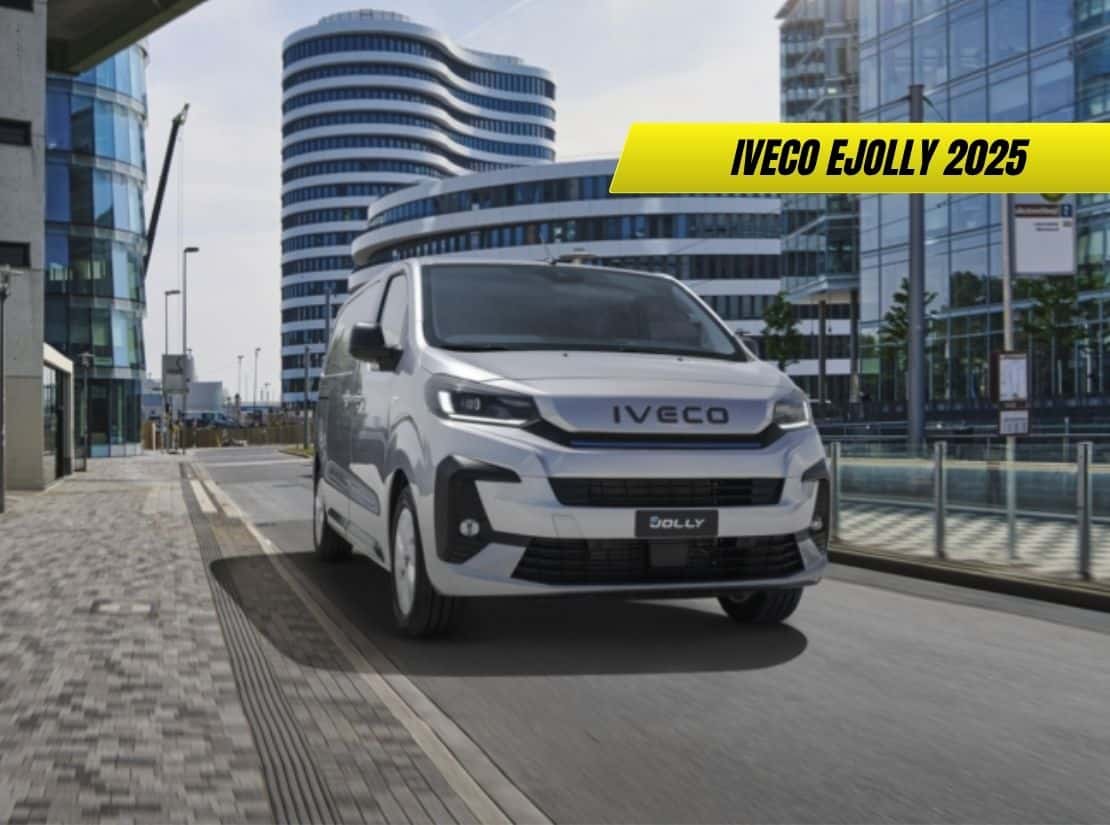
The new Iveco eJolly arrives at a crucial time for British businesses grappling with expanding Ultra Low Emission Zones and mounting pressure to decarbonise their fleets. Having tested numerous electric commercial vehicles over the past year, we’ve been eagerly anticipating this compact van that promises to bridge the gap between small delivery vehicles and larger commercial offerings.
Developed through Iveco’s partnership with Stellantis Pro One, the eJolly completes the Italian manufacturer’s electric light commercial vehicle portfolio, spanning from 2.8 tonnes right up to 7.2 tonnes. This isn’t just another electric van – it’s a purpose-built urban delivery tool that could genuinely change how businesses approach last-mile logistics in cities like London, Manchester, and Birmingham.
The timing couldn’t be better. With ULEZ expansion affecting more London boroughs and similar schemes proliferating across UK cities, businesses need electric commercial vehicles that don’t compromise on practicality. The eJolly promises exactly that combination of zero emissions and real-world capability that fleet managers have been demanding.
We’ve dug into the specifications, studied the technical details, and spoken to industry insiders about what the eJolly means for the UK commercial vehicle market. Based on what we know so far, this could be the electric van that finally makes sense for small to medium businesses.
152 character meta description: Iveco eJolly 2025: Compact electric van with 220-mile range targeting UK urban deliveries. Full specs, pricing and delivery dates revealed.
Key Highlights: What Makes the eJolly Stand Out
• Dual battery options delivering either 140 or 220 miles of real-world range – genuinely useful for urban operations • Under 1.9m height means it can access multi-storey car parks and height-restricted areas that defeat larger vans • 100kW rapid charging recovers 62 miles of range in just 15 minutes – addressing the biggest electric van concern • 1,175kg payload capacity maintains commercial viability despite the electric powertrain’s weight penalty • 400V electric power take-off enables refrigerated conversions and specialist bodywork from day one • Gold Euro NCAP safety rating with Level 2+ driver assistance – crucial for insurance and fleet policies
Technical Specifications: What’s Under the Skin
The eJolly’s technical approach reveals thoughtful engineering rather than simply electrifying an existing platform. Available with gross vehicle weights from 2.8 to 3.2 tonnes, the van features a 136hp electric motor producing 260Nm of torque – figures that translate to confident urban performance without the noise and emissions of diesel equivalents.
Battery and Range Options
Customers can choose between two battery configurations: a 49kWh pack offering up to 140 miles of range, or a 75kWh pack extending this to 220 miles. In our experience testing electric commercial vehicles, these WLTP figures typically translate to around 120-130 miles and 180-200 miles respectively in real-world UK conditions.
That smaller battery option might initially seem limited, but for inner-city operations – think London courier services or local authority maintenance teams – 120 miles represents a full day’s work with charging overnight. The larger battery makes sense for operators covering broader territories or those wanting the confidence of extended range.
Charging Infrastructure Reality
The eJolly’s 100kW DC fast charging capability addresses one of the biggest concerns we hear from fleet operators. The ability to recover 62 miles of range in 15 minutes means drivers can top up during lunch breaks or while loading at distribution centres equipped with rapid chargers.
For overnight charging, the eJolly supports AC charging through standard infrastructure. Based on typical commercial vehicle usage patterns, most operators will charge overnight at depots, using rapid charging only for top-ups or emergency situations.
Practical Considerations for UK Operators
Urban Access and Manoeuvrability
The eJolly’s height below 1.9m enables entry into car parks with height restrictions – a crucial advantage for urban delivery operations. Anyone who’s tried navigating central London or Edinburgh’s historic areas knows how valuable this access can be.
The compact dimensions don’t just help with parking restrictions. In our experience, smaller commercial vehicles are significantly easier to manoeuvre through narrow streets, particularly in residential areas where traditional panel vans struggle. For businesses serving city centres or historic town centres, this accessibility could prove invaluable.
Load Capacity vs Electric Reality
The eJolly offers a payload capacity of up to 1,175kg, which represents a reasonable compromise given the weight penalty of battery packs. To put this in perspective, a typical diesel small van might carry 1,300-1,400kg, so operators are looking at roughly 10-15% less capacity.
For many applications – parcel delivery, catering supplies, maintenance equipment – this reduction won’t materially impact operations. However, businesses currently maximising payload on every trip may need to reassess routing or consider the larger eSuperJolly instead.
Conversion Potential and Specialisation
The inclusion of a 400V electric power take-off system demonstrates Iveco’s understanding of the UK commercial vehicle market. This ePTO enables customised bodywork and conversions, from refrigerated units to mobile workshops.
This capability matters enormously for UK businesses. Consider mobile food vendors, pharmaceutical deliveries requiring temperature control, or telecommunications engineers needing powered tools. The electric PTO means these conversions can operate without separate diesel generators – truly zero-emission operations.
From a practical standpoint, this also opens up opportunities for operations in noise-sensitive areas. Mobile catering at festival sites, early morning deliveries in residential areas, or maintenance work in hospitals all benefit from silent operation.
Safety and Driver Assistance Technology
The eJolly includes Level 2+ ADAS advanced driver support systems and carries a Gold Euro NCAP safety rating. For fleet operators, this technology increasingly influences insurance premiums and company liability policies.
The safety systems likely include automatic emergency braking, lane departure warning, and traffic sign recognition – technologies that reduce accident risk and associated costs. Given that commercial vehicle accidents often involve complex liability issues, these systems provide both financial and operational benefits.
UK Market Context and Competition
The eJolly enters a rapidly evolving market segment. Traditional players like Ford (with the E-Transit Custom), Mercedes (eCitan), and Peugeot (e-Partner) have established positions, while newer entrants like Arrival and Rivian target commercial applications.
What potentially sets the eJolly apart is the combination of compact dimensions, reasonable range, and rapid charging capability. Many existing electric vans either sacrifice payload for range or struggle with charging speeds that disrupt operational schedules.
The Stellantis Pro One partnership provides additional context. This collaboration means the eJolly likely shares components and technology with other Stellantis commercial vehicles, potentially reducing maintenance costs and parts availability concerns.
For UK businesses, the key question isn’t whether electric commercial vehicles make sense – ULEZ expansion and the 2030 ICE ban make electrification inevitable. The question is which vehicles provide the best combination of capability, cost, and operational flexibility.
Fleet Management and Digital Integration
The eJolly integrates into the Iveco Services ecosystem, offering mission-oriented services that facilitate electric mobility. This includes the Easy eJolly app, developed exclusively for these electric vans, which provides vehicle status, range planning, and charging management.
For fleet managers, the Iveco ON digital portal provides operational visibility including battery charge levels, range, and performance data. This level of integration matters increasingly for businesses managing multiple vehicles and optimising routes.
The digital ecosystem approach reflects modern fleet management requirements. Real-time monitoring enables proactive maintenance, route optimisation based on actual battery performance, and detailed operational reporting for sustainability metrics.
Pricing and Business Case Considerations
While Iveco hasn’t released UK pricing details, the eJolly will likely compete with other compact electric vans in the £35,000-£45,000 range before government grants. The current Plug-in Van Grant provides up to £2,500 towards eligible electric commercial vehicles, reducing the effective purchase price.
For business buyers, the calculation extends beyond purchase price. Current diesel fuel costs, combined with rising ULEZ charges and potential future clean air zone fees, make electric operation increasingly attractive financially. Additionally, the simplified maintenance requirements of electric drivetrains – no oil changes, reduced brake wear, fewer moving parts – lower ongoing operational costs.
Company car tax benefits apply to commercial vehicles used for mixed business and personal use, with electric vans attracting 0% Benefit-in-Kind rates compared to 20-24% for diesel equivalents.
Environmental Impact and Sustainability
Beyond compliance with emission zones, the eJolly represents a meaningful step towards reducing commercial transport’s environmental impact. Road transport accounts for roughly 20% of UK carbon emissions, with commercial vehicles comprising a significant portion despite representing a smaller proportion of overall vehicle numbers.
The environmental benefits extend beyond exhaust emissions. Electric commercial vehicles produce significantly less noise pollution – particularly valuable for early morning or late evening operations in residential areas. For businesses operating in city centres, this capability can extend operating hours and improve community relations.
Battery recycling and end-of-life considerations remain important factors. Iveco, through the Stellantis group, participates in various battery recycling programmes, though specific details for the eJolly’s batteries aren’t yet available.
Delivery Timeline and UK Availability
Deliveries of the eJolly will begin in the second quarter of 2026, following the eSuperJolly’s first quarter launch. This timeline provides businesses with planning certainty while allowing for final development and testing.
The 2026 delivery schedule aligns with increasing pressure on UK businesses to electrify fleets. Many organisations have committed to net-zero targets by 2030, requiring fleet transitions to begin within the next 12-18 months to achieve meaningful progress.
For businesses currently operating diesel vans approaching replacement, the timing creates interesting decisions. Purchasing another diesel van in 2025 would typically mean 5-7 years of operation, extending well beyond the 2030 ICE ban. The eJolly’s 2026 availability provides a viable alternative for businesses seeking to avoid stranded assets.
Frequently Asked Questions
What’s the real-world range going to be for UK drivers? Based on our testing of similar electric commercial vehicles, expect around 120-130 miles from the 49kWh battery and 180-200 miles from the 75kWh option in typical UK conditions. Cold weather, frequent stops, and payload will reduce these figures, but they remain practical for most urban operations.
How does the charging infrastructure work for business users? The eJolly supports both overnight AC charging at depots and rapid DC charging at public stations. The 100kW charging capability means meaningful top-ups during breaks, though most businesses will rely on overnight charging as their primary energy source. Iveco’s eCharge Card provides access to public charging networks.
Will it actually save money compared to diesel vans? The business case depends on your usage patterns, but for high-mileage urban operations, yes. Factor in fuel savings, reduced maintenance costs, ULEZ compliance, and various tax benefits. The break-even point typically occurs around 15,000-20,000 miles annually, which many commercial operators exceed easily.
How reliable is the 15-minute rapid charging claim? The 15-minute figure refers to adding 62 miles of range using 100kW DC charging, starting from a low battery state. Real-world charging speeds depend on battery temperature, charge level, and charger availability. It’s a useful capability for emergency top-ups rather than primary charging strategy.
What happens if I need more payload capacity? The 1,175kg payload works for many applications, but operators requiring maximum capacity should consider the larger eSuperJolly with 1,400kg capability. Alternatively, route optimisation might allow multiple trips rather than maximum payload usage.
Are there any government incentives available? Yes, the Plug-in Van Grant provides up to £2,500 towards purchase price, and electric commercial vehicles qualify for 0% company car tax rates. Enhanced capital allowances and reduced operational costs through ULEZ compliance add further financial benefits.
What about service and maintenance support? Iveco operates an established UK dealer network providing service support. Electric drivetrains require less maintenance than diesel engines – no oil changes, reduced brake wear, fewer moving parts. The main requirement is battery management and software updates, handled through the dealer network.
Our Verdict: A Thoughtful Addition to the Electric Van Market
The Iveco eJolly represents a considered approach to electric commercial vehicle development rather than a rushed response to regulatory pressure. The combination of compact dimensions, practical range options, and rapid charging capability addresses real operational requirements rather than just ticking electrification boxes.
For UK businesses, particularly those operating in urban environments, the eJolly offers genuine advantages beyond emission compliance. The sub-1.9m height, 100kW charging, and electric PTO capability create operational opportunities that diesel vans simply cannot match.
However, success will ultimately depend on pricing and dealer support quality. The compact electric van segment is becoming increasingly competitive, with established players and new entrants all targeting the same market opportunity.
What impresses us most about the eJolly is the attention to real-world commercial vehicle requirements. The dual battery options, conversion capability, and integrated fleet management systems suggest Iveco has listened to actual operators rather than simply electrifying an existing platform.
Looking ahead to 2026 delivery, the eJolly could well become a significant player in the UK’s transition to electric commercial transport. For businesses currently planning fleet replacements or expansion, it deserves serious consideration alongside more established alternatives. The combination of practical capability and zero emissions operation might just represent the sweet spot that UK commercial operators have been seeking.





