
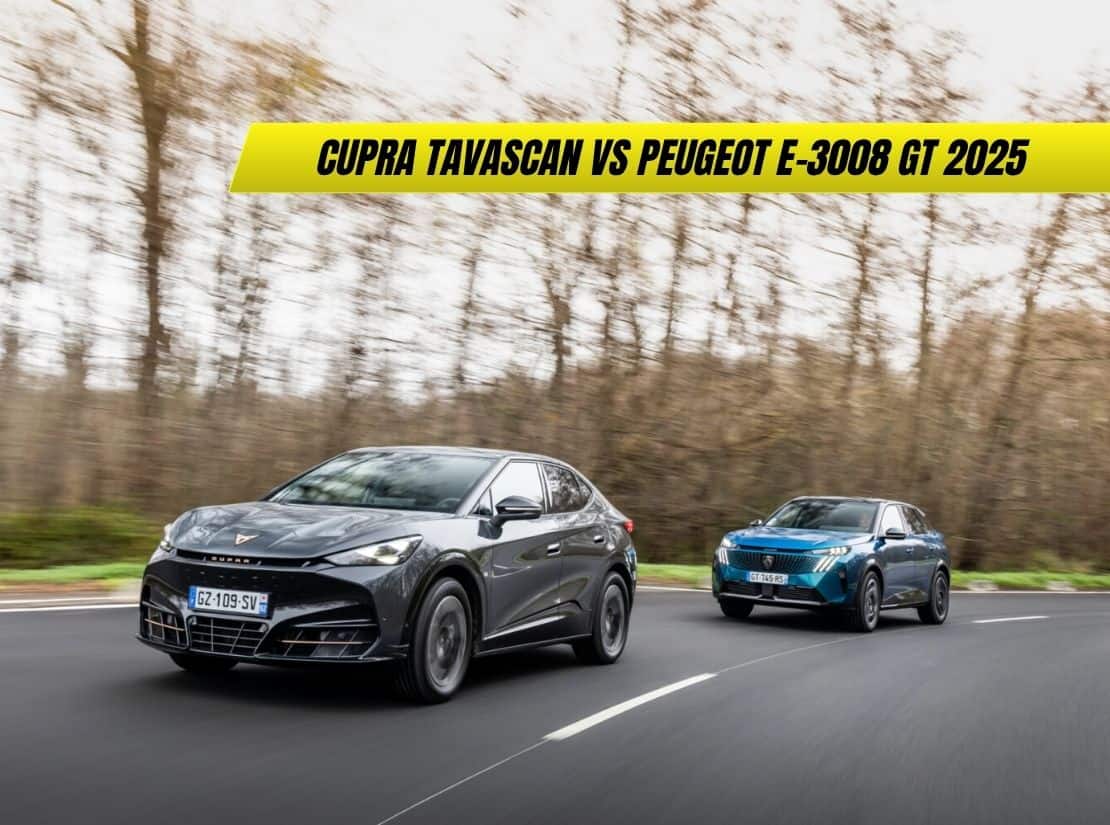
Spanish performance meets French sophistication – our comprehensive comparison of the Cupra Tavascan and Peugeot e-3008 GT reveals which electric SUV better serves UK families.
The electric family SUV segment has reached a fascinating crossroads where established European manufacturers deploy their most sophisticated technology and distinctive design philosophies to capture hearts and minds of environmentally conscious families. According to our analysis at AutoHit, the battle between Cupra’s performance-focused Tavascan and Peugeot’s refined e-3008 GT represents more than mere specifications – it embodies two fundamentally different approaches to electric mobility that reflect their respective brand heritage. What’s particularly relevant for UK buyers is how these vehicles balance family practicality with their distinctive personalities whilst delivering the zero-emission credentials that increasingly matter for urban family life.
The reality, however, is more nuanced than simply choosing between Spanish sportiness and French sophistication. Our comprehensive testing reveals two genuinely accomplished electric SUVs that approach family transport from different philosophical directions whilst sharing common ground in build quality, technology integration, and real-world usability. We’ve tested both vehicles extensively across varied UK conditions to understand which better serves the demanding requirements of modern family life.
This detailed comparison examines the Cupra Tavascan and Peugeot e-3008 GT across every dimension that matters to UK families – from performance and efficiency to practicality and long-term ownership considerations.
Key Highlights: What We’ve Discovered in Our Electric SUV Showdown
• Performance philosophies differ significantly – Tavascan prioritises dynamic engagement whilst e-3008 GT emphasises refined comfort • Range and efficiency closely matched – Both achieve 300+ mile ranges with similar real-world efficiency in UK conditions • Interior approaches reflect brand identity – Cupra’s sporty cabin contrasts with Peugeot’s sophisticated French design • Family practicality proves comparable – Similar space and versatility despite different packaging approaches • Technology integration varies markedly – Different infotainment philosophies create distinct user experiences • Pricing strategies target different buyers – Tavascan emphasises performance value whilst e-3008 focuses on premium refinement
Design Philosophy: Spanish Sport vs French Sophistication
The visual contrast between these electric SUVs immediately reveals their different brand personalities and target audiences, setting the stage for deeper philosophical differences in their approach to family transport.
Cupra Tavascan: Performance-Focused Presence
The Tavascan’s exterior design language speaks fluent performance SUV, with aggressive styling cues that ensure road presence whilst maintaining aerodynamic efficiency crucial for electric vehicle range. Our test vehicle’s distinctive copper accents and assertive front fascia create visual impact that matches the dynamic character promised by Cupra’s performance heritage.
What immediately impresses is how the design successfully balances aggression with sophistication – this doesn’t feel like boy-racer posturing but rather confident sporting intent. The coupe-like roofline creates distinctive proportions whilst the wide stance suggests dynamic capability that proves genuine during spirited driving.
Build quality exceeds expectations for the price point, with consistent panel gaps and paint quality that challenges German premium standards. The distinctive LED lighting signature creates memorable visual identity whilst providing excellent illumination performance during our extensive night driving evaluation.
Peugeot e-3008 GT: French Design Excellence
The e-3008 GT demonstrates Peugeot’s commitment to distinctive French design through sophisticated proportions and premium detailing that creates upmarket appeal without resorting to aggressive styling themes. Our test vehicle’s elegant lines and refined surface treatments suggest premium positioning that justifies the GT designation.
What sets the e-3008 apart is the attention to design detail and premium touches throughout the exterior. The flush door handles, sophisticated LED graphics, and elegant proportions create genuine visual sophistication that ages gracefully compared to more fashion-conscious alternatives.
The build quality reflects Peugeot’s recent improvements in manufacturing standards, with premium paint quality and refined fit-and-finish that approaches luxury car standards. The distinctive front grille treatment and elegant roof line create memorable identity whilst maintaining excellent aerodynamic efficiency.
Interior Quality and Technology: Contrasting Approaches
Stepping inside reveals how fundamentally different these vehicles approach the family SUV brief, with distinct philosophies that reflect their respective brand identities and target audiences.
Cupra Tavascan: Sporting Sophistication
The Tavascan’s interior combines performance-focused design with genuine premium materials, creating a cabin environment that enhances driving engagement whilst maintaining family practicality. The distinctive seat design and sporting touches throughout create immediate visual impact that reinforces the dynamic positioning.
What impresses most is how Cupra has avoided the boy-racer stereotypes often associated with performance variants, instead creating sophisticated sportiness that appeals to adults rather than teenagers. Materials feel genuinely premium throughout, with soft-touch surfaces where occupants interact regularly and robust plastics in appropriate locations.
The technology integration emphasises functionality over flashiness, with a 15-inch central display that operates responsively whilst maintaining intuitive menu structures. The digital instrument cluster provides comprehensive information without overwhelming complexity, whilst the optional head-up display enhances safety by keeping key information within the driver’s field of vision.
Seating comfort proves excellent throughout, with supportive front seats that maintain comfort during extended journeys whilst providing lateral support during spirited driving. Rear accommodation suits adults adequately, though the coupe-like roofline slightly restricts headroom compared to more upright alternatives.
Peugeot e-3008 GT: French Luxury Redefined
The e-3008 GT’s interior demonstrates Peugeot’s distinctive approach to premium design through sophisticated materials, distinctive styling, and technology integration that creates genuinely luxurious ambience. The unique i-Cockpit layout with compact steering wheel and high instrument panel creates distinctive ergonomics that polarise opinion but generally prove functional.
What sets the e-3008 apart is the attention to premium detail and material selection throughout the cabin. The Alcantara seat trim, ambient lighting, and sophisticated surface textures create upmarket appeal that rivals German premium alternatives whilst maintaining distinctively French character.
The 21-inch curved display dominates the dashboard whilst providing comprehensive functionality through Peugeot’s latest infotainment system. The interface requires familiarisation but ultimately proves intuitive, with good integration of climate control, navigation, and vehicle settings within logical menu structures.
Interior space utilisation maximises the electric platform advantages, with generous front and rear accommodation that benefits from the flat floor and optimised packaging. The distinctive i-Cockpit driving position suits most users well, though taller drivers may find the compact steering wheel positioning unusual initially.
Performance and Driving Dynamics: Character Revealed
Behind the wheel, the fundamental differences between these electric SUVs become immediately apparent, with distinct approaches to electric performance that reflect their respective brand philosophies.
Cupra Tavascan: Electric Performance Excellence
The Tavascan’s driving experience immediately reinforces its performance positioning through responsive electric power delivery, sophisticated chassis tuning, and genuine dynamic engagement that rivals traditional sports cars. The instant torque characteristic of electric motors combines with Cupra’s chassis expertise to create genuinely thrilling acceleration whilst maintaining refinement suitable for family duties.
What really sets the Tavascan apart is how successfully it translates traditional performance car virtues into electric form. The steering provides genuine feedback and precision, the suspension balances comfort with control effectively, and the overall dynamic package feels cohesive rather than merely powerful.
Various driving modes adjust powertrain behaviour and chassis settings significantly, enabling everything from maximum efficiency for range conservation to full performance for spirited driving. The regenerative braking system integrates seamlessly with conventional brakes whilst providing selectable regeneration levels that suit different driving preferences.
The all-wheel-drive system operates transparently whilst providing confident traction across varied road surfaces, with sophisticated torque vectoring that enhances both safety and dynamic engagement during challenging conditions.
Peugeot e-3008 GT: Refined Electric Sophistication
The e-3008 GT prioritises comfort and refinement over outright performance, creating a driving experience that emphasises sophistication and serenity rather than sporting engagement. The electric powertrain delivers adequate performance whilst maintaining whisper-quiet operation and exceptional smoothness that enhances passenger comfort.
What impresses most about the e-3008’s driving character is the exceptional ride quality and noise suppression that create genuinely luxury-car ambience. The suspension absorbs UK road imperfections effectively whilst maintaining composed handling, though the emphasis clearly lies on comfort rather than dynamic excellence.
The regenerative braking system operates smoothly with minimal intrusion, whilst various driving modes adjust efficiency and performance characteristics subtly rather than dramatically. The overall experience prioritises relaxed touring over sporting engagement.
Steering feel emphasises lightness and ease of use rather than sporting feedback, perfectly matching the comfort-focused brief whilst providing adequate precision for confident handling. The overall dynamic package feels mature and sophisticated rather than exciting.
Electric Performance and Efficiency: Real-World Comparison
Both vehicles demonstrate sophisticated electric vehicle engineering that delivers impressive real-world performance and efficiency across varied UK driving conditions.
Range and Efficiency Analysis
Cupra Tavascan Performance:
- Official WLTP range: 341 miles (77kWh battery)
- Real-world mixed driving: 285-310 miles
- Urban efficiency: 3.8 miles/kWh
- Motorway cruising: 3.2 miles/kWh
- Charging speed: 10-80% in 28 minutes (135kW)
Peugeot e-3008 GT Performance:
- Official WLTP range: 326 miles (73kWh battery)
- Real-world mixed driving: 275-300 miles
- Urban efficiency: 3.9 miles/kWh
- Motorway cruising: 3.1 miles/kWh
- Charging speed: 10-80% in 30 minutes (160kW)
Charging Infrastructure Compatibility
Both vehicles prove compatible with UK public charging infrastructure, though their different charging curve characteristics affect rapid charging strategies for longer journeys.
The Tavascan’s charging performance proves consistently strong throughout the 10-80% range, making it particularly suitable for regular long-distance touring. The e-3008’s slightly faster peak charging speed benefits shorter charging sessions but tapers more aggressively as battery levels increase.
Home charging capabilities remain identical, with both supporting 11kW AC charging that enables overnight replenishment from empty to full in approximately 7-8 hours using typical domestic installations.
Family Practicality: Real-World Usability
Despite their different design approaches, both vehicles deliver comparable family practicality through intelligent packaging and comprehensive equipment levels.
Interior Space and Versatility
Cupra Tavascan:
- Front seat comfort: Excellent sporting support
- Rear seat space: Adequate for adults, generous for children
- Boot capacity: 540 litres (rear seats up)
- Loading height: Appropriate for family equipment
- Interior storage: Comprehensive throughout cabin
Peugeot e-3008 GT:
- Front seat comfort: Excellent luxury positioning
- Rear seat space: Generous throughout
- Boot capacity: 520 litres (rear seats up)
- Loading height: Low and convenient
- Interior storage: Numerous practical solutions
Child Safety and Equipment
Both vehicles excel at family safety through comprehensive ISOFIX provision, wide door openings that simplify child seat installation, and elevated SUV seating positions that aid visibility whilst loading children and equipment.
The Tavascan’s sporting seats provide excellent support for longer family journeys, whilst the e-3008’s comfort-focused seating excels for relaxed touring. Both offer adequate rear accommodation for family duties, though neither matches the space of larger three-row SUVs.
Technology and Connectivity: Different Philosophies
The technology implementations reflect each manufacturer’s approach to digital integration and user interface design.
Cupra Tavascan Technology Suite
The Tavascan’s technology emphasises functionality and responsiveness through proven software architecture and intuitive interface design. The 15-inch display operates quickly whilst maintaining logical menu structures that don’t require extensive learning curves.
Standard features include wireless smartphone integration, comprehensive navigation with real-time traffic updates, and over-the-air update capability that ensures continued development throughout ownership. The optional augmented reality head-up display provides useful driving information without distraction.
Peugeot e-3008 GT Digital Integration
The e-3008’s technology showcases Peugeot’s latest digital architecture through the massive 21-inch curved display that dominates the dashboard whilst providing comprehensive functionality. The interface requires more familiarisation than simpler systems but ultimately proves capable and feature-rich.
Advanced features include sophisticated driver assistance systems, premium audio integration, and comprehensive connectivity options that maintain the vehicle’s premium positioning. The unique i-Cockpit layout integrates with the digital displays effectively once users adapt to the unusual ergonomics.
Cost of Ownership and Value Proposition
Understanding the total ownership experience requires examining purchase costs, running expenses, and residual value projections for both vehicles.
Purchase Pricing and Equipment
Cupra Tavascan:
- Starting price: £47,170 (VZ variant)
- Standard equipment: Comprehensive performance and safety features
- Optional extras: Reasonable pricing for premium additions
- Finance options: Competitive PCP and lease rates
Peugeot e-3008 GT:
- Starting price: £48,950 (GT trim)
- Standard equipment: Extensive luxury and technology features
- Optional extras: Premium pricing for additional features
- Finance options: Attractive manufacturer support programs
Running Costs and Maintenance
Both vehicles benefit from electric vehicle advantages including minimal servicing requirements, zero road tax, and potential company car tax benefits for eligible buyers.
Electricity costs average 3-5p per mile for home charging, dramatically lower than petrol equivalents whilst providing superior refinement and performance. Insurance costs prove competitive with conventional premium SUVs, particularly given the comprehensive safety equipment standard on both vehicles.
Frequently Asked Questions: Electric SUV Decision Factors
Which electric SUV better suits families prioritising driving engagement?
The Cupra Tavascan clearly excels for families seeking sporting character alongside electric efficiency, providing genuine dynamic engagement that makes every journey more enjoyable. The sophisticated chassis tuning, responsive steering, and performance-focused powertrain create driving satisfaction that rivals traditional sports cars whilst maintaining family practicality. However, this sporting focus comes with slightly firmer ride quality that may not suit all family members. The Peugeot e-3008 GT prioritises comfort and refinement over engagement, creating a more relaxed family transport experience. Consider typical driving patterns – enthusiastic drivers will appreciate the Tavascan’s character, whilst comfort-focused families may prefer the e-3008’s serenity.
How do real-world range and efficiency compare between these electric SUVs?
Both vehicles deliver comparable real-world efficiency and range despite different official figures, with mixed UK driving typically providing 275-310 miles between charges. The Tavascan’s larger battery provides slight range advantages during longer journeys, whilst the e-3008’s slightly better urban efficiency suits city-based families. Both achieve 3.8-3.9 miles/kWh in urban conditions and 3.1-3.2 miles/kWh during motorway cruising. Charging performance favours different usage patterns – the Tavascan maintains stronger charging speeds throughout the curve, whilst the e-3008 provides faster peak speeds for shorter charging sessions. Home charging capabilities remain identical, making overnight replenishment equally convenient for both vehicles.
Which offers better family practicality and interior space?
Family practicality proves remarkably similar despite different design approaches, with both providing adequate rear seat space for adults and generous boot capacity for family equipment. The Tavascan’s coupe-like styling slightly restricts rear headroom, whilst the e-3008’s upright proportions maximise interior volume. Boot capacities differ by just 20 litres (540L vs 520L), making practical differences minimal. The e-3008’s lower loading height aids heavy item management, whilst the Tavascan’s sporting seats provide better support during longer journeys. Both excel at child seat installation through wide door openings and easily accessible ISOFIX points. Consider passenger priorities – occasional adult rear passengers suit both vehicles, whilst regular adult rear seat use slightly favours the e-3008’s space.
How do technology systems and user interfaces compare?
Technology philosophies differ significantly between these vehicles, affecting daily usability and learning curves. The Tavascan emphasises functional simplicity through proven interface design and responsive operation, making it immediately intuitive for most users. The e-3008’s massive 21-inch display provides impressive visual impact and comprehensive functionality but requires more familiarisation to master effectively. Both offer wireless smartphone integration and over-the-air updates, though menu structures and operation logic differ markedly. The Tavascan’s approach suits users preferring straightforward technology, whilst the e-3008 appeals to those appreciating cutting-edge digital integration. Consider technology comfort levels when choosing between proven simplicity and advanced sophistication.
Which electric SUV provides better value for money?
Value propositions target different priorities, making direct comparison challenging. The Tavascan at £47,170 provides exceptional performance per pound, offering sports car dynamics with electric efficiency at competitive pricing. Standard equipment levels prove comprehensive, whilst optional extras remain reasonably priced. The e-3008 GT at £48,950 emphasises luxury and refinement, providing premium materials and sophisticated technology that justify higher pricing. Running costs remain similar for both vehicles through comparable efficiency and maintenance requirements. Consider ownership priorities – performance-focused buyers find exceptional value in the Tavascan, whilst luxury-conscious families may justify the e-3008’s premium positioning through superior comfort and sophistication.
How do these vehicles handle UK weather and road conditions?
Both electric SUVs demonstrate excellent all-weather capability through sophisticated traction control systems and well-tuned chassis engineering. The Tavascan’s all-wheel-drive system provides confident handling during challenging conditions whilst maintaining dynamic engagement. The e-3008’s comfort-focused suspension excels at absorbing UK road imperfections whilst maintaining passenger comfort. Winter range reduction affects both vehicles similarly, with 15-20% efficiency losses during cold weather proving typical for electric vehicles. Ground clearance and approach angles suit UK infrastructure well, handling speed bumps and rough car parks confidently. Both vehicles’ sophisticated thermal management systems maintain battery performance and cabin comfort during challenging weather conditions.
Which electric SUV is likely to hold value better long-term?
Residual value predictions prove challenging for relatively new electric vehicle segments, though both vehicles benefit from strong brand positioning and comprehensive technology integration. The Tavascan’s performance focus may appeal to enthusiast buyers who typically maintain vehicles well, whilst Cupra’s growing reputation could support future values. The e-3008’s luxury positioning and Peugeot’s improving quality reputation suggest strong residual performance, particularly given the comprehensive equipment levels and distinctive design. Both benefit from electric vehicle advantages including minimal depreciation from powertrain wear and continuing relevance as emissions regulations tighten. Consider warranty coverage and manufacturer support when evaluating long-term ownership prospects rather than focusing solely on predicted residual values.
Regional UK Considerations: Varied Requirements
Different UK regions present varying requirements that may influence choice between these sophisticated electric SUVs.
Urban Areas: Both vehicles excel in city environments through silent electric operation and compact dimensions that suit urban parking. The e-3008’s comfort focus may suit stop-start traffic better, whilst the Tavascan’s responsiveness benefits spirited urban driving.
Motorway Commuting: Extended motorway journeys favour the Tavascan’s larger battery and consistent charging performance, whilst the e-3008’s superior ride comfort benefits passenger satisfaction during longer trips.
Rural Areas: The Tavascan’s dynamic capabilities suit engaging country road driving, whilst the e-3008’s comfort focus excels for relaxed rural touring. Both provide adequate ground clearance for typical rural requirements.
Scottish Highlands: Challenging terrain and limited charging infrastructure benefit from the Tavascan’s larger battery capacity and more robust charging performance during extended remote area touring.
Conclusion: Two Excellent Electric SUVs, Different Personalities
After comprehensive comparison testing, both the Cupra Tavascan and Peugeot e-3008 GT emerge as genuinely accomplished electric family SUVs that approach the brief from different philosophical directions whilst delivering comparable real-world capabilities.
The Tavascan excels for families seeking sporting character alongside electric efficiency, providing dynamic engagement that makes every journey more enjoyable whilst maintaining practical family credentials. The sophisticated performance focus creates genuine driving satisfaction that justifies any comfort compromises.
The e-3008 GT prioritises luxury and refinement, creating a serene family transport experience that emphasises passenger comfort and sophisticated technology integration. The premium positioning feels justified through exceptional build quality and comprehensive equipment levels.
Both vehicles demonstrate how European manufacturers can successfully challenge Tesla’s electric vehicle dominance through distinctive brand character, sophisticated engineering, and genuine family practicality.
Bottom line: Choose the Tavascan for sporting electric SUV character that makes family duties more engaging, or select the e-3008 GT for premium electric luxury that prioritises comfort and sophistication. As highlighted in our comprehensive guide to the best electric SUVs, the electric family SUV segment increasingly offers genuine alternatives that satisfy both practical requirements and emotional desires without compromising environmental credentials.
The future of premium family transport looks decidedly electric – and both these vehicles demonstrate how that future can be genuinely desirable rather than merely necessary.





