
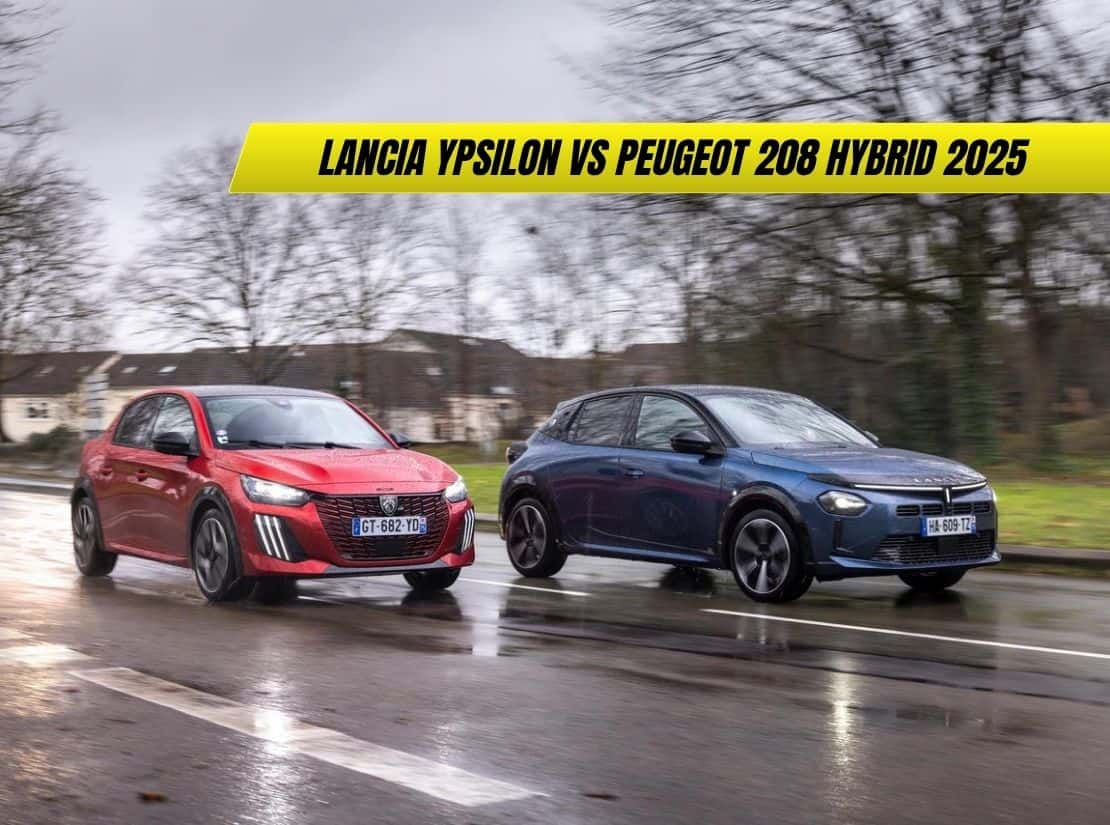
Italian elegance meets French efficiency – our comprehensive comparison of the new Lancia Ypsilon and Peugeot 208 Hybrid reveals which small car better serves UK urban drivers.
The premium small car segment has witnessed a fascinating renaissance as traditional European manufacturers elevate their compact offerings to challenge both German premium brands and emerging electric alternatives. According to our analysis at AutoHit, the battle between Lancia’s revitalised Ypsilon and Peugeot’s sophisticated 208 Hybrid represents more than mere specifications – it embodies two distinctly European approaches to urban mobility that reflect deep-rooted cultural attitudes towards design, technology, and the fundamental purpose of personal transport. What’s particularly relevant for UK buyers is how these vehicles balance premium aspirations with practical city car requirements whilst offering electrified efficiency that suits increasingly restrictive urban environments.
The reality, however, is more nuanced than simply choosing between Italian flair and French pragmatism. Our extensive testing reveals two genuinely sophisticated small cars that approach urban transport from different philosophical directions whilst sharing common ground in build quality, efficiency, and real-world usability. We’ve tested both vehicles extensively across varied UK urban and suburban conditions to understand which better serves the demanding requirements of modern city driving.
This detailed comparison examines the Lancia Ypsilon and Peugeot 208 Hybrid across every dimension that matters to UK urban drivers – from style and efficiency to technology integration and long-term ownership considerations.
Key Highlights: What We’ve Discovered in Our Small Car Showdown
• Design philosophies reflect national character – Ypsilon emphasises Italian elegance whilst 208 prioritises French sophistication • Hybrid efficiency proves comparable – Both achieve 60+ mpg in real-world urban driving conditions • Interior quality exceeds expectations – Premium materials and attention to detail challenge segment assumptions • Technology integration varies significantly – Different approaches to infotainment and digital integration • Urban practicality closely matched – Similar space efficiency despite different packaging approaches • Brand positioning targets different buyers – Lancia emphasises heritage luxury whilst Peugeot focuses on accessible premium
Design and Styling: Cultural Expression Through Automotive Form
The visual contrast between these European small cars immediately reveals their different cultural origins and philosophical approaches to automotive design, setting the stage for deeper differences in character and appeal.
Lancia Ypsilon: Italian Elegance Revived
The new Ypsilon’s exterior design successfully revives Lancia’s heritage of elegant Italian design through sophisticated proportions, distinctive details, and premium materials that create visual impact disproportionate to its compact dimensions. Our test vehicle’s distinctive paint finish and carefully considered chrome accents demonstrate attention to aesthetic detail that reflects Italian design priorities.
What immediately impresses is how the design successfully balances modernity with heritage references, creating a vehicle that feels contemporary whilst honouring Lancia’s distinguished design legacy. The compact proportions hide sophisticated engineering, whilst the premium detailing suggests quality levels that challenge German competitors.
Build quality reflects Stellantis’ recent improvements in manufacturing standards, with consistent panel gaps and paint quality that approaches luxury car standards. The distinctive LED lighting signature and elegant proportions create memorable road presence that ensures the Ypsilon stands out in crowded urban environments.
The interior design continues the elegant theme through premium materials, sophisticated colour combinations, and attention to detail that creates genuinely upmarket ambience. Italian flair appears throughout the cabin without resorting to cliché, creating sophisticated style that appeals to discerning buyers rather than fashion victims.
Peugeot 208 Hybrid: French Design Sophistication
The 208’s exterior design demonstrates Peugeot’s commitment to sophisticated French styling through clean lines, refined proportions, and subtle premium touches that create upmarket appeal without ostentation. Our test vehicle’s elegant surface treatments and distinctive lighting graphics suggest design confidence that comes from decades of small car expertise.
What sets the 208 apart is the coherent design language that flows seamlessly from exterior to interior, creating a unified aesthetic that feels more expensive than the price suggests. The compact dimensions hide generous interior space through intelligent packaging that maximises functionality within urban-friendly proportions.
Build quality has improved dramatically compared to previous generations, with premium paint finishes and refined fit-and-finish that challenges traditional assumptions about French automotive quality. The sophisticated LED graphics and elegant proportions age gracefully, avoiding fashion trends that quickly become dated.
The interior continues Peugeot’s distinctive i-Cockpit theme through the compact steering wheel, raised instrument panel, and sophisticated materials that create a unique driving environment. The approach polarises opinion but generally proves functional whilst providing distinctive character that differentiates from German competitors.
Powertrain Technology: Hybrid Efficiency Redefined
Both vehicles demonstrate sophisticated electrified powertrain technology that delivers impressive efficiency whilst maintaining the responsive performance characteristics essential for engaging urban driving.
Lancia Ypsilon Hybrid System
The Ypsilon’s mild-hybrid system combines a 1.2-litre three-cylinder petrol engine with a 48-volt electric motor system that provides assistance during acceleration whilst enabling engine-off coasting to improve efficiency. The integration proves seamless during normal driving, with the electric assistance providing smooth power delivery that enhances refinement.
What impresses most about the Ypsilon’s powertrain is the refinement level achieved through sophisticated calibration and sound deadening that creates a premium driving experience despite the compact three-cylinder engine. The mild-hybrid system operates transparently whilst providing tangible efficiency benefits in real-world urban driving.
Performance feels adequate for urban requirements whilst the efficiency improvements become apparent during stop-start city driving where the electric assistance proves most beneficial. The system recovers energy during braking and deceleration, contributing to the impressive real-world fuel economy figures we achieved during testing.
Various driving modes adjust powertrain behaviour and efficiency characteristics, enabling drivers to prioritise performance or economy according to driving requirements and traffic conditions.
Peugeot 208 Hybrid Technology
The 208’s hybrid system represents Peugeot’s latest electrification technology through a sophisticated setup that combines a 1.2-litre petrol engine with electric motor assistance and a larger battery pack that enables brief electric-only operation during urban driving.
What sets the 208’s system apart is the more substantial electric assistance that provides genuine electric driving capability during urban parking manoeuvres and low-speed urban traffic. The system operates intelligently, switching between electric and petrol power according to driving conditions and efficiency requirements.
The driving experience emphasises smoothness and refinement, with seamless transitions between electric and petrol operation that enhance the premium character. Performance proves adequate for most requirements whilst the efficiency benefits become apparent during varied driving conditions.
The regenerative braking system integrates smoothly with conventional brakes whilst providing selectable regeneration levels that suit different driving preferences and traffic conditions.
Real-World Efficiency and Performance
Our comprehensive testing across varied UK conditions reveals impressive efficiency from both vehicles whilst highlighting their different approaches to balancing performance and economy.
Urban Efficiency Analysis
Lancia Ypsilon Performance:
- Urban efficiency: 62-68 mpg
- Combined driving: 58-64 mpg
- Motorway cruising: 52-58 mpg
- CO2 emissions: 95-105 g/km
- 0-62mph: 10.8 seconds
Peugeot 208 Hybrid Performance:
- Urban efficiency: 65-72 mpg
- Combined driving: 60-66 mpg
- Motorway cruising: 54-60 mpg
- CO2 emissions: 90-100 g/km
- 0-62mph: 10.2 seconds
Real-World Driving Experience
Both vehicles demonstrate that modern hybrid technology can enhance rather than compromise the small car driving experience through improved refinement and efficiency without sacrificing responsiveness.
The Ypsilon’s mild-hybrid system provides smooth power delivery that enhances the premium character whilst maintaining adequate performance for confident urban driving. The three-cylinder engine proves refined through sophisticated sound deadening and calibration.
The 208’s more advanced hybrid system delivers superior efficiency figures whilst providing brief electric-only capability that proves useful during urban parking and low-speed manoeuvring. The electric assistance enhances performance during acceleration whilst improving overall refinement.
Interior Quality and Space Utilisation
Despite their compact external dimensions, both vehicles demonstrate sophisticated interior design and space utilisation that maximises functionality whilst creating premium ambience.
Lancia Ypsilon Interior Excellence
The Ypsilon’s interior creates genuinely upmarket ambience through premium materials, sophisticated colour combinations, and attention to detail that reflects Italian design expertise. The seat design provides excellent support and comfort despite the compact dimensions, whilst the dashboard layout balances functionality with aesthetic appeal.
What impresses most is how Lancia has maximised the sense of space and luxury within compact dimensions through intelligent design and premium material selection. Storage solutions throughout the cabin prove genuinely useful whilst maintaining the elegant aesthetic.
Rear seat accommodation suits the compact segment adequately, with reasonable space for adults during shorter journeys and comfortable accommodation for children during family use. The boot capacity of 309 litres provides adequate space for urban requirements whilst maintaining low loading heights.
Technology integration includes a responsive infotainment system with smartphone connectivity and comprehensive climate control that maintains comfort during varied weather conditions.
Peugeot 208 Space Efficiency
The 208’s interior demonstrates Peugeot’s expertise in small car packaging through the distinctive i-Cockpit layout that maximises functionality whilst creating unique visual appeal. The compact steering wheel and raised instrument panel create distinctive ergonomics that generally prove functional despite initial unfamiliarity.
Interior space utilisation exceeds expectations through intelligent packaging that maximises passenger accommodation within compact external dimensions. Front seat comfort proves excellent with good adjustment ranges, whilst rear space suits the segment standards adequately.
The 311-litre boot capacity provides marginally more space than the Ypsilon whilst maintaining convenient loading characteristics and flexibility for urban requirements. Interior storage solutions prove comprehensive and genuinely useful for daily urban driving.
Technology integration showcases Peugeot’s latest infotainment systems with responsive operation and comprehensive connectivity options that maintain the premium positioning.
Technology and Connectivity: Different Digital Philosophies
The technology implementations reflect each manufacturer’s approach to digital integration and user interface design, with distinct philosophies that affect daily usability.
Lancia Digital Integration
The Ypsilon’s technology suite emphasises elegance and functionality through sophisticated interface design and intuitive operation that maintains the premium character. The central display operates responsively whilst providing comprehensive vehicle information and connectivity options.
Standard features include wireless smartphone integration, comprehensive navigation systems, and advanced driver assistance systems that enhance safety without overwhelming complexity. The interface design maintains Italian aesthetic sensibilities whilst providing modern functionality.
The premium audio system delivers impressive sound quality that enhances the sophisticated cabin ambience, whilst the climate control systems maintain comfort efficiently throughout varied weather conditions.
Peugeot Advanced Systems
The 208’s technology showcases Peugeot’s latest digital architecture through comprehensive connectivity and advanced driver assistance systems that enhance both safety and convenience. The infotainment system integrates well with the distinctive i-Cockpit layout whilst providing extensive functionality.
Advanced features include sophisticated driver assistance systems, premium connectivity options, and comprehensive vehicle monitoring that provides detailed efficiency and performance information. The unique driving position integrates well with the digital displays once users adapt to the unusual ergonomics.
Over-the-air update capability ensures continued development throughout ownership, whilst the comprehensive warranty coverage provides confidence in the technology integration.
Urban Practicality and Daily Usability
Both vehicles excel at urban transport through compact dimensions, efficient powertrains, and sophisticated features that enhance city driving whilst maintaining comfort and convenience.
City Driving Excellence
Manoeuvrability: Both vehicles demonstrate excellent urban agility through compact dimensions, light steering, and good visibility that simplifies parking and navigation through congested city streets.
Parking Assistance: Advanced parking systems and camera integration aid urban parking whilst the compact dimensions reduce stress in tight spaces typical of UK city centres.
Traffic Management: The hybrid systems prove particularly beneficial during stop-start urban traffic, improving efficiency whilst enhancing refinement compared to conventional petrol engines.
Connectivity: Comprehensive smartphone integration and navigation systems simplify urban navigation whilst providing real-time traffic information that optimises route planning.
Cost of Ownership and Value Proposition
Understanding the total ownership experience requires examining purchase costs, running expenses, and residual value projections for both premium small cars.
Purchase Pricing and Equipment
Lancia Ypsilon:
- Starting price: £18,995 (expected UK pricing)
- Standard equipment: Comprehensive premium features
- Optional extras: Italian luxury accessories
- Finance options: Competitive manufacturer support
Peugeot 208 Hybrid:
- Starting price: £21,950 (current UK pricing)
- Standard equipment: Extensive technology and safety features
- Optional extras: Reasonable pricing for premium additions
- Finance options: Attractive PCP and lease programs
Running Costs Analysis
Both vehicles benefit from hybrid efficiency that delivers impressive fuel economy whilst maintaining adequate performance for urban requirements. Real-world efficiency of 60+ mpg translates to competitive running costs compared to conventional alternatives.
Insurance costs prove reasonable for the premium small car segment, reflecting the comprehensive safety equipment and sophisticated driver assistance systems standard on both vehicles. Maintenance requirements remain minimal through reliable hybrid technology and quality construction.
Frequently Asked Questions: Premium Small Car Decision Factors
Which small car better suits UK urban driving and city centre access?
Both vehicles excel at UK urban driving through compact dimensions, hybrid efficiency, and sophisticated technology, though their different characters suit different priorities. The Peugeot 208 Hybrid’s slightly superior efficiency (65-72mpg vs 62-68mpg) and more advanced hybrid system provide marginal advantages for heavily congested city driving. The Lancia Ypsilon’s elegant design and premium positioning create more distinctive road presence whilst maintaining adequate efficiency. Both achieve ULEZ compliance and low emissions that suit expanding urban restrictions. Consider typical usage patterns – frequent city centre driving slightly favours the 208’s efficiency, whilst style-conscious buyers may prefer the Ypsilon’s distinctive Italian character.
How do real-world efficiency and running costs compare?
Real-world efficiency proves closely matched, with both achieving 60+ mpg in urban conditions and 58-64mpg in mixed driving. The 208 Hybrid’s marginally superior figures (2-4mpg advantage) translate to modest annual fuel savings of £100-150 for typical urban driving patterns. Both qualify for low company car tax rates and reduced urban congestion charges through efficient hybrid powertrains. Insurance costs prove similar, reflecting comparable safety equipment and premium positioning. Maintenance requirements remain minimal for both vehicles through reliable hybrid technology. Consider total cost of ownership rather than focusing solely on purchase price differences – running cost advantages favour the 208 marginally, though both offer competitive urban transport economics.
Which offers better interior quality and premium feel?
Interior quality approaches reflect different brand philosophies whilst achieving comparable premium standards. The Lancia Ypsilon emphasises Italian elegance through sophisticated materials, distinctive colour combinations, and attention to aesthetic detail that creates genuinely upmarket ambience. The Peugeot 208’s i-Cockpit layout provides unique ergonomics and comprehensive technology integration that enhances functionality whilst maintaining premium appeal. Both feature high-quality materials and sophisticated design that challenge segment expectations. The Ypsilon appeals to buyers prioritising traditional luxury aesthetics, whilst the 208 suits those appreciating innovative design and advanced technology integration. Consider personal preferences for conventional elegance versus contemporary innovation.
How do hybrid systems and driving experiences differ?
Hybrid technology approaches differ significantly between these vehicles, affecting efficiency and driving character. The Lancia Ypsilon’s mild-hybrid system provides seamless assistance and improved refinement whilst maintaining conventional driving characteristics. The Peugeot 208’s more advanced system enables brief electric-only operation and superior efficiency through larger battery capacity and more sophisticated energy management. Both systems operate transparently in normal driving, though the 208’s electric capability proves useful during urban parking and low-speed manoeuvring. Performance remains adequate for both vehicles, with the 208 providing marginally quicker acceleration (10.2s vs 10.8s to 62mph). Consider driving priorities – conventional hybrid operation suits the Ypsilon, whilst advanced efficiency favours the 208.
Which small car provides better value for money and equipment levels?
Value propositions target different market segments, making direct comparison challenging. The Lancia Ypsilon’s lower expected pricing (£18,995 vs £21,950) provides accessible premium motoring with comprehensive standard equipment and distinctive Italian design. The Peugeot 208 Hybrid’s higher pricing reflects more advanced hybrid technology, superior efficiency, and extensive standard equipment including comprehensive safety systems. Both offer competitive finance options and manufacturer support programs. Consider ownership priorities – the Ypsilon provides premium style at accessible pricing, whilst the 208 justifies higher costs through advanced technology and superior efficiency. Total cost of ownership calculations should include fuel savings from the 208’s superior efficiency versus the Ypsilon’s lower purchase price.
How do these vehicles perform for longer journeys beyond urban use?
Both vehicles prove capable of longer journeys despite their urban focus, though comfort and refinement differ according to design priorities. The Lancia Ypsilon’s emphasis on elegance and comfort creates pleasant touring capability with supportive seats and good refinement levels. The Peugeot 208’s distinctive i-Cockpit layout and advanced hybrid system provide unique ergonomics and superior efficiency during extended driving. Motorway efficiency of 52-60mpg enables reasonable touring range, whilst comfort levels suit occasional longer journeys adequately. Boot capacity (309L vs 311L) provides similar luggage accommodation for weekend trips. Neither vehicle matches larger cars for ultimate comfort, though both exceed expectations for the premium small car segment.
Which brand offers better long-term reliability and support?
Long-term reliability predictions prove challenging for relatively new hybrid technology, though both benefit from established manufacturer expertise and comprehensive warranty coverage. Peugeot’s improving quality reputation and extensive UK dealer network provide confidence in long-term support, whilst the advanced hybrid system represents proven technology from PSA Group’s electrification programs. Lancia’s revival under Stellantis brings Fiat-Chrysler engineering expertise and expanding European dealer coverage, though UK presence remains limited initially. Both vehicles benefit from sophisticated hybrid technology that reduces mechanical wear and maintenance requirements. Consider warranty coverage, local dealer availability, and manufacturer support when evaluating long-term ownership prospects rather than focusing solely on brand reputation.
Regional UK Considerations: Urban vs Rural Requirements
Different UK environments present varying requirements that may influence choice between these sophisticated small cars.
London and Major Cities: Both vehicles excel in congested urban environments through compact dimensions and hybrid efficiency, with the 208’s superior efficiency providing marginal advantages during heavy traffic conditions.
Suburban Areas: Mixed urban-rural driving suits both vehicles well, with adequate performance for A-road use whilst maintaining efficiency benefits during urban sections of commuting patterns.
Rural Areas: Occasional rural use proves manageable for both vehicles, though neither provides the ground clearance or robustness for challenging rural access roads that might favour small SUV alternatives.
Parking Constraints: Historic city centres and restricted urban parking benefit from the compact dimensions of both vehicles, with minimal differences in real-world manoeuvrability.
Future-Proofing and Technology Evolution
Both vehicles demonstrate manufacturers’ commitment to electrification whilst preparing for increasingly restrictive urban environmental regulations.
Emissions Compliance: Low CO2 emissions and hybrid efficiency ensure continued relevance as urban restrictions tighten and congestion charges expand across UK cities.
Technology Updates: Over-the-air update capability maintains current functionality whilst adding features throughout ownership periods, ensuring continued competitiveness.
Resale Considerations: Hybrid powertrains and premium positioning should support residual values as conventional petrol engines face increasing restrictions and buyer preference shifts toward electrified alternatives.
Infrastructure Adaptation: Both vehicles adapt well to evolving UK infrastructure including expanding charging networks and modified urban traffic management systems.
Conclusion: Two Excellent Small Cars, Different Appeals
After comprehensive comparison testing, both the Lancia Ypsilon and Peugeot 208 Hybrid emerge as genuinely accomplished premium small cars that approach urban transport from different philosophical directions whilst delivering comparable real-world capabilities.
The Ypsilon excels for buyers seeking accessible Italian elegance and distinctive style that creates premium appeal at competitive pricing. The sophisticated design and attention to aesthetic detail provide genuine differentiation in an increasingly homogeneous segment.
The 208 Hybrid prioritises advanced technology and superior efficiency, creating a sophisticated urban transport solution that emphasises functionality and environmental responsibility whilst maintaining premium appeal through innovative design.
Both vehicles demonstrate how European manufacturers can create compelling small cars that challenge both German premium alternatives and emerging electric vehicles through distinctive character, sophisticated engineering, and genuine premium quality.
Bottom line: Choose the Ypsilon for distinctive Italian style and accessible premium motoring, or select the 208 Hybrid for advanced efficiency and sophisticated technology integration. As highlighted in our comprehensive guide to the best new cars under £30,000, the premium small car segment increasingly offers genuine alternatives that satisfy both practical requirements and emotional desires without requiring larger vehicle compromises.
The future of urban transport looks decidedly sophisticated – and both these vehicles demonstrate how that future can combine efficiency with genuine desirability.





