
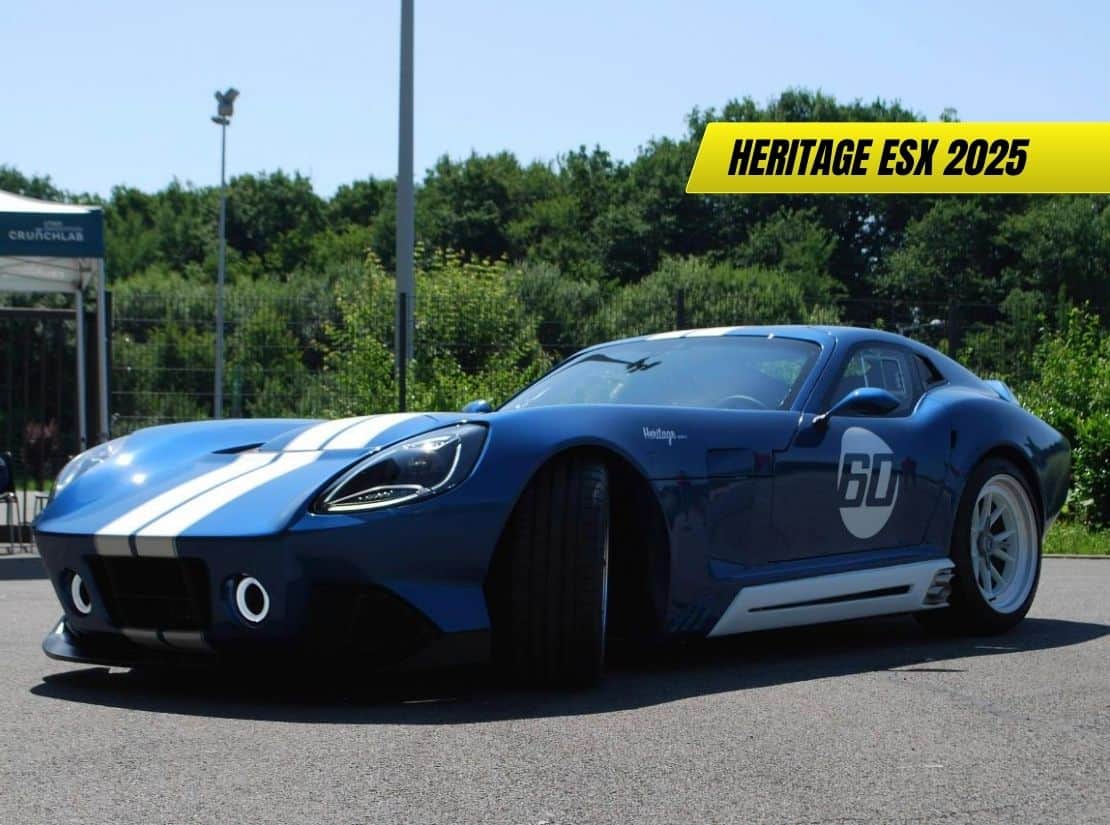
In an era when automotive education often focuses on computer simulations and theoretical knowledge, something extraordinary happened in the workshops of Espera Sbarro school in Montbéliard, France. Twenty-five students, aged between 18 and 25, accomplished what many professional manufacturers struggle to achieve: creating a stunning, fully functional sports car from scratch in just five months. At AutoHit, we’ve been fascinated by this project not just for its technical achievement, but for what it reveals about hands-on automotive education and the enduring appeal of classic design.
The Heritage ESX isn’t simply a student project or academic exercise – it’s a fully operational homage to the legendary 1965 Shelby Cobra Daytona Coupe that demonstrates how traditional coachbuilding skills, when combined with modern engineering knowledge, can produce results that rival professional concept cars. What makes this achievement particularly remarkable is the compressed timeline and limited resources available to the student team.
Understanding the Heritage ESX requires appreciating both its technical accomplishment and its educational philosophy. This project represents the culmination of Franco Sbarro’s unconventional approach to automotive education, where students learn by doing rather than studying, creating real vehicles that must perform rather than merely look impressive. For UK readers interested in automotive careers or alternative education paths, the project offers fascinating insights into different approaches to learning car design and construction.
From hand-built tubular chassis to custom bodywork, this student project achieves professional standards while demonstrating the power of practical automotive education.
Key Highlights
• Rapid Development: Complete design and construction accomplished in just 5 months by 25 students aged 18-25, demonstrating intensive hands-on learning
• Professional Standards: 1,150kg weight, Ford 5.0L V8 engine, and custom tubular chassis create genuine performance capability rivalling commercial sports cars
• Authentic Homage: Faithful recreation of 1965 Shelby Daytona Coupe proportions and styling cues while incorporating modern safety and technology features
• Educational Innovation: Espera Sbarro’s unique teaching method combines theory with immediate practical application, producing graduates with real-world building experience
• Public Recognition: Debut at Le Mans Classic 2025 provides prestigious platform showcasing student capabilities to automotive industry professionals
The Sbarro Educational Philosophy
Franco Sbarro’s approach to automotive education fundamentally differs from conventional design schools that emphasise computer modelling and theoretical study. Students at Espera Sbarro learn by building actual vehicles from conception to completion, developing skills in chassis fabrication, bodywork construction, mechanical systems, and project management through direct experience.
The Heritage ESX project exemplifies this philosophy, with students divided into specialist teams: 12 focusing on mechanical systems and 13 concentrating on bodywork and styling. This division mirrors professional automotive development while ensuring every student gains exposure to both engineering and design disciplines.
Educational Methodology
Practical problem-solving drives the curriculum, with students encountering real-world challenges that computer simulations cannot replicate. Material limitations, budget constraints, and deadline pressures create authentic industry conditions that prepare graduates for professional automotive careers.
Traditional craftsmanship techniques combine with modern materials and methods, teaching students skills increasingly rare in contemporary automotive manufacturing. Hand-forming body panels, welding tubular chassis, and custom fabrication provide capabilities that distinguish Sbarro graduates from conventional design school alumni.
Technical Achievement: The Heritage ESX Specification
The tubular chassis represents sophisticated engineering, balancing strength requirements with weight considerations to achieve the impressive 1,150kg total weight. Custom fabrication throughout demonstrates student capabilities extending far beyond typical academic projects, creating a vehicle that performs rather than merely displaying design concepts.
Ford 5.0-litre V8 engine produces 450bhp, providing genuine performance capability that matches the Heritage ESX’s dramatic appearance. Six-speed manual transmission and rear-wheel drive configuration remain faithful to classic sports car architecture while incorporating modern safety considerations.
Engineering Innovation
Multi-tubular chassis design employs sophisticated stress analysis and material selection that rivals professional racing car construction. Weight distribution and structural integrity receive equal attention, creating a platform capable of handling significant power levels safely.
Modern components including LED lighting elements borrowed from Ford Puma and glazing adapted from Porsche 718 Cayman demonstrate intelligent parts sourcing that reduces costs while maintaining quality standards.
Design Excellence: Honouring the Original
Proportional accuracy to the 1965 Shelby Daytona Coupe creates immediate visual recognition while contemporary interpretation updates classic elements for modern appeal. 4.56-metre length, 1.80-metre width, and 1.24-metre height closely match original dimensions, ensuring authentic presence and stance.
Distinctive styling cues including the long bonnet, dramatically recessed cabin, and concave rear treatmentcapture the essence of Pete Brock’s original aerodynamic masterpiece. Blue livery with white racing stripes provides immediate visual connection to the Le Mans-winning competition cars.
Aesthetic Details
Integrated side exhaust outlets and prominent wheel arch flares reference the original’s muscular racing character while modern surface treatments create sophisticated light interplay across the bodywork. LED lighting signaturesupdate classic round headlight arrangements without compromising period authenticity.
Interior design created entirely by students provides contemporary comfort and functionality within period-appropriate aesthetic framework. Custom fabrication of seats, dashboard, and trim pieces demonstrates comprehensive design capabilities extending beyond exterior styling.
The Five-Month Challenge
Project timeline from initial concept to running vehicle represents extraordinary achievement requiring sophisticated planning and execution. Parallel development of chassis, bodywork, mechanical systems, and interior components demands coordination that mirrors professional automotive programmes.
Resource management within academic constraints forces creative solutions and efficient working methods that provide valuable experience for future professional careers. Budget limitations encourage innovative approaches to parts sourcing and fabrication techniques.
Team Coordination
Student specialisation in mechanical or bodywork disciplines creates natural project divisions while requiring continuous communication and coordination between teams. Problem-solving collaboration develops interpersonal skills essential for professional automotive development environments.
Quality standards maintained throughout the compressed timeline demonstrate student commitment and capability exceeding typical academic project expectations. Professional presentation at Le Mans Classic validates project success against industry standards.
Franco Sbarro: Automotive Maverick and Educator
Franco Sbarro’s background as racing mechanic, coachbuilder, and prototype constructor provides authentic industry perspective that informs educational methodology. Over 50 years in automotive construction creates unparalleled experience base for guiding student development.
Previous student projects including single-seater racers, electric vehicles, and concept cars demonstrate consistent achievement levels that prepare graduates for immediate professional contribution. Industry recognition through Geneva Motor Show presentations and media coverage validates educational approach.
Legacy and Influence
Sbarro’s unconventional vehicles throughout his career demonstrate willingness to challenge conventional thinking while maintaining technical competence. Educational philosophy emphasises hands-on learning over theoretical study, producing graduates with practical skills increasingly rare in contemporary automotive industry.
International recognition of Sbarro student projects creates networking opportunities and career pathways for graduates seeking automotive industry positions. Professional partnerships with manufacturers and suppliers provide real-world context for student learning.
UK Automotive Education Context
British automotive education typically emphasises computer-aided design and theoretical engineering study, producing graduates with strong analytical capabilities but limited hands-on construction experience. The Sbarro approach offers contrasting methodology that could enhance UK automotive education offerings.
Industry demand for practical fabrication skills creates opportunities for graduates with comprehensive hands-on experience. Classic car restoration, bespoke construction, and prototype development sectors particularly value traditional craftsmanship combined with modern engineering knowledge.
Career Pathways
Motorsport applications provide natural progression for students with chassis fabrication and performance tuning experience. Specialist manufacturers like Morgan, Caterham, and McLaren value employees capable of translating design concepts into physical reality.
Consultancy opportunities exist for professionals combining design capabilities with construction expertise, particularly in prototype development and concept car realisation for established manufacturers.
The Heritage ESX in Context
Modern automotive landscape increasingly emphasises mass production efficiency over individual craftsmanship, making projects like the Heritage ESX particularly valuable for preserving traditional skills. Digital design toolscomplement but cannot replace hands-on fabrication experience for complete automotive understanding.
Classic design revival interest creates market opportunities for vehicles combining period aesthetics with contemporary performance and reliability. The Heritage ESX demonstrates commercial potential for thoughtfully executed retro-inspired designs.
Industry Implications
Manufacturers increasingly recognise value of employees with comprehensive practical experience alongside theoretical knowledge. Prototype development and concept car construction require skills that traditional academic programmes often overlook.
Boutique manufacturers and restoration specialists particularly benefit from employees capable of independent problem-solving and multi-disciplinary project management. The Sbarro approach produces graduates ideally suited for these challenging professional environments.
Le Mans Classic Debut
Public presentation at Le Mans Classic 2025 provides prestigious platform for showcasing student achievement to international automotive community. Historic racing context particularly appropriate for Cobra Daytona homage, connecting contemporary craftsmanship with motorsport heritage.
Industry exposure through major automotive events creates networking opportunities and potential career openings for project participants. Media coverage validates educational approach while inspiring future students to pursue hands-on automotive careers.
Professional Recognition
Automotive journalist coverage and industry professional interest in student projects demonstrates practical value of Sbarro educational methodology. Manufacturer representatives attending classic events provide direct connection between students and potential employers.
Competition context at historic racing events showcases vehicle performance capabilities alongside aesthetic achievement, proving functional competence beyond mere display purposes.
Lessons for UK Automotive Enthusiasts
The Heritage ESX project demonstrates possibilities available to dedicated individuals willing to commit time and effort to hands-on learning. Traditional coachbuilding skills remain relevant and valuable despite automotive industry evolution toward mass production methods.
Creative problem-solving and resource optimisation required for successful project completion provide transferable skills valuable across automotive industry sectors. Team collaboration under pressure develops interpersonal capabilities essential for professional success.
Practical Inspiration
Home workshop enthusiasts can draw inspiration from student achievement levels, recognising that ambitious projects remain possible with proper planning and execution. Classic car restoration and kit car construction offer accessible entry points for developing similar skills.
Professional development opportunities exist for UK automotive workers seeking to enhance practical capabilities through additional training or project experience. Specialist courses and workshop experiences provide pathways for skill development outside traditional academic structures.
Future Implications
Automotive industry evolution toward electrification and autonomous systems creates new requirements for professionals combining traditional craftsmanship with contemporary technology understanding. The Sbarro approach provides ideal preparation for these hybrid skill requirements.
Sustainable automotive solutions often require innovative approaches that benefit from comprehensive hands-on experience alongside theoretical knowledge. Prototype development for new technologies particularly values professionals capable of rapid physical realisation of design concepts.
Educational Innovation
UK automotive education could benefit from incorporating greater hands-on elements inspired by successful international programmes like Espera Sbarro. Industry partnerships and practical project requirements enhance graduate employability while maintaining academic rigor.
International exchange opportunities could expose UK students to alternative educational methodologies while building global networks valuable for future career development.
Frequently Asked Questions
How much does it cost to attend Espera Sbarro school? The Espera Sbarro programme costs approximately €12,000 for the 10-month course, which includes materials, workshop access, and instruction. While significant, this represents exceptional value considering students build actual vehicles rather than simply studying automotive theory. The hands-on experience and industry connections often justify the investment through enhanced career prospects.
Are there similar hands-on automotive programmes available in the UK? While no UK institution exactly replicates the Sbarro model, several options exist for practical automotive education. Coventry University’s automotive design programme includes prototype construction elements, while specialist institutions like the National College for Motorsport offer practical engineering courses. Additionally, companies like Caterham Academy provide build-your-own sports car experiences.
What career prospects do Sbarro graduates typically have? Graduates often find employment with specialist manufacturers, motorsport teams, prototype developers, and bespoke automotive companies. The combination of design understanding and practical construction skills proves particularly valuable for roles requiring rapid concept-to-reality translation. Some graduates establish independent workshops or consultancy practices leveraging their comprehensive skill sets.
Could the Heritage ESX project be replicated by UK enthusiasts? While challenging, similar projects are possible for dedicated groups with appropriate workshop facilities and diverse skill sets. The key requirements include chassis fabrication capabilities, bodywork forming skills, mechanical expertise, and project management experience. UK kit car manufacturers and specialist engineering companies could provide guidance and components for ambitious private projects.
What makes the Sbarro approach different from conventional automotive education? The primary difference lies in immediate practical application rather than theoretical study followed by eventual hands-on experience. Students learn welding, fabrication, design, and engineering simultaneously through building actual vehicles. This creates deeper understanding and problem-solving capabilities that prove valuable in professional automotive environments requiring innovation and adaptability.
How does the Heritage ESX compare to professional concept cars? The Heritage ESX demonstrates build quality and design sophistication approaching professional concept car standards, though achieved with significantly smaller budgets and timeframes. The functional engineering and attention to detail rival manufacturer prototypes, while the educational context adds inspirational value beyond mere technical achievement. Professional designers have praised the project’s execution and authenticity.
What role does the Le Mans Classic presentation play for students? The Le Mans Classic debut provides invaluable professional exposure, allowing students to present their work to international automotive media, manufacturers, and enthusiasts. This creates networking opportunities, potential career openings, and industry recognition that significantly enhances graduate prospects. The prestigious venue validates student achievement while inspiring future projects.
Our Verdict: Redefining Automotive Education Through Achievement
The Heritage ESX represents far more than an impressive student project – it demonstrates the transformative power of hands-on automotive education that combines traditional craftsmanship with contemporary engineering knowledge. The five-month timeline and professional-quality results achieved by 25 young people should challenge conventional assumptions about automotive education and student capabilities.
For UK readers, the project offers fascinating insights into alternative educational approaches that prioritise practical experience alongside theoretical understanding. The combination of design, engineering, and fabrication skills developed through such programmes creates graduates uniquely qualified for contemporary automotive challenges requiring innovation and adaptability.
The technical achievement represented by the Heritage ESX – custom tubular chassis, hand-formed bodywork, integrated mechanical systems, and authentic period styling – rivals professional manufacturer concept cars while providing genuine educational value for participants. The compressed timeline demonstrates efficiency levels that should inspire both educational institutions and industry professionals.
Franco Sbarro’s educational philosophy of learning through building rather than studying offers compelling alternative to conventional automotive education that increasingly emphasises computer simulation over practical construction. The consistent quality of student projects emerging from Espera Sbarro validates this approach while creating graduates with rare and valuable skill combinations.
For automotive enthusiasts considering career development or educational opportunities, the Heritage ESX demonstrates possibilities available through dedicated practical learning. The project proves that ambitious automotive construction remains achievable for committed individuals willing to invest time and effort in comprehensive skill development.
The international recognition achieved by Sbarro student projects, including presentations at prestigious events like Le Mans Classic, validates the professional relevance of hands-on automotive education. UK automotive educationcould benefit significantly from incorporating greater practical elements inspired by successful international programmes.
Looking forward, the Heritage ESX stands as testament to human creativity, technical skill, and educational innovation that transcends national boundaries while inspiring automotive enthusiasts worldwide to pursue ambitious practical projects with confidence and determination.
Perfect inspiration for automotive enthusiasts seeking hands-on learning opportunities, the Heritage ESX proves that ambitious car construction remains possible for dedicated students willing to combine traditional skills with contemporary knowledge.





