
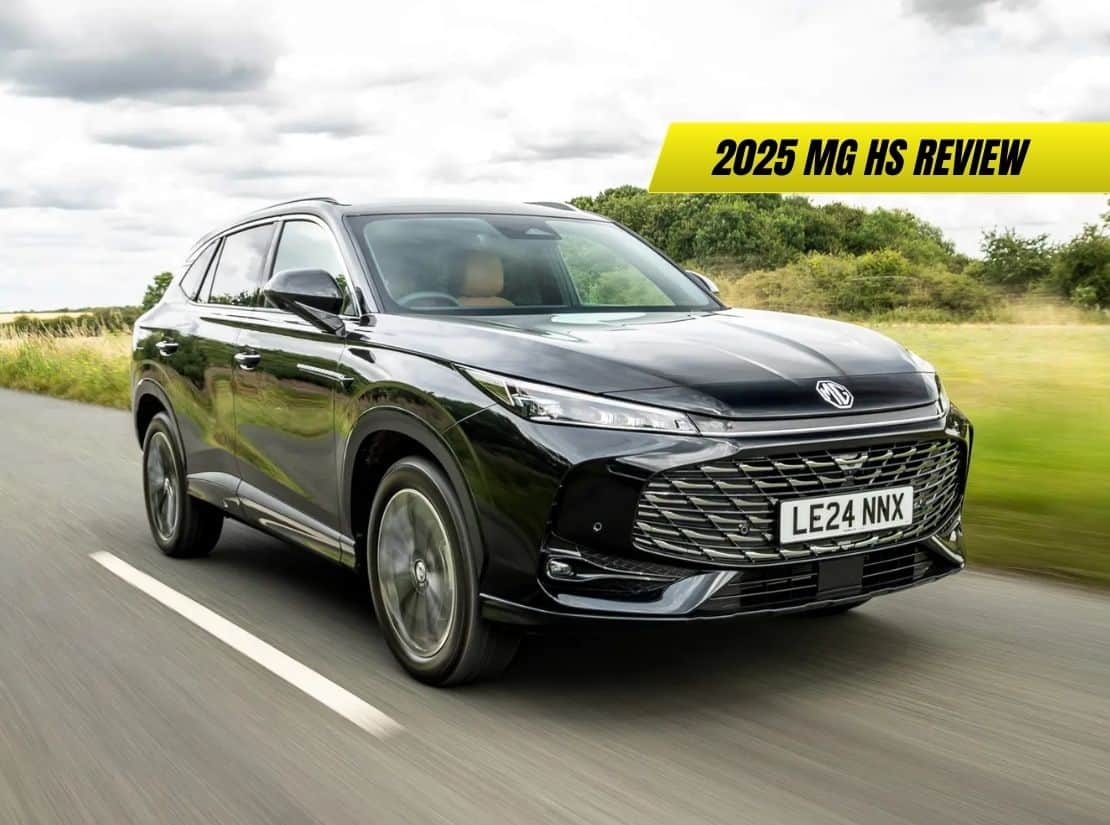
The MG HS has quietly become one of Britain’s automotive success stories, climbing to eighth place in UK sales charts and even claiming the top spot in January 2023. For a Chinese-built SUV from a century-old British marque now owned by SAIC Motor, that’s no small achievement. But can the all-new second-generation model build on this momentum, or has MG simply polished a fundamentally flawed formula?
Having driven the latest HS extensively on British roads, our team at AutoHit can confirm this isn’t merely a cosmetic refresh. MG has addressed virtually every criticism levelled at the previous generation – ride quality, interior refinement, powertrain responsiveness – while maintaining the aggressive pricing that made the original such a volume seller. At £24,995 for the entry-level SE, it’s positioned as “a medium SUV for the price of a small SUV,” directly challenging the likes of the Nissan Qashqai and Ford Kuga.
The real intrigue lies in the plug-in hybrid variant, which promises 75 miles of electric-only range and a 5% BiK rate that could tempt company car drivers away from full EVs. In an era where electric vehicle sales are faltering and range anxiety persists, could the HS PHEV represent the sweet spot between environmental responsibility and real-world practicality?
Key Highlights: • Dramatically improved ride quality and refinement addressing previous generation’s major weaknesses • Aggressive pricing from £24,995 undercutting most rivals by several thousand pounds • 75-mile electric range in PHEV with 5% BiK rate making it hugely attractive for company drivers • Significantly enlarged interior space with best-in-class rear legroom and 507-litre boot • Comprehensive seven-year warranty providing reassurance in a competitive segment • Dual 12.3-inch screens standard bringing premium tech to an affordable package
Design Evolution: European Styling Meets Chinese Engineering
The most immediate transformation is visual. Where the previous HS looked generic and slightly awkward, the 2025 model displays genuinely attractive proportions that wouldn’t look out of place in a German premium showroom. MG’s London design studio has crafted something that feels distinctly European while incorporating subtle Chinese engineering touches.
The extended wheelbase – now 2.77 metres compared to the previous 2.71 metres – allows for dramatically shortened overhangs that give the HS a more dynamic stance. The front grille adopts a more aggressive hexagonal design, flanked by slim LED headlights that taper toward the centre, creating a focused, purposeful expression that previous MG designs notably lacked.
The side profile reveals more robust and incisive lines compared to the previous generation, designed to convey solidity and sportiness, with generous wheel arches emphasised by black plastic cladding and 19-inch wheels on Trophy variants. There’s even a hint of Tesla in the rear light treatment – not entirely coincidental given MG’s ambitions in the electric vehicle space.
At 4.66 metres long, 1.89 metres wide, and 1.66 metres high, the HS occupies proper family SUV territory while undercutting rivals on price. The increased dimensions translate directly into improved interior space, addressing one of the key criticisms of Chinese vehicles attempting to crack the European market.
Interior Transformation: Premium Ambitions Realised
Step inside the 2025 HS and the transformation becomes immediately apparent. Whereas the older HS looked premium but felt cheap, the new model offers some soft-touch trim across the dashboard that’s a worthwhile improvement. The twin 12.3-inch displays – one for instrumentation, another for infotainment – create a genuinely premium atmosphere that rivals offerings from Audi and BMW.
The digital instrument cluster offers three distinct modes – Map, Digital, and ADAS – each with its own layout and visual theme. The infotainment system supports Apple CarPlay and Android Auto, though only via cable rather than wireless connection. Navigation feels responsive, though like many modern systems, switching between functions requires returning to the main screen, which can prove distracting during driving.
Space and Comfort: Where the HS Truly Excels
Interior space represents one of the HS’s greatest strengths, with adequate space for knees and heads even for taller passengers. The central rear passenger benefits from a completely flat floor, while the central console offers two USB-C ports and air conditioning vents.
The boot capacity has grown to 507 litres, expanding to 1,484 litres with rear seats folded. More importantly for UK families, MG has addressed the previous generation’s compromise between petrol and PHEV boot space – both variants now offer identical luggage capacity, a rare achievement in the plug-in hybrid segment.
Front seats feature what MG calls “zero-gravity technology,” though this marketing terminology essentially describes well-contoured seats with good lateral support. The Trophy trim adds heated leather upholstery, with tan colourway available as a £500 option for buyers seeking a more premium aesthetic.
Powertrain Options: Petrol Efficiency Meets PHEV Innovation
1.5T Petrol: Improved but Unexceptional
The standard offering pairs a 1.5-litre turbocharged petrol engine producing 170bhp and 275Nm with either a six-speed manual or seven-speed dual-clutch automatic. With 170bhp, the HS’s petrol engine has more than enough oomph once you’re on the move, but there’s an appreciable delay between pressing the accelerator and the car moving, followed by the car lurching forwards clumsily.
Real-world testing reveals 0-62mph in 9.2 seconds for the automatic, with a claimed top speed of 195km/h. The engine proves regular in operation and comfortable for longer journeys without fatigue, though not particularly spirited or sporty, partly due to the car’s substantial weight of over two tonnes fully loaded.
Fuel economy claims suggest 7.6 litres per 100km (37.2mpg), though real-world testing typically yields around 8.6 litres per 100km (32.9mpg) in mixed driving. For a vehicle of this size and weight, these figures prove competitive if unexceptional.
PHEV: The Real Star of the Show
The MG HS PHEV is an entirely different proposition – so impressive that it earned Plug-in Hybrid of the Year at the 2025 What Car? Awards. Combining the 1.5-litre petrol engine with a 154kW electric motor, total system output reaches 307bhp and 569Nm, slashing the 0-62mph time to just 6.8 seconds.
More crucially for UK buyers, the HS PHEV’s official 75-mile electric range came close to matching that in real-world testing, travelling 74 miles before the engine was forced to fire up. This puts it significantly ahead of rivals like the Ford Kuga PHEV (43 miles), Hyundai Tucson PHEV (43 miles), and Kia Sportage PHEV (43 miles).
The environmental benefits prove substantial, with CO2 emissions of just 12g/km compared to 173g/km for the petrol-only variant. For company car drivers, this translates to a 5% BiK rate versus 37% for the conventional engine – a saving that could amount to hundreds of pounds monthly.
Driving Experience: Comfort Over Thrills
MG has clearly prioritised comfort and refinement over dynamic excellence, and this approach largely succeeds. The brand has added significant insulation and sound deadening around the cabin and engine bay where it wasn’t included before, contributing to its borderline silent atmosphere.
The ride quality represents a dramatic improvement over the previous generation. Where the old HS felt unsettled over typical British road surfaces, the 2025 model absorbs potholes and speed humps with composure that belies its £25,000 starting price. The 19-inch wheels on Trophy variants don’t compromise comfort as much as expected, though the smaller 18-inch wheels on SE models would likely prove even more forgiving.
Handling and Steering: Adequate Rather Than Engaging
The steering offers good responses without being exceptional in communication, though some body roll becomes apparent during faster cornering, without being particularly bothersome. This accurately summarises the HS’s dynamic character – perfectly adequate for family duties but unlikely to satisfy driving enthusiasts.
The absence of drive modes means you cannot alter steering weight, throttle mapping, or suspension settings to suit different scenarios. Similarly, paddle shifters aren’t provided, so the DCT transmission operates exclusively in automatic mode. For most buyers, these omissions won’t matter, but they highlight MG’s focus on simplicity over sophistication.
Technology and Safety: Comprehensive but Intrusive
MG Pilot Safety Suite
All HS models come equipped with MG’s comprehensive safety package, including adaptive cruise control (DCT models), traffic jam assistance, lane keeping assistance, blind spot monitoring, and automatic emergency braking with pedestrian and bicycle detection. Unfortunately, like many new cars, all the systems are active at journey start, and the car will incessantly beep if you exceed speed limits or if it thinks you’re looking away from the road.
The driver attention monitoring proves particularly intrusive, so sensitive it even alerts if you dare look at the speedo, mirrors or perform shoulder checks when changing lanes, becoming so intrusive that some drivers resort to covering the face-scanning camera.
Infotainment and Connectivity
The twin-screen setup feels modern and responsive, though the reliance on touchscreen controls for climate functions proves frustrating. The 360-degree camera system on Trophy models includes a transparent chassis view that makes parking significantly easier, particularly given the HS’s substantial dimensions.
Android Auto and Apple CarPlay integration works reliably, though the lack of wireless connectivity feels dated in 2025. The navigation system includes live traffic updates and generally provides accurate routing for UK roads.
UK Market Positioning and Competition
Pricing Strategy: Value Remains King
Starting at £24,995 for the SE manual, the HS includes Apple CarPlay/Android Auto, rear camera, parking sensors, dual 12.3-inch displays, and comprehensive safety equipment. The DCT automatic adds £1,500, while Trophy trim adds £2,500 for dual-zone climate control, heated leather seats, electric tailgate, and 360-degree camera.
The PHEV starts at £31,495 in SE trim, rising to £33,995 for Trophy specification. While these prices represent increases over the previous generation, the HS remains significantly cheaper than key rivals:
- Ford Kuga: From £29,645 (£5,500+ more expensive)
- Nissan Qashqai: From £28,045 (£3,000+ more expensive)
- Kia Sportage: From £29,000 (£4,000+ more expensive)
- Hyundai Tucson: From £30,445 (£5,500+ more expensive)
Company Car Appeal: PHEV Economics
The PHEV’s 5% BiK rate creates compelling economics for business users. A £34,000 HS PHEV attracts monthly BiK liability of approximately £140 for a 40% taxpayer, compared to over £400 for an equivalent diesel SUV. Factor in potential fuel savings for drivers with home charging, and the PHEV makes strong financial sense despite its £6,000 premium over the petrol model.
Real-World Ownership Considerations
Reliability and Warranty
MG’s seven-year, 80,000-mile warranty provides reassurance that most rivals cannot match. While long-term reliability data for Chinese-built vehicles remains limited, early reports suggest build quality has improved significantly over previous generations.
The PHEV’s complexity introduces potential failure points, but the extended warranty should cover most eventualities during typical ownership periods. Service intervals stretch to 12 months or 15,000 miles, helping offset slightly higher insurance costs compared to previous generations.
Running Costs and Fuel Economy
Real-world testing over 400 kilometres of mixed driving revealed consumption of 8.6 litres per 100km (32.9mpg), compared to the claimed 7.6 litres per 100km (37.2mpg). These figures prove typical for the segment, though diesel rivals offer superior long-distance efficiency.
The PHEV’s economics depend heavily on charging patterns. With home charging, electric-only operation costs approximately 6-8p per mile compared to 15-20p for petrol. Public rapid charging reduces these savings but still provides economic advantages over conventional powertrains.
Comparison Table: HS vs Key Rivals
| Model | Starting Price | Power | 0-62mph | Fuel Economy | Boot Space | Warranty |
|---|---|---|---|---|---|---|
| MG HS 1.5T | £24,995 | 170bhp | 9.2s | 33mpg | 507L | 7 years |
| MG HS PHEV | £31,495 | 307bhp | 6.8s | 75mi EV | 507L | 7 years |
| Ford Kuga 1.5 | £29,645 | 148bhp | 9.8s | 42mpg | 456L | 3 years |
| Nissan Qashqai 1.3 | £28,045 | 138bhp | 9.9s | 44mpg | 479L | 3 years |
| Kia Sportage 1.6T | £29,000 | 177bhp | 8.8s | 38mpg | 591L | 7 years |
| Hyundai Tucson 1.6T | £30,445 | 148bhp | 9.9s | 40mpg | 616L | 5 years |
Our Take: The HS’s value proposition remains compelling, particularly when you factor in the comprehensive warranty and standard equipment levels. The PHEV variant offers exceptional company car economics that few rivals can match.
Frequently Asked Questions
How reliable is the 2025 MG HS, and what about parts availability in the UK?
MG’s seven-year warranty provides better coverage than most rivals, suggesting confidence in build quality. The brand has invested heavily in UK dealer infrastructure, with over 160 outlets providing sales and service support. Parts availability has improved significantly since SAIC’s acquisition, though some specialist components may take longer to source than for European rivals. Early reliability reports suggest significant improvements over previous generations, though long-term data remains limited. The comprehensive warranty should cover most potential issues during typical ownership periods.
Is the PHEV worth the £6,000 premium over the petrol model?
For company car drivers, absolutely. The 5% BiK rate versus 37% for the petrol model creates monthly savings of £200-300 for most taxpayers, effectively paying for the premium within two years. Private buyers with regular access to home charging will also benefit from reduced running costs, though the payback period extends to 4-5 years based on typical mileage. The PHEV’s superior performance (6.8s vs 9.2s to 62mph) and refined operation provide additional justification beyond pure economics.
How does the HS compare to models featured in our best SUVs under £40k guide?
The HS offers exceptional value in our comprehensive guide to the 20 best SUVs under £40k, particularly when specification levels are considered. While rivals like the Mazda CX-5 offer superior driving dynamics and the Skoda Karoq provides better build quality, few match the HS’s combination of space, equipment, and warranty coverage at this price point. The PHEV variant’s 75-mile electric range surpasses most plug-in rivals, making it particularly competitive in the electrified SUV segment.
What about real-world charging times and infrastructure for the PHEV?
A 7kW home wallbox fully charges the PHEV’s 24.7kWh battery in approximately four hours, making overnight charging convenient for most users. Public rapid charging isn’t typically necessary given the 75-mile electric range, but the HS accepts up to 11kW AC charging when available. The UK’s expanding charging network makes longer journeys feasible, though the petrol engine eliminates range anxiety entirely. Vehicle-to-load capability allows you to power external devices, adding practical utility for camping or emergency situations.
How does the HS handle typical UK driving conditions – motorways, country lanes, urban traffic?
The HS excels in urban environments where the PHEV’s electric operation provides silent, instant acceleration ideal for stop-start traffic. Motorway refinement is excellent, with minimal road noise and comfortable seating for longer journeys. The suspension handles typical British road surfaces well, though the firm setup may prove less forgiving than some rivals over particularly poor surfaces. Country lane visibility could be better due to thick A-pillars, but the 360-degree camera system on Trophy models helps compensate during parking manoeuvres.
What are the main drawbacks compared to established European rivals?
The HS lacks the driving engagement of a Mazda CX-5 or Ford Kuga, prioritising comfort over dynamics. Build quality, while improved, doesn’t quite match Volkswagen Group standards, and some interior materials still feel cost-conscious. The infotainment system’s reliance on touchscreen controls proves less intuitive than physical buttons in rivals. Additionally, the intrusive safety systems can become annoying, though these issues affect most modern vehicles rather than being MG-specific problems.
Should I consider the HS over premium alternatives in our SUV guides?
For buyers prioritising value and practicality over badge prestige, the HS makes compelling sense. However, if you’re considering models featured in our guide to 20 premium SUVs under £60k, alternatives like the Volvo XC60 or BMW X3 offer superior refinement, driving dynamics, and brand cachet. The decision ultimately depends on whether you prioritise specification levels and warranty coverage (HS strengths) or premium brand heritage and driving experience (European rival strengths).
The Verdict: Value Engineering at Its Finest
The 2025 MG HS represents a watershed moment for Chinese automotive engineering in the UK market. Where previous generations felt like competent but uninspiring value propositions, the latest HS delivers genuine quality improvements that justify its position among mainstream European rivals.
The petrol model succeeds primarily on value: £24,995 buys more space, equipment, and warranty coverage than any rival can match. While it won’t satisfy driving enthusiasts, it provides comfortable, reliable family transport with running costs that won’t stretch household budgets.
The PHEV variant, however, represents something more significant. Its 75-mile electric range exceeds most plug-in rivals, while the 5% BiK rate creates compelling economics for company drivers. The combination of performance (0-62mph in 6.8 seconds), efficiency, and practicality positions it as perhaps the most complete plug-in hybrid SUV under £35,000.
Our assessment: MG has addressed virtually every criticism of the previous generation while maintaining the aggressive pricing that made the HS a volume success. The result is a genuinely competitive family SUV that happens to be built in China rather than a Chinese car attempting to compete with European rivals.
Bottom line: If badge snobbery isn’t a concern and you prioritise value, space, and warranty coverage over ultimate refinement, the HS deserves serious consideration. The PHEV variant, in particular, offers company car economics that few rivals can match while delivering real-world electric capability that makes daily petrol-free operation genuinely achievable.
The HS represents MG’s most convincing argument yet that Chinese engineering can deliver European levels of quality and refinement – just with significantly more attractive pricing and warranty terms.





