
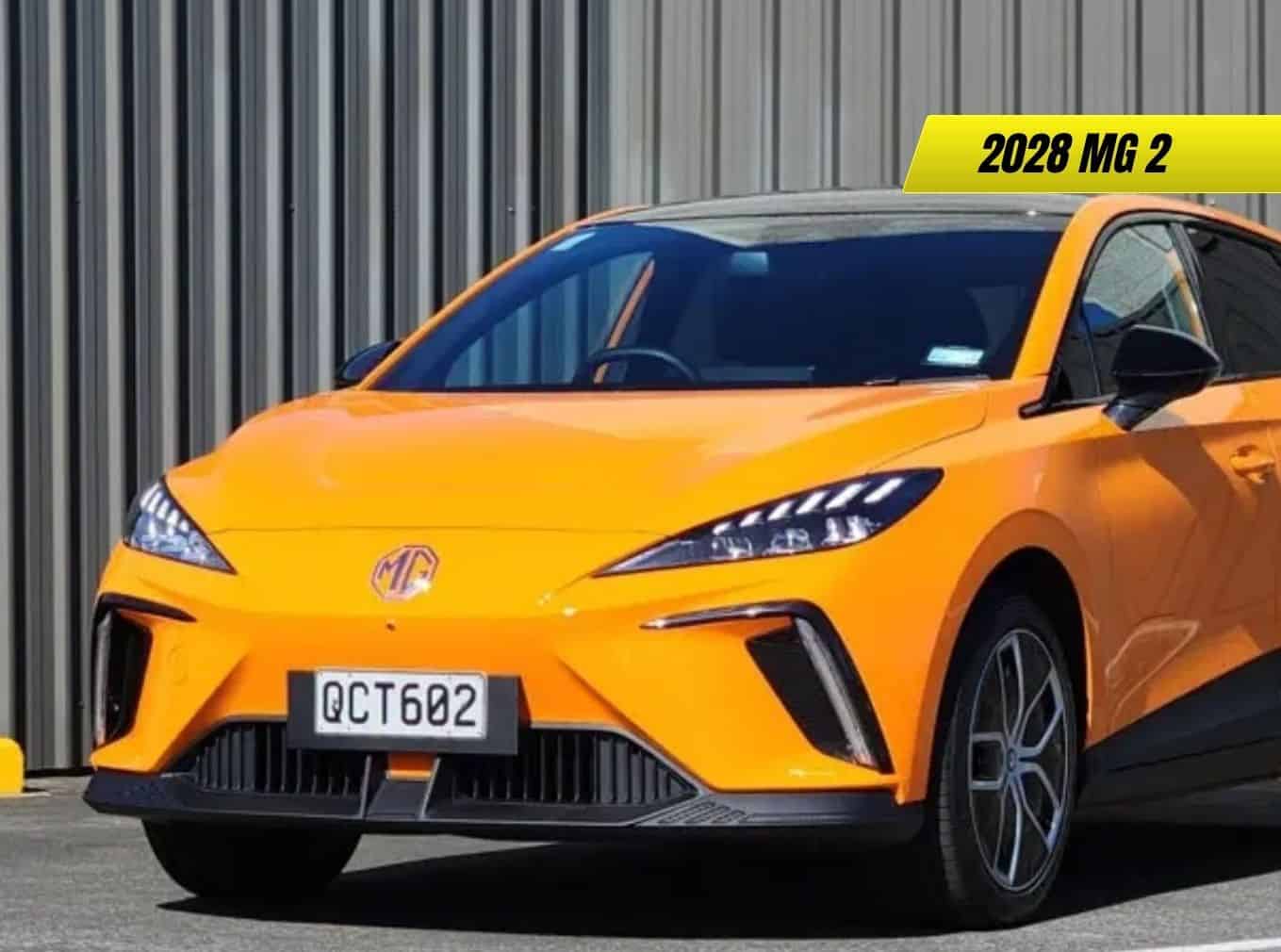
Complete 2028 MG 2 UK preview covering £22,000 pricing, British design, electric specifications and market positioning against Renault 5 for UK buyers.
The 2028 MG 2 represents a pivotal moment for affordable electric mobility in the UK, promising to deliver a fully British-designed electric city car priced around £22,000 that directly challenges the established success of vehicles like the Renault 5 E-Tech. As MG’s most important upcoming model for the European market, the MG 2 embodies the brand’s strategy to reclaim its position as the affordable electric vehicle leader while leveraging British design expertise and engineering refinement to create something genuinely tailored for UK driving conditions.
Confirmed by MG UK boss David Allison at the 2025 Goodwood Festival of Speed, the MG 2 will sit below the current MG 4 hatchback as the entry-level model in MG’s expanding seven-strong electric vehicle lineup. With advanced concept work already completed and design responsibility assigned to MG’s London design studio, the project represents the most significant British-led development in MG’s modern electric era, designed specifically for European tastes and requirements rather than being adapted from Chinese market products.
Key Points
• Competitive pricing strategy: Starting around £22,000 to directly challenge Renault 5’s £22,995 pricing while offering superior value proposition • British design leadership: Fully designed in the UK using MG’s London design studio and Longbridge engineering centre for European market focus • Advanced platform technology: Based on SAIC’s proven Modular Scalable Platform shared with MG 4, ensuring reliability and performance • Strategic market timing: 2028 launch targets peak affordable EV demand before VW ID.2 and other mainstream competitors arrive • Comprehensive specifications: Expected 150bhp motor with 250-mile range from 52kWh battery, matching key Renault 5 benchmarks • Global market potential: European-designed model with international sales potential, particularly in markets with narrow urban roads
Understanding MG’s Strategic Position in the UK Electric Vehicle Market
The development of the MG 2 reflects MG’s recognition that their current competitive advantage in the UK electric vehicle market faces increasing pressure from both traditional European manufacturers and emerging Chinese brands. David Allison’s frank assessment that “we are nowhere near the cheapest when it comes to EV sales” highlights how rapidly the affordable electric vehicle segment has evolved since MG first established dominance with models like the ZS EV.
From my analysis of the current UK market dynamics, the MG 2’s strategic importance extends beyond simple product positioning to represent MG’s broader evolution from import-focused brand to genuinely British-influenced manufacturer. While competitors featured in our best family SUVs guide focus on versatility and space, MG’s approach with the MG 2 emphasizes urban optimization and accessibility that reflects actual UK driving patterns and infrastructure constraints.
The timing proves particularly strategic as the UK transitions through the critical period where electric vehicle adoption moves from early adopters to mainstream buyers seeking practical, affordable alternatives to traditional petrol cars. The Renault 5’s market success has demonstrated substantial demand for well-designed, reasonably priced electric city cars, creating the opportunity that MG aims to capture with more aggressive pricing and British-tailored features.
British Design Philosophy and European Market Focus
The MG 2’s development represents a fundamental shift in MG’s approach to product creation, with design and engineering leadership transferred from China to the UK specifically to create a vehicle that succeeds in European conditions. David Allison’s emphasis that “it has to be” designed in the UK reflects recognition that Chinese market preferences and requirements don’t translate effectively to European urban environments.
London Design Studio Leadership: MG’s London design studio takes primary responsibility for the MG 2’s aesthetic and functional development, drawing on British automotive design heritage while incorporating modern electric vehicle requirements. The approach emphasizes the “very much European style” that Allison identifies as essential for success in markets where four-metre cars represent practical rather than minimal transportation.
Longbridge Engineering Integration: The historic Longbridge facility, built on the site of the former MG Rover factory, provides engineering refinement and testing capabilities specifically calibrated for European road conditions. This facility’s previous work on the Cyberster sports car and MG 3 supermini demonstrates its capability to adapt global MG products for British requirements.
Cultural Design Understanding: The British design team’s understanding of UK urban environments, narrow roads, tight parking spaces, and specific user requirements creates advantages that pure technology transfers cannot replicate. This cultural alignment becomes particularly important for a vehicle targeting daily urban use rather than occasional transportation.
Visual Design Direction: While specific design details remain confidential, the European-centric approach suggests styling that balances modern electric vehicle characteristics with the practical, unpretentious aesthetic that appeals to British buyers seeking efficient transportation rather than technology statements.
The design philosophy contrasts with the approach taken by vehicles in our 20 best SUVs to buy in 2025 under 40kguide, prioritizing urban functionality over maximum space or dramatic styling elements.
Technical Specifications and Platform Architecture
The MG 2 builds upon SAIC’s proven Modular Scalable Platform architecture that currently underpins the successful MG 4 hatchback, providing a foundation of tested technology while allowing optimization for the smaller vehicle requirements. This platform strategy balances development costs with performance capabilities while ensuring reliability based on established components.
Powertrain Expectations: Benchmarking against the Renault 5’s 150bhp motor configuration, the MG 2 likely offers similar power output with potential for enhanced efficiency through platform optimization and British market calibration. The single-motor, front-wheel-drive configuration provides adequate performance for urban use while maximizing range and minimizing costs.
Battery and Range Projections: Expected battery capacity around 52kWh matches the Renault 5’s specification while MG’s efficiency focus could deliver the targeted 250-mile range figure that provides genuine practical utility for UK driving patterns. The platform’s flexibility also allows for potential smaller battery variants targeting maximum affordability.
Charging Infrastructure Compatibility: The platform supports rapid DC charging capabilities essential for practical electric vehicle ownership in the UK, where home charging access varies significantly across different housing types and regions. Compatibility with the UK’s expanding rapid charging network ensures practical long-distance capability when required.
Performance Balance Optimization: Rather than pursuing maximum performance figures, the MG 2’s calibration emphasizes the balance of adequate acceleration, efficient operation, and smooth urban driving characteristics that matter most to British city car buyers.
| Technical Specification | Expected MG 2 | Renault 5 E-Tech | Competitive Position |
|---|---|---|---|
| Power output | 150bhp (estimated) | 150bhp | Competitive parity |
| Battery capacity | 52kWh (expected) | 52kWh | Market standard |
| WLTP range | 250 miles (target) | 250 miles | Matching benchmark |
| Charging speed | DC rapid capable | 80kW DC | Competitive capability |
| Platform | SAIC MSP | CMF-BEV | Proven technology |
Pricing Strategy and Market Positioning Analysis
The MG 2’s pricing strategy represents a direct challenge to established competitors while acknowledging the reality of increased competition in the affordable electric vehicle segment. David Allison’s commitment to “price it as aggressively as I can get away with” indicates MG’s willingness to accept reduced margins to establish market position and volume sales.
Competitive Pricing Framework: The £22,000 starting price positions the MG 2 just below the Renault 5’s £22,995 entry point while providing scope for multiple trim levels that maintain clear positioning against both the current MG 4 and incoming competitors like the Volkswagen ID.2. This pricing requires significant cost control while delivering specification levels that justify electric vehicle premiums over conventional alternatives.
Value Proposition Development: Beyond headline pricing, the MG 2’s value proposition emphasizes the total cost of ownership advantages including lower charging costs compared to petrol alternatives, reduced maintenance requirements, and potential government incentives for electric vehicle adoption. The British design and engineering input also provides intangible benefits for buyers seeking products with local relevance.
Monthly Payment Focus: Allison’s emphasis on monthly payment affordability reflects understanding that many British buyers evaluate vehicles based on financing costs rather than total purchase price. Competitive lease rates and PCP deals become essential for achieving volume sales in a market segment where buyers are typically price-sensitive.
Trim Level Strategy: The platform flexibility allows for multiple trim levels that provide upgrade paths without compromising the entry-level price point. Higher specifications can incorporate additional technology, improved materials, and enhanced features while maintaining the fundamental value proposition that defines the model’s appeal.
Compared to alternatives in our best cars under £25,000 guide, the MG 2’s pricing strategy acknowledges that electric vehicles compete against both conventional and electric alternatives in determining buyer choices.
Advanced Technology Integration and Connectivity Features
The MG 2 incorporates MG’s latest technology integration while maintaining the cost discipline required for aggressive pricing. The approach emphasizes proven, practical features rather than cutting-edge innovations that might compromise reliability or affordability.
Infotainment and Connectivity: Expected features include MG’s latest infotainment system with smartphone integration capabilities, though specific screen sizes and interface designs await confirmation. The British development input ensures compatibility with UK-specific requirements including traffic information, charging point integration, and local service access.
MG iSMART Integration: The MG iSMART app connectivity provides remote vehicle monitoring, charging management, and service scheduling capabilities that enhance ownership experience while supporting efficient vehicle utilization. These features become particularly valuable for urban users managing charging schedules around variable electricity pricing.
Safety and Driver Assistance: MG Pilot suite of driver assistance systems provides comprehensive safety equipment as standard, including automatic emergency braking, lane keep assist, and traffic sign recognition. The British development input ensures calibration for UK road conditions, signage, and traffic patterns.
Over-the-Air Update Capability: Modern software architecture supports over-the-air updates for both infotainment functions and vehicle systems, ensuring the MG 2 maintains current capabilities throughout its ownership life while reducing service center visit requirements.
The technology approach emphasizes practical utility over impressive specifications, contrasting with the complexity sometimes found in vehicles from our diesel SUVs guide that target different buyer priorities and usage patterns.
Market Competition and Segment Analysis
The MG 2 enters a rapidly evolving UK market segment where traditional boundaries between city cars, superminis, and small electric vehicles continue to blur. Understanding its competitive position requires examining both direct electric rivals and the broader range of vehicles competing for similar buyer attention and budgets.
Direct Electric Vehicle Competitors: The Renault 5 E-Tech represents the primary benchmark, offering proven French design, competitive pricing, and established dealer support. The MG 2’s advantages include potentially lower pricing, British market optimization, and MG’s growing dealer network, while the Renault benefits from established brand perception and longer electric vehicle experience.
Emerging Competition Framework: The anticipated Volkswagen ID.2 and its Cupra and Skoda variants represent serious future competition with potentially superior interior quality and brand prestige, though likely at higher prices. Chinese brands including BYD and others offer specification advantages but may lack the local design relevance and dealer support that MG provides.
Conventional Vehicle Competition: The MG 2 also competes against conventional petrol vehicles in the £15,000-£20,000 range, where total cost of ownership advantages must overcome higher initial purchase prices. This comparison becomes increasingly favorable as petrol prices and urban access restrictions influence running costs.
Market Segment Evolution: The success of vehicles like the Renault 5 demonstrates that the affordable electric vehicle segment represents genuine volume opportunity rather than niche market, encouraging multiple manufacturers to develop competing products that will intensify competition by the MG 2’s 2028 launch.
Against alternatives featured in our best Chinese SUVs in the UK market guide, the MG 2 offers British design input and local development that differentiates it from pure import products while maintaining competitive pricing and specifications.
Production Timeline and Market Introduction Strategy
The MG 2’s development timeline reflects the balance between speed to market and thorough development required for success in the competitive European market. David Allison’s confidence in MG’s rapid development capabilities, citing the company’s ability to progress “from concept to production in as little as two years,” indicates aggressive scheduling while maintaining quality standards.
Development Phase Management: Current status indicates “fairly advanced” concepts already exist, suggesting the project has progressed beyond initial styling studies to functional prototypes suitable for engineering development. This advancement supports the 2028 target timeline while allowing for comprehensive testing and refinement.
UK Engineering Input: The Longbridge engineering center’s role in testing and configuring the MG 2 for European markets ensures British road conditions, regulations, and preferences influence the final product. This local input distinguishes the MG 2 from products developed solely for Chinese domestic markets and adapted for export.
Production Location Strategy: While final production will occur in China to maintain cost competitiveness, the British design and engineering input ensures the product meets European requirements and preferences. This approach balances cost control with market relevance in ways that pure import strategies cannot achieve.
Market Introduction Planning: The 2028 launch timing targets the period when affordable electric vehicle demand reaches mainstream levels while avoiding direct collision with the most intense competition from German manufacturers whose products arrive slightly earlier.
| Development Milestone | Timeline | Key Activities | UK Market Impact |
|---|---|---|---|
| Concept completion | 2024-2025 | Design finalization | British input integration |
| Prototype testing | 2025-2026 | UK road validation | Local optimization |
| Production preparation | 2026-2027 | Manufacturing setup | Supply chain establishment |
| Market launch | 2028 | UK dealer introduction | Sales commencement |
Urban Mobility Focus and UK Infrastructure Alignment
The MG 2’s design prioritizes urban mobility requirements that reflect actual UK driving patterns rather than theoretical maximum capabilities. This focus acknowledges that most British city car buyers use vehicles primarily for urban commuting, local errands, and occasional longer journeys rather than comprehensive transportation needs.
Urban Design Optimization: The targeted four-meter length provides maneuverability advantages in British city centers while maintaining adequate interior space for practical use. This balance becomes particularly important in markets like London, Birmingham, and Manchester where parking constraints and narrow roads favor compact vehicles.
Charging Infrastructure Integration: The MG 2’s development coincides with continued expansion of UK charging infrastructure, particularly in urban areas where city car buyers are most likely to live. The vehicle’s specifications align with available charging speeds and locations rather than pursuing maximum capability that infrastructure cannot support.
Range and Usage Pattern Alignment: The targeted 250-mile range addresses real-world UK usage patterns where most daily driving falls well within electric vehicle capabilities while providing confidence for occasional longer journeys. This range specification avoids both inadequate capability and excessive cost for unused range.
City Center Access Benefits: As UK cities expand low emission zones and potentially introduce congestion charging for conventional vehicles, the MG 2’s zero-emission capability provides access advantages that improve with regulatory changes rather than being undermined by them.
The urban focus contrasts with the broader capability emphasis found in vehicles from our Volkswagen Golf 2025review, acknowledging that specialized urban vehicles can optimize characteristics that mainstream models must compromise.
Ownership Experience and Support Infrastructure
The MG 2’s ownership experience benefits from MG’s established UK dealer network and service infrastructure while incorporating improvements based on electric vehicle requirements and customer feedback from existing models. The British development input ensures ownership experience design reflects UK customer expectations and requirements.
Dealer Network Advantages: MG’s expanding UK dealer network provides service and support advantages over newer electric vehicle brands that rely on limited specialist centers or mobile service units. Established relationships with local dealers support both sales and ongoing maintenance requirements.
Service and Maintenance Simplification: Electric powertrain simplicity reduces routine maintenance requirements compared to conventional vehicles, while MG’s proven components and established service procedures ensure consistent support quality. The shared platform with MG 4 provides parts commonality that supports efficient service operations.
Warranty and Reliability Expectations: MG’s standard warranty coverage and established reliability record provide confidence for buyers concerned about electric vehicle durability and long-term costs. The proven platform architecture reduces risk compared to entirely new electric vehicle technologies.
Technology Support and Updates: MG iSMART connectivity and over-the-air update capabilities ensure the MG 2 maintains current functionality throughout ownership while reducing service center visits for routine updates or improvements.
Community and Brand Experience: MG’s heritage and growing enthusiast community provide intangible ownership benefits that pure technology products cannot replicate, particularly important for buyers seeking emotional connection alongside practical transportation.
Compared to ownership experiences described in our Toyota RAV4 2026 review, the MG 2 emphasizes accessibility and affordability over premium features or maximum reliability, targeting different buyer priorities and expectations.
Frequently Asked Questions
When will the MG 2 be available to order in the UK and what’s the expected delivery timeline?
The MG 2 is targeted for market introduction in 2028, with order books likely opening in late 2027 to allow dealer preparation and initial stock building. MG UK boss David Allison has confirmed that “fairly advanced” concepts already exist, indicating development is progressing toward the announced timeline. While MG has demonstrated rapid development capabilities in the past, the 2028 target allows for comprehensive testing and refinement essential for success in the competitive European market.
How will the £22,000 starting price compare to total ownership costs versus petrol alternatives?
The MG 2’s £22,000 starting price represents higher initial cost than equivalent petrol city cars, but electric operation provides significant ongoing savings through lower energy costs, reduced maintenance requirements, and potential exemptions from urban charging zones. Based on current energy prices and typical UK driving patterns, the total cost of ownership over four years should favor the MG 2 despite higher initial investment, particularly for urban users with access to home charging.
What makes the British design input significant compared to other Chinese-manufactured electric vehicles?
The MG 2’s British design leadership through MG’s London design studio and Longbridge engineering center ensures optimization for European road conditions, parking requirements, and user preferences that differ significantly from Chinese market needs. David Allison emphasizes that such a vehicle “wouldn’t succeed in China” due to different market preferences, making European-specific development essential for success. This local input affects everything from exterior dimensions to interior ergonomics and technology integration.
How does the expected 250-mile range perform in real-world UK driving conditions?
The targeted 250-mile WLTP range should translate to approximately 200-220 miles in typical UK driving conditions, including motorway use, urban stop-start traffic, and seasonal temperature variations. This capability exceeds most daily driving requirements while providing confidence for longer journeys, particularly with the UK’s expanding rapid charging network. The range specification balances practical utility with cost control, avoiding both inadequate capability and excessive expense for unused range.
Will the MG 2 be available through the same dealer network as current MG models?
Yes, the MG 2 will be sold and serviced through MG’s established UK dealer network, providing nationwide coverage and local support. This network advantage over newer electric vehicle brands that rely on limited specialist centers or direct sales models offers both convenience and confidence for buyers concerned about ongoing support. The shared platform with MG 4 also ensures parts availability and technician familiarity across the dealer network.
How does the MG 2 compare to the upcoming Volkswagen ID.2 and other mainstream brand competitors?
The MG 2’s primary advantage over upcoming VW Group products lies in expected lower pricing and earlier market availability, while VW products will likely offer superior interior quality and brand prestige at higher prices. The British design input also provides local market optimization that German manufacturers developing primarily for European-wide appeal may not match. However, VW’s established dealer network and brand reputation provide competitive advantages that MG must overcome through value proposition and product execution.
What warranty and support coverage can UK buyers expect for the MG 2?
MG typically provides comprehensive warranty coverage including extended battery warranties common for electric vehicles, though specific MG 2 terms await confirmation. The established dealer network and proven component supply chain support consistent service quality, while the shared platform with successful MG 4 provides parts commonality and technician familiarity. MG iSMART connectivity also enables remote diagnostics and over-the-air updates that reduce service center visit requirements while maintaining vehicle performance.
Conclusion
The 2028 MG 2 represents a compelling proposition for UK buyers seeking affordable electric mobility without sacrificing quality, design sophistication, or practical capability. By combining British design leadership with proven platform technology and aggressive pricing strategy, MG aims to reclaim leadership in the affordable electric vehicle segment while addressing the specific requirements of European urban driving.
From my analysis, the MG 2 succeeds most effectively by acknowledging that successful electric city cars require optimization for actual usage patterns rather than pursuing maximum capabilities that buyers neither need nor want to pay for. The British design input ensures cultural alignment and practical optimization that pure technology transfers cannot achieve, while the established dealer network provides support advantages over newer competitors.
The timing proves particularly strategic as the UK market transitions from electric vehicle early adoption to mainstream acceptance, creating substantial demand for well-designed, reasonably priced alternatives to conventional city cars. The Renault 5’s market success validates this demand while demonstrating that buyers will choose electric vehicles when they offer compelling combinations of design, capability, and value.
Looking ahead, the MG 2’s success could influence the broader affordable electric vehicle segment while demonstrating the continued relevance of British automotive design expertise in the global electric vehicle transition. Whether targeting first-time electric vehicle buyers, urban commuters, or environmentally conscious families, the MG 2 offers a uniquely compelling combination of accessibility, capability, and local market understanding.
For comprehensive information about MG’s current electric vehicle range and dealer network, visit MG Motor UK’s official website. The Society of Motor Manufacturers and Traders provides valuable insights into UK electric vehicle market trends and regulatory developments affecting vehicle choice decisions.





