
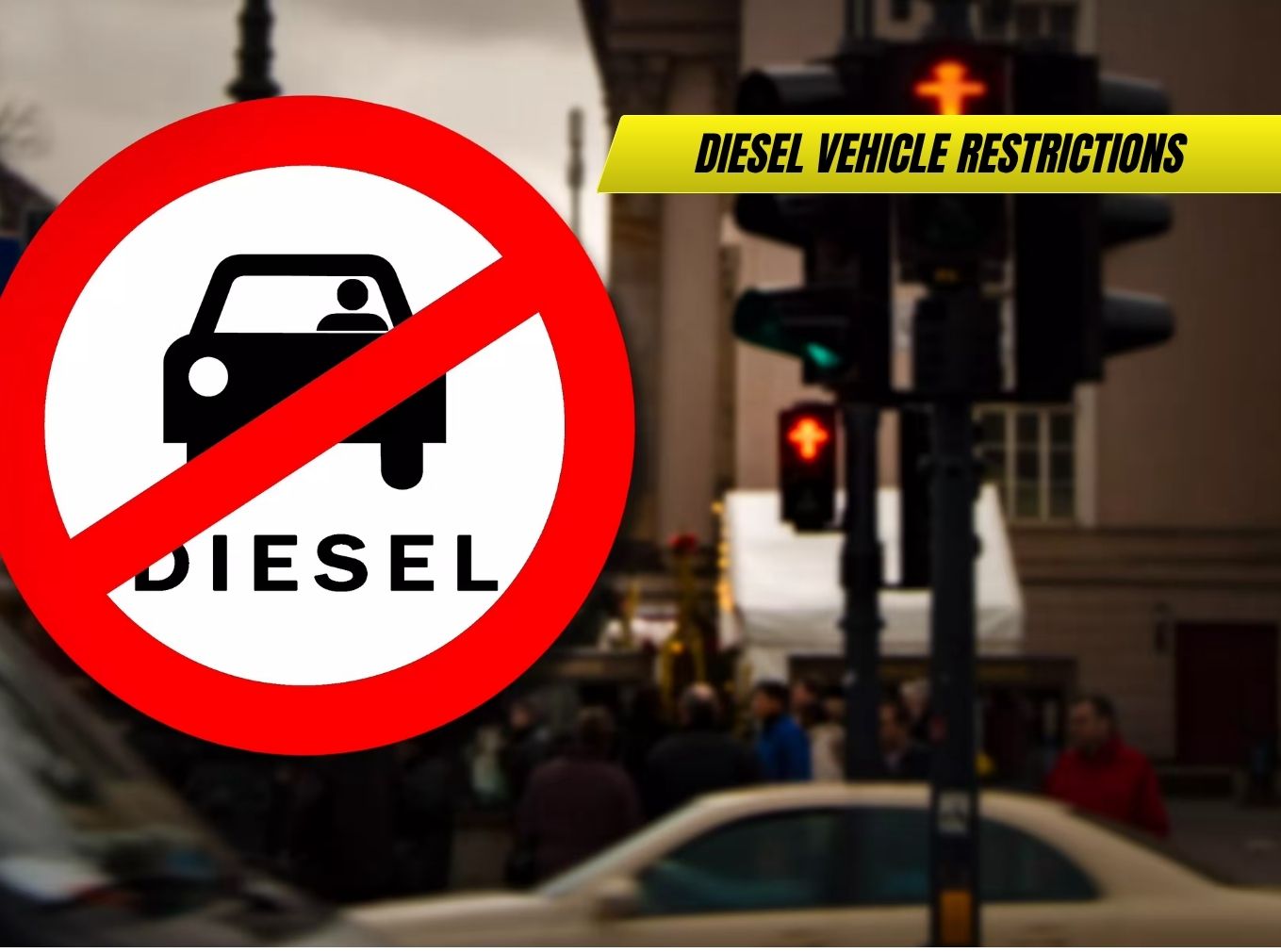
Complete guide to UK diesel restrictions 2025. Euro 5 vehicle bans, clean air zone charges, penalties, and compliance strategies for diesel drivers across Britain.
The landscape for diesel vehicle ownership in the UK continues to evolve rapidly as environmental regulations tighten and clean air zones expand across major cities. Euro 5 diesel vehicles, once considered environmentally acceptable, now face increasing restrictions and daily charges in many urban areas. With new regulations taking effect throughout 2025 and beyond, diesel drivers must navigate a complex web of local restrictions, penalty charges, and compliance requirements. Understanding these changes is crucial for avoiding unexpected costs and planning future vehicle purchases in an increasingly restrictive regulatory environment.
Key Points Summary
• Euro 6 now mandatory – Most UK clean air zones require Euro 6 standard for diesel vehicles, effectively banning Euro 5 and older diesels • Daily charges widespread – Birmingham, Bath, Bristol and other cities impose £8-£12.50 daily charges for non-compliant diesel vehicles • ULEZ covers all London – London’s Ultra Low Emission Zone expanded to all boroughs, affecting millions of diesel drivers daily • Penalties are severe – Non-payment results in £60-£180 penalty charges, with enforcement through automatic number plate recognition • Older diesels worst hit – Euro 1-5 diesel vehicles face the most restrictions, while Euro 6 diesels remain largely exempt • Support schemes available – Scrappage grants and retrofit programmes help drivers transition to compliant vehicles
Understanding Euro Emission Standards and Current UK Requirements
The European emission standards framework forms the foundation of UK clean air zone regulations, with Euro 6 currently the latest exhaust emissions standard for new cars and a minimum requirement for diesel vehicles in a number of clean air zones, including the London ULEZ. Understanding these standards helps diesel drivers assess their compliance status and potential costs.
In my experience, many UK drivers remain confused about the differences between Euro standards and their practical implications. Euro 5 diesel vehicles, manufactured primarily between 2009-2015, allowed significantly higher NOx emissions compared to Euro 6 standards. While Euro 5 represented progress at the time, stricter environmental requirements now classify these vehicles as non-compliant in most urban clean air zones.
Euro 6 was introduced in 2014 and has four different versions, with the latest update – Euro 6d – made a requirement for emissions standards in January 2021. This evolution means even some vehicles sold as “Euro 6” in early 2015 may not meet current clean air zone requirements, creating confusion for owners who believed their relatively recent purchases would remain compliant.
From my point of view, the rapid progression from Euro 5 to Euro 6d demonstrates the accelerating pace of environmental regulation. Diesel drivers must now consider not just current compliance but also future regulatory changes when making vehicle purchasing decisions. The gap between Euro 5 and Euro 6 NOx limits represents the most significant reduction in allowable emissions in the Euro standards history.
The practical implications affect millions of UK vehicles. Almost every diesel car registered since September 2015 meets Euro 6 standards, though some earlier models do too (you can find some ULEZ compliant diesel cars going back to 2012). However, this means vehicles manufactured between 2009-2015 face varying compliance status, requiring individual checking rather than simple age-based assumptions.
London ULEZ: The UK’s Largest Diesel Restriction Zone
London’s Ultra Low Emission Zone represents the most comprehensive diesel vehicle restriction in the UK, covering all London boroughs and affecting millions of daily journeys. The expansion has created the world’s largest clean air zone, fundamentally changing diesel vehicle economics for London drivers.
Diesel cars must meet Euro 6 standards to be ULEZ compliant, effectively excluding most Euro 5 and older diesel vehicles from penalty-free access. The daily ULEZ charge is £12.50 for non-compliant vehicles, creating significant annual costs for regular London drivers who might face charges exceeding £4,500 per year.
Let’s examine the enforcement mechanisms that make ULEZ compliance unavoidable. TfL uses Automatic Number Plate Recognition (ANPR) cameras to detect entry to the zone. If your vehicle does not meet the ULEZ emission standards, failure to pay will result in a Penalty Charge Notice (PCN) of £180, or £90 if paid within 14 days. This comprehensive monitoring system ensures minimal evasion opportunities.
The zone’s scope creates particular challenges for diesel drivers living on the boundaries. The London ULEZ applies 24 hours a day, every day of the year, except Christmas Day, meaning even brief journeys into compliant areas trigger charges. Many outer London residents find themselves effectively trapped by ULEZ boundaries, facing daily charges for accessing central services or employment.
I would recommend careful route planning for diesel drivers regularly visiting London. The expanded ULEZ boundaries mean many previously free routes now incur charges, while alternative routes may add significant journey time and fuel costs. Some drivers find the combined time and cost penalties exceed the benefits of diesel ownership, particularly for vehicles primarily used for urban driving.
Research demonstrates the zone’s effectiveness in reducing pollution, with harmful nitrogen dioxide and particulate matter levels in outer London 22% lower than before the ULEZ and its expansion. However, this environmental success comes at significant cost to owners of older diesel vehicles who face difficult choices between expensive compliance, costly daily charges, or vehicle replacement.
Regional Clean Air Zones: Birmingham, Bath, and Beyond
Beyond London, numerous UK cities have implemented or plan to introduce clean air zones specifically targeting diesel vehicles that fail to meet Euro 6 standards. These regional schemes create a patchwork of restrictions that complicate travel planning for diesel drivers.
Birmingham set up a scheme in June 2021, charging £8 per day for cars and vans, rising to £50 for lorries, buses and coaches. Birmingham’s Class D clean air zone represents the most comprehensive outside London, applying to all vehicles that do not meet the minimum emissions standards of Euro 6 for diesel and Euro 4 for petrol.
Bath operates a Class C zone affecting commercial vehicles and taxis but exempting private cars, though this distinction may change as environmental pressures increase. Bath and North East Somerset Council operates a Class C clean air zone, which means taxis and private hire vehicles, vans and LGVs, and buses and HGVs, are all subject to a daily charge, with charges of £9 for smaller vehicles and £100 for larger ones.
Based on my experience, the varying classification systems create confusion for drivers travelling between cities. Class C zones affect commercial vehicles only, while Class D zones include private cars. This inconsistency means diesel drivers must research specific requirements for each destination rather than assuming uniform national standards.
Future expansion appears inevitable as eventually, almost 20 councils could set up clean air zones, including some Scottish cities that plan to ban older vehicles from driving in city centres altogether. This expansion creates particular challenges for diesel drivers who may find themselves increasingly restricted from accessing major urban centres across the UK.
The enforcement mechanisms mirror London’s approach, with automatic number plate recognition systems monitoring compliance and issuing penalty notices for non-payment. You may get a £120 penalty charge if you drive a non-compliant vehicle within the Birmingham Clean Air Zone and fail to pay the required fee, demonstrating the serious financial consequences of non-compliance.
| City | Zone Type | Daily Charge (Cars) | Penalty Charge | Operational Hours |
|---|---|---|---|---|
| London (ULEZ) | Class D+ | £12.50 | £180 (£90 if paid early) | 24/7 except Christmas |
| Birmingham | Class D | £8.00 | £120 (£60 if paid early) | 24/7 including holidays |
| Bath | Class C | Private cars exempt | N/A for cars | 24/7 |
| Bristol | Class D | £9.00 | £120 (£60 if paid early) | 24/7 |
Financial Impact and Cost Analysis for Diesel Drivers
The cumulative financial impact of clean air zone restrictions can dramatically alter the economics of diesel vehicle ownership, particularly for drivers who regularly travel between multiple restricted areas or live within zone boundaries.
Regular commuters face the highest costs, with daily ULEZ charges of £12.50 potentially reaching £3,250 annually for weekday-only travel, or over £4,500 for daily use. Birmingham’s £8 daily charge still represents £2,080 per year for regular users, while multiple city visits compound costs rapidly for business users or delivery drivers.
In my experience, many diesel drivers underestimate the total annual impact when initially considering whether to pay charges or replace vehicles. Beyond direct charges, factors include increased insurance costs for older vehicles, reduced resale values due to restriction zones, and potential penalty charges for forgotten payments or technical issues.
Vehicle depreciation has accelerated significantly for non-compliant diesel vehicles. Euro 5 diesel values have dropped substantially as restriction zones expand, with many models now worth significantly less than similar petrol equivalents. This depreciation particularly affects owners who purchased vehicles immediately before restriction announcements, facing both ongoing charges and reduced asset values.
I would recommend calculating total ownership costs including potential charges when considering vehicle retention versus replacement. For many drivers, the combination of daily charges, reduced resale values, and increasing restriction zones makes vehicle replacement more economical than continued compliance payments, particularly when considering the improving availability of compliant alternatives.
Penalty charge administration adds another cost layer for non-compliant drivers. Multiple penalty notices can accumulate quickly for drivers unfamiliar with zone boundaries or payment systems, with charges potentially exceeding vehicle values for older diesels. The appeal process, while available, requires time and documentation that may not guarantee success.
Vehicle Compliance Checking and Exemption Opportunities
Determining vehicle compliance requires more than simple age-based assumptions, as manufacturers implemented Euro 6 standards at different rates and some earlier vehicles achieved compliance through advanced emission control systems.
The most accurate way to find out if your car is ULEZ compliant is to ask your manufacturer or refer to the handbook and confirm for yourself. Online checkers provide initial guidance but may contain inaccuracies that result in unexpected penalty charges for drivers who relied on incorrect information.
Vehicle registration documents sometimes contain Euro standard information, though older V5C documents may lack these details. For newer vehicles, the Euro emissions standards may be listed in section D.2 of your vehicle log book (V5C). However, this information isn’t always present or may be unclear, requiring alternative verification methods.
Manufacturer compliance databases offer the most reliable verification, though accessing this information may require contacting dealers or manufacturer customer services. Some manufacturers provide online VIN checkers that confirm Euro standard compliance, while others require written requests or dealer verification services.
From my point of view, the complexity of compliance checking reflects the rapid evolution of emission standards and the variability in manufacturer implementation. Drivers should verify compliance through multiple sources rather than relying on single online checkers, particularly given the financial consequences of incorrect assumptions.
Exemption opportunities exist for specific vehicle categories and circumstances. Keepers of vehicles registered with a ‘disabled’ or ‘disabled passenger vehicles’ tax class will be exempt until 24 October 2027 as long as their vehicle doesn’t change tax class. Military and historic vehicles also qualify for exemptions in most zones, though specific criteria vary between authorities.
Retrofit solutions provide compliance pathways for some vehicles through approved emission control system upgrades. Modified or retrofitted vehicles registered with the Energy Saving Trust’s Clean Vehicle Retrofit Accreditation Scheme (CVRAS) may qualify for exemptions, though retrofit costs often exceed vehicle values for older diesels.
Support Schemes and Transition Assistance Programs
Recognition of the financial burden imposed by clean air zone restrictions has led to various support schemes designed to help drivers transition away from non-compliant vehicles, though availability and eligibility vary significantly between areas.
London provides the most comprehensive support through expanded scrappage schemes. When he announced the ULEZ zone was being extended, London Mayor Sadiq Khan also announced a massive expansion of scrappage scheme to all Londoners. These schemes typically offer £2,000-£5,000 towards replacement vehicle purchases or public transport credits for qualifying applicants.
Birmingham offers targeted support for local businesses and residents, with various grants available to help local businesses move into something more efficient. These include up to £4,500 for taxis and vans, up to £20,000 for HGVs and up to £35,000 for buses and coaches. However, private car owners typically receive limited support compared to commercial operators.
Let’s analyse the effectiveness of these schemes in practice. Many programmes face high demand that exceeds available funding, creating waiting lists and application deadlines that may not align with drivers’ immediate needs. Income restrictions often exclude middle-income earners who face the same compliance costs but earn too much for assistance eligibility.
Eligibility criteria typically favour local residents and businesses, creating inequities for drivers who regularly visit restricted zones but live outside qualifying areas. This geographic restriction particularly affects outer London residents who face ULEZ charges but may not qualify for borough-specific scrappage schemes.
I would recommend early application for any relevant support schemes, as funding often operates on first-come, first-served basis with limited annual budgets. Documentation requirements can be extensive, including proof of residence, income verification, and vehicle ownership evidence that may take time to gather.
Alternative support includes interest-free loans for vehicle replacement, discounted public transport passes, and cargo bike loan schemes for suitable businesses. However, these alternatives may not address the practical needs of drivers requiring personal mobility or commercial vehicle capacity that public transport cannot provide.
Future Regulatory Developments and Planning Considerations
The regulatory environment for diesel vehicles continues evolving as environmental targets tighten and political pressure for cleaner air intensifies. Understanding likely future developments helps drivers make informed decisions about vehicle retention, replacement, or usage patterns.
Based on my experience, the trend clearly favours increasingly strict restrictions on diesel vehicles, with Euro 6 standards likely representing only a temporary reprieve rather than long-term compliance certainty. Some European cities already plan complete diesel bans by 2030, suggesting UK restrictions may follow similar trajectories.
Scottish cities appear poised for the most aggressive restrictions, with some Scottish cities that plan to ban older vehicles from driving in city centres altogether. These outright bans represent a more severe approach than current charge-based systems, potentially affecting even Euro 6 diesel vehicles in future phases.
Zero emission zone concepts are emerging in cities like Oxford, where all vehicles will be charged unless they are plug-in hybrid, electric or hydrogen vehicles that can run without any exhaust emissions. Such zones would exclude all diesel vehicles regardless of Euro standard, representing the ultimate restriction for combustion engine vehicles.
From my point of view, diesel drivers should consider these future restrictions when making vehicle purchasing decisions today. Investing in Euro 6 diesel vehicles may provide short-term compliance but could face restrictions within the typical vehicle ownership period, particularly in urban areas where environmental pressures remain high.
The expansion of restriction zones appears inevitable as more than 60 local authorities have been ordered to tackle illegal levels of air pollution. This government directive ensures continued pressure for additional clean air zones, potentially creating a national network that makes diesel vehicle ownership increasingly impractical for many drivers.
Technology developments may influence future regulations, with real-world emission testing potentially revealing higher actual emissions than laboratory standards suggest. This could lead to retrospective restrictions on vehicles currently considered compliant, creating additional uncertainty for diesel vehicle owners planning long-term ownership.
Alternative Vehicle Options and Replacement Strategies
The increasing restrictions on diesel vehicles necessitate careful consideration of alternative powertrains and replacement strategies that provide long-term compliance certainty while meeting practical transportation needs.
Electric vehicles offer the most comprehensive solution to current and future restrictions, with all electric cars ULEZ compliant, as they produce zero tailpipe emissions. However, electric vehicle adoption requires consideration of charging infrastructure, range requirements, and initial purchase costs that may exceed diesel replacement budgets.
Petrol alternatives face less stringent restrictions, with most, if not all, petrol cars registered since January 2006 meeting Euro 4 standards required for current clean air zone compliance. However, petrol vehicles typically offer lower fuel economy than diesel equivalents, affecting running costs for high-mileage drivers.
Hybrid vehicles provide a compromise solution, though compliance requirements vary. Petrol hybrids (the most common type), must meet Euro 4 standards and diesel hybrids must meet Euro 6 standards. This distinction makes petrol hybrids more accessible for drivers seeking restriction-zone compliance with improved fuel economy.
I would recommend considering total cost of ownership rather than initial purchase prices when evaluating alternatives. While compliant vehicles may cost more initially, the elimination of daily charges, improved resale values, and reduced regulatory risk often justify higher purchase costs over typical ownership periods.
Vehicle leasing arrangements may provide flexibility for drivers uncertain about long-term regulatory changes. Shorter lease terms allow adaptation to changing restrictions without the depreciation risks associated with ownership of potentially obsolete vehicles.
For drivers requiring diesel characteristics such as towing capacity or long-range capability, newer Euro 6 diesels provide temporary compliance, though consideration should be given to potential future restrictions that may affect even current standards. From my point of view, such vehicles should be considered interim solutions rather than long-term answers to changing regulations.
Frequently Asked Questions
Will my Euro 5 diesel car be banned from UK cities?
Euro 5 diesel vehicles aren’t technically banned but face daily charges in most UK clean air zones. Diesel cars must meet Euro 6 standards to be ULEZ compliant, meaning Euro 5 diesels incur £8-£12.50 daily charges in cities like London, Birmingham, and Bristol. These charges can make regular city driving financially impractical, effectively functioning as economic bans for many drivers.
How can I check if my diesel car meets Euro 6 standards?
The most accurate way to find out if your car is ULEZ compliant is to ask your manufacturer or refer to the handbook and confirm for yourself. Online checkers provide initial guidance but aren’t 100% accurate. Check your V5C registration document section D.2 for Euro standard information, or contact your vehicle manufacturer’s customer service for definitive confirmation.
What happens if I don’t pay clean air zone charges?
Non-payment results in significant penalty charges: failure to pay will result in a Penalty Charge Notice (PCN) of £180, or £90 if paid within 14 days for London ULEZ. Birmingham charges £120 penalty charge, reduced to £60 if paid within 14 days. Enforcement uses automatic number plate recognition, making evasion nearly impossible.
Are there any exemptions for older diesel vehicles?
Limited exemptions exist for specific circumstances. Keepers of vehicles registered with a ‘disabled’ or ‘disabled passenger vehicles’ tax class will be exempt until 24 October 2027. Military, emergency services, and historic vehicles may also qualify for exemptions. However, most private diesel cars have no exemption options beyond compliance or payment.
Can I retrofit my Euro 5 diesel to meet current standards?
Retrofit options exist through the Energy Saving Trust’s Clean Vehicle Retrofit Accreditation Scheme (CVRAS), but costs typically exceed vehicle values for older diesels. Professional assessment is required to determine feasibility, and successful retrofit must achieve certified emission reductions to qualify for clean air zone exemptions.
Which UK cities will introduce diesel restrictions next?
Eventually, almost 20 councils could set up clean air zones, with expansion likely as more than 60 local authorities have been ordered to tackle illegal levels of air pollution. Scottish cities appear most likely to implement aggressive restrictions, while other major urban areas face government pressure to introduce measures if air quality targets aren’t met.
Is it worth keeping my Euro 5 diesel or should I replace it?
Consider total costs including daily charges, depreciation, and future restrictions. For regular city drivers, annual charges of £2,000-£4,500 plus declining resale values often make replacement more economical. However, rural drivers with occasional city visits might find continued ownership viable. I would recommend calculating specific annual costs based on your actual travel patterns before deciding.
Conclusion
The regulatory landscape for diesel vehicles in the UK has fundamentally shifted, with Euro 5 diesels now facing significant restrictions across major urban areas. In my experience, the rapid expansion of clean air zones and the severity of daily charges create compelling economic arguments for vehicle replacement rather than continued compliance payments for most urban and suburban drivers.
I would recommend that current Euro 5 diesel owners carefully assess their specific circumstances, including typical travel patterns, annual mileage in restricted zones, and vehicle replacement costs. For many drivers, the combination of daily charges, reduced resale values, and expanding restrictions makes transition to compliant alternatives the most practical long-term solution.
The future clearly favours zero-emission vehicles, with electric and hybrid options becoming increasingly viable as technology improves and charging infrastructure expands. Whether you’re considering one of the best cars under £25,000 or exploring diesel SUV alternatives, understanding current restrictions and future regulatory trends ensures informed decisions that provide both compliance certainty and practical mobility solutions for the evolving UK transport environment.





