
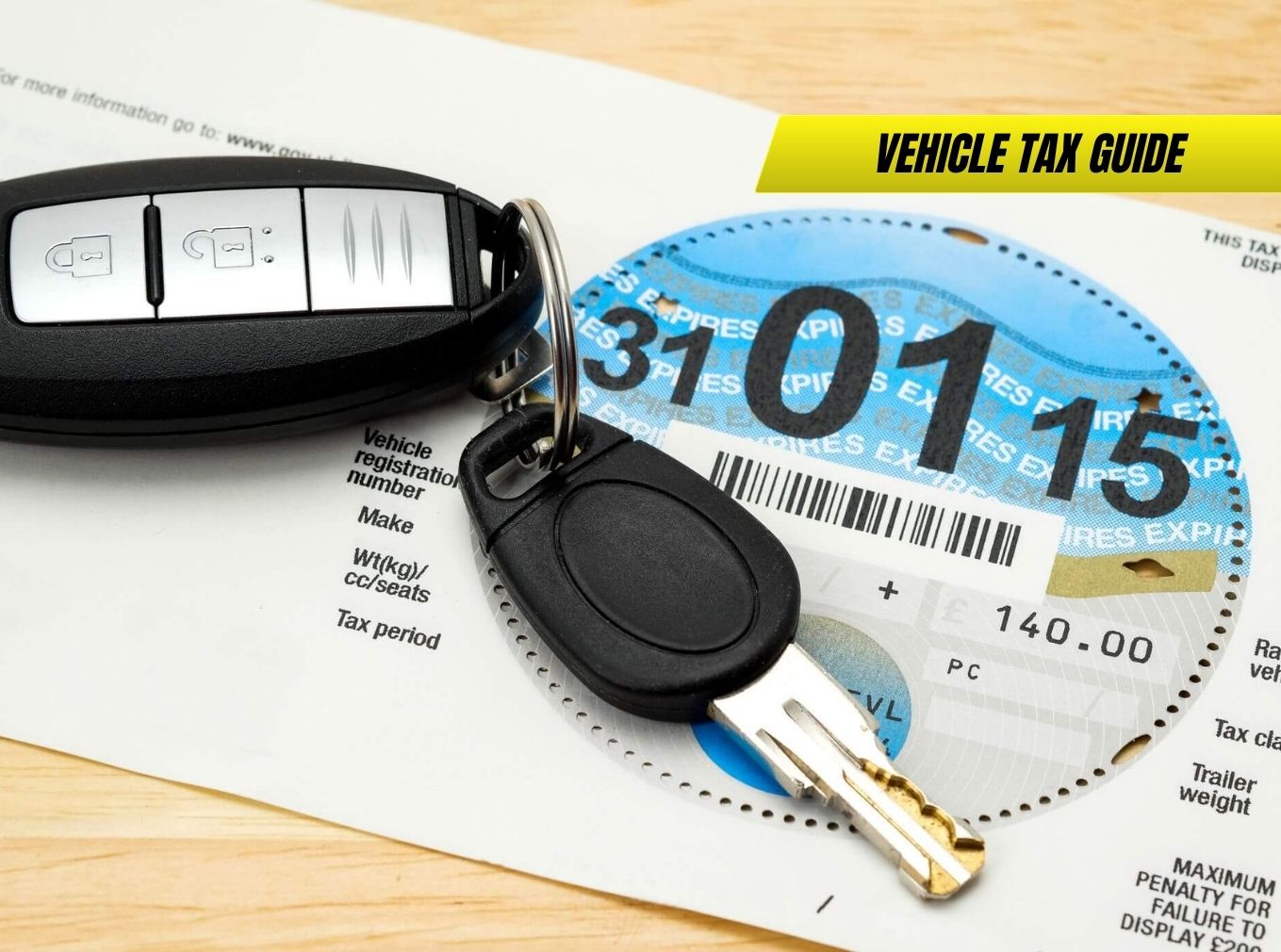
Complete UK vehicle tax guide for 2025. Current road tax rates, payment methods, SORN declarations, and DVLA requirements for all vehicle types.
Vehicle tax, commonly known as road tax, represents a significant annual expense for UK motorists, with rates varying dramatically based on vehicle type, emissions, and registration date. Understanding the current system helps drivers make informed decisions about vehicle purchases, budget for ongoing costs, and ensure legal compliance with DVLA requirements. This comprehensive guide covers everything UK drivers need to know about vehicle tax in 2025, from current rates and payment options to exemptions and enforcement procedures.
Key Points Summary
- Emission-based pricing: Vehicle tax rates depend primarily on CO2 emissions and registration date
- Annual requirement: Most vehicles require valid tax to use public roads legally
- Multiple payment options: Annual, six-monthly, or monthly payment plans available through various channels
- SORN alternative: Statutory Off Road Notification allows tax-free vehicle storage
- Automatic enforcement: DVLA uses ANPR cameras for compliance monitoring and penalty issuing
- Electric vehicle benefits: Zero-emission vehicles currently exempt from standard vehicle tax rates
Understanding UK Vehicle Tax System Structure
The UK vehicle tax system operates on emissions-based principles, with rates determined by a vehicle’s CO2 output and first registration date. This structure encourages environmentally friendly vehicle choices while generating revenue for road maintenance and infrastructure investment.
Vehicles registered before March 2001 use engine size for tax calculation, while those registered between March 2001 and April 2017 use CO2 emissions bands. Cars registered from April 2017 onwards face a flat rate after the first year, with higher rates for vehicles exceeding £40,000 in list price.
The system’s complexity reflects government policy objectives balancing environmental concerns, revenue generation, and motorist affordability. Changes to rates and structures occur annually during the budget process, making regular updates essential for accurate cost planning.
From my experience advising drivers on vehicle purchases, understanding tax implications can significantly impact total ownership costs, particularly when comparing options from our best cars under £25,000 guide. The tax differences between similar vehicles can amount to hundreds of pounds annually.
Current Vehicle Tax Rates for 2025
First Year Rates (April 2017 Onwards)
| CO2 Emissions (g/km) | Petrol/Diesel | Alternative Fuel |
|---|---|---|
| 0 | £0 | £0 |
| 1-50 | £10 | £0 |
| 51-75 | £25 | £15 |
| 76-90 | £115 | £105 |
| 91-100 | £140 | £130 |
| 101-110 | £160 | £150 |
| 111-130 | £180 | £170 |
| 131-150 | £220 | £210 |
| 151-170 | £555 | £545 |
| 171-190 | £895 | £885 |
| 191-225 | £1,345 | £1,335 |
| 226-255 | £1,910 | £1,900 |
| Over 255 | £2,245 | £2,235 |
Standard Rates (Second Year Onwards)
For vehicles registered from April 2017, most cars pay a standard rate of £180 annually after the first year, regardless of emissions. However, vehicles with a list price exceeding £40,000 face an additional £390 premium for five years, bringing their annual cost to £570.
This flat-rate structure simplifies tax calculation for newer vehicles while maintaining incentives for low-emission choices through reduced first-year rates. The premium rate for expensive vehicles generates additional revenue while targeting higher-income motorists.
Pre-2017 Vehicle Rates
Vehicles registered between March 2001 and April 2017 continue using emissions-based bands throughout their lifetime, with rates ranging from £0 for the cleanest vehicles to £695 for the most polluting models. These rates remain stable, providing predictable tax costs for older vehicle owners.
Classic cars registered before January 1984 qualify for historic vehicle status, exempting them from road tax entirely. This exemption recognises the limited mileage and cultural value of vintage vehicles while acknowledging their minimal environmental impact due to restricted use.
Payment Methods and Options
DVLA Online Services
The DVLA’s online portal provides the most convenient payment method for vehicle tax, available 24/7 with immediate confirmation. The system accepts debit cards, credit cards, and direct debit arrangements, with slight discounts available for annual payments compared to monthly instalments.
Online payments require the vehicle’s V5C reference number, valid MOT certificate (where applicable), and valid insurance policy. The system automatically verifies these requirements before processing payments, ensuring compliance with legal requirements.
Phone and Postal Payments
DVLA phone services offer alternative payment methods for drivers preferring telephone transactions, though processing times may be longer than online alternatives. Postal payments remain available but require additional processing time and carry risks associated with cheque or postal order transmission.
Payment Frequency Options
Annual Payment Paying annually provides the best value, avoiding the 5% surcharge applied to monthly direct debit arrangements. Annual payments also reduce administrative burden and ensure continuous compliance without monthly attention requirements.
Monthly Direct Debit Monthly payments spread costs throughout the year but incur a 5% premium compared to annual rates. This option suits drivers preferring predictable monthly expenses over larger annual payments, though the additional cost should be considered.
Six-Month Payments Six-monthly payments offer a compromise between cost and cash flow management, though they’re only available for certain payment methods and vehicle types. This option may suit drivers with seasonal income patterns or those wanting to spread costs without the monthly premium.
SORN (Statutory Off Road Notification) Requirements
SORN declarations allow vehicle owners to avoid tax payments for vehicles not used on public roads, provided they’re kept on private property throughout the SORN period. This system accommodates classic car owners, vehicles undergoing restoration, or those temporarily out of use.
Submitting a SORN declaration requires careful attention to timing, as the system doesn’t allow refunds for overlapping periods. Vehicles must be removed from public roads before the SORN becomes effective, and insurance requirements may still apply depending on storage circumstances.
SORN Compliance Requirements:
- Vehicle must be kept on private property
- Cannot be driven on public roads
- Must renew SORN annually if vehicle remains off-road
- Insurance may still be required depending on circumstances
- MOT exemption applies while SORN is in effect
Understanding SORN requirements proves particularly valuable for owners of classic vehicles or project cars that spend extended periods off public roads. Proper SORN management can save significant amounts in tax and MOT costs while maintaining legal compliance.
Exemptions and Reduced Rates
Zero Emission Vehicles
Pure electric vehicles currently enjoy £0 first-year and standard rates, though this exemption faces potential future changes as electric vehicle adoption increases. The government has indicated that electric vehicles may face standard taxation as they become mainstream, making current exemptions a temporary incentive rather than permanent benefit.
When considering options from our best cheap electric SUVs guide, the current tax exemption represents substantial annual savings compared to conventional alternatives. However, buyers should consider potential future policy changes when making long-term vehicle decisions.
Disabled Driver Exemptions
Vehicles used by disabled drivers may qualify for tax exemptions under specific circumstances, including those adapted for disability use or used primarily for disabled passenger transportation. Applications require supporting documentation and DVLA approval before exemptions become effective.
Historic Vehicle Status
Vehicles manufactured before January 1984 automatically qualify for historic status, exempting them from both vehicle tax and MOT requirements. This recognition acknowledges the cultural and historical value of vintage vehicles while recognising their typically limited road use.
Enforcement and Penalties
The DVLA employs sophisticated Automatic Number Plate Recognition (ANPR) technology for tax enforcement, with cameras positioned throughout the UK road network. This system automatically identifies untaxed vehicles and generates penalty notices without human intervention.
Penalty Structure:
- £80 fine for vehicles used without tax (reduced to £40 if paid within 28 days)
- Vehicle clamping for persistent offenders
- Court prosecution for serious violations
- Vehicle impounding and disposal for continued non-compliance
Similar to understanding UK driving licence points accumulation, vehicle tax violations can escalate quickly from minor penalties to serious legal consequences. The automated enforcement system means violations are detected and processed rapidly, emphasising the importance of maintaining current tax status.
Vehicle Tax Planning and Budgeting
Effective vehicle tax planning involves understanding rate structures when making purchasing decisions, particularly for drivers considering multiple vehicle options. The tax differences between similar vehicles can significantly impact total ownership costs over time.
Budget Planning Considerations:
- Annual tax costs for specific vehicle categories
- First-year versus standard rate differences
- Premium rate implications for expensive vehicles
- Payment frequency cost differences
- Potential future rate changes
When evaluating options from categories like best family SUVs or diesel SUVs, incorporating tax costs into total cost of ownership calculations provides more accurate financial planning. The annual tax burden can represent 10-15% of total running costs for some vehicle types.
Impact of Vehicle Choice on Tax Costs
Emission Level Considerations
Vehicle emissions directly impact tax costs, making fuel efficiency and powertrain choice important financial considerations. The difference between adjacent emissions bands can represent significant annual savings, particularly for high-mileage drivers.
Hybrid and alternative fuel vehicles often benefit from reduced rates compared to conventional petrol or diesel alternatives with similar performance characteristics. These incentives reflect government policy encouraging cleaner vehicle choices while maintaining revenue generation objectives.
Price Point Implications
The £40,000 threshold for premium rate taxation affects many modern vehicles, particularly SUVs and executive cars. Understanding this threshold helps buyers evaluate whether upgrading to higher-specification models justifies the additional tax burden over five years.
Premium Rate Impact Example:
- Standard vehicle: £180 annually
- Premium vehicle (>£40,000): £570 annually for 5 years
- Additional cost: £390 × 5 = £1,950 over premium period
Long-Term Ownership Planning
Vehicle tax considerations become particularly important for long-term ownership, as annual costs accumulate substantially over time. Understanding rate trajectories and potential policy changes helps inform purchasing decisions and ownership duration planning.
The government’s commitment to net-zero emissions suggests continued policy evolution favouring low-emission vehicles, making current incentive structures potentially temporary. Buyers should consider both current and anticipated future tax treatment when making vehicle decisions.
Commercial Vehicle Tax Considerations
Commercial vehicles face different tax structures based on weight, usage patterns, and emission characteristics. Light commercial vehicles under 3.5 tonnes generally follow car-based taxation, while heavier vehicles use graduated systems based on gross vehicle weight and axle configuration.
Commercial Tax Categories:
- Light goods vehicles (up to 3.5t): Car-based rates
- Heavy goods vehicles: Weight and axle-based rates
- Public service vehicles: Specialized rate structures
- Agricultural vehicles: Reduced rates or exemptions
Understanding commercial vehicle taxation proves essential for business owners and fleet operators, as tax costs can significantly impact operational expenses and vehicle specification decisions.
Regional Variations and Additional Charges
While vehicle tax rates remain consistent across the UK, additional regional charges may apply in certain areas. The London Ultra Low Emission Zone (ULEZ) and similar schemes in other cities represent supplementary costs beyond standard vehicle taxation.
Additional Regional Considerations:
- ULEZ charges in London and planned expansions
- Clean Air Zones in various UK cities
- Congestion charging in specific urban areas
- Workplace parking levies in some locations
These additional charges can substantially increase the total cost of vehicle operation in affected areas, making emission levels even more financially significant for urban drivers. When considering vehicles for city use, total charge implications should inform purchasing decisions.
Frequently Asked Questions
When do I need to pay vehicle tax?
Vehicle tax must be paid before using your vehicle on public roads. Tax becomes due on the first day of the month when the previous tax period expires, and driving without valid tax is illegal and subject to penalties.
Can I get a refund if I sell my vehicle?
Yes, you can claim a refund for complete unused months when you inform DVLA about selling, scrapping, or permanently exporting your vehicle. Refunds are processed automatically when the new keeper registers the vehicle.
What happens if I forget to renew my vehicle tax?
Driving without valid tax is illegal and results in an £80 penalty (£40 if paid within 28 days). ANPR cameras automatically detect untaxed vehicles, and repeated violations can lead to clamping, court prosecution, and vehicle impounding.
Do electric vehicles pay road tax?
Currently, pure electric vehicles (0g/km CO2) are exempt from vehicle tax. However, the government has indicated this exemption may change as electric vehicle adoption increases and revenue needs evolve.
How do I check if my vehicle tax is up to date?
You can check your vehicle tax status online at gov.uk/check-vehicle-tax using your vehicle registration number. This service shows current tax status, expiry dates, and payment history.
What documentation do I need to tax my vehicle?
You need your vehicle’s V5C reference number, valid MOT certificate (if required), and proof of valid insurance. The DVLA system automatically verifies these requirements before processing tax payments.
Can I pay vehicle tax monthly instead of annually?
Yes, monthly direct debit payments are available but cost 5% more than annual payments. This option helps spread costs but represents less value overall compared to annual payment methods.
Conclusion
Understanding UK vehicle tax requirements and rate structures empowers drivers to make informed vehicle choices while ensuring legal compliance and cost optimization. The system’s complexity reflects multiple policy objectives, but mastering the basics provides significant financial and legal benefits.
In my experience, incorporating tax considerations into vehicle purchasing decisions often reveals surprising cost differences between similar models. The annual nature of these costs means small rate differences accumulate substantially over typical ownership periods, making tax awareness a valuable financial planning tool.
For UK drivers, staying current with vehicle tax obligations represents both a legal necessity and financial opportunity. Proper planning, payment timing, and vehicle choice can minimise costs while maintaining full compliance with DVLA requirements. As policy continues evolving toward environmental objectives, understanding these systems becomes increasingly valuable for cost-conscious motoring.





