
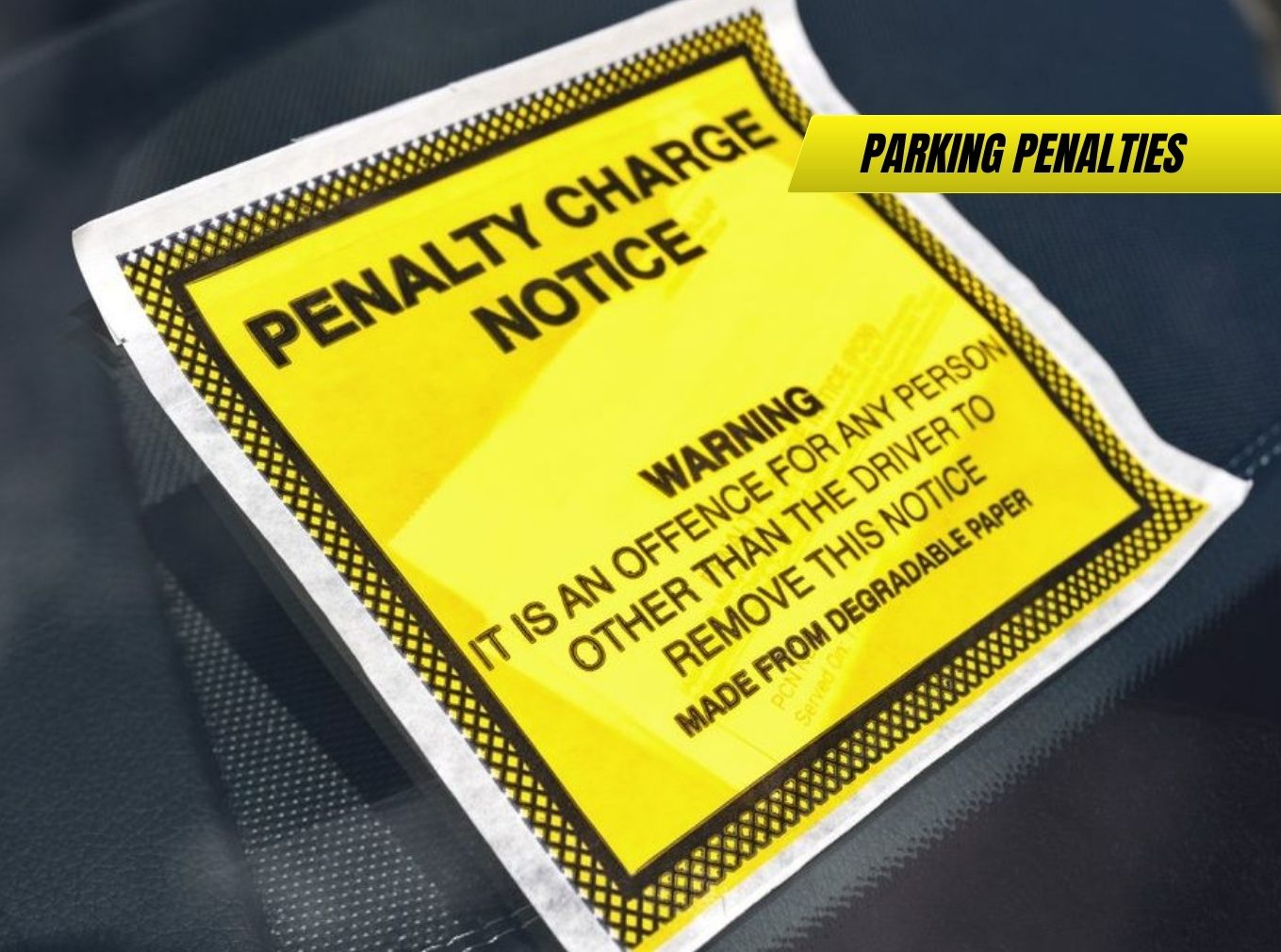
Complete UK parking penalties guide 2025. Learn about increased parking fines, penalty charge notices, appeals process and how to avoid costly parking violations across Britain.
Parking enforcement across the UK has become increasingly strict in 2025, with significant penalty increases implemented nationwide and new technologies making violations easier to detect. Understanding your rights, the different types of parking penalties, and the appeals process can save you hundreds of pounds and considerable stress. This comprehensive guide covers everything British drivers need to know about parking penalties, from avoiding fines to challenging unfair tickets.
Key Points Summary
• Major increases: London parking fines rose by £30 from April 2025, with similar increases across England and Wales • Early payment discount: 50% reduction available for payment within 14 days of issue • Different penalty types: Council PCNs, police FPNs, and private parking charges have different rules and rights • Appeals process: Formal representation procedures available for challenging unfair penalties • Escalation risks: Unpaid penalties can lead to court orders, bailiffs, and vehicle clamping or removal • Private vs public: Understanding the distinction is crucial for determining your response options
Understanding UK Parking Penalty Systems in 2025
The UK operates multiple parking enforcement systems, each with distinct rules, penalties, and appeal procedures. Understanding these differences is essential for protecting your rights and responding appropriately to parking violations.
Major Penalty Increases Across the UK
London boroughs implemented significant increases from 7 April 2025, with penalties rising by £30 across all categories. This represents the first major increase since 2011, reflecting increased enforcement costs and policy objectives to reduce traffic congestion.
Current UK Parking Penalty Structure (2025):
| Area/Authority | Higher Level Penalties | Lower Level Penalties |
|---|---|---|
| London Band A | £160 (increased from £130) | £110 (increased from £80) |
| London Band B | £140 (increased from £110) | £90 (increased from £60) |
| Most English councils | £70-£130 | £50-£80 |
| Welsh authorities | £70-£100 | £50-£70 |
| Scottish councils | £60-£100 | £40-£60 |
The 50% early payment discount remains available across all authorities, making prompt payment within 14 days significantly more cost-effective than waiting.
Types of Parking Enforcement Authorities
Local councils issue Penalty Charge Notices (PCNs) for most parking violations under civil enforcement powers granted by the Traffic Management Act 2004.
Police forces issue Fixed Penalty Notices (FPNs) for more serious parking offences that are considered criminal violations rather than civil contraventions.
Private companies issue Parking Charge Notices (also abbreviated PCN) for violations on private land such as supermarket car parks, hospitals, and retail parks.
Penalty Charge Notices (PCNs): Council Parking Enforcement
Understanding PCN Categories
Council parking enforcement distinguishes between higher level and lower level contraventions based on the severity of disruption and safety risks they create.
Higher Level Contraventions (attract maximum penalties):
- Parking in disabled bays without displaying valid Blue Badge
- Stopping in bus lanes during operational hours
- Parking on red routes or clearways
- Blocking loading bays during restricted times
- Causing dangerous obstructions to traffic flow
- Parking in areas specifically reserved for emergency vehicles
Lower Level Contraventions (attract reduced penalties):
- Overstaying maximum parking duration
- Parking without displaying valid parking permit or ticket
- Parking outside bay markings or designated spaces
- Using resident parking areas without appropriate permits
- Failing to display valid pay-and-display tickets correctly
PCN Payment Options and Deadlines
You typically have 28 days to either pay your PCN or make a formal representation challenging it. Most authorities accept payment through:
Online payment portals: Usually the most convenient option with instant confirmation Telephone payment lines: Available during business hours with immediate processing Postal payments: Allow extra time for delivery and processing In-person payments: At council offices or designated payment centres
Critical warning: If you fail to pay or challenge within 28 days, the authority will issue a Charge Certificatedemanding payment of the original fine plus 50% surcharge, with only 14 days to pay.
Vehicle Removal and Additional Charges
Beyond standard penalties, councils can clamp or remove vehicles for serious contraventions, incurring additional charges:
| Service | London Costs (2025) | Typical UK Costs |
|---|---|---|
| Vehicle release from pound | £280 | £150-£250 |
| Daily storage fees | £55 per day | £20-£40 per day |
| Clamp release fee | £100 | £70-£100 |
| Vehicle disposal | £100 | £50-£100 |
These charges apply in addition to the original parking penalty and can quickly escalate total costs into hundreds of pounds.
Fixed Penalty Notices (FPNs): Police Parking Enforcement
Police forces issue FPNs for parking violations considered criminal offences rather than civil contraventions. These typically involve more serious safety risks or traffic disruption.
Common FPN Parking Offences
Dangerous parking positions: Leaving vehicles where they create genuine safety hazards, such as on pedestrian crossings, near junctions, or blocking emergency access routes.
Loading restrictions: Violating weight or height restrictions on bridges, in tunnels, or areas with structural limitations.
Moving traffic violations: Stopping in prohibited areas during traffic enforcement operations or failing to comply with police directions.
FPN Consequences and Penalties
Unlike PCNs, some FPN parking offences can result in penalty points on your driving licence in addition to financial penalties. Typical consequences include:
- Fines ranging from £30-£130 depending on severity
- Possible 3 penalty points for dangerous parking
- Court prosecution if unpaid after 28 days
- 50% surcharge for late payment
I would recommend treating FPNs more seriously than council PCNs due to their criminal nature and potential impact on your driving record.
Private Parking Charge Notices: Your Rights and Options
Private parking enforcement operates under contract law rather than statutory powers, creating different rights and obligations for motorists. Understanding this distinction is crucial for determining appropriate responses.
How Private Parking Enforcement Works
Private parking operators claim authority through contractual relationships established when you enter their premises. By parking on private land, they argue you’ve entered into a contract with terms displayed on signage.
Common private parking scenarios include:
- Supermarket and retail car parks
- Hospital and healthcare facility parking
- Leisure and entertainment venues
- Service stations and roadside facilities
- Residential parking areas
Distinguishing Private from Official Penalties
Private parking ‘fines’ are designed to look very similar to official council PCNs, but key differences include:
Official Penalty Charge Notices:
- Issued under statutory powers
- Backed by civil enforcement legislation
- Independent appeals process available
- Can lead to court orders and bailiff enforcement
Private Parking Charge Notices:
- Contractual invoices, not legal fines
- No penalty points on driving licence
- Different appeals procedures
- Must prove contract formation and breach
Challenging Private Parking Charges
Your options when receiving private parking charges depend on whether the operator belongs to recognised trade bodies:
Trade Body Members (BPA or IPC):
- Use independent appeals service (POPLA or IAS)
- Follow formal appeals procedures
- Generally more regulated approach to enforcement
Non-Trade Body Members:
- No independent appeals process
- Can dispute directly with operator
- Option to ignore (though with potential consequences)
- May face less regulated enforcement practices
In my experience, challenging private parking charges through proper channels often succeeds where genuine procedural failures or unclear signage can be demonstrated.
The Appeals Process: Making Representations
Formal Representation Procedure
For council PCNs, you have the right to make formal representations challenging the penalty within 28 days of issue. Representations must be made in writing (including online) and should include:
Grounds for appeal: Specific legal or procedural reasons why the penalty shouldn’t apply Supporting evidence: Photographs, receipts, witness statements, or documentation supporting your case
Clear explanation: Detailed account of circumstances surrounding the alleged contravention
Common Grounds for Successful Appeals
Procedural errors: Incorrect vehicle details, invalid signage, or failures in the penalty issuing process
Mitigating circumstances: Medical emergencies, vehicle breakdowns, or circumstances beyond your control
Payment issues: Valid permits or tickets not properly displayed due to technical problems or unclear instructions
Signage problems: Inadequate, unclear, or missing parking restriction signs that failed to properly communicate rules
Loading/unloading: Legitimate loading activities where restrictions may not apply during specific circumstances
From my point of view, the most successful appeals combine clear procedural arguments with strong supporting evidence, particularly photographs taken at the time of the incident.
Independent Adjudication
If your initial representation is rejected, you can request independent adjudication through:
Traffic Penalty Tribunal: Covers England and Wales for most parking and traffic contraventions Parking and Traffic Appeals Service: Handles London parking appeals
Bus Lane Adjudication Service: Specifically for bus lane penalty challenges
Independent adjudicators provide impartial reviews and can cancel penalties where authorities have failed to prove their case or acted unreasonably.
Enforcement Escalation: What Happens to Unpaid Penalties
The Enforcement Process Timeline
Day 1-28: Initial payment period with early payment discount available for first 14 days
Day 29: Charge Certificate issued if no payment or representation made, adding 50% surcharge to original penalty
Day 43: Court order obtained if Charge Certificate unpaid, enabling enforcement action including bailiff involvement
Ongoing: Enforcement agents can visit your property, clamp vehicles, or seize goods to recover the debt
Bailiff and Enforcement Agent Powers
Certified enforcement agents have specific powers to recover parking penalty debts:
Peaceful entry: Can enter business premises but generally cannot force entry to homes for traffic debts Vehicle seizure: Can clamp or remove vehicles found on public highways Goods seizure: Can take control of goods belonging to the debtor to sell at auction Additional costs: Can add their fees and costs to the original debt
Important note: Enforcement agents must follow strict procedures and cannot use excessive force or harassment. You have rights even during enforcement action.
Vulnerable Debtor Protections
Special protections apply for vulnerable individuals including:
- People with serious mental health conditions
- Those receiving certain means-tested benefits
- Individuals with disabilities affecting their understanding
- People in severe financial hardship
Enforcement agents must suspend action and refer cases back to creditors when vulnerability is identified.
Regional Variations and Special Circumstances
Scotland and Northern Ireland Differences
Scotland operates separate parking enforcement systems with different penalty levels and appeals procedures. Scottish drivers should consult local authority websites for specific guidance on payments and challenges.
Northern Ireland follows distinct enforcement protocols under different legislation, with separate appeals bodies and penalty structures.
London-Specific Considerations
London’s complex parking enforcement reflects its unique transport challenges:
Congestion Charge zones: Additional penalties for non-payment of daily charges Ultra Low Emission Zone (ULEZ): Separate penalty system for non-compliant vehicles Red routes: Enhanced enforcement with higher penalties for major disruption Multiple enforcement bodies: Different boroughs may have varying policies within Greater London
Special Event Parking
Major events, roadworks, or emergency situations can create temporary parking restrictions with enhanced enforcement:
Temporary restrictions: Additional signage may create time-limited parking rules Event day enforcement: Increased penalty issue rates during major sporting events or festivals
Emergency restrictions: Police powers to remove vehicles during incidents or safety operations
Prevention Strategies: Avoiding Parking Penalties
Technology and Parking Apps
Modern parking management increasingly relies on technology that can help avoid violations:
Parking apps: Allow remote payment and time extensions for pay-and-display areas ANPR systems: Automatic number plate recognition enables cashless parking but requires accurate vehicle registration Real-time availability: Apps showing available spaces reduce circling and desperation parking
Important warning: Technical failures with parking apps or payment systems don’t automatically excuse violations, though they may provide grounds for successful appeals.
Understanding Parking Signage
Restriction periods: Check exact times when restrictions apply – some may have complex rules with multiple exception periods Permit requirements: Understand whether visitor permits, resident permits, or pay-and-display tickets are required Loading restrictions: Different rules may apply for goods vehicles during specific hours Disabled access: Blue Badge holders have different rights but must still display badges correctly
I would recommend always photographing parking signage and your vehicle’s position when parking in unfamiliar areas, as this evidence proves invaluable if disputes arise.
Frequently Asked Questions
What’s the difference between PCNs from councils and private companies? Council PCNs are legal penalties backed by statute, while private PCNs are contractual invoices. Council tickets can lead to court orders and bailiffs, while private tickets are civil contract disputes with different enforcement options.
Can private parking companies add points to my driving licence? No, private parking charges cannot result in penalty points on your licence. Only criminal penalties issued by police (FPNs) or court convictions can add points to your driving record.
How long do I have to pay parking penalties? Typically 28 days for both council and private parking charges, with 50% discounts usually available for payment within 14 days. Missing these deadlines can result in significant additional charges.
Can I ignore private parking tickets? You can choose to ignore private parking tickets, but operators may pursue debt recovery through courts. Success depends on whether they can prove contract formation and breach – outcomes vary significantly.
What happens if I can’t afford to pay parking fines? Contact the issuing authority to discuss payment plans or hardship provisions. Many councils offer instalment arrangements, and enforcement must consider financial hardship and vulnerability.
Can I appeal parking tickets after paying them? Generally no – payment is considered acceptance of the penalty. You must challenge tickets before paying if you believe they’re unfair or incorrectly issued.Do parking restrictions apply on Sundays and bank holidays? This varies by location and specific restriction. Always check signage carefully, as some restrictions apply seven days a week while others have exceptions for Sundays and holidays.
Conclusion
Parking enforcement across the UK continues to intensify, with 2025’s penalty increases reflecting councils’ determination to manage traffic flow and generate revenue for transport improvements. Understanding your rights and obligations helps navigate this complex landscape while protecting your finances.
The key to avoiding parking problems combines careful attention to signage, understanding local variations, and knowing how to challenge unfair penalties effectively. For drivers considering best SUVs under £30,000 or 20 best SUVs to buy in 2025 under £40k, parking costs and restrictions should factor into your vehicle choice, especially for larger vehicles in urban areas.
In my experience, the best approach combines prevention with proportional response. Pay genuine penalties promptly to benefit from discounts, but don’t hesitate to challenge unfair or incorrectly issued tickets through proper channels. Understanding these systems empowers you to make informed decisions that protect both your rights and your wallet in an increasingly complex parking enforcement environment.
Remember that parking regulations exist to manage shared public space fairly – but when enforcement goes wrong, you have rights and procedures to seek redress through established appeals systems.





