
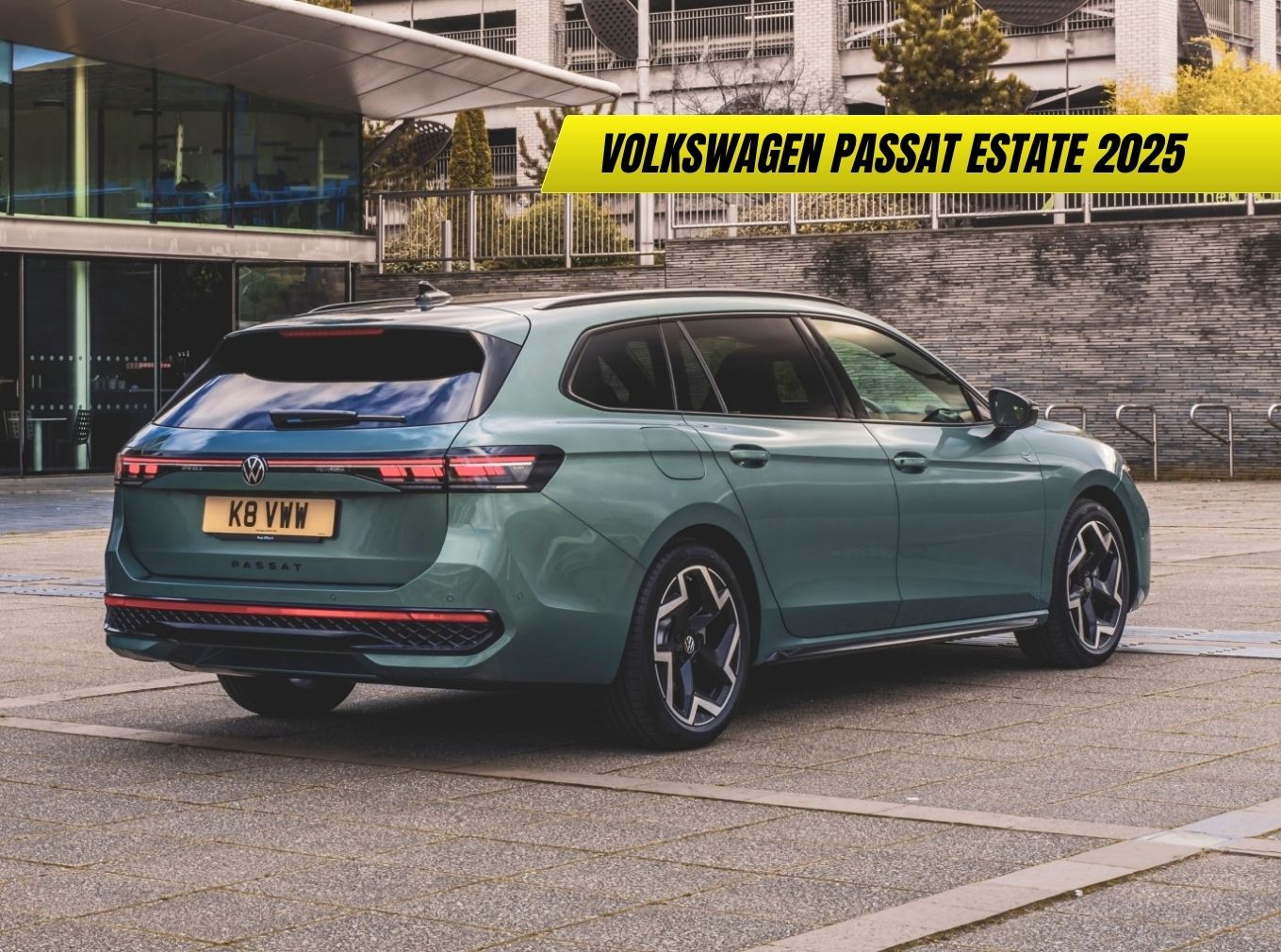
Complete 2025 Volkswagen Passat Estate UK guide. Discover prices from £39,950, hybrid engines, 690L boot space and why it’s What Car? Estate of the Year 2025.
The 2025 Volkswagen Passat marks a significant transformation for one of Britain’s most enduring executive estate cars. Available exclusively as an estate for the first time in its 52-year history, the ninth-generation Passat enters a challenging market with premium pricing, advanced hybrid technology, and space that rivals much larger vehicles. With starting prices from £39,950 and extending to over £50,000, this represents a substantial investment for UK families. This comprehensive review examines whether the new Passat justifies its elevated position in today’s SUV-dominated landscape.
Key Points Summary
• Estate-only model: Saloon discontinued, focusing entirely on practical estate configuration with massive 690L boot capacity • Premium pricing: Starting from £39,950 for Life trim, extending to £51,420 for top R-Line specifications • Hybrid powertrains: 1.5L mild-hybrid and plug-in hybrid options delivering up to 272hp and 706mpg official economy • Award winner: Named What Car? Estate of the Year, Tow Car of the Year, and Safety Award winner for 2025 • Spacious interior: 144mm longer than predecessor with 50mm extended wheelbase for enhanced passenger comfort • Advanced technology: 15-inch infotainment display, massage seats, and comprehensive driver assistance systems
Volkswagen Passat Estate 2025: UK Pricing Structure
The 2025 Passat represents a significant price increase compared to mainstream family estates, positioning it firmly in premium territory alongside German rivals. The estate-only strategy reflects market realities, as the estate consistently outsold the saloon variant in European markets.
Complete UK Pricing Breakdown
| Trim Level | Engine | Power | Starting Price | Key Features |
|---|---|---|---|---|
| Life | 1.5 eTSI MHEV | 150hp | £39,950 | LED headlights, 17″ wheels, 15″ display |
| Elegance | 1.5 eTSI MHEV | 150hp | £42,935 | Panoramic roof, heated seats, premium audio |
| R-Line | 1.5 eTSI MHEV | 150hp | £44,185 | Sports styling, 19″ wheels, adaptive suspension |
| Life PHEV | 1.5 eHybrid | 204hp | £44,445 | Plug-in hybrid, 62-mile electric range |
| Elegance PHEV | 1.5 eHybrid | 204hp | £47,540 | Premium features plus hybrid efficiency |
| R-Line PHEV | 1.5 eHybrid | 272hp | £48,790 | Maximum power with sports specification |
These prices represent a substantial premium over the closely-related Skoda Superb Estate, which offers similar mechanicals for approximately £2,000-£3,000 less depending on specification. However, the Passat undercuts German premium rivals like the BMW 3 Series Touring and Mercedes-Benz C-Class Estate by significant margins.
Value Comparison Analysis
The Passat’s pricing strategy positions it between mainstream and premium segments:
More expensive than:
- Skoda Superb Estate (similar platform, £2,000-£3,000 less)
- Citroën C5 X (significantly cheaper alternative)
- Previous-generation models (substantial price increase)
Less expensive than:
- BMW 3 Series Touring (£5,000-£8,000 more)
- Mercedes C-Class Estate (£4,000-£7,000 more)
- Audi A4 Avant (£3,000-£6,000 more)
This positioning creates both opportunities and challenges for UK buyers seeking executive estate practicality without premium badge pricing.
Engine Range and Performance
Volkswagen has simplified the Passat engine lineup significantly, focusing on advanced hybrid technology rather than the diverse petrol and diesel options previously available.
1.5 eTSI Mild-Hybrid System
The entry-level powertrain combines a 1.5-litre turbocharged petrol engine with 48V mild-hybrid assistance:
Performance specifications:
- Maximum power: 150hp
- Peak torque: 250Nm
- 0-62mph: 9.2 seconds
- Top speed: 137mph
- Fuel economy: Up to 51.8mpg combined
- CO2 emissions: 124g/km
The mild-hybrid system allows the engine to coast with combustion switched off during steady cruising, contributing to impressive real-world efficiency. In my experience, the system operates seamlessly, with engine restarts barely perceptible during normal driving.
Plug-in Hybrid Powertrains
Volkswagen offers two plug-in hybrid variants combining the 1.5-litre petrol engine with electric motor assistance and a 19.7kWh battery pack:
204hp eHybrid specification:
- System power: 204hp
- Electric range: Up to 62 miles (WLTP)
- Combined range: Over 620 miles
- Fuel economy: Up to 706mpg (official)
- CO2 emissions: 8g/km
- Charging time: 2.5 hours (AC), compatible with 50kW DC rapid charging
272hp eHybrid specification:
- System power: 272hp (R-Line exclusive)
- 0-62mph: Approximately 6.5 seconds
- Similar electric range and efficiency benefits
- Enhanced performance for minimal efficiency penalty
The plug-in hybrid system proves particularly attractive for company car drivers, with just 5% Benefit-in-Kind tax rating making it significantly cheaper than combustion alternatives for business users.
Transmission and Drivetrain
All Passat variants feature Volkswagen’s seven-speed DSG dual-clutch automatic transmission as standard, with drive sent exclusively to the front wheels. The transmission operates smoothly in normal driving, though some drivers may notice the characteristic DSG hesitation from standstill in stop-start traffic.
No all-wheel-drive option is available, unlike the related Skoda Superb, which may disappoint buyers requiring enhanced traction for towing or challenging weather conditions.
Design and Dimensions
The ninth-generation Passat represents a comprehensive redesign focused on maximising interior space and aerodynamic efficiency while maintaining recognisable Volkswagen design language.
Exterior Design Evolution
The new Passat adopts a more streamlined profile with significant dimensional increases:
Key dimensions:
- Length: 4,917mm (+144mm vs predecessor)
- Width: 1,849mm
- Height: 1,498mm
- Wheelbase: 2,841mm (+50mm for enhanced rear space)
- Drag coefficient: 0.25 Cd (excellent for estate configuration)
The design emphasises horizontal lines and clean surfaces, creating a sophisticated appearance that avoids the aggressive styling trends affecting some competitors. LED headlights are standard across the range, with matrix LED technology available on higher specifications.
Trim-specific styling differences:
- Life: Conservative design with practical 17-inch wheels
- Elegance: Subtle chrome enhancements and larger wheel options
- R-Line: Aggressive front bumper, side skirts, and 19-inch wheels creating sportier appearance
Interior Space and Practicality
The extended wheelbase and overall length deliver exceptional interior accommodation, particularly benefiting rear passengers who previously found the Passat somewhat cramped compared to rivals.
Interior highlights:
- Front space: Generous headroom and legroom for occupants up to 6’3″
- Rear accommodation: Significantly improved legroom with comfortable seating for three adults
- Boot capacity: 690 litres (mild-hybrid) or 510 litres (plug-in hybrid) with exceptional load height
- Maximum cargo: 1,920 litres with rear seats folded
The boot opening is wide and low, facilitating easy loading of bulky items. The plug-in hybrid models sacrifice some cargo space due to battery placement, but still offer more capacity than many SUV alternatives.
Interior Quality and Technology
Volkswagen has completely reimagined the Passat’s cabin, eliminating most physical controls in favour of digital interfaces and touch-sensitive surfaces.
Digital Cockpit Integration
The interior centres around a massive 15-inch touchscreen dominating the dashboard, controlling most vehicle functions:
Standard technology features:
- 15-inch central touchscreen with MIB4 infotainment system
- 10.25-inch digital instrument cluster
- Wireless Apple CarPlay and Android Auto
- Voice control with natural language recognition
- Connected services including real-time traffic and weather
Higher trim additions:
- Head-up display with augmented reality navigation
- Harman Kardon premium audio system
- ErgoActive massage seats with multiple adjustment options
- Ambient lighting with customisable colours
Interior Quality Assessment
Materials throughout the cabin feel premium, with soft-touch plastics, genuine metal trim, and high-quality fabric or leather depending on specification. Build quality appears solid, though long-term durability remains unproven given the model’s recent introduction.
The elimination of physical climate controls proves contentious – adjusting temperature or fan speed requires multiple touchscreen interactions, creating potential distraction during driving. Some drivers will find this frustrating compared to the immediate accessibility of traditional controls.
Practicality Features
Storage solutions:
- Large centre console with sliding covers
- Multiple cup holders and device storage areas
- Generous door bins accommodating large bottles
- Rear seat pockets and cup holders
Family-friendly features:
- Three ISOFIX mounting points (including front passenger seat)
- Easy rear access through wide-opening doors
- Through-loading facility with ski hatch
- 12V and USB-C charging points throughout
Driving Experience and Performance
The Passat prioritises comfort and refinement over sporting dynamics, delivering a sophisticated driving experience suited to long-distance cruising and family duties.
On-Road Behaviour
Ride quality: The suspension setup provides excellent bump absorption and stability, with the optional DCC adaptive dampers enhancing body control without compromising comfort. Road noise is well-controlled despite the large boot area that can amplify sound in some estate cars.
Handling characteristics: Steering is light and precise enough for confident cornering, though the Passat feels more at home on motorways than challenging B-roads. The front-wheel-drive layout handles the power delivery well, with minimal torque steer even in the more powerful plug-in hybrid variants.
Performance assessment:
- The 150hp mild-hybrid feels adequate for most situations, though lacks the enthusiasm for spirited driving
- Plug-in hybrid variants provide noticeably stronger acceleration, particularly the 272hp R-Line
- Electric-only driving in PHEV models is impressively quiet and smooth
- DSG transmission operates smoothly in most conditions
Efficiency and Range
Mild-hybrid efficiency: Real-world fuel economy of 45-48mpg proves achievable with mixed driving, impressive for such a large vehicle. The system’s ability to coast with the engine off contributes noticeably to efficiency on longer journeys.
Plug-in hybrid performance: The 62-mile electric range proves realistic in moderate weather conditions, enabling many commutes to be completed entirely on electric power. Combined operation delivers exceptional efficiency when the battery is regularly recharged.
From my point of view, the plug-in hybrid variants offer the most compelling proposition for UK buyers, combining genuine electric capability with petrol backup for longer journeys.
Competition Analysis
The estate car market has contracted significantly, but several notable competitors remain for UK buyers considering the Passat.
Direct Rivals Comparison
| Model | Starting Price | Boot Space | Power Range | Key Strengths |
|---|---|---|---|---|
| VW Passat Estate | £39,950 | 690L | 150-272hp | Space, technology, efficiency |
| Skoda Superb Estate | £37,000+ | 660L | 150-272hp | Value, practicality, similar tech |
| BMW 3 Series Touring | £45,000+ | 500L | 184-374hp | Dynamics, premium badge, AWD |
| Mercedes C-Class Estate | £44,000+ | 490L | 204-421hp | Luxury, refinement, technology |
| Citroën C5 X | £32,000+ | 545L | 130-225hp | Value, comfort, unique styling |
Market Positioning Assessment
The Passat occupies a challenging middle ground – more expensive than value-focused alternatives but lacking the prestige appeal of German premium brands. Success depends on buyers prioritising space and technology over badge appeal or ultimate driving dynamics.
Passat advantages:
- Exceptional interior space for passengers and cargo
- Advanced hybrid technology with genuine electric capability
- Comprehensive standard equipment levels
- Strong safety ratings and driver assistance systems
Potential disadvantages:
- Higher pricing than mechanically-similar Skoda Superb
- Limited engine choice compared to competitors
- Front-wheel-drive only (no all-wheel-drive option)
- Heavy reliance on touchscreen controls
Ownership Costs and Practicality
Insurance and Running Costs
Insurance groups range from 30-32 for mild-hybrid variants to 36-40 for plug-in hybrid models, representing higher costs than some competitors. The Citroën C5 X, for example, sits in significantly lower insurance groups.
Annual running costs (estimated):
- Insurance: £800-£1,200 depending on driver profile and specification
- VED: £195 annually for mild-hybrid, £0 for plug-in hybrid (first year)
- Service costs: Competitive with premium alternatives, simplified by electric drive assistance
- Fuel costs: Significant savings possible with plug-in hybrid if regularly charged
Company Car Benefits
The plug-in hybrid variants offer exceptional value for business users:
- 5% BiK rate for both eHybrid variants (8g/km CO2)
- Significant tax savings compared to equivalent combustion alternatives
- Electric range sufficient for most daily commutes
- P11D values competitive with premium alternatives
For company car drivers, the tax advantages often justify the higher purchase price compared to conventional alternatives.
Warranty and Service
Volkswagen provides a standard three-year, 60,000-mile warranty – adequate but not industry-leading. Mercedes offers unlimited mileage over the same period, while some Asian manufacturers provide longer coverage periods.
The hybrid systems receive an extended eight-year, 100,000-mile battery warranty, providing reassurance for long-term ownership.
Safety and Driver Assistance
The 2025 Passat achieved a five-star Euro NCAP safety rating, with comprehensive standard equipment across all trim levels.
Standard Safety Systems
Active safety features:
- Autonomous Emergency Braking with pedestrian and cyclist detection
- Adaptive Cruise Control with stop-and-go functionality
- Lane Keeping Assistance with steering correction
- Traffic Sign Recognition with speed limit display
- Driver Attention Monitoring system
Passive safety:
- Advanced airbag system including knee airbag for driver
- Reinforced passenger cell construction
- ISOFIX mounting points for child seats
- Automatic emergency services calling
Advanced Driver Assistance Options
Higher trim levels and option packages add:
- Matrix LED headlights with adaptive beam patterns
- 360-degree camera system for parking assistance
- Semi-autonomous parking with remote control via smartphone app
- Enhanced adaptive cruise control with lane centering
The safety systems operate effectively, though some drivers find the lane keeping assistance overly intrusive in certain situations.
Regional Considerations for UK Buyers
England and Wales
Standard pricing and dealer coverage ensure good availability and service support throughout England and Wales. Urban areas benefit from expanding charging infrastructure supporting plug-in hybrid models.
Scotland
Full model availability with consistent pricing across Scotland. Some rural areas may have longer distances to charging points, potentially affecting plug-in hybrid appeal for some buyers.
Northern Ireland
Complete range available with mainland UK pricing. The developing charging network supports plug-in hybrid ownership, though rapid charging options remain more limited than other UK regions.
Future Outlook and Recommendations
Market Sustainability
The traditional estate car market continues contracting, but the Passat’s comprehensive redesign and hybrid focus position it well for buyers rejecting SUV alternatives. The estate-only strategy acknowledges market realities while maximising appeal in remaining segments.
Electric Transition
Volkswagen offers the ID.7 Tourer as the Passat’s electric successor, though traditional buyers may prefer the hybrid Passat’s flexibility. The plug-in hybrid models provide excellent preparation for eventual full electrification.
Residual Value Considerations
Factors supporting values:
- Award recognition and positive reviews
- Comprehensive equipment and advanced technology
- Proven Volkswagen reliability and build quality
- Limited competition in large estate segment
Potential concerns:
- Premium pricing compared to mechanically-similar alternatives
- Rapidly evolving hybrid technology potentially dating current systems
- Overall market contraction for traditional estate cars
#### Frequently Asked Questions
#### Why is the 2025 Volkswagen Passat only available as an estate? Volkswagen discontinued the saloon because the estate consistently outsold it across European markets. The focus on a single body style allows better resource allocation and clearer market positioning against SUV alternatives.
#### How does the Passat Estate compare to the Skoda Superb Estate? Both share the same platform and engines but the Passat costs £2,000-£3,000 more for similar specifications. The Passat offers more sophisticated styling and technology integration, while the Superb provides better value and a more traditional interior layout.
#### What’s the real-world electric range of the plug-in hybrid Passat? The official 62-mile WLTP range is achievable in moderate conditions. Real-world results vary from 45-55 miles depending on weather, driving style, and terrain, which covers most UK daily commutes entirely on electric power.
#### Is the touchscreen-heavy interior practical for daily use? The large 15-inch display provides excellent functionality but requires multiple interactions for basic climate control. Some drivers find this distracting compared to traditional physical controls, though most adapt with experience.
#### How much can the Passat Estate tow? All variants can tow up to 1,800kg when properly equipped, making the Passat excellent for caravans and boat trailers. The low loading height and stable handling characteristics earn it What Car?’s Tow Car of the Year award.
#### Should I choose mild-hybrid or plug-in hybrid? Choose mild-hybrid for lower purchase costs and simplicity, or plug-in hybrid for company car tax benefits and genuine electric driving capability. The plug-in variants justify their premium for high-mileage drivers or those with home charging.
#### How does the Passat’s pricing justify the premium over mainstream alternatives? The Passat offers more sophisticated technology, better interior materials, and more comprehensive standard equipment than cheaper alternatives. However, the closely-related Skoda Superb provides similar benefits for less money.
Conclusion
The 2025 Volkswagen Passat Estate represents both triumph and challenge for traditional estate car enthusiasts. The comprehensive redesign delivers exceptional space, advanced technology, and sophisticated hybrid powertrains that justify its What Car? awards recognition. However, the premium pricing strategy creates a challenging market position between value alternatives and genuine premium rivals.
In my experience, the Passat succeeds best as a premium alternative to SUV ownership, offering comparable space and technology in a more efficient and refined package. The plug-in hybrid variants prove particularly compelling for company car drivers, where tax advantages offset higher purchase costs.
For buyers considering best family SUVs or exploring 20 best SUVs to buy in 2025 under £40k, the Passat provides a compelling estate alternative with superior efficiency and refinement. However, those seeking maximum value should seriously consider the mechanically-identical Skoda Superb Estate.
The 2025 Passat estate succeeds in its mission to provide sophisticated family transport with genuine hybrid capability. While the pricing may limit its appeal compared to previous generations, it delivers advanced technology and exceptional space that few competitors match. For UK buyers willing to invest in premium estate car ownership, the Passat represents one of the most accomplished options available.
The estate car segment may be contracting, but vehicles like the Passat prove there remains strong appeal for buyers prioritising efficiency, space, and refinement over SUV fashion. Whether this translates into commercial success will depend on UK buyers recognising these traditional estate car virtues in an increasingly SUV-focused marketplace.





