
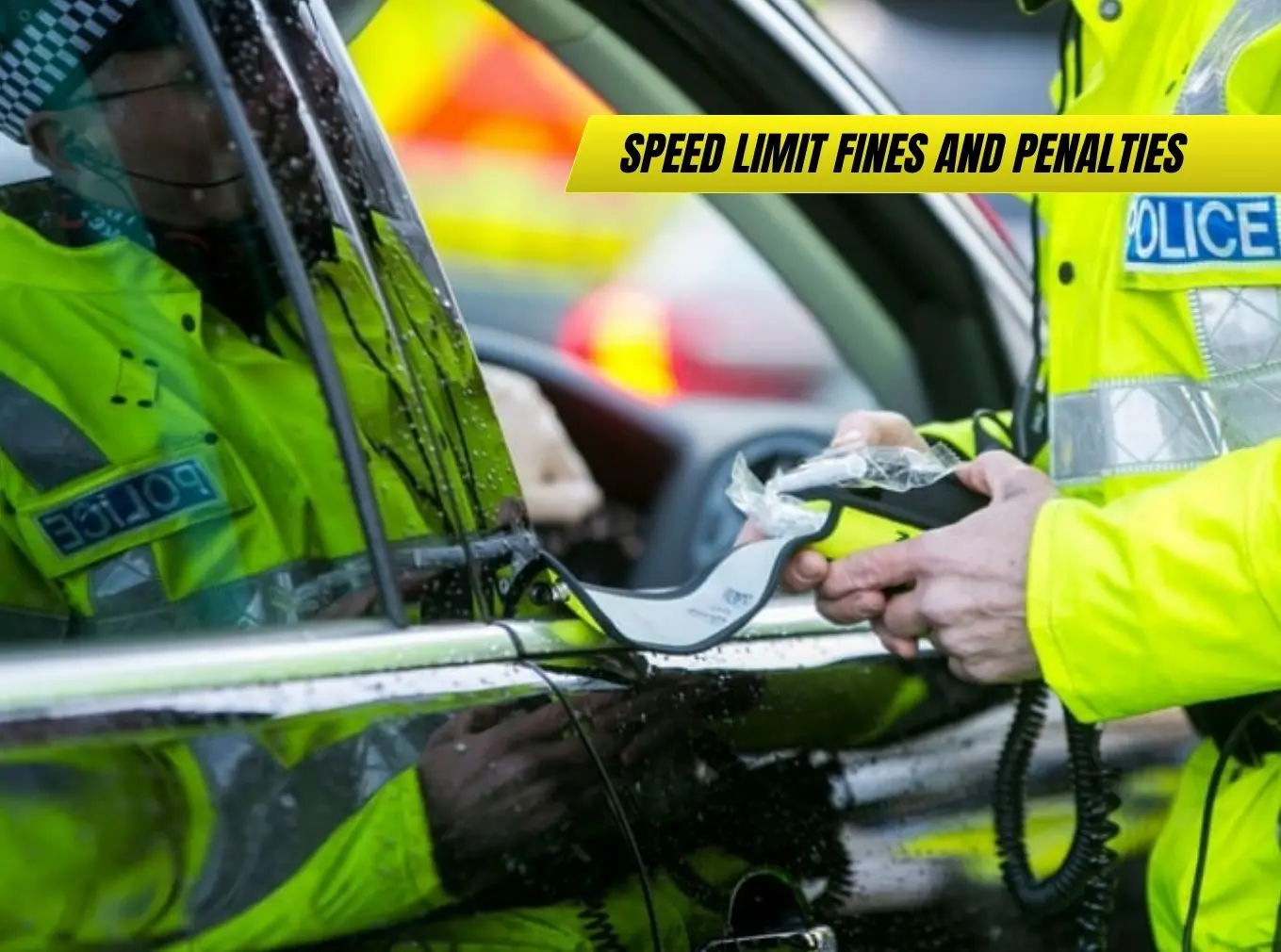
Understanding UK speed limit fines, penalty points and what to do if caught speeding. Complete guide to speed cameras, appeals process and driving licence points in 2025.
Getting caught speeding can be a costly and stressful experience for any UK driver. From my experience covering road traffic legislation, understanding the current penalty system, your rights, and the appeals process can save you significant money and protect your driving licence. This comprehensive guide covers everything you need to know about UK speed limit violations, from minor infractions to serious offences that could result in disqualification.
Key Points: UK Speed Limit Penalties 2025
- Fixed penalty notices start from £100 with 3 penalty points
- Court summons required for speeds exceeding limit by 50mph or more
- Speed awareness courses available as alternative to points for minor offences
- Six-month disqualification possible for serious speed violations
- Penalty point totals of 12 or more result in driving ban
- Professional drivers face enhanced penalties and career implications
Current UK Speed Limits and Enforcement
Understanding where and how speed limits apply across different road types remains fundamental for every UK driver. Built-up areas typically maintain 30mph limits, though many residential zones now feature 20mph restrictions, particularly near schools and hospitals.
Single carriageway roads outside built-up areas generally maintain 60mph limits, whilst dual carriageways allow 70mph. Motorways permit 70mph for cars, though variable speed limits frequently reduce this during peak hours or adverse weather conditions.
From my analysis of current enforcement practices, average speed cameras now represent the primary detection method across major routes. These systems calculate average speeds between multiple points, making it impossible to slow down briefly to avoid detection.
Speed Camera Tolerance and Accuracy
UK police forces typically apply the “10% plus 2mph” guideline when prosecuting speed violations. This means drivers travelling at 35mph in a 30mph zone, or 79mph on motorways, generally won’t face prosecution.
However, this remains guidance rather than legal requirement. Some forces prosecute any detected speeding violation, whilst others may allow greater tolerances during specific circumstances.
| Speed Limit | Typical Prosecution Threshold | Points/Fine Risk |
|---|---|---|
| 20mph | 24mph | Low |
| 30mph | 35mph | Low |
| 40mph | 46mph | Medium |
| 60mph | 68mph | Medium |
| 70mph | 79mph | High |
Penalty Structure and Financial Consequences
Fixed Penalty Notices represent the most common outcome for minor speed violations. These typically involve £100 fines plus three penalty points, though serious violations require court appearances with significantly higher penalties.
Band A offences (minor speeding) result in fines equivalent to 50% of weekly income, with £100-£300 range plus three penalty points. Band B offences (moderate speeding) increase to 75-125% of weekly income, typically £300-£500 plus 4-6 penalty points.
Band C offences (serious speeding) result in 125-175% of weekly income fines, often £500-£1,000, plus 6 penalty points and potential disqualification periods of up to 56 days.
In my experience, drivers earning higher incomes face proportionally larger financial penalties. A £100,000 annual salary could result in £1,500+ fines for serious speed violations, making the financial impact substantial for professional drivers.
Speed Awareness Courses: Alternative to Points
National Speed Awareness Courses offer eligible drivers alternatives to penalty points for minor violations. These four-hour educational programmes cost approximately £80-£100, depending on location.
Eligibility depends on several factors:
- First speeding offence within three years
- Speed exceeding limit by specific margins (typically 10-24mph over)
- Course availability in your area
- Completing course within specified timeframe
I would recommend accepting speed awareness courses when offered, as they avoid penalty points whilst providing valuable road safety education. However, completing a course prevents using this option again within three years.
Understanding Penalty Points and Disqualification
The UK’s penalty point system tracks driving violations over rolling three-year periods. Accumulating 12 or more points typically results in six-month driving disqualification, though courts may impose longer bans for serious violations.
New drivers face enhanced penalties during their first two years. Accumulating six or more penalty points results in licence revocation, requiring complete re-testing to regain driving privileges.
For detailed information about penalty points, consult our UK driving licence points guide for comprehensive coverage of the totting-up system.
Professional Drivers and Enhanced Penalties
Commercial drivers face additional consequences beyond standard penalties. Speed violations can affect:
- Professional driving licences and certifications
- Insurance premiums and employment prospects
- Company vehicle policies and fleet management
- Operator’s licence standings for commercial operators
Many employers maintain strict policies regarding traffic violations, potentially resulting in disciplinary action or employment termination for serious speed violations.
Detection Methods and Technology
Fixed speed cameras remain common on high-risk routes, typically painted yellow and clearly signposted. These capture vehicles exceeding preset thresholds, automatically generating penalty notices.
Mobile speed detection utilises handheld devices and unmarked vehicles, often positioned in accident blackspots or complaint areas. Officers may offer immediate fixed penalties or court summons depending on violation severity.
Average speed cameras calculate speeds between multiple detection points, typically covering several miles of roadway. These systems prove particularly effective on major routes and construction zones.
Variable speed limits on smart motorways automatically adjust limits based on traffic conditions, weather, and incidents. Cameras enforce these limits rigorously, with many drivers caught unaware of temporary reductions.
Legal Rights and Appeals Process
Receiving a Notice of Intended Prosecution (NIP) begins the formal process. This document must arrive within 14 days of the alleged violation, though exceptions apply for rental vehicles and delayed postal delivery.
Nominating the driver remains legally required when the registered keeper wasn’t driving. Failing to provide driver details within 28 days results in six penalty points and fines up to £1,000.
Valid Grounds for Appeal
Several circumstances may invalidate speed violation prosecutions:
Technical defences include:
- Faulty speed detection equipment calibration
- Inadequate warning signage for camera locations
- Incorrect speed limit signage or road markings
- Due diligence in emergency situations
Procedural defences include:
- Late service of prosecution notices
- Incorrect driver identification procedures
- Administrative errors in documentation
- Jurisdiction issues for prosecution location
From my experience, technical defences prove more successful than procedural challenges, though both require expert legal representation for optimal outcomes.
What to Do When Caught Speeding
Immediate response to speed violation notices determines available options. Acting quickly preserves maximum choice between fixed penalties, speed awareness courses, and court proceedings.
Review the evidence carefully, checking photograph clarity, speed readings, and location accuracy. Digital evidence packages often reveal technical issues that experienced traffic law specialists can identify.
Consider professional advice for serious violations or when facing disqualification. Specialist traffic law solicitors understand technical defences and procedural requirements that self-represented defendants often overlook.
Court Proceedings and Mitigation
Magistrates’ courts handle most speed violation prosecutions, with standard procedures and sentencing guidelines. Exceptional hardship arguments may prevent disqualification in specific circumstances, though courts apply strict criteria.
Mitigation factors courts consider include:
- Employment consequences of disqualification
- Care responsibilities for dependents
- Medical appointments and essential travel needs
- Previous good driving records and character references
I would recommend professional legal representation for court appearances, as experienced advocates understand local court practices and effective mitigation strategies.
Impact on Insurance and Future Driving
Motor insurance premiums typically increase following speed convictions, with impacts varying by insurer and violation severity. Penalty points must be declared to insurers, with failure to disclose potentially invalidating coverage.
Premium increases generally range from 10-30% for minor speed violations, whilst serious violations or multiple convictions may double insurance costs. Specialist insurers often provide competitive rates for drivers with penalty points.
Employment implications affect professional drivers, delivery personnel, and roles requiring business travel. Many employers conduct regular licence checks, with speed violations potentially affecting career progression or job security.
Regional Variations and Enforcement Practices
Police force policies vary significantly across the UK, with some adopting zero-tolerance approaches whilst others maintain generous tolerances. Thames Valley Police and Avon and Somerset typically apply strict enforcement, whilst Devon and Cornwall often show greater leniency.
Speed camera partnerships coordinate enforcement across multiple force areas, sharing resources and intelligence. Road safety initiatives often increase enforcement during specific periods, particularly following serious accidents or public complaints.
Wales maintains particularly strict speed enforcement, with extensive 20mph zones and aggressive average speed camera deployment. Scotland applies similar approaches, particularly on A-road networks and tourist routes.
❓ Frequently Asked Questions
H4: How long do penalty points stay on my driving licence?
Penalty points remain on your driving licence for four years from the date of conviction, though they only count towards disqualification totals for three years. Points appear on your licence when viewed by insurance companies and employers throughout the four-year period. After four years, points automatically disappear from your licence record.
H4: Can I check how many penalty points I currently have?
Yes, you can check your penalty points online through the DVLA website using your driving licence number and national insurance number. The service shows current point totals, conviction dates, and when points will expire. Alternatively, you can request this information by post or telephone from DVLA customer services.
H4: What happens if I receive a speed violation notice for a rental car?
When driving rental vehicles, speed violation notices initially go to the rental company as registered keeper. The company will then contact you to identify you as the driver at the time of the offence. You remain responsible for any penalties, though rental companies may charge additional administration fees for handling the process.
H4: Are speed awareness courses worth taking instead of penalty points?
Speed awareness courses cost £80-£100 but prevent penalty points from being added to your licence. This saves money on insurance premium increases and avoids contributing towards potential disqualification totals. However, you cannot take another speed awareness course for three years, so subsequent violations will result in penalty points.
H4: Can GPS speedometers help avoid speed violations?
GPS speedometers often show slightly different readings from vehicle speedometers and speed cameras. Vehicle speedometers typically read 2-5% higher than actual speed, whilst GPS systems may be affected by signal accuracy and atmospheric conditions. For legal purposes, calibrated police equipment remains the definitive speed measurement for prosecution purposes.
H4: What constitutes exceptional hardship for avoiding driving disqualification?
Courts consider exceptional hardship in specific circumstances where disqualification would cause severe consequences beyond normal inconvenience. Valid examples include losing employment that requires driving, inability to care for dependent relatives, or essential medical transportation needs. Financial hardship alone rarely qualifies, and courts apply strict criteria before accepting these arguments.
H4: How accurate are average speed cameras over long distances?
Average speed cameras calculate speeds between multiple detection points using automatic number plate recognition. The systems are highly accurate when properly calibrated and maintained. However, technical defences may apply if cameras are incorrectly positioned, inadequately maintained, or if prosecution calculations contain errors. Expert technical evidence is usually required to challenge average speed prosecutions successfully.
Protecting Your Driving Future
Understanding UK speed limit enforcement helps drivers make informed decisions about their motoring behaviour. From my experience, the financial and practical consequences of speed violations often exceed the minor time savings achieved through excessive speeds.
Prevention remains far more cost-effective than dealing with violations after they occur. Modern vehicles offer sophisticated speed control systems, whilst smartphone apps provide real-time speed limit information and camera location warnings.
For drivers facing multiple violations or potential disqualification, seeking professional legal advice early maximises available options and may preserve driving privileges essential for employment and family responsibilities.
Remember that road safety legislation continues evolving, with enhanced penalties for serious violations and increasing enforcement technology deployment across the UK’s road network.





