
Complete UK Blue Badge guide covering application process, parking rights, penalties and disabled space regulations. Essential information for disabled drivers and carers in 2025.
Navigating parking regulations as a disabled driver or carer can be challenging without proper understanding of your rights and responsibilities. The UK’s Blue Badge scheme provides essential parking concessions for people with disabilities, but the system involves specific rules and requirements that must be followed correctly. From my experience helping families understand these regulations, proper knowledge of Blue Badge entitlements can significantly improve mobility and independence for disabled individuals.
Key Points: UK Blue Badge Parking Rights 2025
- Blue Badge holders can park free in pay-and-display spaces for up to 3 hours
- Disabled parking bays marked with wheelchair symbols are exclusively reserved
- Automatic eligibility applies to certain disability benefits and conditions
- Application process involves medical assessment and supporting documentation
- Penalties for misuse include fines up to £1,000 and badge confiscation
- Digital badges being introduced across England to reduce fraud and improve enforcement
Understanding the UK Blue Badge Scheme
The Blue Badge scheme operates across the United Kingdom, providing parking concessions for people with severe mobility problems who have difficulty using public transport. Administered by local councils, the scheme recognises that accessible parking represents a fundamental requirement for maintaining independence and community participation.
Eligibility criteria have been expanded significantly in recent years to include hidden disabilities, mental health conditions, and cognitive impairments that affect mobility and navigation. This broader recognition acknowledges that parking difficulties extend beyond purely physical limitations.
From my analysis of current regulations, the scheme aims to balance accessibility requirements with fair enforcement, ensuring designated spaces remain available for those who genuinely require them whilst deterring fraudulent use.
Automatic Blue Badge Eligibility Categories
Automatic qualification applies to individuals receiving specific disability benefits or meeting defined medical criteria. These categories eliminate the need for detailed assessment processes, streamlining applications for clearly eligible applicants.
Disability Living Allowance Recipients
People receiving Higher Rate Mobility Component of Disability Living Allowance automatically qualify for Blue Badges. This includes individuals assessed as requiring assistance or supervision when walking outdoors.
Personal Independence Payment (PIP) recipients scoring 8+ points for moving around activities also qualify automatically. This covers various mobility limitations including walking difficulties, balance problems, and pain management issues.
War Pensioners and Armed Forces Personnel
War Pensioners receiving supplements for lower limb amputations or mobility difficulties qualify automatically. Current and former Armed Forces personnel with service-related disabilities also receive streamlined processing.
Veterans with mobility limitations arising from military service can access dedicated application pathways through specialist support organisations and local authority veteran coordinators.
Medical Assessment and Non-Automatic Applications
Discretionary applications require detailed medical evidence and potentially face-to-face assessments. Local authorities evaluate each case individually, considering how walking difficulties impact daily life and community participation.
Assessment criteria focus on walking distance limitations, balance problems, risk of falls, and mental health conditions affecting safe navigation. Hidden disabilities including autism, dementia, and severe anxiety now receive equal consideration alongside physical limitations.
Medical evidence must demonstrate permanent and substantial walking difficulties that significantly impact daily activities. Temporary conditions may qualify for short-term badges where recovery timescales exceed 12 months.
| Assessment Factor | Scoring Criteria | Qualification Threshold |
|---|---|---|
| Walking distance | Cannot walk more than 50 metres | Automatic |
| Walking speed | Takes 2+ times normal duration | Considered |
| Balance/coordination | Risk of falling or stumbling | Considered |
| Psychological distress | Anxiety affecting navigation | Considered |
Blue Badge Application Process
Online applications represent the preferred method across most UK local authorities, though postal and telephone options remain available for those requiring assistance. The gov.uk portal provides standardised application forms linking directly to local council processing systems.
Required documentation includes proof of identity, residency confirmation, and medical evidence supporting the disability claim. Digital photographs must meet passport-style requirements for badge production.
Application fees vary by location but typically range from free in Scotland and Wales to £10-£15 in English local authorities. Renewal costs generally match initial application fees.
Processing times average 4-6 weeks for straightforward applications, though complex cases requiring medical assessments may take 12+ weeks. Temporary badges for urgent medical appointments can often be processed more quickly.
From my experience, submitting comprehensive medical evidence initially reduces delays and requests for additional information that can extend processing times.
Where Blue Badges Can Be Used
Pay-and-display parking represents the most significant concession, allowing Blue Badge holders to park free of charge for up to 3 hours in time-limited spaces. This applies to council-controlled on-street parking and many public car parks.
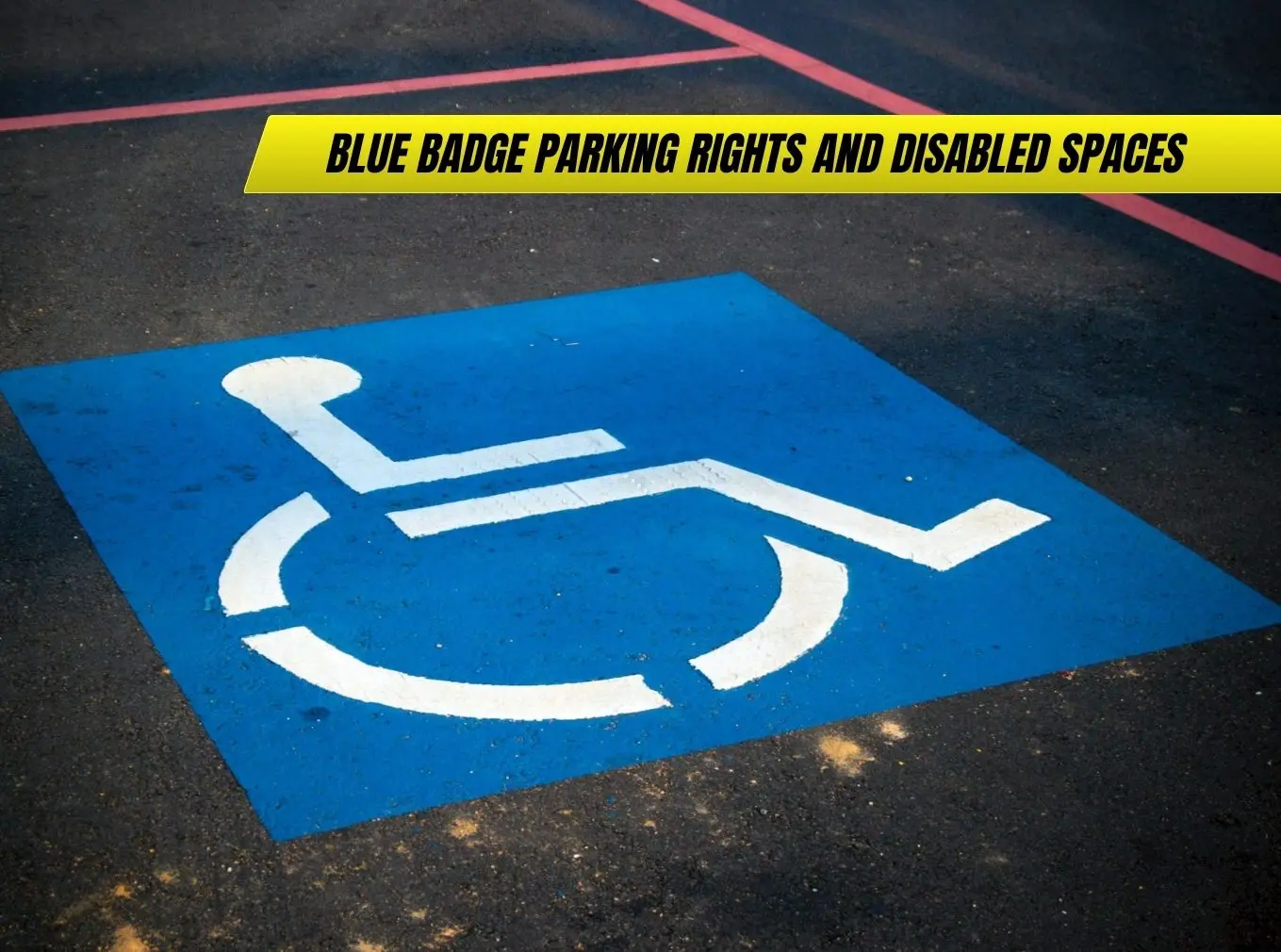
Disabled parking bays marked with wheelchair symbols remain exclusively reserved for Blue Badge holders. These spaces typically offer closer proximity to destinations and additional space for wheelchair access or mobility equipment.
Yellow lines parking is permitted for up to 3 hours provided no loading restrictions apply and the vehicle doesn’t obstruct traffic flow. Red routes and clearways maintain absolute parking prohibitions regardless of Blue Badge status.
Private car parks may voluntarily recognise Blue Badge concessions, though this varies significantly between operators. Shopping centres, hospitals, and leisure facilities often provide dedicated disabled spaces with extended time limits.
For information about parking regulations affecting all drivers, see our guide to UK driving licence points to understand penalty systems.
Blue Badge Display and Usage Rules
Proper display requires the badge to be clearly visible from outside the vehicle, typically placed on the dashboard behind the windscreen. Clock discs showing arrival times must accompany the badge when parking on yellow lines or in time-limited spaces.
Badge holder presence remains essential for legitimate use. The disabled person must either be the driver or a passenger for the badge to be valid. Drop-off and collection scenarios allow brief stops, but extended parking requires the badge holder’s presence throughout.
Transferability between vehicles is permitted, but the same usage rules apply regardless of which car displays the badge. Family members or carers can drive Blue Badge holders and utilise parking concessions when the disabled person is present.
Common Usage Mistakes and Violations
Lending badges to friends or family members constitutes fraud when the disabled person isn’t present. Continued useof deceased relatives’ badges represents another common violation that carries serious penalties.
Parking in inappropriate locations such as blocking dropped kerbs, fire exits, or loading bays may still result in penalties despite Blue Badge possession. The badge provides concessions, not exemptions from all parking rules.
Disabled Parking Bay Specifications
UK regulations mandate specific dimensions for disabled parking spaces to ensure accessibility for wheelchair users and people with mobility equipment. Standard spaces measure minimum 2.4 metres wide by 4.8 metres long, though larger bays are increasingly common.
Access zones alongside parking bays must provide 1.2 metres clearance to accommodate wheelchair transfers and walking aids. Shared access zones between adjacent disabled bays can reduce overall space requirements whilst maintaining accessibility.
Surface requirements include firm, level ground with appropriate drainage and non-slip materials. Dropped kerbsand tactile paving must connect disabled bays to pedestrian routes and building entrances.
Signage standards include vertical signs displaying the international wheelchair symbol and ground markingstypically painted in yellow for council-controlled spaces or white for private facilities.
The regulations ensure disabled parking spaces meet the diverse needs of Blue Badge holders, from wheelchair users requiring transfer space to people with mobility impairments needing closer proximity to destinations.
Penalties and Enforcement
Parking violations in disabled spaces without valid Blue Badge display result in Penalty Charge Notices (PCNs)typically ranging from £70-£130 depending on location and severity. Early payment discounts usually reduce penalties by 50% when paid within 14 days.
Fraudulent badge use carries much more serious consequences, including fines up to £1,000, badge confiscation, and potential prosecution for fraud offences. Repeat offenders may face driving licence endorsements and vehicle seizure in extreme cases.
Appeals processes allow badge holders to challenge incorrect penalties through formal representations to issuing authorities and subsequent independent adjudication if initial appeals are rejected.
Enforcement methods increasingly utilise ANPR cameras and digital verification systems to identify fraudulent badges and track parking durations automatically.
From my observation, enforcement standards vary significantly between local authorities, with urban areas typically maintaining stricter monitoring than rural locations.
Blue Badge Renewal and Changes
Renewal periods vary from 1-10 years depending on the nature of the qualifying condition. Permanent conditionsoften receive longer-duration badges, whilst progressive conditions require more frequent assessment.
Automatic renewal applies to some benefit-related badges where the underlying qualification continues. Medical reassessment may be required for discretionary awards to confirm ongoing eligibility.
Change of address notifications must be submitted promptly to ensure continued validity. Badge replacement for lost or damaged cards incurs additional fees but can typically be processed quickly with appropriate documentation.
Digital transformation is occurring across England with electronic badges replacing physical cards in many areas. These smart badges enable more sophisticated enforcement and reduce counterfeiting opportunities.
Support and Advice Services
Citizens Advice provides free guidance on Blue Badge applications and appeals processes. Local disability organisations often offer specialist support for complex applications requiring detailed medical evidence.
Motability operates comprehensive information services for disabled drivers, covering Blue Badge entitlements alongside vehicle adaptations and financing options. Independent living centres provide practical advice combining parking rights with broader accessibility planning.
For drivers experiencing warning light issues, understanding diagnostic procedures can help maintain vehicle reliability essential for maintaining mobility independence.
❓ Frequently Asked Questions
H4: How long does a Blue Badge application take to process?
Standard applications typically take 4-6 weeks to process from submission to badge collection. Complex casesrequiring medical assessments or additional evidence can take 8-12 weeks. Urgent applications for immediate medical needs may receive expedited processing within 1-2 weeks, though this depends on local authority capacity and medical evidence clarity.
H4: Can I use my Blue Badge when travelling abroad?
European Union recognition allows Blue Badge use in most EU countries for disabled parking spaces and some time-limited areas. Post-Brexit arrangements maintain mutual recognition with many European countries, though specific concessions vary by destination. Travel insurance should include coverage for parking penalties abroad, and research local regulations before travelling.
H4: What happens if my Blue Badge is lost or stolen?
Immediate reporting to the issuing local authority prevents fraudulent use and enables replacement processing. Police reports for stolen badges may be required for insurance claims and court proceedings if the badge is misused. Replacement fees typically match initial application costs, and temporary permits may be available while permanent replacements are processed.
H4: Can I appeal a Blue Badge application refusal?
Yes, appeal processes allow challenges to refusal decisions through formal reviews and independent assessments. Additional medical evidence can strengthen appeals, particularly for hidden disabilities or fluctuating conditions. Citizens Advice and disability organisations provide free support for preparing appeals, and success rates improve significantly with professional assistance.
H4: Do Blue Badges work in private car parks?
Private car park recognition varies significantly between operators. Shopping centres, hospitals, and leisure facilities often provide disabled spaces recognising Blue Badges, though time limits and terms of use may differ from public spaces. Supermarket chains typically honour Blue Badge concessions, whilst airport parking requires specific disabled tariffs rather than automatic exemptions.
H4: Can carers apply for Blue Badges on behalf of disabled people?
Authorised representatives can submit applications for disabled people unable to complete processes independently. Power of attorney documentation or appointee status may be required for legal authority to act on another person’s behalf. Professional carers and family members can assist with applications, though the disabled person remains the badge holder and must be present when using parking concessions.
H4: What medical conditions automatically qualify for Blue Badges?
Automatic qualifications include higher rate mobility DLA, PIP with 8+ moving around points, war pension mobility supplements, and registered blindness. Recent expansions include severe anxiety disorders, autism spectrum conditions affecting navigation, and cognitive impairments causing safety concerns when walking. Terminal illnesses also qualify under fast-track procedures regardless of current mobility limitations.
Maximising Your Blue Badge Benefits
Understanding your Blue Badge rights enables confident use of parking concessions whilst avoiding common pitfalls that result in penalties or badge confiscation. From my experience, proper badge usage significantly improves access to essential services, employment opportunities, and community participation for disabled people and their families.
Regular review of parking regulations helps adapt to changing rules and enforcement methods, particularly as digital systems replace traditional approaches. Local variations in enforcement standards and private car park policies require ongoing awareness for optimal badge utilisation.
The Blue Badge scheme represents a crucial accessibility tool that, when used properly, provides genuine mobility improvements for disabled people across the UK. However, the system relies on responsible usage and continued eligibility assessment to ensure resources remain available for those who need them most.
For broader information about UK driving regulations and requirements, explore our comprehensive guide to the best family SUVs to understand vehicle options that accommodate disabled passengers and mobility equipment effectively.






Hello
Your section on Disabled Parking Bay Specifications refers to UK regulations mandating the dimensions and signage of disabled parking spaces.
Can you advise me the source of these regulations, please?
Thanks in advance
Raymond Hunter