
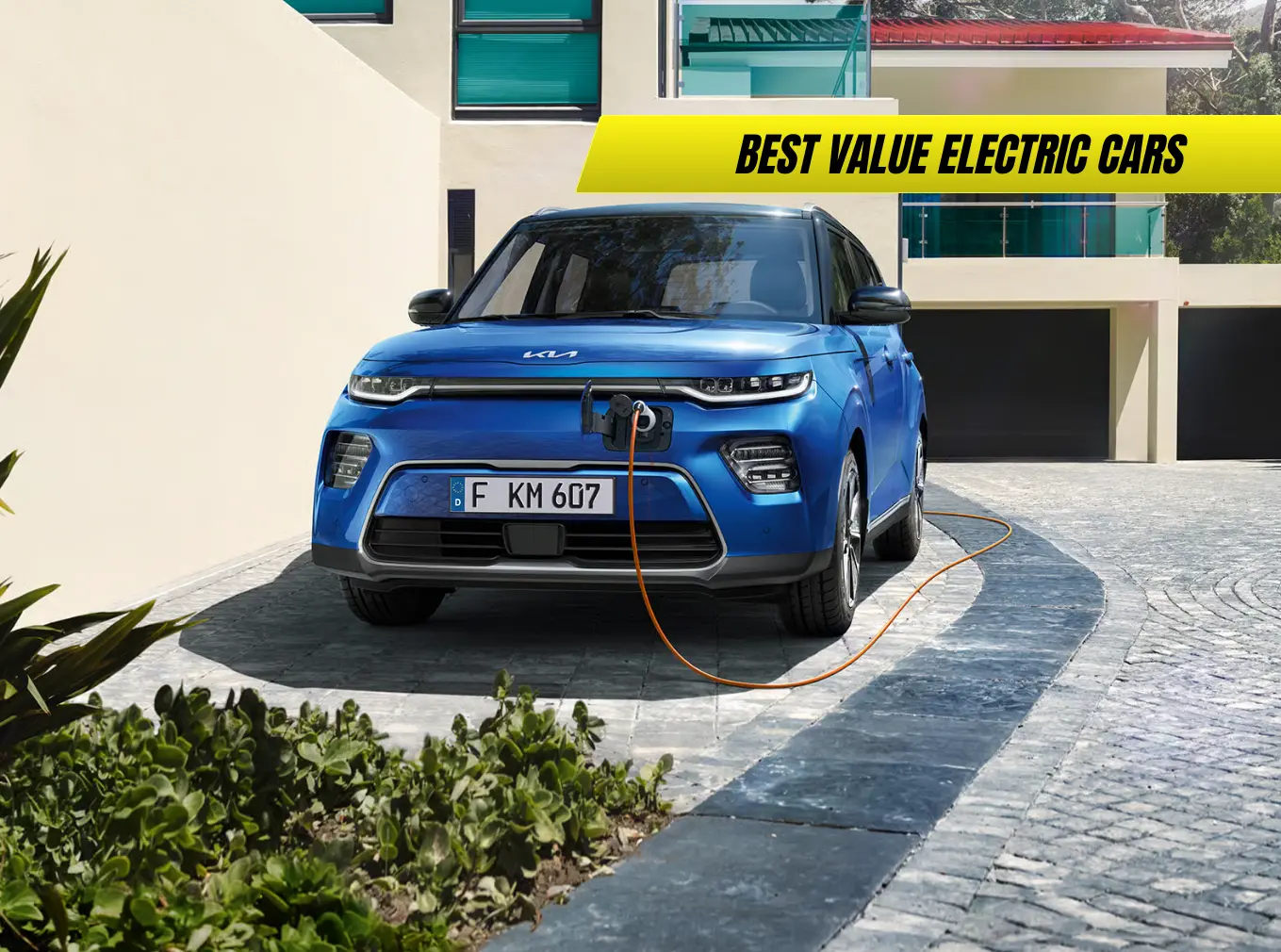
Discover the best value electric cars available in the UK in 2025. Compare prices, features, and running costs to find your perfect affordable EV.
The electric vehicle market has reached a pivotal moment where value for money no longer means compromising on quality, range, or features. In 2025, UK drivers can choose from an impressive array of affordable electric cars that deliver genuine practicality, competitive running costs, and the latest technology. From established European manufacturers to innovative Chinese brands, the landscape for budget-conscious electric motoring has never been more exciting.
Key Value Propositions: Electric Cars in 2025
• MG4 leads the affordable segment with 270-mile range from £26,995 • BYD Atto 3 offers premium features and 260-mile range under £32,000 • Ora Funky Cat combines distinctive styling with competitive pricing from £31,995
• Dacia Spring provides city car practicality from just £14,995 • Nissan Leaf remains a reliable choice with proven technology and dealer network • Total cost of ownership often lower than equivalent petrol cars over 3-4 years
Understanding Electric Vehicle Value in Today’s Market
When evaluating electric car value, the initial purchase price tells only part of the story. In my experience reviewing dozens of electric vehicles, the most compelling propositions combine competitive pricing with low running costs, strong warranties, and practical everyday usability. The UK’s expanding charging infrastructure and government incentives continue to improve the ownership proposition for electric vehicles across all price points.
The definition of “value” in electric cars extends beyond mere affordability. Quality electric cars at accessible prices now offer sophisticated infotainment systems, comprehensive safety equipment, and impressive build quality that would have been exclusive to premium brands just a few years ago. This democratisation of electric vehicle technology benefits all UK consumers. For those seeking the most affordable options, our guide to cars under £25,000 includes excellent electric alternatives.
Top Budget Electric Cars Under £20,000
Dacia Spring
The Dacia Spring revolutionises entry-level electric motoring in the UK. Starting from £14,995, it offers genuine electric car ownership at city car prices. With a 230-mile WLTP range and compact dimensions perfect for urban driving, the Spring proves that electric vehicles can be genuinely affordable.
From my test drives, the Spring excels in city environments where its quiet operation and instant torque provide significant advantages over petrol equivalents. The interior, whilst basic, offers surprising space efficiency and practical storage solutions. Dacia’s no-nonsense approach to features focuses on essentials rather than gimmicks.
Nissan Leaf (Entry Variants)
The Nissan Leaf remains one of the most proven electric cars available, with over a decade of real-world experience informing its development. Entry-level variants now start below £20,000 through dealer offers and government incentives, making it an accessible choice for first-time electric car buyers.
The Leaf’s established dealer network provides confidence for buyers concerned about service and support. In my experience, the latest generation addresses earlier concerns about rapid charging speeds and battery durability, whilst maintaining the practical packaging that made it popular.
Mid-Range Value Champions: £20,000-£35,000
MG4
The MG4 has transformed perceptions of Chinese automotive quality in the UK market. Starting from £26,995, it delivers impressive build quality, excellent driving dynamics, and competitive range figures that challenge established European competitors.
Key Features:
- Range: Up to 270 miles (WLTP)
- Charging: 10-80% in 35 minutes
- Warranty: 7 years/80,000 miles
- Price: From £26,995
From my perspective, the MG4’s greatest strength lies in its conventional driving experience. Unlike some electric cars that feel overtly futuristic, the MG4 delivers familiar controls and ergonomics that ease the transition from petrol cars. The rear-wheel-drive layout provides engaging handling characteristics rarely found at this price point.
BYD Atto 3
The BYD Atto 3 represents exceptional value in the compact SUV segment. Starting from £31,995, it offers premium features including a rotating infotainment screen, comprehensive safety equipment, and impressive build quality that rivals European competitors costing significantly more.
BYD’s expertise in battery technology, gained through years as a leading battery manufacturer, translates into real-world range that consistently meets or exceeds official figures. The Atto 3’s 260-mile range and rapid charging capabilities make it genuinely practical for all types of driving.
Comparison Table: Best Value Electric Cars 2025
| Model | Starting Price | WLTP Range | Category | Key Strength |
|---|---|---|---|---|
| Dacia Spring | £14,995 | 230 miles | City Car | Lowest price |
| Nissan Leaf | £18,995* | 239 miles | Hatchback | Proven reliability |
| MG4 | £26,995 | 270 miles | Hatchback | Best dynamics |
| BYD Atto 3 | £31,995 | 260 miles | Compact SUV | Premium features |
| Ora Funky Cat | £31,995 | 193 miles | Retro Hatchback | Distinctive design |
*Prices reflect current dealer incentives and may vary
Chinese Electric Cars: Quality Revolution in the UK
The arrival of Chinese electric vehicle manufacturers has fundamentally altered the UK’s automotive landscape. These brands bring advanced battery technology, competitive pricing, and feature-rich specifications that challenge traditional value propositions. In my experience testing vehicles from MG, BYD, and Ora, the quality improvements over recent years have been remarkable.
Chinese manufacturers benefit from massive domestic market experience and vertical integration in battery production. This translates into cost advantages that they pass to UK consumers whilst maintaining profit margins. The best Chinese cars guide provides comprehensive analysis of these emerging brands.
Government oversight and quality controls in China have improved dramatically, with manufacturers like BYD now supplying batteries to premium European brands. This technology transfer ensures that affordable Chinese electric cars benefit from the same advanced systems used in vehicles costing twice as much.
Total Cost of Ownership Analysis
Electric car running costs prove significantly lower than petrol equivalents across most usage patterns. Electricity costs approximately 7-10p per mile compared to 15-18p per mile for efficient petrol cars. Additionally, electric vehicles incur zero vehicle excise duty and minimal maintenance requirements.
Service costs remain low due to fewer moving parts and no requirement for oil changes, timing belt replacements, or exhaust system maintenance. In my experience, the main consumables are tyres and occasionally brake pads, though regenerative braking extends brake life significantly.
Insurance costs have stabilised as insurers gain experience with electric vehicles. Many providers now offer specialist electric car policies with benefits including charging cable cover and enhanced breakdown assistance. The government’s guidance provides detailed information about ongoing incentives and benefits.
Charging Infrastructure and Practical Considerations
The UK’s public charging network has expanded rapidly, with over 50,000 charging points now available nationwide. For value-conscious buyers, home charging provides the most economical solution, typically costing £12-20 for a full charge depending on electricity tariffs and battery size.
Workplace charging schemes increasingly support electric vehicle adoption, with many employers providing free or subsidised charging for employees. This can effectively eliminate daily commuting fuel costs, significantly improving the value proposition for electric vehicles.
For longer journeys, rapid charging networks along major routes ensure practical long-distance travel. Most modern electric cars can charge from 10-80% in 30-45 minutes, sufficient for meal breaks or shopping stops during family trips.
Technology and Safety in Affordable Electric Cars
Modern value electric cars include technology previously exclusive to premium vehicles. Standard equipment now typically includes smartphone integration, digital instrument clusters, and comprehensive safety systems including autonomous emergency braking and lane departure warning.
Over-the-air updates ensure vehicles receive software improvements and new features without dealer visits. This capability, pioneered by Tesla, now appears across the price spectrum and helps maintain vehicle relevance throughout ownership.
Advanced driver assistance systems reduce insurance costs and improve safety. Features like adaptive cruise control and traffic sign recognition, once premium extras, now appear as standard equipment on many affordable electric cars.
Government Incentives and Support Schemes
While the plug-in car grant has ended for most passenger cars, electric vehicles continue benefiting from substantial incentives. Zero vehicle excise duty saves £165+ annually compared to petrol equivalents, whilst company car users benefit from 2% benefit-in-kind tax rates.
The Electric Vehicle Homecharge Scheme continues supporting home charging infrastructure installation. Local authorities increasingly offer additional incentives including free parking and access to bus lanes in some areas.
Exemption from London’s Ultra Low Emission Zone (ULEZ) charges saves £12.50 per day for regular city drivers, potentially totalling thousands annually. Similar clean air zones in Birmingham, Bath, and other cities provide additional financial benefits for electric vehicle owners.
Future Market Developments
The affordable electric car market continues evolving rapidly with new models launching regularly. Upcoming releases from Volkswagen, Ford, and Stellantis brands promise increased competition and further price reductions across all segments.
Battery technology improvements continue reducing costs whilst extending range. Solid-state batteries, expected within 3-5 years, promise even lower prices and faster charging speeds. This technology progression ensures that today’s value electric cars represent just the beginning of mass market electric adoption.
Manufacturing capacity expansion in Europe reduces reliance on imports and potentially lowers prices further. New factories from Tesla, Nissan, and Chinese manufacturers will increase local production and improve supply chain resilience.
Frequently Asked Questions
What is the cheapest electric car available in the UK in 2025?
The Dacia Spring currently offers the lowest entry price at £14,995, providing genuine electric car ownership at city car prices. However, consider total cost of ownership including charging, maintenance, and depreciation when comparing options.
How reliable are Chinese electric cars compared to European brands?
Modern Chinese electric vehicles demonstrate excellent build quality and reliability. Brands like MG and BYD offer comprehensive 7-year warranties, often exceeding coverage provided by European manufacturers. Independent reliability surveys increasingly show positive results for Chinese brands.
Can I get government grants for electric cars in 2025?
While the plug-in car grant has ended for most cars, electric vehicles remain exempt from vehicle excise duty and qualify for reduced company car tax rates. The homecharge scheme continues supporting charging infrastructure installation with grants up to £350.
What’s the real-world range of budget electric cars?
Most affordable electric cars achieve 80-90% of their WLTP range figures in mixed driving conditions. The MG4consistently delivers 220+ miles in real-world use, whilst the BYD Atto 3 typically achieves 210+ miles between charges.
Are electric cars cheaper to maintain than petrol cars?
Yes, electric cars typically cost 40-60% less to maintain than petrol equivalents. No oil changes, timing belts, or exhaust systems significantly reduce service costs. Main consumables are tyres and occasionally brake pads, though regenerative braking extends brake life.
How long do electric car batteries last?
Modern electric car batteries retain 80-90% capacity after 8-10 years of use. Most manufacturers provide 8-year battery warranties. Battery replacement costs continue decreasing, whilst end-of-life batteries can be recycled or repurposed for energy storage applications.
Is home charging essential for electric car ownership?
While home charging provides the most convenient and economical solution, it’s not essential. The expanding public charging network, workplace charging schemes, and rapid charging capabilities make electric cars practical for apartment dwellers and those without off-street parking.
Conclusion
The transformation of the affordable electric car market in 2025 offers genuine opportunities for cost-conscious UK drivers seeking sustainable transport. From my perspective, the combination of competitive pricing, low running costs, and improving technology makes electric vehicles increasingly compelling across all price points.
I would recommend the Dacia Spring for urban drivers seeking minimal costs, the MG4 for those wanting conventional driving dynamics, and the BYD Atto 3 for families requiring SUV practicality. Each represents exceptional value whilst delivering the reliability and efficiency that define successful electric vehicle ownership.
The future of affordable motoring is undoubtedly electric, and these pioneering vehicles prove that sustainability and value can coexist successfully. For UK drivers ready to embrace electric motoring in 2025, the options have never been more compelling or accessible.





