
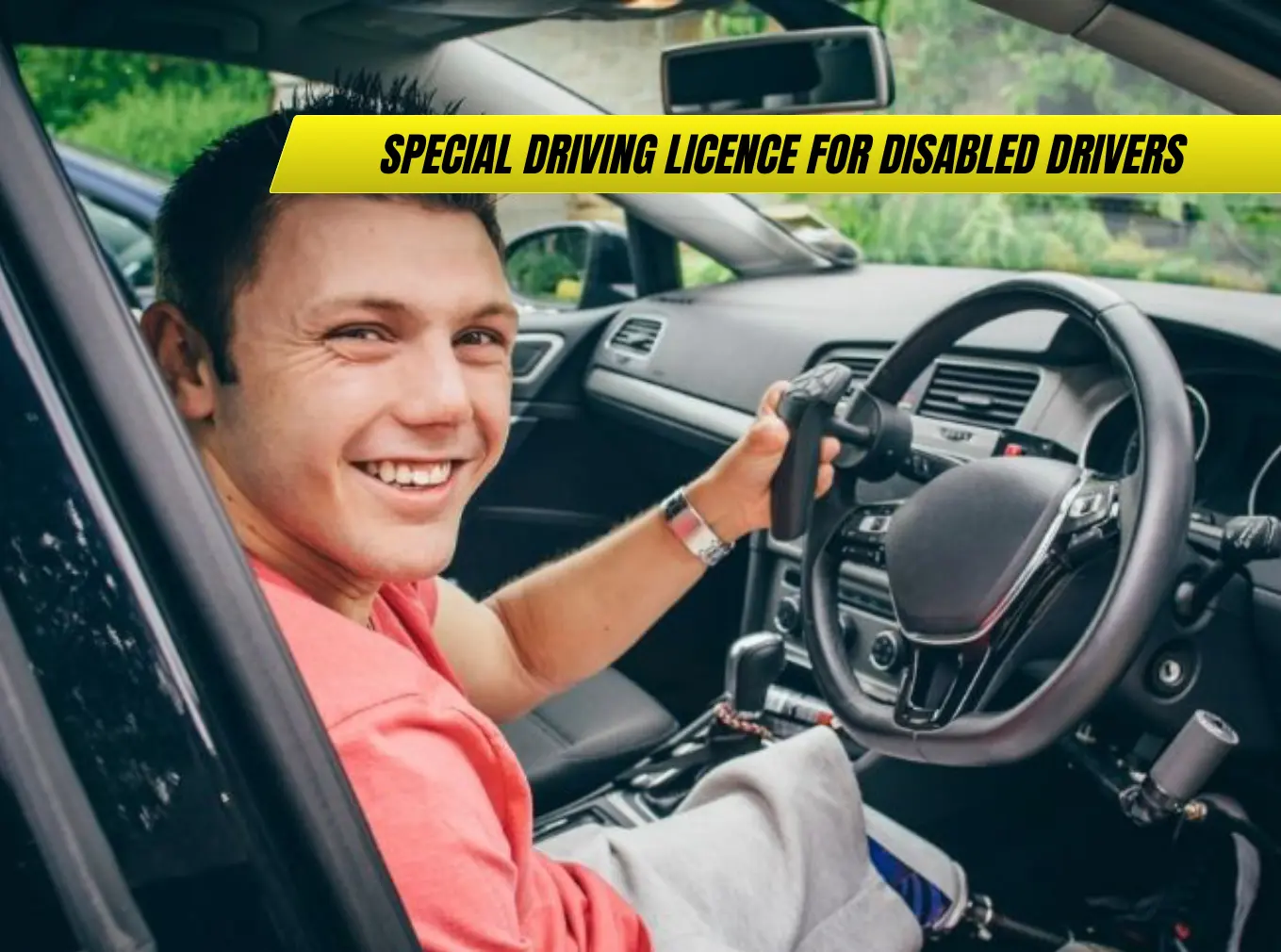
Complete guide to special driving licences for disabled drivers in the UK. DVLA procedures, vehicle adaptations, and support available in 2025.
The special driving licence for disabled drivers in the UK ensures that mobility challenges don’t prevent people from accessing the freedom and independence that driving provides. The DVLA has comprehensive procedures and support systems in place to help disabled individuals obtain appropriate driving licences, with vehicle adaptations and specialist training available to accommodate various physical and cognitive conditions. In my experience working with disabled drivers, the UK system provides excellent support and flexibility to ensure safe, independent mobility for all eligible drivers.
Key Highlights: Special Driving Licences for Disabled Drivers
• DVLA medical assessments determine appropriate licence categories and restrictions • Vehicle adaptationsavailable for various physical disabilities and mobility challenges • Specialist driving instructors trained to work with disabled learners • Financial support including VAT exemptions and grants for vehicle modifications • Ongoing support through regular medical reviews and adaptation updates • Comprehensive regulations ensuring road safety whilst maximising independence
Understanding UK Disability Driving Regulations
The DVLA disability driving framework provides structured pathways for disabled individuals to obtain driving licences appropriate to their specific needs and capabilities. The system balances road safety requirements with the fundamental right to mobility and independence that driving represents.
The UK approach emphasises individual assessment rather than blanket restrictions, recognising that many disabilities can be successfully accommodated through vehicle adaptations, training, or specific licence conditions. This personalised approach ensures maximum independence whilst maintaining safety standards. For broader context on UK driving regulations, our guide on UK driving licence points provides essential information about licence management.
DVLA Medical Assessment Process
Comprehensive Evaluation Procedures
The DVLA medical assessment process evaluates an individual’s fitness to drive based on their specific medical condition and functional capabilities. The assessment considers various factors including vision, physical mobility, cognitive function, and the ability to operate vehicle controls safely.
Assessment Components:
- Medical questionnaire completion
- GP or specialist medical reports
- Independent medical examination (if required)
- Practical driving assessment
- Vehicle adaptation evaluation
- Ongoing monitoring requirements
The process begins with detailed medical disclosure when applying for or renewing a driving licence. The DVLA medical team reviews this information and may require additional assessments or specialist reports to determine appropriate licence categories and any necessary restrictions.
In my experience, the DVLA medical team demonstrates excellent understanding of how various conditions can be accommodated through adaptations or training. The focus remains on enabling safe driving rather than preventing it wherever possible.
The assessment timeline varies depending on condition complexity and required specialist input. Simple cases may be resolved within weeks, whilst complex situations requiring multiple assessments or adaptations may take several months to complete.
Types of Special Driving Licences
Adapted Licence Categories
The UK driving licence system includes various categories and endorsements that accommodate different disabilities whilst ensuring appropriate vehicle operation. These modifications ensure drivers operate vehicles safely within their capabilities.
Common Licence Adaptations:
- Automatic transmission only restrictions
- Daylight driving limitations
- Modified vehicle control requirements
- Specific medical review periods
- Speed or distance limitations
- Adapted vehicle specifications
Group 1 licences (cars and motorcycles) often accommodate various adaptations through vehicle modifications rather than licence restrictions. The DVLA works with drivers to identify appropriate solutions that maintain independence whilst ensuring safety.
Group 2 licences (buses and trucks) have stricter medical standards due to public safety considerations. However, many conditions that restrict Group 2 eligibility don’t affect Group 1 licence capability, ensuring continued car driving ability.
Regular medical reviews ensure ongoing fitness to drive whilst accommodating changing medical conditions. The review frequency depends on the specific condition and its progression characteristics, balancing safety with administrative burden.
Vehicle Adaptations and Modifications
Comprehensive Adaptation Solutions
Vehicle adaptations range from simple modifications to sophisticated systems that enable individuals with significant physical disabilities to drive safely and independently. The UK has excellent specialist companies providing comprehensive adaptation services.
Physical Control Adaptations:
- Hand controls for acceleration and braking
- Left-foot accelerator pedals
- Steering wheel knobs and extensions
- Electronic gear selection systems
- Adapted parking brake controls
- Modified seat positioning systems
Vision and Cognitive Aids:
- Enhanced mirror systems
- Audio parking sensors and cameras
- Simplified control layouts
- Voice-activated systems
- Enhanced lighting systems
- Navigation aids with audio guidance
Advanced adaptations include sophisticated electronic systems that enable individuals with limited mobility to operate vehicles using minimal physical input. These systems demonstrate remarkable engineering that transforms vehicle accessibility.
The adaptation assessment process involves occupational therapists, driving instructors, and adaptation specialists working together to identify optimal solutions. This collaborative approach ensures adaptations meet individual needs whilst maintaining vehicle safety and reliability.
Financial Support and Grants
UK Government Support Systems
The UK provides substantial financial support for disabled drivers through various schemes that recognise the additional costs associated with accessible motoring. These programmes help ensure financial constraints don’t prevent access to essential mobility.
Available Support Schemes:
- VAT exemption on vehicle adaptations
- Blue Badge parking scheme
- Access to Work grants for employment-related adaptations
- Disabled Students’ Allowance for education-related mobility
- Local authority grants and support schemes
- Charitable organisation assistance programmes
VAT exemption applies to most vehicle adaptations when installed for disabled drivers, providing significant savings on expensive modification work. The process requires appropriate medical certification but covers comprehensive adaptation costs.
The Blue Badge scheme provides parking benefits that recognise the additional challenges faced by disabled drivers. Recent scheme expansions include mental health conditions and other non-visible disabilities, improving accessibility for diverse needs.
Access to Work grants can fund vehicle adaptations, specialist driving lessons, and ongoing support costs when required for employment purposes. The scheme recognises driving as essential for many employment opportunities and provides comprehensive support accordingly.
Specialist Driving Instruction
Professional Training Services
Specialist driving instructors trained to work with disabled learners provide essential support throughout the learning process. These professionals understand how various conditions affect driving ability and adapt teaching methods accordingly.
The Association of Driving Instructors (ADI) includes specialists with additional training in disability awareness and adaptation techniques. These instructors work closely with occupational therapists and adaptation specialists to ensure comprehensive support.
Specialist Instruction Benefits:
- Adapted teaching vehicles available
- Flexible lesson scheduling and duration
- Coordination with medical professionals
- Adaptation trial and assessment support
- Ongoing support throughout licence validity
- Family member training for adapted vehicles
Many driving schools maintain adapted vehicles for training purposes, allowing learners to experience different adaptation types before committing to expensive modifications. This trial approach ensures optimal adaptation selection.
The instruction process often takes longer than standard driving lessons, reflecting the additional considerations required for safe adaptation to various modifications and techniques. This thorough approach ensures confidence and competence before independent driving.
Medical Conditions and Driving Eligibility
Condition-Specific Considerations
Various medical conditions affect driving eligibility differently, with the DVLA maintaining detailed guidance on how specific conditions are assessed and accommodated. This comprehensive approach ensures consistent, fair evaluation across different disability types.
Vision-Related Conditions:
- Minimum visual acuity requirements
- Visual field assessments
- Adaptation options for partial sight
- Regular monitoring requirements
- Specialist assessment procedures
Mobility Conditions:
- Physical capability assessments
- Adaptation requirement evaluation
- Range of motion testing
- Strength and coordination assessment
- Progressive condition monitoring
Cognitive and Neurological Conditions:
- Mental health impact evaluation
- Seizure disorder considerations
- Reaction time assessments
- Decision-making capability testing
- Medication effect monitoring
The DVLA provides detailed guidance on reporting requirements for various conditions, ensuring drivers understand their obligations whilst receiving appropriate support. This transparency helps maintain safety whilst protecting individual rights.
Application Process and Documentation
DVLA Procedure Requirements
The application process for special driving licences requires comprehensive documentation and may involve multiple assessment stages. Understanding these requirements helps ensure smooth application processing and appropriate support access.
Required Documentation:
- Completed DVLA medical questionnaire
- GP or specialist medical reports
- Vision test certificates (if applicable)
- Previous driving licence documentation
- Proof of identity and residence
- Medical condition evidence and history
The initial application triggers DVLA medical review processes that may require additional information or assessments. Applicants should expect this process and prepare comprehensive medical documentation accordingly.
Application Timeline:
- Initial review: 2-4 weeks
- Medical assessment: 4-12 weeks
- Practical evaluation: 2-6 weeks
- Final decision: 1-2 weeks
- Total process: 2-6 months typically
Complex cases requiring multiple specialist assessments or extensive adaptations may take longer to resolve. The DVLA provides regular updates throughout the process and works to minimise delays wherever possible.
Ongoing Obligations and Reviews
Continuous Compliance Requirements
Disabled drivers have ongoing obligations to maintain licence validity and ensure continued safe driving capability. These requirements protect both individual and public safety whilst maintaining driving privileges.
Regular medical reviews ensure ongoing fitness to drive whilst accommodating changing medical conditions. Review frequencies vary based on condition type and progression characteristics, balancing safety with administrative convenience.
Ongoing Requirements:
- Regular medical review compliance
- Condition change reporting obligations
- Vehicle adaptation maintenance
- Insurance disclosure requirements
- Prescription medication monitoring
- Annual licence renewal procedures
Drivers must report significant changes in medical condition that could affect driving safety. This obligation ensures the DVLA can provide appropriate support and assessment when circumstances change.
Vehicle adaptation maintenance ensures continued safe operation throughout ownership. Specialist adaptation companies provide ongoing support and maintenance services to ensure optimal performance and safety.
Insurance Considerations
Specialist Insurance Solutions
Insurance for disabled drivers requires disclosure of medical conditions and vehicle adaptations, though this shouldn’t significantly affect premium costs. Specialist insurers understand disability-related requirements and provide appropriate coverage.
Many mainstream insurers now provide competitive coverage for disabled drivers, recognising that adapted vehicles and trained drivers often present lower risk profiles than standard cases. The key lies in comprehensive disclosure and appropriate specialist advice.
Insurance Considerations:
- Medical condition disclosure requirements
- Vehicle adaptation coverage needs
- Specialist equipment protection
- Recovery and assistance services
- Replacement vehicle provisions
- Legal protection coverage
The Association of British Insurers provides guidance on disability insurance requirements and helps ensure fair treatment for disabled drivers. This support helps prevent discrimination whilst ensuring appropriate coverage.
Technology and Future Developments
Advancing Adaptation Technology
Emerging technologies continue expanding possibilities for disabled drivers through sophisticated adaptation systems and autonomous driving features. These developments promise even greater independence and safety for disabled drivers.
Advanced driver assistance systems (ADAS) particularly benefit disabled drivers by providing additional safety margins and reducing physical demands. Features like automatic emergency braking and lane-keeping assistance enhance safety whilst reducing driver workload.
Future Technologies:
- Voice-controlled vehicle systems
- Enhanced autonomous driving features
- Improved adaptation integration
- Smartphone-based vehicle control
- Advanced safety monitoring systems
- Simplified control interfaces
The DVLA continues updating regulations to accommodate technological advances whilst maintaining safety standards. This progressive approach ensures disabled drivers benefit from technological improvements as they become available.
Support Organisations and Resources
Comprehensive Support Networks
Numerous organisations provide support, advice, and advocacy for disabled drivers throughout the UK. These groups offer valuable resources and assistance throughout the licensing and adaptation process.
Key Support Organisations:
- Motability Scheme for vehicle access
- Disabled Living Foundation advice services
- Queen Elizabeth’s Foundation driving assessments
- Local authority disability services
- Charitable driving organisations
- Peer support networks
The Motability Scheme provides comprehensive vehicle access for disabled individuals through adapted vehicle leasing and purchase programmes. This scheme simplifies vehicle access whilst ensuring appropriate adaptations and support.
Professional organisations like the Association of Driving Instructors maintain specialist registers of qualified disability driving instructors, ensuring access to appropriate professional support throughout the learning process.
Frequently Asked Questions
What medical conditions affect driving licence eligibility in the UK?
Various conditions require DVLA assessment including vision problems, mobility limitations, epilepsy, diabetes, heart conditions, and mental health issues. Most conditions can be accommodated through adaptations or restrictions rather than licence refusal.
How much do vehicle adaptations cost for disabled drivers?
Adaptation costs vary significantly from £200 for simple modifications to £15,000+ for complex electronic systems. VAT exemption applies to most adaptations, whilst grants and support schemes help with costs for many drivers.
Can I drive whilst my medical condition is being assessed?
Driving eligibility during assessment depends on the specific condition and current licence status. The DVLA provides clear guidance on when driving must stop and when it can continue during assessment periods.
How often do disabled drivers need medical reviews?
Review frequency varies by condition from annual reviews for progressive conditions to 5-year intervals for stable situations. The DVLA tailors review schedules to individual circumstances and medical evidence.
What happens if my condition worsens after getting a licence?
Drivers must report significant condition changes to the DVLA, which may trigger reassessment. The focus remains on maintaining safe driving through additional adaptations or restrictions rather than licence withdrawal.
Are there age limits for disabled driver licences?
Standard age rules apply with additional medical monitoring for older drivers. Disability doesn’t change age-related requirements, though medical reviews may become more frequent with advancing age.
Can disabled drivers use motorways and dual carriageways?
Most disabled drivers can use all road types unless specific medical restrictions apply. Licence conditions specify any limitations, with most adaptations enabling full road network access.
Conclusion
The UK system for disabled driver licensing demonstrates excellent commitment to balancing safety with independence, providing comprehensive support and flexibility to ensure maximum mobility for disabled individuals. From my perspective, the DVLA approach recognises driving as a fundamental aspect of independence whilst maintaining appropriate safety standards through thorough assessment and ongoing support.
I would recommend disabled individuals explore driving possibilities through DVLA medical assessment, specialist instruction evaluation, and adaptation assessment to understand available options. The comprehensive support system ensures most people can achieve safe, independent driving with appropriate adaptations and training.
The UK disabled driver support system proves that physical or cognitive challenges need not prevent access to the freedom and independence that driving provides. For disabled individuals considering driving in 2025, the available support, technology, and expertise make this an excellent time to explore driving possibilities and access the mobility that enhances quality of life and independence.





