
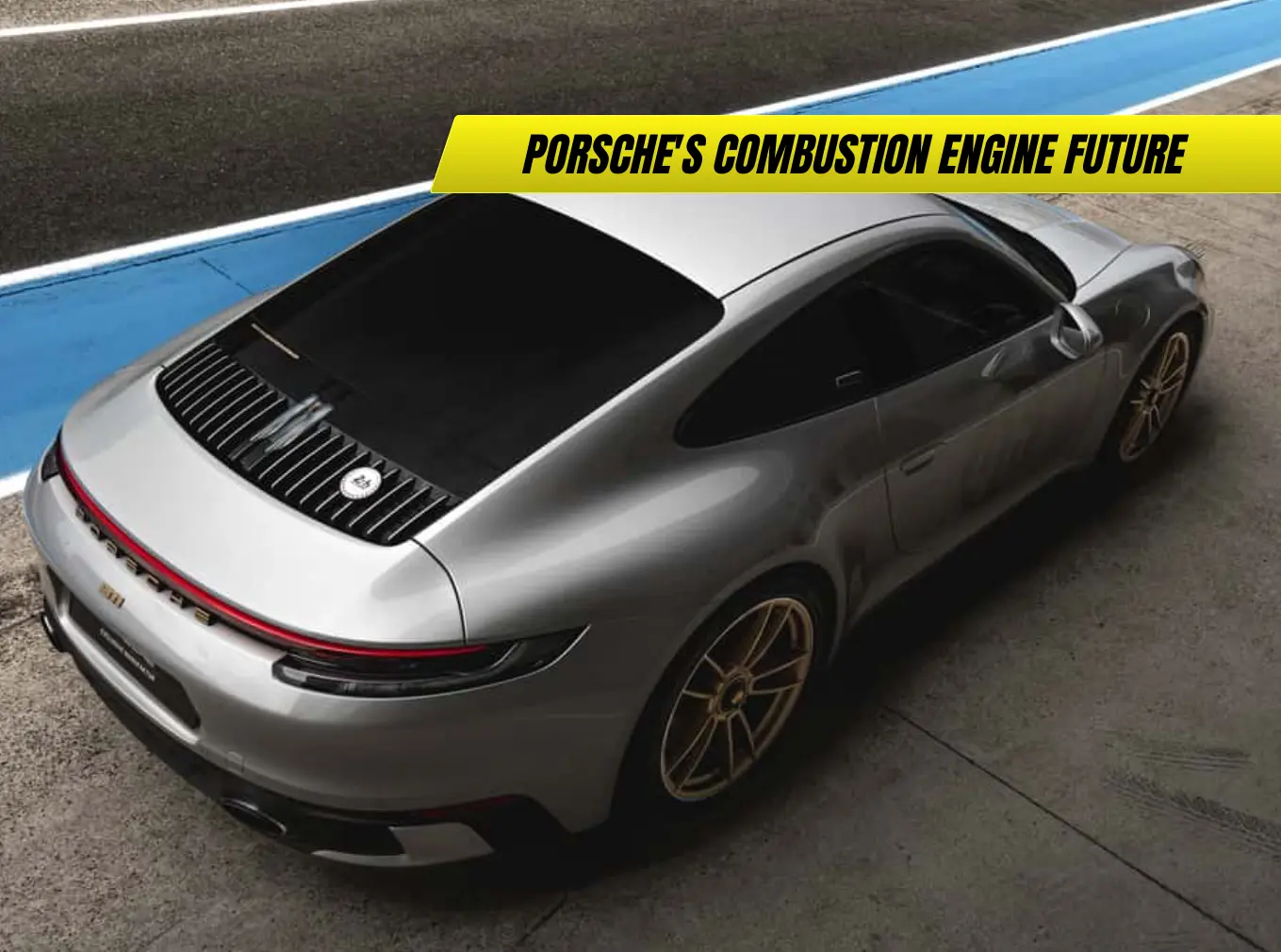
Porsche extends combustion engines across entire range including 718 and new SUV models for UK market. Complete guide covering strategy, powertrains and buyer implications.
Porsche’s strategic commitment to extending combustion engine availability across its entire model range represents a significant departure from the industry’s rush toward full electrification, offering UK enthusiasts continued access to traditional petrol power alongside expanding electric options. The German sports car manufacturer’s decision to maintain internal combustion engines from the compact 718 sports cars through to future large SUV models demonstrates confidence in hybrid technology and market demand for driver-focused experiences that define the Porsche brand. This strategy particularly benefits UK buyers who value the emotional connection and performance characteristics of naturally aspirated and turbocharged engines while providing transitional pathways toward eventual electrification.
Key Points:
- Combustion engines retained across entire Porsche lineup including future models
- 718 sports cars continue with petrol power alongside electric variants
- New large SUV development includes combustion and hybrid powertrains
- Strategic hybrid integration balances performance with efficiency requirements
- UK market benefits from continued choice between electric and petrol options
- Premium positioning allows combustion engine continuation beyond mass market trends
Porsche’s Combustion Strategy: Defying Industry Electrification Trends
Porsche’s decision to maintain combustion engines across its complete model range contrasts sharply with competitors pursuing aggressive electrification timelines, reflecting deep understanding of brand heritage and customer preferences that define luxury sports car ownership. This approach acknowledges that Porsche buyers, particularly in markets like the UK, value driving engagement and emotional connection that current electric technology struggles to replicate completely.
From my experience analysing premium automotive strategies, Porsche’s approach demonstrates remarkable confidence in market positioning and customer loyalty. While mass market manufacturers face regulatory pressure to electrify rapidly, Porsche’s premium positioning and relatively low production volumes provide flexibility to maintain combustion options that preserve brand DNA while developing electric alternatives.
The strategy also recognises infrastructure realities in markets like the UK, where charging network limitations and range concerns continue affecting premium car buyers who expect unrestricted mobility for touring and performance driving applications. This dual-powertrain approach ensures continued market relevance while electric technology matures and infrastructure expands.
718 Evolution: Maintaining Sports Car Purity
The Porsche 718 Boxster and Cayman’s continued development with combustion engines preserves the pure sports car experience that defines these models’ appeal to UK enthusiasts. The naturally aspirated and turbocharged flat-four engines provide the immediate throttle response and distinctive sound characteristics that electric powertrains cannot replicate, maintaining emotional engagement essential for sports car satisfaction.
Recent developments suggest the 718 lineup may receive updated powertrains that enhance performance while meeting emissions requirements through advanced engineering rather than electrification. This approach appeals to purist buyers who prioritise driving engagement over environmental credentials, particularly in the UK market where sports cars often serve as weekend recreational vehicles rather than daily transport.
The continued availability of manual transmissions in 718 models further demonstrates Porsche’s commitment to traditional sports car values, addressing enthusiasts concerned about the disappearance of engagement-focused features from modern performance cars. This strategy positions the 718 as increasingly rare authentic sports car experience in a market trending toward automated, electrified alternatives.
Large SUV Development: Expanding Combustion Options
Porsche’s development of a new large SUV with combustion engine options represents significant expansion of the brand’s utility vehicle portfolio, competing directly with luxury SUVs while maintaining performance credentials that differentiate Porsche from conventional luxury manufacturers. This model likely targets UK buyers seeking maximum space and capability without compromising the driving dynamics expected from Stuttgart engineering.
The large SUV’s powertrain strategy probably includes both conventional combustion engines and sophisticated hybrid systems that balance performance with efficiency requirements. Unlike vehicles in our best SUVs under £30,000category, this Porsche will command premium pricing while delivering exceptional capability and luxury refinement.
Expected dimensions suggest accommodation for seven passengers while maintaining the performance characteristics that justify Porsche pricing premiums. The combustion engine availability ensures unrestricted capability for long-distance touring and towing applications where electric alternatives may face range limitations affecting UK buyers’ usage patterns.
Hybrid Technology Integration: Performance and Efficiency Balance
Porsche’s hybrid systems demonstrate that electrification can enhance rather than compromise performance characteristics, using electric motors to fill torque gaps and improve throttle response while maintaining combustion engine character. The technology implementation focuses on performance augmentation rather than purely efficiency gains, aligning with brand values and customer expectations.
The sophisticated hybrid systems likely feature multiple drive modes that allow pure electric operation for urban environments while providing full system power for performance applications. This flexibility appeals to UK buyers facing increasing urban emission restrictions while maintaining capability for spirited country driving where Porsche vehicles excel.
Battery placement and weight distribution considerations ensure hybrid systems complement rather than compromise chassis dynamics that define Porsche handling characteristics. The engineering approach prioritises driving engagement while achieving efficiency improvements that satisfy regulatory requirements and environmentally conscious buyers.
UK Market Implications: Choice and Infrastructure Considerations
Porsche’s strategy provides UK buyers with continued choice between combustion and electric powertrains, addressing market segments with different priorities and usage patterns. Urban buyers may prefer electric variants for emission compliance and running cost advantages, while rural and performance-focused buyers can select combustion options that better suit their requirements.
The approach acknowledges UK infrastructure limitations that continue affecting electric vehicle adoption, particularly for buyers requiring long-distance capability or lacking home charging facilities. Porsche’s premium positioning enables combustion engine continuation while infrastructure expands and electric technology improves.
UK regulatory environment increasingly restricts combustion engines in urban areas, but Porsche’s hybrid technology provides emission compliance while maintaining flexibility. The strategy ensures continued market access while preparing for eventual full electrification when technology and infrastructure mature sufficiently.
Comparison with German Luxury Competitors
Porsche’s combustion strategy contrasts with competitors pursuing more aggressive electrification timelines, potentially providing competitive advantages for buyers preferring traditional powertrains. While BMW, Mercedes, and Audi announce electric-only futures for various model lines, Porsche maintains combustion options that preserve brand differentiation.
This strategic differentiation potentially attracts buyers from competitors who feel pressured toward electrification before personal preference or infrastructure readiness. Porsche’s confidence in combustion continuation could capture market share from buyers seeking traditional luxury performance experiences.
Environmental Considerations: Balancing Performance and Responsibility
Porsche’s continued combustion development includes advanced efficiency technologies that reduce environmental impact while maintaining performance characteristics essential for brand identity. Synthetic fuel research and development suggests future pathways for carbon-neutral combustion engines that could satisfy environmental concerns while preserving driving engagement.
The premium positioning enables investment in advanced technologies that mass market manufacturers cannot justify economically. This includes sophisticated hybrid systems, lightweight materials, and advanced engine technologies that maximise efficiency while maintaining performance characteristics that define Porsche ownership experience.
UK buyers increasingly consider environmental impact alongside performance, and Porsche’s approach provides options for different priorities rather than forcing compromise. The strategy acknowledges that environmental responsibility can be achieved through multiple pathways rather than exclusively through electrification.
Performance Heritage: Maintaining Emotional Connection
Porsche’s commitment to combustion engines preserves the emotional aspects of sports car ownership that electric alternatives struggle to replicate completely. The sound, vibration, and throttle response characteristics that define internal combustion engines remain essential elements of the driving experience for many enthusiasts, particularly in the UK market where sports car ownership often emphasises emotional rather than rational considerations.
The strategy recognises that Porsche customers often purchase vehicles for recreational rather than purely transportation purposes, making emotional engagement crucial for satisfaction. Unlike daily transport vehicles where efficiency and convenience prioritise over engagement, sports cars and performance SUVs serve different purposes where traditional engine characteristics remain valuable.
Manufacturing continuation of combustion engines ensures preservation of engineering expertise and production capabilities that could become valuable if market preferences shift or regulations change. This strategic flexibility provides insurance against uncertain future developments while maintaining current customer satisfaction.
Future Model Development: Long-term Combustion Commitment
Porsche’s long-term product planning includes combustion engine development for future model generations, suggesting confidence in market demand and regulatory flexibility that enables continued production. This commitment requires substantial investment in engine technology development while simultaneously advancing electric alternatives, demonstrating financial confidence in dual-powertrain strategies.
Future combustion engines likely incorporate advanced technologies including cylinder deactivation, variable compression ratios, and sophisticated hybrid integration that maximises efficiency while preserving performance characteristics. These developments ensure continued relevance while meeting increasingly stringent efficiency and emission requirements.
The development timeline suggests combustion engines will remain available through the current decade and potentially beyond, providing UK buyers with continued access to traditional Porsche driving experiences while electric technology continues evolving toward full performance parity with combustion alternatives.
UK Dealer Network: Supporting Dual-Powertrain Strategy
Porsche’s UK dealer network requires comprehensive training and equipment investment to support both combustion and electric powertrains simultaneously, ensuring service quality across the complete model range. This dual capability becomes crucial for maintaining customer satisfaction as the lineup includes increasingly diverse powertrain technologies.
Service and maintenance considerations differ significantly between combustion and electric vehicles, requiring dealer investment in training, equipment, and facility modifications. The complexity potentially increases service costs but ensures comprehensive support for all powertrain variants throughout their ownership cycles.
UK dealers must manage inventory and expertise for multiple powertrain technologies while maintaining the premium service experience expected by Porsche customers. This operational complexity requires significant investment but enables customer choice that supports sales across diverse market segments.
Frequently Asked Questions
Will Porsche continue offering manual transmissions with combustion engines?
Porsche has confirmed commitment to manual transmissions in appropriate models, particularly the 718 sports cars, recognising that driving engagement remains crucial for enthusiast buyers seeking authentic sports car experiences.
How do Porsche’s hybrid systems affect performance compared to pure combustion engines?
Porsche’s hybrid technology enhances performance through electric motor assistance that improves acceleration and throttle response while maintaining the sound and character of combustion engines, creating superior rather than compromised driving experiences.
Will combustion engine availability affect Porsche pricing in the UK market?
Combustion engines may command premium pricing due to regulatory compliance costs and limited production volumes, but Porsche’s luxury positioning suggests customers accept higher prices for preferred powertrain technologies.
How does Porsche’s strategy compare to other luxury manufacturers’ electrification plans?
Porsche’s dual-powertrain approach provides more customer choice compared to competitors pursuing aggressive electrification timelines, potentially attracting buyers preferring traditional powertrains while infrastructure and technology continue developing.
What emission compliance solutions does Porsche use for continued combustion engine sales?
Advanced hybrid systems, sophisticated engine technologies, and potential synthetic fuel development enable emission compliance while maintaining combustion availability, ensuring regulatory conformity without eliminating traditional powertrains.
Will the new large SUV compete with vehicles like the Porsche Cayenne Electric 2026?
The large SUV complements rather than competes with existing models, providing additional space and capability while the Cayenne maintains its current positioning, expanding rather than replacing model range coverage.
How long will Porsche continue combustion engine production for UK buyers?
Current strategic communications suggest combustion availability through the current decade and potentially beyond, providing UK buyers with continued access to traditional Porsche powertrains while electric alternatives mature.
Conclusion
Porsche’s strategic commitment to maintaining combustion engines across its complete model range provides UK buyers with unprecedented choice in an industry increasingly focused on electrification mandates. This approach preserves the emotional engagement and performance characteristics that define sports car ownership while acknowledging market realities and infrastructure limitations that continue affecting premium car buyers.
From my perspective, Porsche’s confidence in dual-powertrain strategy demonstrates sophisticated understanding of brand values and customer priorities that differentiate luxury sports car ownership from mass market transportation. The continued availability of traditional engines ensures preservation of driving experiences that electric technology cannot yet replicate while providing pathways for buyers ready to embrace electrification.
I would recommend Porsche’s approach for UK buyers who value choice and driving engagement over regulatory compliance pressure, particularly those seeking sports cars and performance SUVs where emotional connection remains crucial for satisfaction. However, buyers should consider long-term infrastructure development and potential regulatory changes that may affect combustion engine viability for specific usage patterns and geographic locations.





