
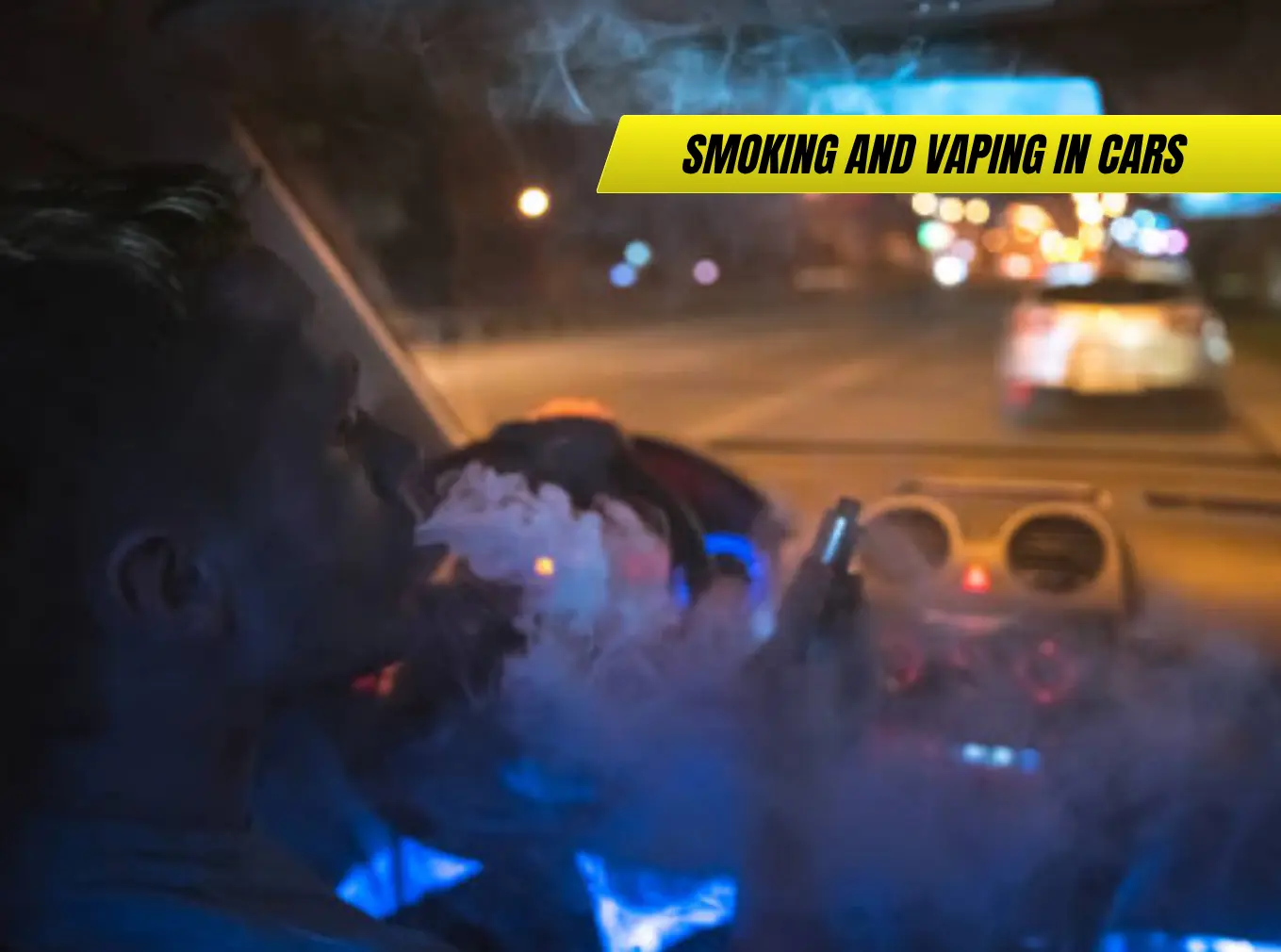
Discover the 2025 UK laws on smoking and vaping in cars. Learn when it’s illegal, who can be fined, and how these rules protect children and road safety.
Smoking or vaping behind the wheel may seem harmless, but in the UK it’s tightly regulated. Since 2015, smoking in a vehicle carrying passengers under 18 has been against the law, and in 2025 enforcement has tightened further under updated road safety and clean air measures.
This guide explains what’s legal, what’s not, how fines are applied, and what drivers need to know about the risks of smoking or vaping inside cars.
Key Points
- Smoking in a car with anyone under 18 present is illegal across the UK.
- The driver and smoker can each be fined £50.
- Vaping is not banned nationally, but subject to local restrictions and employer policies.
- Distraction or impaired visibility from smoke or vapour can lead to dangerous driving charges.
- Police can issue on-the-spot fines for careless driving linked to smoking or vaping.
The Law: Smoking in Cars with Minors
The Children and Families Act 2014 made it an offence to smoke in a private vehicle carrying a person under 18. The law applies across England, Wales, and Scotland, regardless of whether the windows are open or the sunroof is down.
The rule covers:
- Cigarettes
- Cigars
- Pipes
- Herbal smoking products
Both the driver and the person smoking can be fined £50 each.
Refusal to pay may escalate to court penalties of up to £200.
What About Vaping in the Car?
Vaping (using e-cigarettes) is not currently illegal in private vehicles, but restrictions are increasing.
Local authorities, fleets, and ride-hailing companies such as Uber and Addison Lee prohibit vaping inside vehicles for health and cleanliness reasons.
However, drivers should be cautious:
- Vapour clouds can obscure visibility.
- Police can issue a careless driving fine (£100) if vaping leads to loss of control or distraction.
- Under Section 3 of the Road Traffic Act 1988, obstructed vision can result in 3 penalty points and a higher fine if proven.
For related guidance, see UK Speed Camera Regulations 2025 – New Rules and What They Mean for Drivers.
Smoking in Work or Company Vehicles
Smoking is banned in all work vehicles used by more than one person, even if passengers aren’t present at the time.
That includes:
- Taxis and minicabs
- Delivery vans and shared fleet cars
- Company pool vehicles
Employers must display “No Smoking” signs and enforce compliance under the Health Act 2006.
Failure to do so can result in fines up to £2,500 for businesses.
Enforcement and Penalties
| Offence | Fine | Responsible Authority |
|---|---|---|
| Smoking in a car with a minor | £50 fixed penalty | Local police |
| Vaping causing careless driving | £100 + 3 points | Traffic police |
| Smoking in a company vehicle | £200–£2,500 | Local council / HSE |
| Obstructed visibility | £100–£1,000 | DVSA / court ruling |
Police can also issue warnings for “driving without proper control” if smoking causes a lapse in attention, such as dropping ash or lighting a cigarette while driving.
Health and Safety Implications
Smoking in confined spaces like cars significantly increases exposure to second-hand smoke.
Public Health England found that toxins remain in the air for up to 45 minutes after a cigarette is extinguished, even with windows open.
Children are particularly vulnerable to:
- Respiratory infections
- Asthma
- Sudden onset allergies
“No level of second-hand smoke is safe, especially in enclosed spaces,” states the NHS Smokefree campaign.
From a driver’s perspective, smoking also increases risk due to distraction and reduced reaction times.
Vaping and the Clean Air Agenda
In 2025, the UK government expanded the Clean Air (Vehicles) Review, exploring potential restrictions on vaping in public vehicles and taxis.
While private use remains legal, policy pressure is mounting for:
- Ban on vaping near children
- Stricter rules for professional drivers
- Clearer signage requirements
For more on evolving safety standards, see Spanner Warning Light – What It Means and What to Do (UK Drivers Guide 2025).
Expert Perspective
From my point of view, while the UK hasn’t banned vaping in private vehicles yet, common sense and safety should guide behaviour. Vapour clouds, like smoke, can limit visibility—especially at night or in cold conditions.
Drivers should treat vaping as a potential distraction, similar to eating or using a mobile phone while driving.
Fleet and taxi drivers should expect stricter enforcement under corporate duty-of-care policies in 2025 and beyond.
Practical Advice for Drivers
- Never smoke or vape in a car with minors or passengers sensitive to fumes.
- Keep your windows clear—vapour residue can reduce visibility.
- Avoid lighting or adjusting devices while the car is moving.
- Clean your interior regularly to remove smoke or vape residue.
- Use designated rest stops for smoking to stay compliant and safe.
For guidance on road behaviour and fines, you can also review UK Toll Roads and Charges 2025 – Complete Guide to Costs, Payment Methods, and Penalties.
FAQs
Is it illegal to smoke in your own car in the UK?
Only if a passenger under 18 is present. Otherwise, it’s legal but discouraged.
Can I vape while driving?
Yes, but if vapour affects visibility or concentration, police may fine you for careless driving.
Do taxis and work vans follow the same rule?
Yes. Smoking and vaping are banned in all company and shared vehicles.
Can the police stop me for vaping?
Yes, if they believe it impaired your control of the vehicle.
Are e-cigarettes considered tobacco under UK law?
No, but they’re regulated under separate nicotine and advertising laws.
Conclusion
In 2025, smoking and vaping laws in UK vehicles are clear: protect minors, avoid distractions, and prioritise safety.
In my experience, drivers who avoid smoking or vaping at the wheel stay safer, cleaner, and free from fines.
As public health policy evolves, expect tighter restrictions on in-car vaping, particularly for professionals and parents. Responsible habits remain the best safeguard against legal and health risks.





