
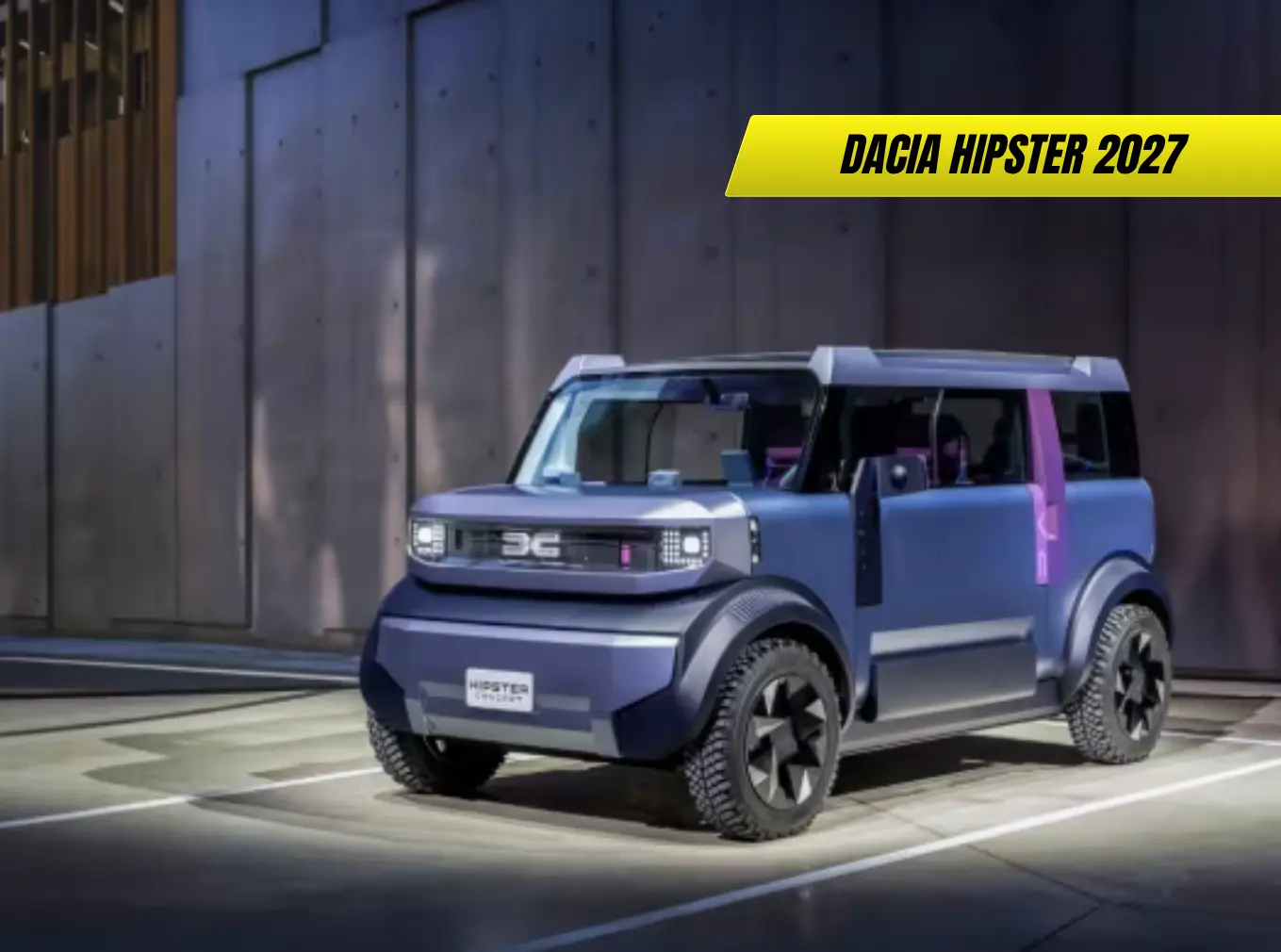
The Dacia Hipster 2027 is not your typical electric car — it’s a futuristic urban quadricycle designed for short commutes, low emissions, and unbeatable affordability. Expected to launch in Europe and the UK by late 2027 with a price tag of just £13,000, this compact EV aims to reinvent city driving much like the legendary Renault Twizy did a decade ago.
From my point of view, the Hipster represents a clever blend of minimalism and modern mobility, perfectly timed for the UK’s shift toward smaller, cleaner vehicles suited to urban environments and ULEZ zones.
Key Highlights
- Fully electric quadricycle positioned below the Dacia Spring
- Target range: 120–150 miles WLTP
- 20 kWh battery with rapid home charging
- Price expected around £13,000
- Two-seat configuration with modular storage options
- UK launch planned for 2027
Design: Simplicity Meets Style
The Hipster 2027 has been designed under Dacia’s new “Essential by Nature” philosophy — offering just what drivers need, and nothing they don’t.
The compact body measures around 2.9 metres in length, making it shorter than a Smart EQ Fortwo. The rugged styling features:
- Boxy panels and replaceable bumpers for low repair costs
- LED strip lighting front and rear for high visibility
- Plastic body cladding for durability
- 14-inch wheels designed for efficiency and city grip
Despite its minimalism, the Hipster looks trendy and robust, targeting young urbanites and second-car buyers who want something more characterful than a scooter or microcar.
“The Hipster is not a toy — it’s a new form of intelligent urban mobility,” said David Durand, Dacia’s Head of Design.
Powertrain and Range
The Hipster is powered by a compact electric motor producing between 20 and 30 hp, depending on the version. Its 20 kWh battery allows a range of up to 150 miles WLTP, more than enough for city use, where average daily driving in the UK rarely exceeds 25 miles.
| Variant | Power | Range | Battery | Top Speed |
|---|---|---|---|---|
| Urban | 20 hp | 120 mi | 15 kWh | 55 mph |
| Extended | 30 hp | 150 mi | 20 kWh | 60 mph |
The battery can be fully recharged in about 4 hours using a standard 7.4 kW wallbox, and Dacia will likely offer domestic charging bundles for UK customers, similar to those featured on the Toyota Corolla Cross 2025 guide.
From my point of view, the Hipster’s modest range and power make it perfectly suited to London, Birmingham, or Manchester — where compact EVs can park easily and avoid congestion charges.
Interior and Equipment
Inside, the Dacia Hipster is minimalist yet cleverly designed. Recycled materials, simple textures, and modular elements define its style.
- Digital display for essential driving information
- Smartphone dock replaces infotainment
- Optional Bluetooth speakers
- Washable floor mats and plastic surfaces for easy cleaning
- Detachable storage pods that clip into the dashboard
Everything feels robust, wipe-clean, and functional. There’s even an optional roof rack and rear cargo module, turning the Hipster into a micro-van for urban deliveries.
As with the Toyota Aygo X 2026 Hybrid, Dacia’s goal is to balance fun with practicality — and the Hipster does exactly that.
Safety and Structure
Although the Hipster falls into the L7e quadricycle category, Dacia is designing it to exceed the segment’s typical safety standards. It will include:
- A reinforced tubular frame for occupant protection
- Front and side airbags (rare for this category)
- Electronic Stability Control
- Regenerative braking and automatic hill-hold assist
The model will meet all UK electric vehicle safety regulations, including ULEZ compliance and zero road taxstatus, as outlined on gov.uk.
Pricing and Market Position
| Version | UK Price (est.) | Range | Target Audience |
|---|---|---|---|
| Urban | £12,995 | 120 mi | City commuters |
| Extended | £13,995 | 150 mi | Students, delivery fleets |
The Dacia Hipster will sit below the Dacia Spring in the brand’s line-up, offering an even more affordable option for eco-conscious drivers. It will qualify for zero congestion charge and low insurance categories, making it particularly attractive for city dwellers and young drivers.
UK Availability and Competitors
UK deliveries are expected in late 2027, with online reservations likely through dacia.co.uk.
| Model | Starting Price | Range | Category |
|---|---|---|---|
| Dacia Hipster | £13,000 | 150 mi | Quadricycle |
| Citroën Ami | £8,000 | 46 mi | Micro EV |
| Fiat Topolino | £10,500 | 47 mi | Micro EV |
| Renault Twizy (used) | £6,000–£8,000 | 60 mi | Quadricycle |
| Dacia Spring | £16,000 | 137 mi | City EV |
Compared with competitors, the Hipster stands out for its safety equipment, longer range, and UK durability — ideal for daily use beyond urban centres.
Running Costs
| Expense | Annual Estimate |
|---|---|
| Electricity | £100–£150 |
| Insurance | £200–£350 |
| Maintenance | £150–£250 |
| Tyres | £80–£120 |
| Total | £530–£870 |
Operating costs are less than half those of a small petrol car, thanks to low energy use and fewer mechanical parts.
In cities like London, Leeds, and Bristol, the Hipster will also benefit from ULEZ and congestion charge exemptions, helping drivers save hundreds annually — a point reinforced in AutoHit’s review of UK speed camera regulations 2025, which discusses broader shifts in urban policy for cleaner transport.
Sustainability
Built in Romania using renewable energy, the Hipster embodies Dacia’s push toward sustainable mobility:
- 75% recycled materials in the cabin
- Fully recyclable body panels
- Low-energy battery production
- Reduced CO₂ footprint in logistics and supply
From my experience with Dacia’s current range, these sustainability improvements feel genuine rather than tokenistic — practical solutions that reduce waste without increasing cost.
Practicality
The Hipster’s modular design makes it far more usable than most microcars.
- 200 litres of rear storage
- Quick-access side doors for tight parking
- Optional open-top version for southern markets
- Roof rack supports up to 40 kg
- Turning circle under 8 metres
For UK cities where space is at a premium, it’s the perfect answer to both congestion and parking stress.
FAQ
When will the Dacia Hipster 2027 be released in the UK?
By late 2027, with online reservations opening earlier that year.
How much will it cost?
Around £13,000, making it the cheapest new electric vehicle available in Britain.
Is it road legal everywhere in the UK?
Yes, it will meet full UK quadricycle regulations.
How long does it take to charge?
About four hours using a standard 7.4 kW home charger.
Will it be eligible for government grants?
Yes, it should qualify under the UK’s plug-in vehicle schemes.
Who are its main rivals?
Citroën Ami, Fiat Topolino, and the upcoming Renault Duo.
Conclusion
The Dacia Hipster 2027 redefines affordable electric mobility. With its quirky design, impressive range, and ultra-low price, it represents the next evolution in urban transport.
From my point of view, it’s the ideal choice for city dwellers who want a zero-emission, low-maintenance, and fun-to-drive vehicle that costs less than a used hatchback.
Dacia has already proven that simplicity sells, and with the Hipster, the brand takes that philosophy to its logical conclusion — an electric future that’s accessible, sustainable, and unmistakably smart for British roads.





