
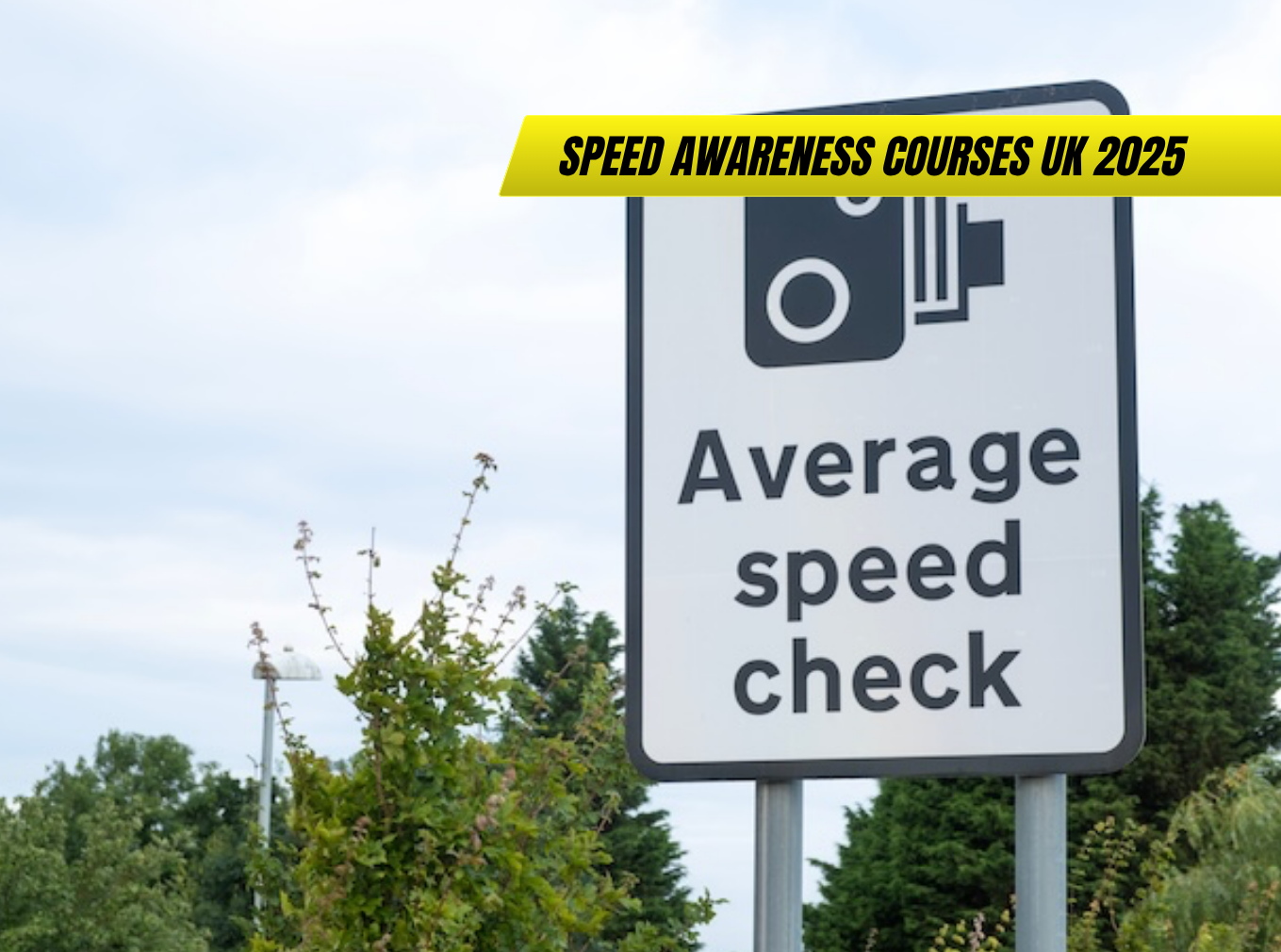
In 2025, speed awareness courses remain one of the most effective ways for UK drivers—especially new motorists—to avoid penalty points after a speeding offence. Run by police-approved training providers, these courses focus on improving judgement, hazard awareness, and speed control instead of issuing immediate fines or licence endorsements.
This guide explains who qualifies, how much it costs, what to expect, and how it affects your driving record and insurance.
Key Points
- Offered for minor speeding offences (within 10% + 9 mph of limit).
- Replaces fines and points for eligible first-time offenders.
- Course costs £90–£120, duration four hours.
- Attendance prevents licence points and avoids revocation under the New Drivers Act.
- Only one course allowed every three years.
Eligibility Criteria in 2025
You may be offered a speed awareness course if:
- The offence falls within 10% + 9 mph above the posted limit.
- e.g. 42 mph in a 30 mph zone or 79 mph on a 70 mph motorway.
- You haven’t attended another course in the previous three years.
- The incident didn’t involve an accident or dangerous driving.
- You hold a valid UK licence (provisional or full).
Offences outside these margins result in standard fixed penalties (3–6 points and fines).
Course Providers and Booking
Courses are coordinated through NDORS (National Driver Offender Retraining Scheme) and delivered by police-approved centres such as:
- AA DriveTech
- TTC Group
- UKROEd
- IAM RoadSmart
You can book online using the link in your Notice of Intended Prosecution (NIP) or via your local constabulary website.
Places fill quickly—booking within 14 days is recommended.
What the Course Covers
Speed awareness courses focus on behavioural change, not punishment. Topics include:
- Consequences of excess speed on reaction time and stopping distance.
- Common psychological traps such as “I’m only a little over.”
- How to use speed limit clues (signage, street lighting, road markings).
- Managing distractions and peer pressure.
- Understanding average-speed camera zones.
- Practical exercises on anticipation and braking distance.
Courses are interactive, using videos, simulations, and group discussions rather than tests.
Duration, Format, and Cost
| Course Type | Duration | Cost | Delivery |
|---|---|---|---|
| Classroom (in-person) | 4 hours | £100–£120 | Local training centre |
| Virtual (online) | 3–4 hours | £90–£110 | Secure video platform |
You must attend the full session, participate actively, and present photo ID.
Failure to attend or complete the session leads to reissue of the original fine and points.
Example: Eligibility by Speed Limit
| Limit (mph) | Course Offer Range (mph) | Fixed Penalty Range |
|---|---|---|
| 20 | 24–31 | 32+ |
| 30 | 35–42 | 43+ |
| 40 | 46–53 | 54+ |
| 50 | 57–64 | 65+ |
| 60 | 68–75 | 76+ |
| 70 | 79–86 | 87+ |
Figures based on 2025 NDORS guidance.
Why It Matters for New Drivers
Under the New Drivers Act, accumulating six penalty points in two years leads to automatic licence revocation.
Attending a speed awareness course avoids this outcome for minor first offences.
In my view, for young drivers it’s a vital opportunity to learn from a mistake without jeopardising their licence or insurance standing.
Insurance Impact
Insurers generally treat attendance positively compared to receiving points.
| Situation | Typical Premium Impact |
|---|---|
| Completed course, no points | Neutral or slight reduction |
| 3 points added | +18–25% premium increase |
| 6 points (revocation risk) | +50% or licence loss |
However, some providers may still ask if you’ve attended a course; honesty is required when asked directly.
What Happens After Completion
- Course provider notifies police electronically.
- No penalty points are added.
- No record appears on your DVLA licence.
- Data retained by NDORS for three years (for eligibility tracking only).
You may resume driving immediately after the course—no retest or paperwork needed.
Common Misconceptions
| Myth | Reality |
|---|---|
| “It’s a driving test.” | No. It’s an educational session. |
| “Insurers can see I took a course.” | Only if they ask directly. |
| “I can take one every year.” | No. Minimum 3-year gap. |
| “Online versions don’t count.” | They’re fully approved and equivalent. |
| “Late arrival is fine.” | No. Arrive on time or lose eligibility. |
How to Avoid Speeding in the Future
- Use cruise control or speed limiter functions on modern cars.
- Watch for street lighting (indicates 30 mph zones).
- Leave earlier to avoid rushing.
- Download traffic and speed alert apps for real-time updates.
- Learn about enforcement technology via UK Speed Camera Regulations 2025.
Real-World Example
A 20-year-old driver in Leeds was recorded at 39 mph in a 30 zone.
The police offered a speed awareness course instead of a fine and points.
After attending online, the driver avoided licence revocation, improved their awareness, and kept insurance costs stable.
Expert Opinion
From my point of view, the course system represents smart enforcement — it corrects behaviour rather than punishing early mistakes.
For new drivers, attending is an investment in safety and financial stability, avoiding years of high insurance premiums.
FAQs
Can I take a course instead of a fine every time?
No. You’re only eligible once every three years.
Will my employer or insurer know?
Only if they specifically request disclosure.
Does attending affect my record?
No points are recorded on your DVLA file.
What if I can’t attend on the scheduled date?
You must rearrange before the deadline; missing it cancels the offer.
Is the course mandatory?
No, but refusing it means accepting points and fines instead.
In 2025, speed awareness courses remain a fair and effective alternative for minor speeding offences.
In my experience, taking one early in your driving career sets the foundation for better control, safer driving, and a clean licence that stays free from costly mistakes.





