
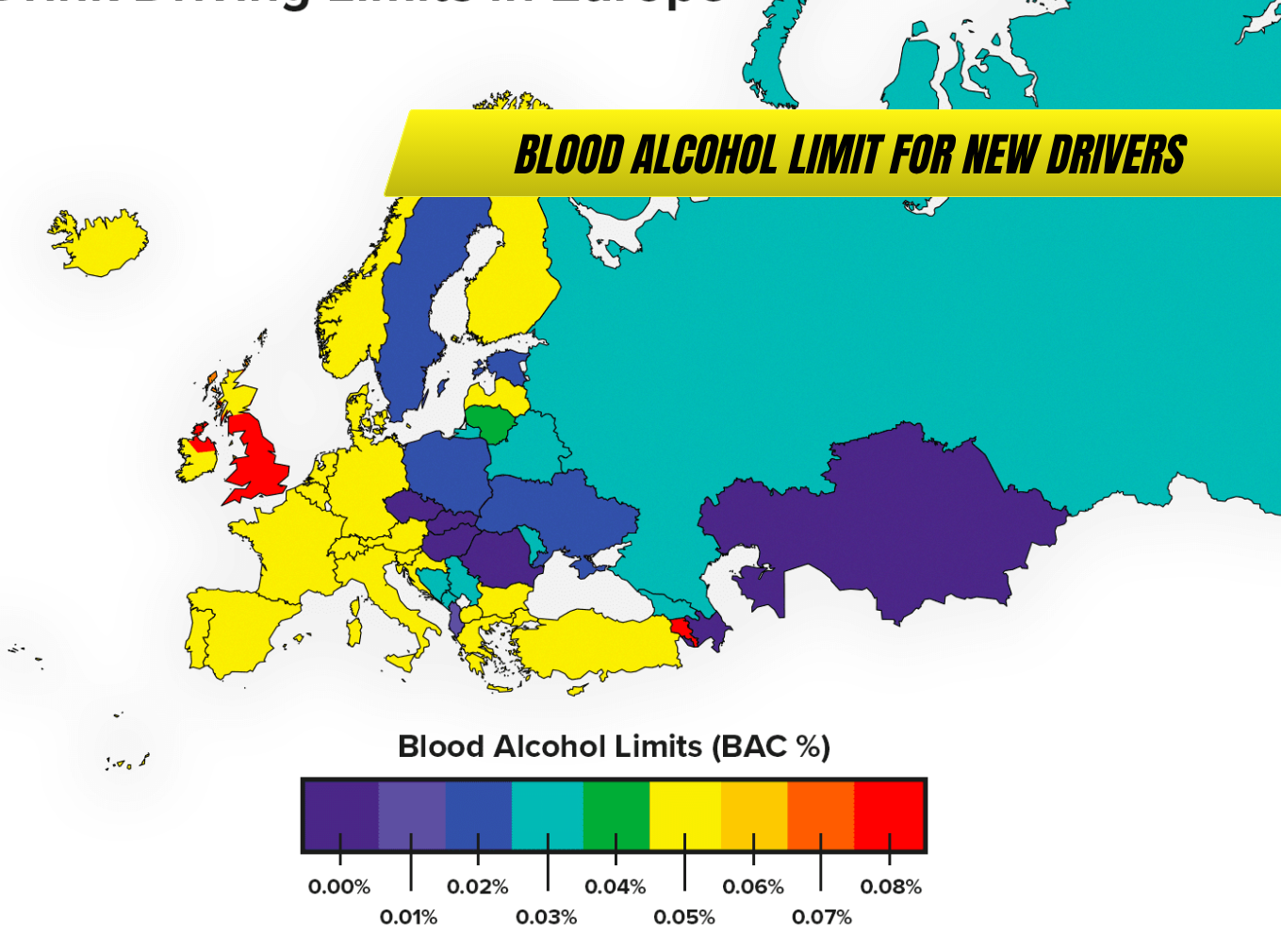
The UK’s drink-driving framework is among the toughest in Europe, and for new drivers, the tolerance is practically zero. Even a single drink can lead to instant licence revocation under the New Drivers Act (1995). In 2025, enforcement is stricter than ever thanks to digital roadside breath testing, automatic DVLA alerts, and record-sharing across regions.
Key Points
- Legal blood alcohol limit in England, Wales, Northern Ireland: 80 mg/100 ml.
- In Scotland: 50 mg/100 ml, effectively zero-tolerance.
- For new drivers, any measurable alcohol can trigger penalties.
- Convictions result in 6–11 points, £2,500 fine, and licence loss.
- New digital enforcement connects police breath tests directly to the DVLA.
Legal Blood Alcohol Limits by Region
| Region | Blood Alcohol Limit | Breath Limit | Urine Limit | Notes |
| England / Wales | 80 mg/100 ml | 35 µg/100 ml | 107 mg/100 ml | Applies since 1967 Road Safety Act |
| Scotland | 50 mg/100 ml | 22 µg/100 ml | 67 mg/100 ml | Lower limit since 2014 |
| Northern Ireland | 80 mg/100 ml | 35 µg/100 ml | 107 mg/100 ml | Planned reduction to 50 mg by 2026 |
In real terms, most drivers exceed the limit after one pint of beer or a small glass of wine.
Because alcohol affects everyone differently, enforcement focuses on measurable breath readings, not subjective impairment.
New Drivers Act – The “Six-Point Rule”
Under the New Drivers Act (1995), your licence is revoked if you accumulate six or more penalty points within two years of passing your test.
A single drink-driving offence carries up to 11 points, so new drivers automatically lose their licence.
Steps after revocation:
- Reapply for a provisional licence.
- Retake both theory and practical tests.
- Pay fines and administrative costs.
This strict system aims to deter early-career drivers from taking risks behind the wheel.
Penalties for Exceeding the Limit
| Offence | Penalty | Additional Consequences |
| Driving or attempting to drive over the limit | Up to £2,500 fine, 6 months’ imprisonment, 12–36-month ban | Licence revoked if held <2 years |
| Refusing a breath test | £1,000 fine, 12-month ban | Same legal effect as conviction |
| Causing death while over the limit | Up to life imprisonment | Unlimited fine + extended ban |
| In charge of a vehicle while over the limit | £2,500 fine | 10 points or disqualification |
Drivers also face insurance surcharges for up to 5 years and may require specialist “DR10” policies costing twice the normal rate.
Digital Enforcement in 2025
Since 2024, UK police forces have rolled out connected digital breathalysers linked to the DVLA and Motor Insurers’ Bureau databases.
These devices:
- Log tests automatically in the driver’s record.
- Prevent duplicate samples or disputes.
- Allow instant roadside disqualification for extreme readings.
The system supports the government’s Road Safety 2030 Vision, aiming to cut drink-related deaths by 50%.
The Morning-After Risk
Even after sleeping, residual alcohol can still exceed the limit.
The human body eliminates 1 unit per hour, but this varies with weight, hydration, and food intake.
| Drinks Consumed | Approximate Hours to Clear | Legal Risk in Morning |
| 2 pints of beer | 4–5 hours | Low |
| 4 pints of beer | 8–9 hours | High |
| Bottle of wine | 10–12 hours | Very high |
In short, you can fail a breath test the morning after a night out.
Preventive Measures
- Do not drive within 12 hours of heavy drinking.
- Use personal digital breath testers (AlcoSense, Dräger).
- Book public transport or rideshare when socialising.
- Nominate a designated driver in advance.
Drivers caught with alcohol traces twice within two years may also face medical re-examination before licence reinstatement.
For details on cumulative penalty points, check UK Driving Licence Points – What Happens at 12 Points.
Insurance and Employment Impact
| Category | Impact | Duration |
| Standard insurance | +80–120% premium | 5 years |
| Company car eligibility | Often suspended | Until licence reinstated |
| Professional licences (HGV, taxi, courier) | Immediate withdrawal | DVLA medical review required |
A conviction also appears on the Enhanced DBS check, affecting public-service and teaching careers.
Scotland’s Stricter Standard
Scotland’s 50 mg limit effectively means no alcohol before driving.
Average-size adults can breach the limit with half a pint of beer or one small glass of wine.
Since its introduction, alcohol-related road deaths have fallen by 15%, and similar reductions are expected if Northern Ireland adopts the same threshold by 2026.
My Point of View
From my point of view, the UK’s strict stance is entirely justified.
Too many novice drivers underestimate how small an amount of alcohol can affect coordination and reaction times.
The best rule remains absolute: if you drink, don’t drive—at all. It’s not only safer but far simpler than calculating limits you can’t accurately measure.
FAQs
Can new drivers drink at all before driving?
Technically yes, but any measurable alcohol risks disqualification under the New Drivers Act.
What’s the difference between England and Scotland?
Scotland’s limit is lower at 50 mg/100 ml—essentially zero tolerance.
How long does a drink-driving offence stay on record?
11 years for serious convictions (DR10, DR80).
Will my insurance go up after a drink-driving ban?
Yes, typically by 80–120% for five years.
Can I drive the morning after a party?
Only once you’re sure all alcohol is metabolised—usually 8–12 hours after moderate drinking.
In 2025, there’s no room for error: for new UK drivers, the safe alcohol limit is zero.
In my experience, understanding that early means avoiding not just fines—but potentially life-changing consequences.





