
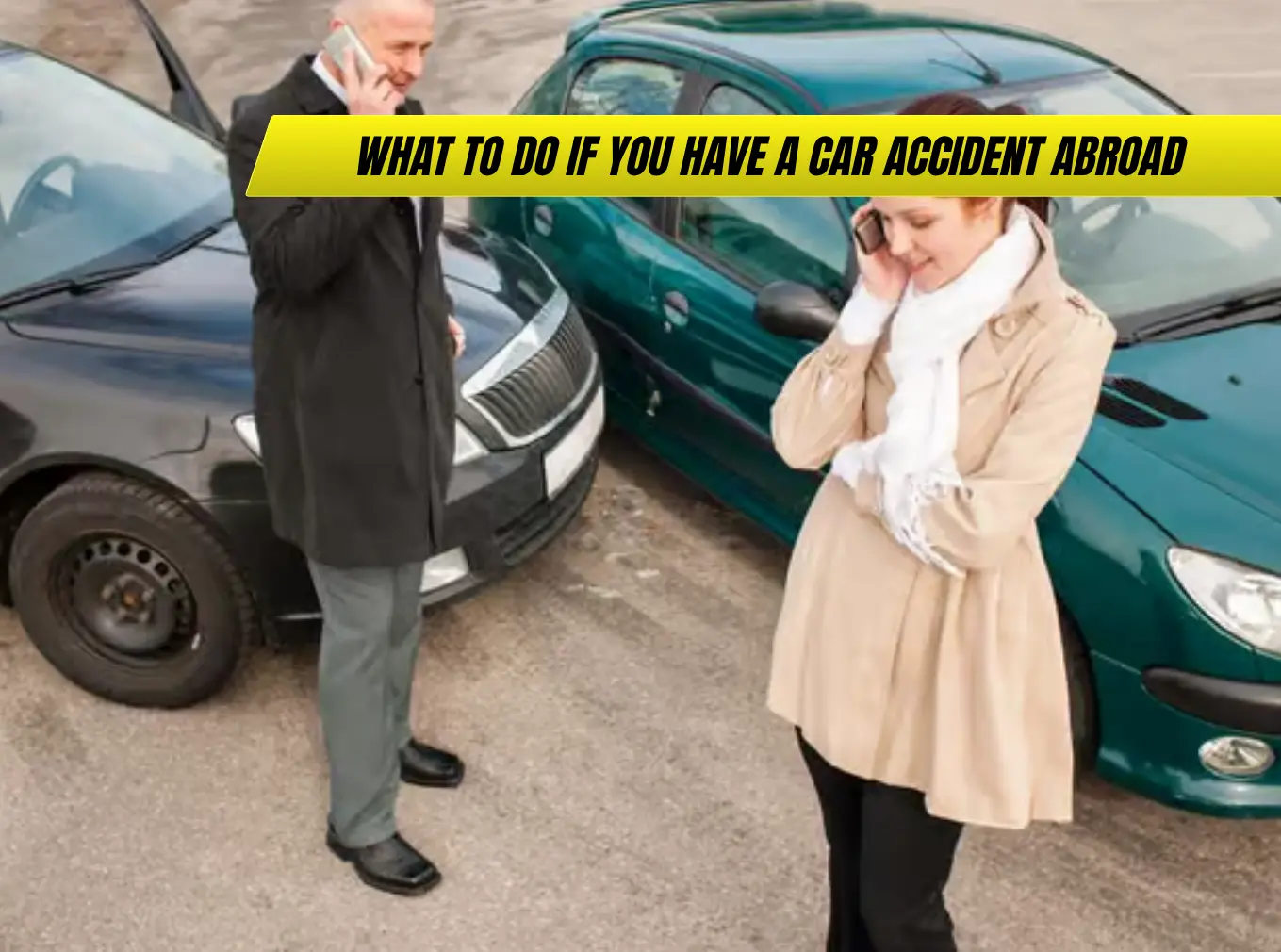
Driving abroad can turn from adventure to nightmare in seconds if you’re involved in a crash. In 2025, as more Britons take road trips across Europe, it’s essential to know the right steps to protect your health, your licence, and your insurance. Different countries follow different legal procedures, but one rule applies everywhere: don’t panic — act methodically.
Key Points
- Call emergency services first: 112 works EU-wide.
- Collect details of drivers, witnesses, and vehicles.
- Complete a European Accident Statement (EAS) form if applicable.
- Notify your UK insurer within 24 hours.
- For serious accidents, contact the British embassy or consulate.
Immediate Actions at the Scene
- Check for injuries.
Prioritise medical help. Dial 112 (EU), 911 (US), or 999 (UK territory).
Move to safety if the car is blocking traffic or leaking fluids. - Do not admit liability.
Even a polite apology can be interpreted as accepting fault. Simply exchange information. - Call the local police.
In France, Spain, Germany, and Italy, police attendance is mandatory for injury or significant damage. - Take photos and videos.
Include all vehicles, road signs, and number plates. Capture any skid marks or debris. - Complete the European Accident Statement (EAS) — most insurers recognise it across the EU. Each driver fills their side, signs, and keeps a copy.
Essential Details to Exchange
| Information | What to Note |
| Driver name and address | Match with passport or ID |
| Vehicle registration | Including trailer if attached |
| Insurance company and policy number | On green card or EAS form |
| Phone and email contact | Required for insurer follow-up |
| Police report number | Mandatory for claim submission |
If the other driver refuses to cooperate, call local police immediately and record their plate number.
Contacting Your Insurer
You must notify your UK insurer within 24 hours, even if you’re not at fault.
Provide:
- Date, time, and country of the accident
- Police report reference
- Photos and EAS form
- Any medical or towing invoices
Many insurers, including Direct Line, LV=, and Aviva, operate 24/7 international helplines.
Failure to report promptly may void your claim.
Using the Green Card System
The Green Card confirms you have valid UK insurance when driving in Europe.
As of 2025, it’s no longer mandatory in EU countries, but still required in:
- Albania
- Turkey
- Serbia
- Ukraine
- Montenegro
If you plan to drive outside the EU, request a Green Card from your insurer at least two weeks before departure.
Legal and Financial Responsibility
Each country applies its own traffic laws. UK drivers should be aware:
- On-the-spot fines are legal in France, Spain, and Italy.
- Police may impound your vehicle until payment.
- You may be required to sign statements or attend local hearings.
If another driver causes the crash, your insurer or the Motor Insurers’ Bureau (MIB) can pursue compensation under EU reciprocal arrangements.
Handling Injuries and Medical Costs
If you hold a UK Global Health Insurance Card (GHIC), you’re entitled to emergency treatment in the EU on the same terms as residents.
However, it doesn’t cover:
- Private hospitals
- Medical repatriation
- Damage to your vehicle
For full protection, always carry travel insurance with repatriation cover.
Car Recovery and Repairs
| Scenario | What to Do | Who Pays |
| Minor damage, car drivable | Continue journey carefully | You (may claim later) |
| Car undriveable | Call insurer’s European breakdown partner | Covered under policy |
| Vehicle written off | Leave it with local authority or recovery yard | Insurer arranges scrap/export |
Providers like the AA and RAC offer optional European Breakdown Cover including recovery to the UK if repairs take more than 48 hours.
Contacting the British Embassy
If you’re arrested, injured, or your vehicle is impounded, contact the nearest British embassy or consulate.
They can:
- Provide translators and legal contacts
- Notify family members
- Issue emergency travel documents
They cannot, however, pay fines or act as legal representation.
Find contact details at GOV.UK – Find a British Embassy.
Documentation to Keep
Keep a dedicated folder (digital or paper) with:
- Driving licence and International Driving Permit (if required)
- V5C logbook or ownership proof
- Insurance certificate or Green Card
- European Accident Statement (EAS) form
- GHIC card and travel insurance policy
In my experience, being organised saves hours of confusion when dealing with foreign authorities.
Claiming Compensation in the UK
If hit by a foreign driver while abroad, you can claim via:
- Your insurer (if comprehensive)
- The MIB International Claims Department
(for EU and EEA countries with agreements)
You’ll need:
- Police report and EAS form
- Repair or replacement invoices
- Proof of no-fault (photos, witness details)
Claims may take several months, but the process is well-established across Europe.
My Point of View
From my point of view, British drivers underestimate how quickly a simple collision abroad can turn bureaucratic.
Preparation — documents, insurance, and composure — is the difference between a quick claim and weeks of chaos.
If you drive regularly in Europe, build a digital folder with all key documents in English and local language versions.
FAQs
Do I need a European Accident Statement?
Yes, it’s recognised by most EU insurers and speeds up claims.
Will my UK insurance cover me fully abroad?
Most policies offer third-party cover by default; check before travelling for comprehensive protection.
Can I be fined on the spot by police?
Yes. Many countries allow immediate payment of traffic fines.
What happens if my car is written off abroad?
Your insurer arranges export or disposal through a local partner.
Can I drive while waiting for insurance repairs?
Only if the vehicle remains roadworthy and meets local legal requirements.
Driving abroad in 2025 is easier than ever — but also less forgiving if you’re unprepared.
In my experience, treating every trip like a business journey — documents ready, phone charged, coverage confirmed — turns a potential disaster into a manageable inconvenience.





