
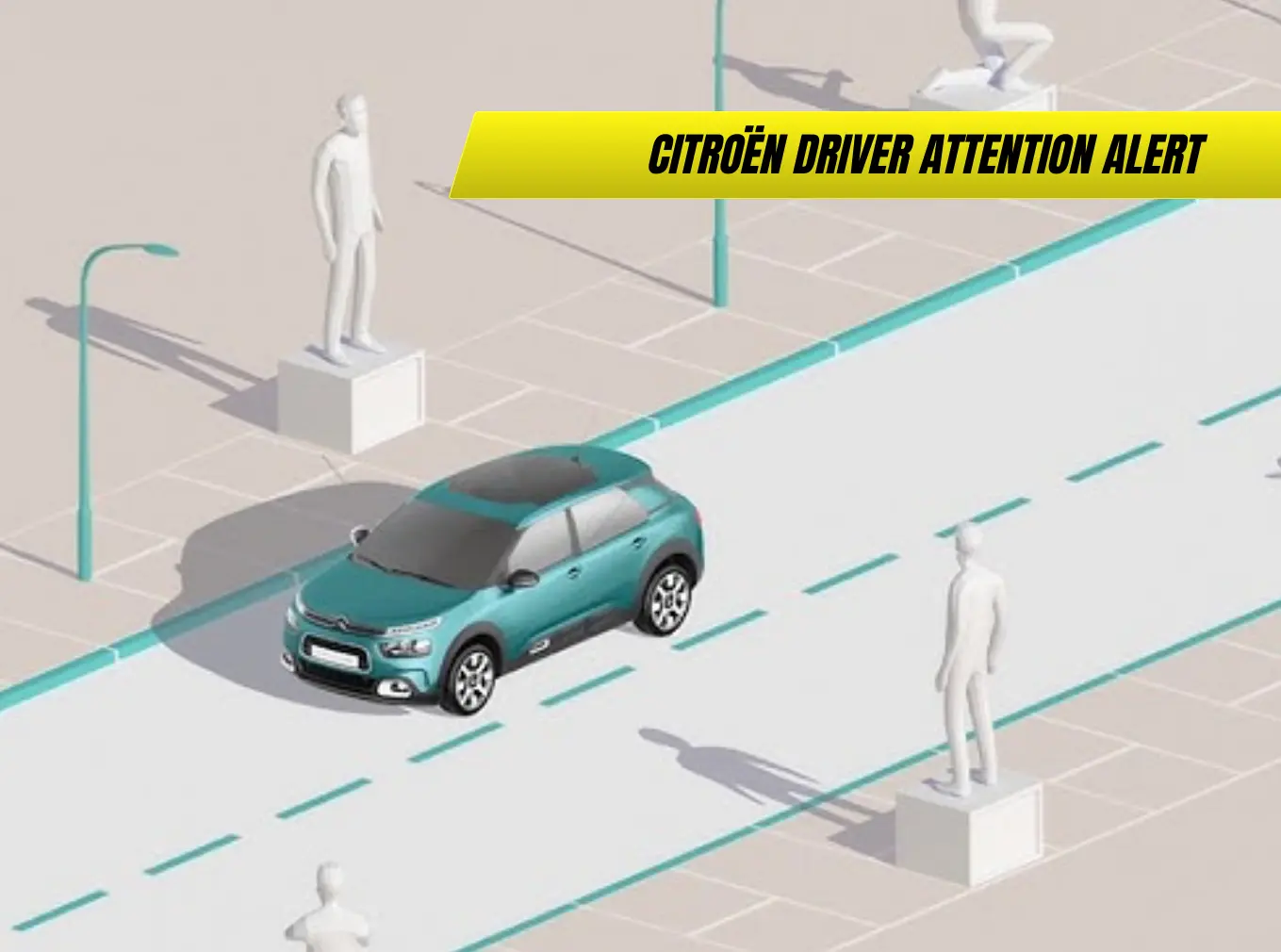
Driver Attention Alert is Citroën’s fatigue-monitoring system designed to reduce accidents caused by drowsiness or distraction. With long commutes, busy motorways and night-time driving common across the UK, this system helps identify early signs of reduced driver focus. This guide explains how the system works, when it warns, its limitations and how to use it effectively.
Key Points
- Monitors driving behaviour to detect signs of fatigue.
- Issues visual and audible alerts when attention drops.
- Works automatically at medium and high speeds.
- Uses steering inputs, lane position and driving patterns to assess fatigue.
- Does not replace rest breaks — only supports safer driving.
How Driver Attention Alert Works
The system continuously analyses:
- Steering wheel movements
- Lane positioning
- Speed consistency
- Micro-corrections made by the driver
- Time spent driving without breaks
Citroën models equipped with Advanced Driver Attention Alert also use a camera to assess head position, direction of gaze and blink rate.
If unusual or inconsistent behaviour is detected, the system warns the driver to take a break.
Types of Warnings
Citroën vehicles can deliver several alert types:
- Audible chime signalling reduced attention
- Visual message such as “Driver Attention Alert: Take a Break”
- Icon displayed on the instrument cluster
- Stronger warnings if behaviour continues
Alerts typically appear after around 2 hours of continuous driving, sooner if the system identifies erratic behaviour.
When the System Activates
Driver Attention Alert is most active when:
- Speed exceeds 40–45 mph
- Driving is continuous without breaks
- Steering behaviour becomes inconsistent
- Lane positioning drifts frequently
It becomes less accurate in these conditions:
- Strong crosswinds
- Damaged or unclear road markings
- Heavy rain or fog reducing camera accuracy
- Rough rural roads requiring constant corrections
Benefits for UK Drivers
The system is particularly helpful in the UK due to:
- Long motorway distances
- Frequent night-time travel
- High rates of fatigue-related incidents
- Busy commuting corridors such as the M1, M4, M25 and M6
It forms a core part of Citroën’s safety package alongside Lane Keeping Assist and Speed Limit Recognition.
Using the System Correctly
To maximise effectiveness:
- Keep the windscreen clean (especially around the camera zone)
- Ensure lane-keeping systems are active
- Take breaks at least every 2 hours
- Avoid relying on the system to stay awake — it is a warning tool, not a substitute for rest
Troubleshooting Driver Attention Alert
| Problem | Possible Cause | Solution |
|---|---|---|
| Frequent false warnings | Rough roads or strong winds | Reduce sensitivity if available |
| No warnings on long trips | System may be switched off | Check vehicle settings |
| Alert appears immediately | Erratic steering or distraction | Take a short break |
| Warning disappears suddenly | Lane markings lost or low visibility | Clean windscreen, improve visibility |
If the system becomes unavailable after a windscreen replacement, camera calibration is required.
Maintenance Tips
- Replace worn wipers to maintain clear camera visibility.
- Avoid mounting accessories near the camera or sensor area.
- Keep tyre pressure correct to avoid wandering at high speeds.
- Update vehicle software during services for optimal ADAS performance.
For further maintenance support, see the guide to common dashboard warnings such as the spanner symbol:
My Point of View
From my point of view, Driver Attention Alert is especially valuable during monotonous motorway drives where fatigue builds without warning. The system doesn’t replace breaks, but it provides an important safeguard — a nudge that often comes exactly when needed.
FAQs
Does the system use a camera or steering detection?
Basic versions use steering analysis; advanced versions use cameras as well.
Does it detect if I fall asleep?
Not directly, but it identifies patterns indicating drowsiness.
Is it active in city driving?
It mainly works at higher speeds, typically over 40 mph.
Can I turn it off?
Yes, but it’s recommended to keep it on for motorway travel.
Does it work at night?
Yes, although advanced camera systems rely on adequate lighting.
Conclusion
Driver Attention Alert adds an extra layer of safety for UK drivers, especially on long or late-night journeys. By monitoring steering patterns and alerting drivers before fatigue becomes dangerous, it reduces the risk of drifting, delayed reactions and serious accidents. In my experience, combining this system with proper rest and good driving habits delivers the best safety results.





