
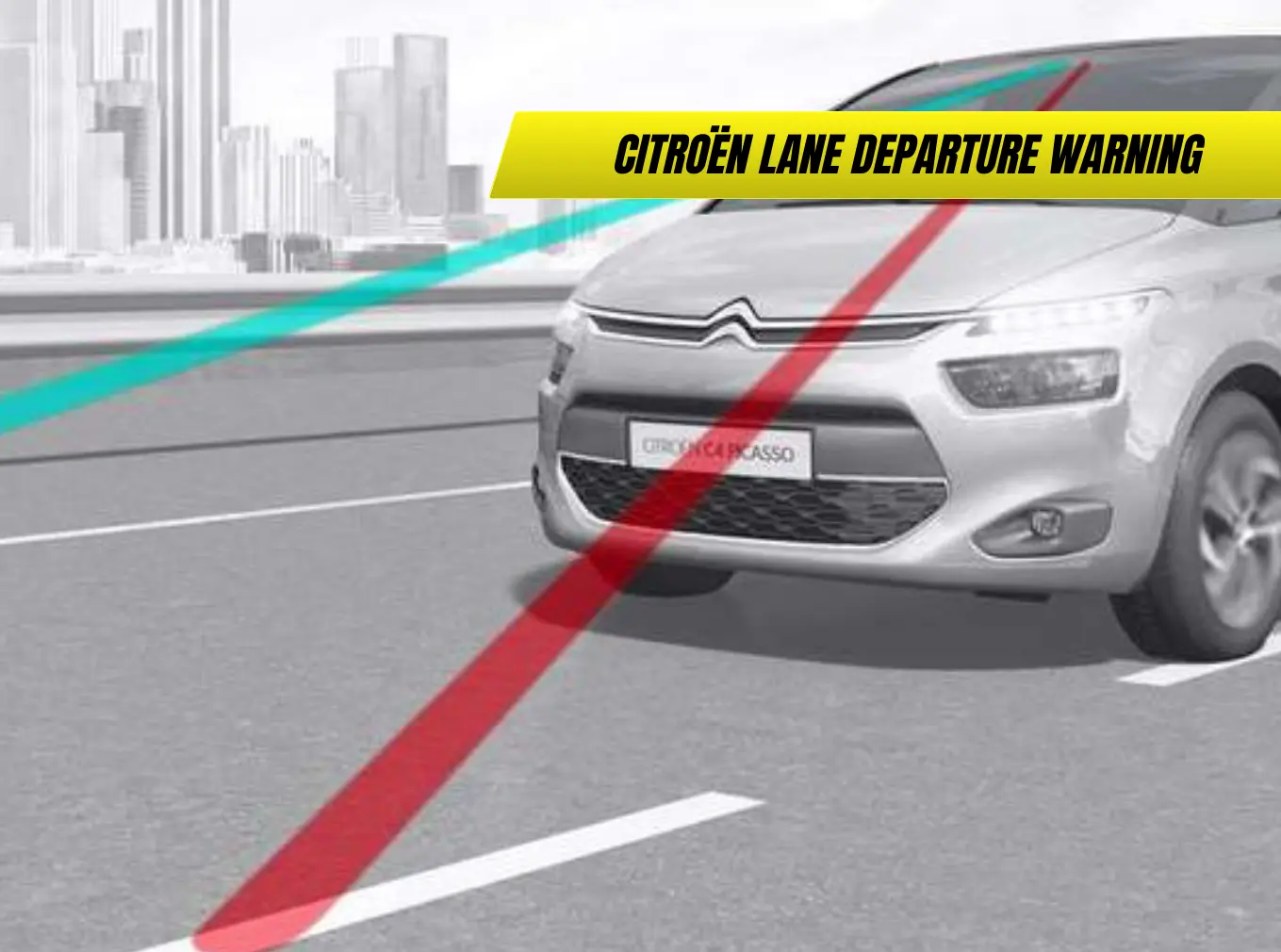
Lane Departure Warning (LDW) is one of Citroën’s key safety systems designed to reduce the risk of accidents caused by drifting out of your lane. With long motorway journeys, fatigue, poor visibility and distraction being common factors on UK roads, LDW provides a crucial early alert to help drivers stay centred and avoid collisions.
Key Points
- Detects lane markings using a windscreen-mounted camera.
- Warns the driver when drifting unintentionally.
- Helps prevent accidents caused by fatigue or distraction.
- Works best at speeds above 40 mph.
- Complements Lane Keeping Assist on newer models.
How Lane Departure Warning Works
A camera positioned behind the windscreen reads:
- Lane markings
- Road edges
- Contrasts between tarmac and paint
If the vehicle begins to drift out of the lane without the indicator being used, the system triggers:
- Audible warnings
- Steering wheel vibrations
- Visual alerts on the instrument cluster
These alerts prompt the driver to steer back into position.
When the System Activates
LDW typically operates when:
- Speed is above approximately 40 mph
- Lane markings are visible
- Indicators are not activated
It will not intervene if the driver clearly signals lane changes.
Lane Departure Warning vs Lane Keeping Assist
| Feature | Lane Departure Warning | Lane Keeping Assist |
|---|---|---|
| Warns the driver | Yes | Yes |
| Actively steers the car | No | Yes |
| Works at lower speeds | Limited | Sometimes |
| Aims to prevent drifting | Yes | Yes |
| Autonomous driving | No | No |
LDW is the passive component, while Lane Keeping Assist is the active corrective function.
Benefits for UK Drivers
LDW is especially useful on:
- Motorways (M1, M4, M6, M25)
- Long-distance A-roads
- Night driving
- Rural routes with fewer visual cues
- Heavy rain or mild fog (if lane markings are still visible)
The system helps reduce common collision types such as sideswipes and road departures.
Limitations
Lane detection becomes less reliable when:
- Lane markings are faded
- Snow, mud or standing water obscures lines
- Strong sun glare affects camera visibility
- Roadworks use temporary markings
- The windscreen is dirty or damaged
Drivers must remain alert and cannot rely solely on the system.
Maintenance and Calibration
To keep LDW effective:
- Clean the windscreen regularly
- Replace worn wipers
- Avoid placing stickers or dashcams near the camera
- Ensure windscreen replacements include proper calibration
- Keep tyres properly inflated for stable handling
A misaligned camera can cause false warnings or failure to detect lanes.
Troubleshooting
| Issue | Likely Cause | Fix |
|---|---|---|
| Frequent false alerts | Poor road markings | Reduce sensitivity if possible |
| No alerts | System off or lane not detected | Check settings / clean windscreen |
| Warning light on | Camera fault | Dealer calibration needed |
| Lane lines disappear | Weather conditions | Safe to rely on manual driving only |
If LDW deactivates temporarily, the system usually displays a message explaining why.
Tips for Best Use
- Keep hands firmly on the wheel at all times.
- Use indicators consistently to prevent unnecessary alerts.
- Combine LDW with Lane Keeping Assist for stronger protection.
- Reduce speed in poor conditions even if the system is active.
For additional guidance on interpreting dashboard alerts, see:
My Point of View
From my point of view, Lane Departure Warning is one of the most underrated safety features. It doesn’t intervene, but it provides a vital second layer of awareness that helps prevent fatigue-related incidents on UK motorways. Most drivers only appreciate it after a long night journey.
FAQs
Does Lane Departure Warning steer the car?
No, it only warns you. Steering is handled by Lane Keeping Assist.
Does it work in heavy rain?
Only if lane markings remain visible; otherwise accuracy drops.
Can I turn it off?
Yes, via the vehicle’s safety menu, though keeping it active is recommended.
Does LDW work in city traffic?
Often no, because markings are inconsistent and speeds are lower.
Do I need calibration after windscreen replacement?
Yes. The camera must be aligned accurately.
Conclusion
Citroën’s Lane Departure Warning system enhances driver awareness by detecting unintentional lane drift and issuing timely alerts. On UK highways, where fatigue and distraction are common, LDW provides an important safety boost. In my experience, it’s a feature that significantly improves long-distance driving confidence when maintained properly.





