
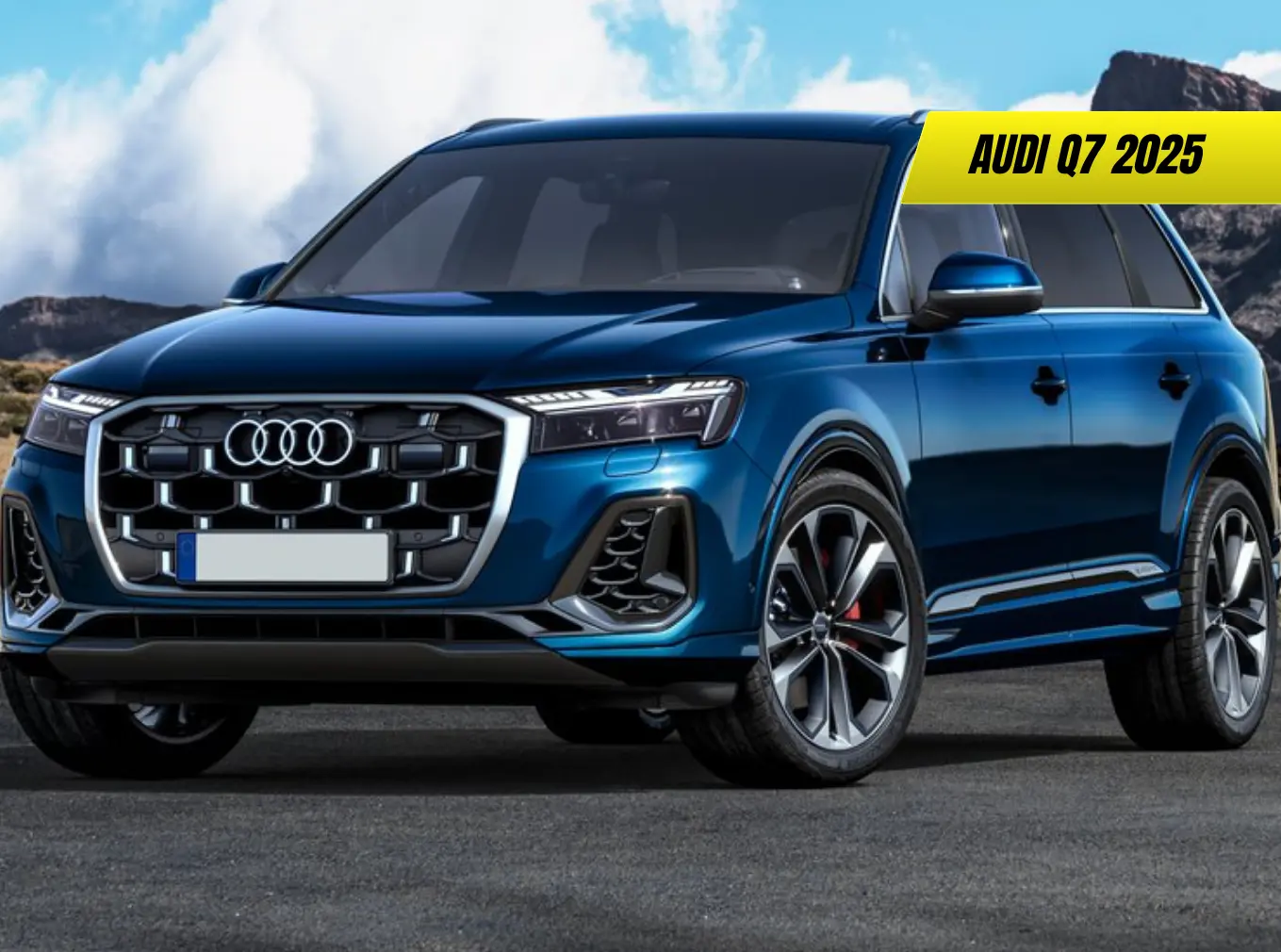
Audi Q7 2025 UK review: flagship seven‑seat SUV with hybrid powertrains, luxury interior, pricing, towing capability and family practicality. The Audi Q7 2025 continues as Audi’s flagship seven‑seat SUV, blending executive luxury with genuine family versatility in the UK market. Available with mild‑hybrid petrol and diesel powertrains, it prioritises refinement, technology and space over outright sportiness, targeting buyers who need to transport seven passengers in comfort whilst maintaining premium brand prestige. Pricing starts from around £68,000 for diesel models and climbs to £85,000+ for higher petrol specifications.
Powertrain range and performance
The Q7 2025 offers two mild‑hybrid powertrains optimised for efficiency and refinement. The entry 3.0 TDI diesel produces 282 hp and 460 lb‑ft of torque, paired with an 8‑speed automatic transmission and quattro all‑wheel drive. Petrol buyers choose the 3.0 TFSI V6 with 335 hp and a 48‑volt mild‑hybrid system that improves start‑stop functionality and enables coasting fuel savings.
Both engines deliver smooth acceleration suitable for motorway overtaking, with the diesel claiming 0–62 mph in 6.1 seconds and the petrol in 5.9 seconds. Top speeds are electronically limited to 155 mph across the range. In my experience, the diesel’s torque advantage makes it the better choice for UK buyers regularly towing trailers or carrying heavy loads, while the petrol suits those prioritising refinement over absolute economy.
Key technical specifications
| Specification | 3.0 TDI V6 | 3.0 TFSI V6 |
|---|---|---|
| Engine | Diesel MHEV | Petrol MHEV |
| Power | 282 hp | 335 hp |
| Torque | 460 lb‑ft | 369 lb‑ft |
| 0–62 mph | 6.1 s | 5.9 s |
| Transmission | 8‑speed auto | 8‑speed auto |
| Drivetrain | Quattro AWD | Quattro AWD |
| Towing capacity (braked) | 7,700 lbs | 7,700 lbs |
| Fuel economy (WLTP) | 37 mpg | 28 mpg |
Seven‑seat practicality and dimensions
Measuring 5,052 mm long, 1,973 mm wide and 1,741 mm tall, the Q7 2025 is among the largest SUVs in Audi’s line‑up, offering genuine seven‑seat accommodation for adults. The 2,999 mm wheelbase creates generous second‑row space with sliding and reclining seatbacks, while the third row folds flat into the floor to maximise flexibility. Rear passengers get USB ports, air vents and climate controls, making the Q7 genuinely usable for family trips with children or occasional extra adults.
Boot capacity varies from 295 litres with all seven seats up, to 885 litres with the third row folded, and 2,050 litres with both rear rows stowed. The wide opening and low loading lip simplify loading heavy items, while power‑operated tailgate and optional air suspension make access easy even when laden. For UK buyers needing maximum versatility, the Q7 edges out smaller rivals like the Nissan X‑Trail, though it demands more parking space.
Luxury interior and technology
The Q7 cabin sets premium benchmarks with high‑quality materials, precise assembly and intuitive controls. The Virtual Cockpit Plus 12.3‑inch digital instrument cluster offers highly customisable displays, while the central MMI touchscreen spans 10.1 inches with haptic feedback. Physical rotary controllers for volume and climate settings maintain usability during dynamic driving.
Ambient lighting in multiple colours creates a sophisticated atmosphere, while optional massaging seats and four‑zone climate control cater to executive needs. Rear passengers benefit from fold‑out tables, wireless charging and individual screens in higher trims. The optional Bang & Olufsen sound system delivers concert‑hall audio quality for family entertainment.
Chassis dynamics and UK road manners
The Q7 2025 employs a five‑link front suspension and multi‑link rear setup tuned for comfort and stability. Optional adaptive air suspension with continuously variable dampers adjusts ride height and firmness automatically, raising 60 mm for off‑road use or lowering 55 mm at motorway speeds to reduce wind resistance.
Quattro all‑wheel drive with torque vectoring provides excellent grip in British weather, while the 48‑volt system smooths engine stop‑start transitions. In my experience, the Q7 feels composed on pothole‑ridden A‑roads and stable at motorway speeds, though its 2.3‑tonne weight is noticeable during spirited driving. For towing, both engines handle the 3,500 kg braked capacity effortlessly, making the Q7 popular with caravanners and boat owners.
Safety and driver assistance
Audi’s comprehensive safety suite includes adaptive cruise control with Traffic Jam Assist, active lane‑keeping, predictive emergency braking with cyclist detection, and 360‑degree cameras. Night Vision Assist uses thermal imaging to detect pedestrians and animals up to 300 metres ahead, while junction assist warns of cross traffic at intersections.
The optional Park Assist Plus manoeuvres the Q7 into parallel or perpendicular spaces automatically, reducing stress in tight UK car parks. For drivers managing family trips, the speed limit recognition and fatigue detection systems help maintain concentration on long journeys. Staying aware of UK driving rules, including those covered in guides to UK driving licence points, remains essential.
UK pricing and trim levels
The Q7 2025 launches from £68,000 for the 3.0 TDI Sport, rising to £85,000+ for higher petrol specifications with extensive options. Four trim levels provide clear progression:
Q7 trim comparison
| Trim | Starting Price | Key features |
|---|---|---|
| Sport | £68,000 | LED Matrix lights, Virtual Cockpit, adaptive cruise |
| S line | £74,000 | 21‑inch wheels, sports suspension, S line styling |
| S line Plus | £80,000 | Panoramic roof, Bang & Olufsen audio, massaging seats |
| Vorsprung | £88,000+ | Night Vision, air suspension, head‑up display |
Company car drivers benefit from diesel’s superior economy and lower CO2, while petrol versions appeal to private buyers prioritising refinement. Servicing follows Audi’s fixed‑price plans, with three‑year/60,000‑mile warranty standard.
Running costs and ownership
The 3.0 TDI achieves around 37 mpg in real‑world UK testing, while the TFSI settles at 28 mpg. Diesel’s lower road tax and better economy make it the fleet favourite, though both benefit from mild‑hybrid efficiency. Insurance groups sit around 45–50, reflecting the Q7’s size and power.
The 3,500 kg towing capacity, combined with advanced trailer assist, makes the Q7 popular for caravans and horseboxes. Fuel costs average 12–15p per mile depending on engine choice and driving style.
How it compares to rivals
The Q7 faces competition from the BMW X7, Mercedes GLS and Land Rover Discovery. The BMW offers sportier dynamics but less third‑row space, while the GLS provides more outright luxury at higher cost. The Discovery excels off‑road but trails in refinement. Against smaller seven‑seaters like the Nissan X‑Trail, the Q7 counters with superior materials and technology.
From my assessment, the Q7 2025 suits UK buyers who need true seven‑seat capability with executive refinement rather than hardcore off‑road ability or outright value.
Frequently asked questions
Which Q7 engine is best for UK motorway driving?
The 3.0 TDI diesel offers superior torque for effortless overtaking and towing, plus better fuel economy than the petrol. Its refinement matches the TFSI while delivering lower running costs for high‑mileage drivers.
Is the Q7’s third row suitable for adults?
The third row works for children and smaller adults on short trips, but lacks the legroom of larger rivals like the BMW X7. It is best as an occasional extra seating option rather than daily use for six adults.
How much can the Q7 tow?
Both engines handle up to 3,500 kg braked and 750 kg unbraked, with advanced trailer assist making reversing and parking easier. This matches most caravans and horseboxes commonly used in the UK.
What warranty does Audi provide?
Three years or 60,000 miles is standard, with options to extend coverage. The mild‑hybrid battery has additional protection under Audi’s terms.
Is the Q7 comfortable on UK roads?
Yes, the adaptive air suspension absorbs potholes and expansion joints effectively, while keeping the body composed at motorway speeds. It is one of the most refined large SUVs available.
What are the main warning lights to watch?
Common indicators include the spanner light for service needs and handbrake warning for brake system checks. Guides to spanner warning light and handbrake warning light explain these and other dashboard alerts.
The Audi Q7 2025 remains a benchmark for premium seven‑seat SUVs in the UK, offering effortless refinement, generous space and proven reliability for family duties.





