
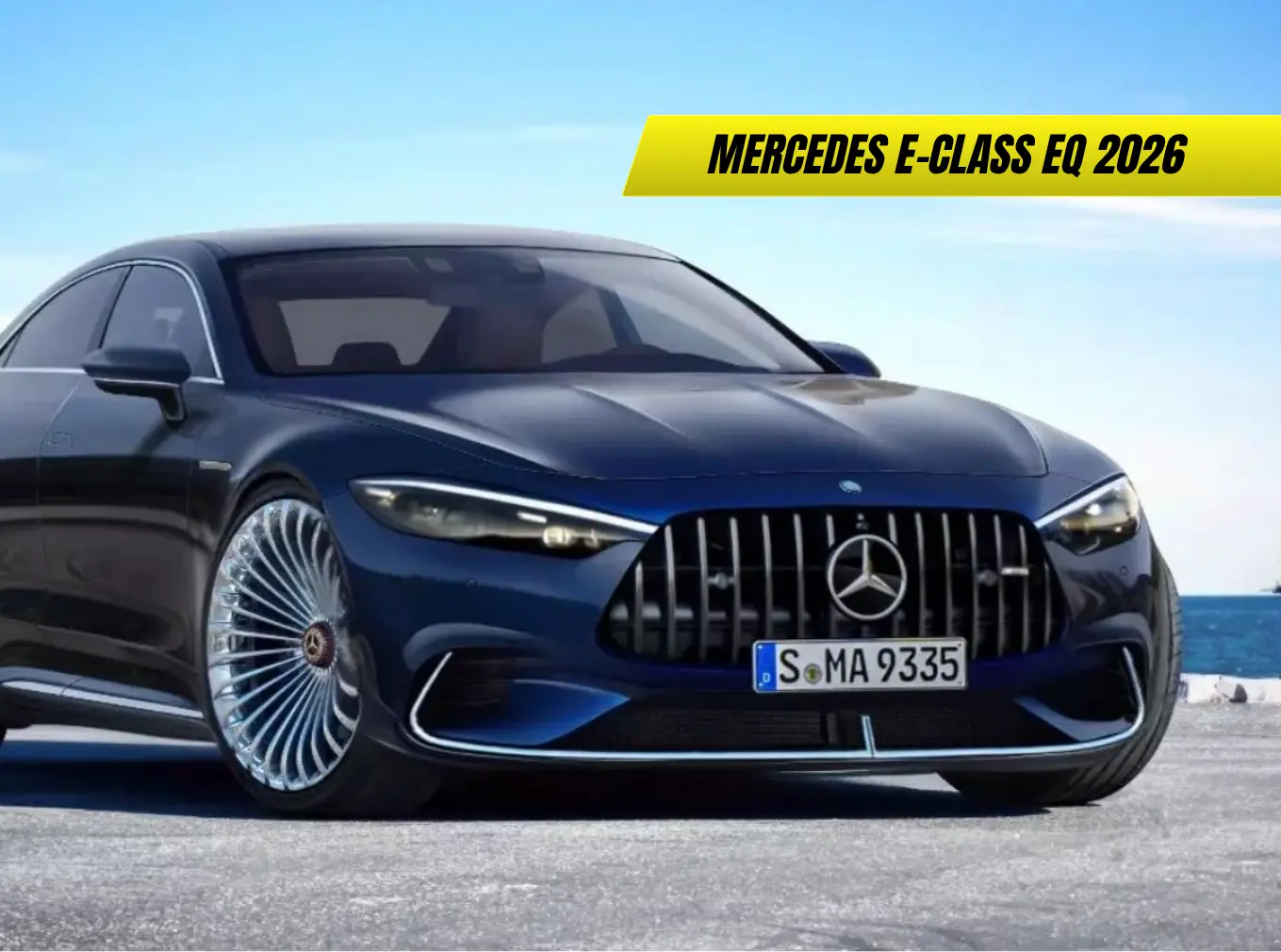
Mercedes E-Class EQ 2027: EQE successor with traditional three-box design, 483hp, 444-mile range. UK launch 2027 from £60,000 replaces blob styling.
Mercedes-Benz replaces disappointing EQE with completely redesigned E-Class with EQ Technology arriving 2027featuring traditional three-box sedan proportions abandoning controversial blob styling, built on new 800-volt MB.EA platform shared with GLC EV delivering 483hp dual-motor AWD, roughly 94kWh battery, and projected 444-mile WLTP range exceeding current EQE’s 394-mile maximum. Expected UK pricing from approximately £60,000-80,000 positioning between combustion E-Class (£55,000+) and discontinued EQS (£105,000+), the radical redesign addresses EQ lineup’s commercial disaster forcing temporary production pauses due to swelling inventories and weak demand plaguing all EQ models (EQE, EQE SUV, EQS, EQS SUV) through overly-futuristic styling alienating conservative executive buyers preferring evolutionary elegance over revolutionary experimentation when investing £70,000+ in premium electric transport.
Why EQE Failed: Commercial Disaster Analysis
Mercedes’ EQ lineup underperformance stems from fundamental miscalculations:
EQE Sales Challenges 2022-2025
- Blob styling alienation: Soap-bar proportions failed resonating with executive buyers
- Pricing premium: £70,000-90,000 exceeded combustion E-Class by £15-20k without justification
- Limited differentiation: Interior/technology too similar to cheaper EQA/EQB
- Range anxiety: 394-mile maximum inadequate for business users’ requirements
- Charging infrastructure: 170kW DC peak slower than Korean/American rivals’ 240-350kW
Production pause (temporary inventory reduction) confirmed commercial failure, with Mercedes pivoting strategy toward E-Class-badged electric variants coexisting with combustion models versus standalone EQ sub-brand approach.
From my point of view, the EQ disaster validates market reality that premium buyers resist radical styling experimentation when combustion alternatives offer proven elegance at lower cost – lesson BMW learned launching i4/i5 as badged electric variants rather than separate “i” sub-brand.
Traditional Three-Box Design: Blob Styling Eliminated
Spy photos reveal complete aesthetic transformation abandoning EQE’s controversial proportions:
Design Revolution Details
Traditional Sedan Architecture
- Defined three-box silhouette with clear bonnet/cabin/boot separation
- Proper boot trunk (vs EQE’s fastback/liftback ambiguity)
- Conventional roofline proportions matching combustion E-Class
- Reduced visual bulk through cleaner surface articulation
Front End Identity
- New-generation grille pattern (GLC EV basis, Vision Iconic concept inspiration)
- Horizontal emphasis creating width perception
- Slimmer LED headlights with Mercedes’ latest light signature
- Sculpted bonnet with power dome subtle character
Side Profile and Rear
- Long wheelbase maintaining executive presence
- Subtle shoulder line versus EQE’s anonymous surfaces
- Conventional door handles (vs current flush touch-sensitive)
- Traditional taillight clusters spanning boot width
- Defined bumper with integrated diffuser element
Visual Comparison: EQE vs E-Class EQ
| Design Element | Current EQE (2022-2027) | E-Class EQ (2027+) | UK Executive Appeal |
|---|---|---|---|
| Overall Shape | Blob/soap-bar fastback | Traditional three-box sedan | Conservative elegance |
| Grille | Closed black panel | New-generation pattern | Premium identity |
| Roofline | Swoopy coupe-sedan | Conventional sedan | Rear headroom |
| Boot | Liftback ambiguity | Proper trunk opening | Practicality |
| Proportions | Odd/ungainly | Balanced/harmonious | Timeless dignity |
MB.EA Platform: 800-Volt Architecture Advantages
The E-Class EQ adopts Mercedes’ newest MB.EA-M (medium) platform debuting with GLC EV:
Platform Technical Specifications
800-Volt Electrical Architecture
- Double voltage versus EQE’s 400-volt EVA II platform
- Enables faster charging: 270kW+ peak (vs EQE’s 170kW)
- Reduced cable thickness and heat generation
- Future-proof for emerging ultra-rapid 350kW+ chargers
Dual-Motor AWD System
- Front and rear permanent magnet motors
- Combined output: 483hp (360kW)
- Torque: 590 lb-ft (800Nm)
- Two-speed transmission optimizing efficiency/performance
- Torque vectoring enhancing handling dynamics
Battery Pack Configuration
- Capacity: Roughly 94kWh (gross, ~90kWh usable estimated)
- Chemistry: Latest NMC cells with improved energy density
- Range: 444 miles WLTP projected (realistic 380-400mi UK)
- DC charging: 10-80% in ~20 minutes (270kW peak)
- Bidirectional capability: Vehicle-to-home/grid support
UK Range and Charging Reality
| Metric | WLTP Claim | Real-World UK | Winter Conditions |
|---|---|---|---|
| Range | 444 miles | 380-400 miles | 320-350 miles |
| DC Charge 10-80% | 18-20 min (270kW) | 22-25 min (average 200kW) | 25-30 min (cold battery) |
| Home Charge (11kW) | 9 hours full | Overnight adequate | Same |
| Motorway 70mph | N/A | 3.2 mi/kWh (280 miles) | 2.8 mi/kWh (250 miles) |
The 800-volt architecture positions E-Class EQ competitively versus Porsche Taycan, Hyundai Ioniq 6, and Kia EV6 offering similar ultra-rapid charging, while 444-mile range exceeds BMW i5 (370 miles) and Audi A6 e-tron (460 miles estimated).
Interior Technology: MBUX Hyperscreen Expected
Following GLC EV precedent, expect comprehensive digital dashboard transformation:
Projected Interior Features
MBUX Hyperscreen Integration
- 56-inch curved glass spanning full dashboard width
- Triple-screen architecture: 12.3″ driver display, 17.7″ central, 12.3″ passenger
- MBUX AI-infused operating system with natural language processing
- Augmented reality navigation with head-up display integration
- Wireless smartphone integration (Apple CarPlay/Android Auto)
Premium Cabin Materials
- Nappa leather upholstery with heating/ventilation/massage
- Open-pore wood trim or sustainable alternatives
- Ambient lighting with 64-colour customization
- Burmester 3D surround audio system (15+ speakers)
- Executive rear seating with recline/massage (long wheelbase)
Advanced Driver Assistance
- Drive Pilot Level 3 autonomous capability (motorway conditions)
- Active Distance Assist DISTRONIC with route-based speed adaptation
- Active Steering Assist maintaining lane centering
- 360-degree camera with transparent hood view
- Remote parking via smartphone
The technology positioning aims justifying £60-80k pricing versus £55k combustion E-Class, with MBUX Hyperscreen differentiation and enhanced driver assistance creating premium electric experience beyond merely electrified powertrains.
UK Pricing Strategy and Competitive Positioning
Estimated UK pricing balances EQE’s failure lessons with premium positioning:
Projected E-Class EQ UK Pricing
| Variant | Power | Range | UK Price (est) | Target Buyer |
|---|---|---|---|---|
| E 300 EQ | 288hp RWD | 460 miles | £60,000 | Fleet executives |
| E 400 EQ 4MATIC | 408hp AWD | 420 miles | £68,000 | Performance buyers |
| E 500 EQ 4MATIC | 483hp AWD | 444 miles | £75,000 | Enthusiast flagship |
| AMG E 53 EQ (potential) | 600hp+ AWD | 380 miles | £85,000+ | Performance luxury |
Premium Electric Executive Sedan UK Landscape
| Model | UK Price | Range | Power | 0-62mph | Boot | UK Appeal |
|---|---|---|---|---|---|---|
| Mercedes E-Class EQ (2027) | £60-80k (est) | 420-460mi | 288-483hp | 4.5-6.2s | 540L (est) | Traditional elegance |
| BMW i5 | £65-85k | 321-370mi | 340-601hp | 4.0-6.0s | 490L | Driver dynamics |
| Audi A6 e-tron | £65-80k (est) | 460mi | 367-503hp | 4.3-5.4s | 502L | Quattro technology |
| Tesla Model S | £90-110k | 405-405mi | 670-1,020hp | 2.1-3.2s | 709L | Tech dominance |
| Porsche Taycan | £85-150k | 286-462mi | 408-938hp | 2.8-5.4s | 407L | Performance focus |
Mercedes positions E-Class EQ as volume executive electric sedan undercutting BMW i5 by £5k while offering superior range and traditional luxury versus tech-focused Tesla approach, targeting 40-60 company car executives prioritizing three-pointed star prestige and conservative styling over outright performance or technology showcase.
Company Car Tax Benefits UK Fleet Focus
Zero-emission status qualifies 2% BIK company car tax (2027/28 projected rates):
BIK Calculation: E-Class EQ vs Diesel E-Class
E 400 EQ 4MATIC (electric, 420-mile range)
- P11D value: £68,000
- BIK rate: 2%
- Taxable benefit: £1,360/year
- Tax paid (40% taxpayer): £544/year
E 300 d Diesel (combustion, 50mpg)
- P11D value: £58,000
- BIK rate: 32%
- Taxable benefit: £18,560/year
- Tax paid (40%): £7,424/year
Annual BIK saving: £6,880 – transformative fleet economics driving adoption among company car schemes prioritizing tax efficiency over acquisition cost, with £68k electric E-Class costing employees £544/year versus £58k diesel’s £7,424/year burden justifying initial premium through operational savings.
Production Timeline and UK Launch Strategy
Projected Launch Timeline
- Current status: Test mules undergoing validation (January 2026)
- Official reveal: Q3-Q4 2026 (Paris or LA Motor Show)
- UK pre-orders: Q4 2026 or Q1 2027
- First deliveries: Q2-Q3 2027
- Production location: Bremen, Germany (E-Class plant, MB.EA capable)
Early UK allocation priorities fleet customers (60% deliveries) over retail buyers reflecting executive sedan segment’s company car dominance, with leasing/salary sacrifice schemes offering attractive monthly rates (estimated £650-850/month) competitive versus combustion alternatives when factoring tax benefits.
Mercedes UK dealers (150+ franchises) receive comprehensive MB.EA training and DC rapid charger installations (50kW minimum) enabling demonstration charging experiences addressing customer range anxiety through hands-on education.
FAQ
When does Mercedes E-Class EQ launch UK?
Expected Q2-Q3 2027 deliveries following Q3-Q4 2026 official reveal – replacing failed EQE with traditional sedan design restoring premium appeal.
How much will E-Class EQ cost UK?
Estimated £60,000-80,000 spanning 288hp RWD through 483hp AWD flagship – positioning between combustion E-Class (£55k+) and discontinued EQS (£105k+).
What went wrong with EQE?
Blob styling alienated executives, £70-90k pricing lacked justification versus combustion, limited differentiation from cheaper EQA/EQB – commercial disaster forcing production pause.
Real-world range UK conditions?
444 miles WLTP reduces to realistic 380-400 miles mixed UK driving, 320-350 miles winter conditions – exceeding BMW i5 (370mi) and competitive with Audi A6 e-tron.
Charging speed and infrastructure?
800-volt architecture enables 270kW+ DC peak charging (10-80% in 20-25 minutes) – double EQE’s 170kW addressing previous slow charging criticism.
Company car tax benefits versus diesel?
2% BIK electric saves £6,880/year versus 32% diesel E-Class for 40% taxpayer – transformative fleet economics driving adoption despite higher acquisition cost.
Better than BMW i5 UK?
Mercedes offers traditional luxury and superior range (444mi vs 370mi) at lower pricing (£60k vs £65k entry), though BMW leads driver dynamics and brand prestige.
Will EQE continue alongside E-Class EQ?
No – EQE discontinued 2027 when E-Class EQ arrives. EQE SUV also cancelled, though EQS/EQS SUV continue full model cycle until replaced 2028-2029.
Conclusion
The 2027 Mercedes E-Class with EQ Technology represents strategic course correction abandoning failed EQ sub-brand approach in favour of traditional E-Class-badged electric variants featuring conservative three-box sedan proportions restoring premium elegance after EQE’s blob styling commercial disaster. The 800-volt MB.EA platform delivering 483hp dual-motor AWD, 444-mile range, and 270kW+ ultra-rapid charging addresses all previous EQ lineup criticisms while estimated £60-80k UK pricing positions competitively versus BMW i5 and Audi A6 e-tron without excessive premium versus combustion alternatives. Company car drivers benefit enormously from 2% BIK qualification saving £6,880 annually versus diesel E-Class justifying initial acquisition premium through operational tax efficiency, while 380-400 mile real-world range eliminates charging anxiety plaguing executive buyers requiring London-Edinburgh business travel capability without strategic rapid charging stops. Whether E-Class EQ succeeds reversing EQ disaster depends on execution quality avoiding previous production issues and pricing discipline preventing premium creep beyond £80k psychological barrier, though traditional styling and established E-Class brand equity suggest Mercedes finally acknowledges market reality that premium buyers prefer evolutionary familiarity over revolutionary experimentation when investing £70,000+ requiring business case justification beyond mere environmental credentials.





