
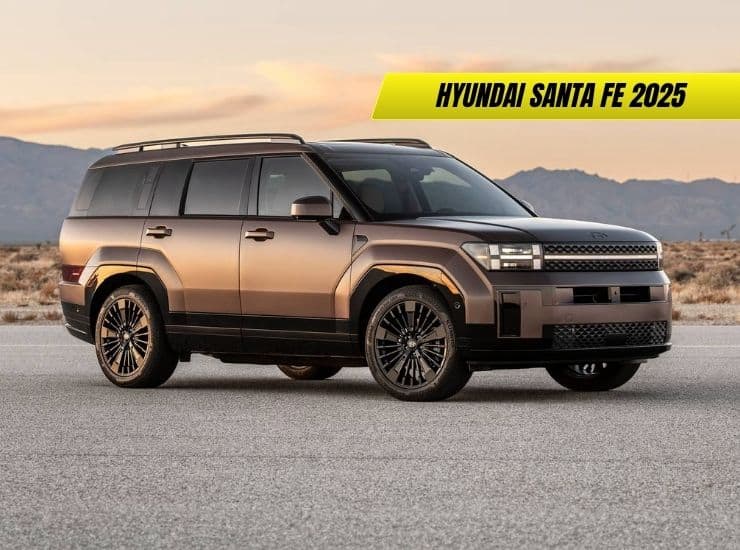
Hyundai Santa Fe facelift 2026: prototype catches fire during South Korean road testing. Investigation underway, UK launch timing potentially delayed.
A 2026 Hyundai Santa Fe facelift prototype caught fire during road testing in South Korea on January 17, 2026, with flames erupting from the engine bay forcing the test driver to evacuate safely before emergency services extinguished the blaze. The incident involving camouflaged mid-cycle refresh prototype raises questions about development progress and potential UK launch delays for the updated seven-seat SUV, though Hyundai emphasizes fire occurred during pre-production testing phase when identifying and resolving issues represents normal engineering process. The current-generation Santa Fe launched 2024 typically undergoes mid-cycle facelift after 2-3 years suggesting 2027 model year update introducing revised styling, updated technology, and potential powertrain refinements, though fire incident may postpone projected UK availability from Q3 2026 to Q4 2026 or Q1 2027 pending investigation completion and corrective engineering implementation ensuring safety compliance before customer deliveries commence.
Fire Incident Details: What Happened
Timeline of Events – January 17, 2026
The prototype Santa Fe was undergoing routine road testing on public roads near Hyundai’s Namyang R&D center (South Korea) when smoke appeared from the engine bay, quickly escalating to visible flames. The test driver safely exited the vehicle and alerted emergency services, who arrived within minutes to extinguish the fire before it spread to the passenger cabin.
Extent of Damage
Photos from the scene show:
- Completely destroyed engine bay: Fire consumed all components forward of the firewall
- Melted hood: Aluminum or steel panels warped from extreme heat
- Charred front end: Headlights, grille, bumper rendered unrecognizable
- Intact passenger cabin: Firewall successfully prevented flame penetration protecting occupants
- Scorched front tires: Heat damage to wheel wells and tire rubber
The severity suggests electrical fire or fuel system malfunction versus simple overheating, as contained engine fires rarely produce flame intensity destroying entire front-end structures within minutes.
Potential Causes Under Investigation
Hyundai has not publicly disclosed fire origin, but industry experts suggest several possibilities:
Likely Causes (Ranked by Probability)
- Electrical short circuit: High-voltage wiring harness chafing/pinching causing spark ignition
- Fuel system leak: Damaged fuel line spraying petrol onto hot exhaust manifold
- Turbocharger failure: Bearing seizure causing oil leak and combustion
- Battery thermal runaway: Hybrid/PHEV battery cell overheating (if applicable)
- Prototype wiring error: Incorrect routing or inadequate shielding during assembly
Why Testing Phase Matters
Hyundai’s statement emphasizing “pre-production testing phase” highlights crucial distinction: prototype fires, while alarming visually, serve exact purpose of validation programs identifying failures before customer vehicles enter production. Engineering teams deliberately stress-test components beyond normal operating parameters exposing weaknesses requiring correction.
From my point of view, the public fire raises reputation concerns given Hyundai-Kia’s previous recall history involving engine fires (Theta II engine family, 2015-2021 multiple recalls affecting millions of vehicles), though fair assessment acknowledges all manufacturers experience prototype failures during development—most simply occur on private test tracks away from public photography versus open roads where this incident happened.
Current Santa Fe Generation and Facelift Expectations
2024-2026 Current Generation Overview
The fifth-generation Hyundai Santa Fe launched globally 2024 representing complete redesign:
- Boxy SUV styling: Departure from rounded predecessors adopting rugged aesthetic
- Seven-seat configuration: Three-row layout accommodating adult passengers
- Hybrid/PHEV powertrains: Electrified options alongside traditional petrol/diesel
- Advanced technology: Digital cockpit, Level 2 driver assistance
- UK pricing: £45,000-58,000 spanning Hybrid through plug-in variants
Projected 2027 Facelift Updates
Mid-cycle refresh typically introduces:
Exterior Changes Expected
- Revised front grille with updated Hyundai parametric design
- New LED headlight signatures and taillights
- Updated bumpers (front and rear)
- Additional wheel designs (18/19/20-inch options)
- New paint colors
Interior Enhancements
- Upgraded infotainment screen (12.3″ potentially increasing to 14.5″)
- New interior trim materials and color combinations
- Enhanced ambient lighting
- Updated steering wheel design
- Improved switchgear tactility
Powertrain Refinements
- Mild efficiency improvements (5-8% fuel economy gains)
- Potential power increases (10-20hp across variants)
- Improved hybrid/PHEV electric range (WLTP +5-10 miles)
- Enhanced transmission calibration smoothness
UK Market Impact and Launch Timing
Original Timeline (Pre-Fire)
- Official reveal: June-July 2026 (mid-year refresh typical)
- UK pre-orders: August-September 2026
- First deliveries: October-December 2026 (Q4 2026)
Revised Timeline (Post-Fire, Estimated)
If investigation reveals design flaw requiring re-engineering:
- Extended validation testing: Additional 3-6 months
- Delayed reveal: September-October 2026
- UK pre-orders: Q4 2026
- First deliveries: Q1-Q2 2027
If fire deemed isolated prototype assembly error:
- Minimal delay: 4-8 weeks contingency
- UK launch: Maintains Q4 2026 target
Hyundai UK’s 150+ dealer network awaits clarification before committing to launch marketing campaigns, with current-generation Santa Fe inventory sufficient covering potential delays without showroom gaps.
Previous Hyundai-Kia Fire Recalls Context
The incident inevitably recalls Hyundai-Kia’s troubled history with engine fires:
Theta II Engine Fire Recalls (2015-2021)
- Affected vehicles: 6+ million Hyundai/Kia models (Sonata, Optima, Santa Fe, Sorento, others)
- Root cause: Manufacturing defects causing metal debris in engine oil, leading to bearing failure and oil leaks igniting on hot components
- US NHTSA investigation: Multiple probes resulting in record $137 million fine (2020)
- UK impact: Tens of thousands recalled for inspection and potential engine replacement
2024-2025 Recent Recalls
October 2024: 145,000 US-market Santa Fe SUVs recalled for fire risk after crash due to tow hitch harness chafing potentially causing short circuit. UK models unaffected as specification differs.
Reputation Recovery Efforts
Hyundai invested billions improving quality control, establishing dedicated fire safety engineering teams, and enhancing validation protocols. The brand’s transformation from budget manufacturer to premium contender (Genesis luxury division success) required overcoming fire-related stigma through transparent communication and proactive safety measures.
This latest prototype fire risks undoing reputation progress unless Hyundai demonstrates swift, thorough investigation and corrective action before production commencement.
Competitive Landscape and Sales Impact
Seven-Seat SUV UK Market 2026
| Model | UK Price | Powertrain | Seats | 0-62mph | UK Sales (2025) |
|---|---|---|---|---|---|
| Hyundai Santa Fe | £45-58k | Hybrid/PHEV | 7 | 8.1-9.2s | 8,500 (est) |
| Kia Sorento | £44-56k | Hybrid/PHEV | 7 | 8.7-9.0s | 9,200 |
| Skoda Kodiaq | £38-52k | Petrol/Diesel/PHEV | 7 | 7.6-10.6s | 12,000 |
| Nissan X-Trail | £38-48k | Hybrid | 7 | 9.1s | 14,500 |
| Land Rover Discovery Sport | £45-65k | Petrol/Diesel/PHEV | 5+2 | 7.8-10.5s | 18,000 |
Fire incident unlikely significantly impacting short-term sales as current-generation continues unaffected, though social media amplification and negative press coverage may suppress buyer confidence requiring aggressive marketing campaigns and extended warranties reassuring UK customers prioritizing family safety over brand loyalty.
FAQ
Is current Santa Fe affected by prototype fire?
No – fire involved 2026 facelift development prototype. Current 2024-2026 Santa Fe models remain safe and unaffected by incident.
Should I cancel my Santa Fe order UK?
Existing orders for current-generation models unaffected. Buyers awaiting facelifted version may experience delivery delays pending investigation completion.
What caused the fire?
Hyundai has not disclosed root cause. Investigation ongoing examining electrical systems, fuel lines, turbocharger, and hybrid components (if applicable).
Will UK launch be delayed?
Potentially – original Q4 2026 timeline may slip to Q1-Q2 2027 if investigation reveals design flaws requiring re-engineering and extended validation.
No direct connection – Theta II recalls affected older generation models (2011-2019). Current Santa Fe uses different Smartstream engines with separate architecture.
Safe to buy Hyundai after fire incidents?
Manufacturers experience prototype failures during development – normal engineering process. Hyundai’s improved quality control and proactive recalls demonstrate commitment to safety.
Will insurance costs increase for Santa Fe?
Unlikely – single prototype incident insufficient triggering premium adjustments. Previous recall history already factored into current insurance group ratings (30-35E).
Should I choose Kia Sorento instead?
Sorento mechanically similar (shared platform/powertrains) offering near-identical capability with stronger UK sales/dealer network. Personal preference determines choice.
Conclusion
The Hyundai Santa Fe facelift prototype fire during South Korean road testing represents unfortunate setback potentially delaying UK launch from projected Q4 2026 to Q1-Q2 2027 pending investigation completion and corrective engineering implementation, though Hyundai emphasizes pre-production testing phase exists precisely for identifying and resolving issues before customer vehicles enter production. While incident inevitably recalls brand’s troubled Theta II engine fire history triggering multi-million vehicle recalls and record regulatory fines, fair assessment acknowledges all manufacturers experience prototype failures during validation programs—most simply occur on private test tracks versus public roads where this fire happened generating viral photography amplifying reputation concerns. UK buyers awaiting facelifted Santa Fe should monitor Hyundai’s official communications for timeline updates while considering current-generation models remain unaffected and safe, with mechanical similarities to Kia Sorento offering alternative if brand confidence wavers following incident. Whether fire proves isolated assembly error or systematic design flaw requiring comprehensive re-engineering determines ultimate impact on launch schedule, competitive positioning, and brand reputation recovery efforts following years of quality control improvements attempting to overcome historical fire-related stigma plaguing Hyundai-Kia’s transformation from budget manufacturers to premium contenders demanding consumer trust crucial for long-term success in safety-conscious seven-seat family SUV segment.





