
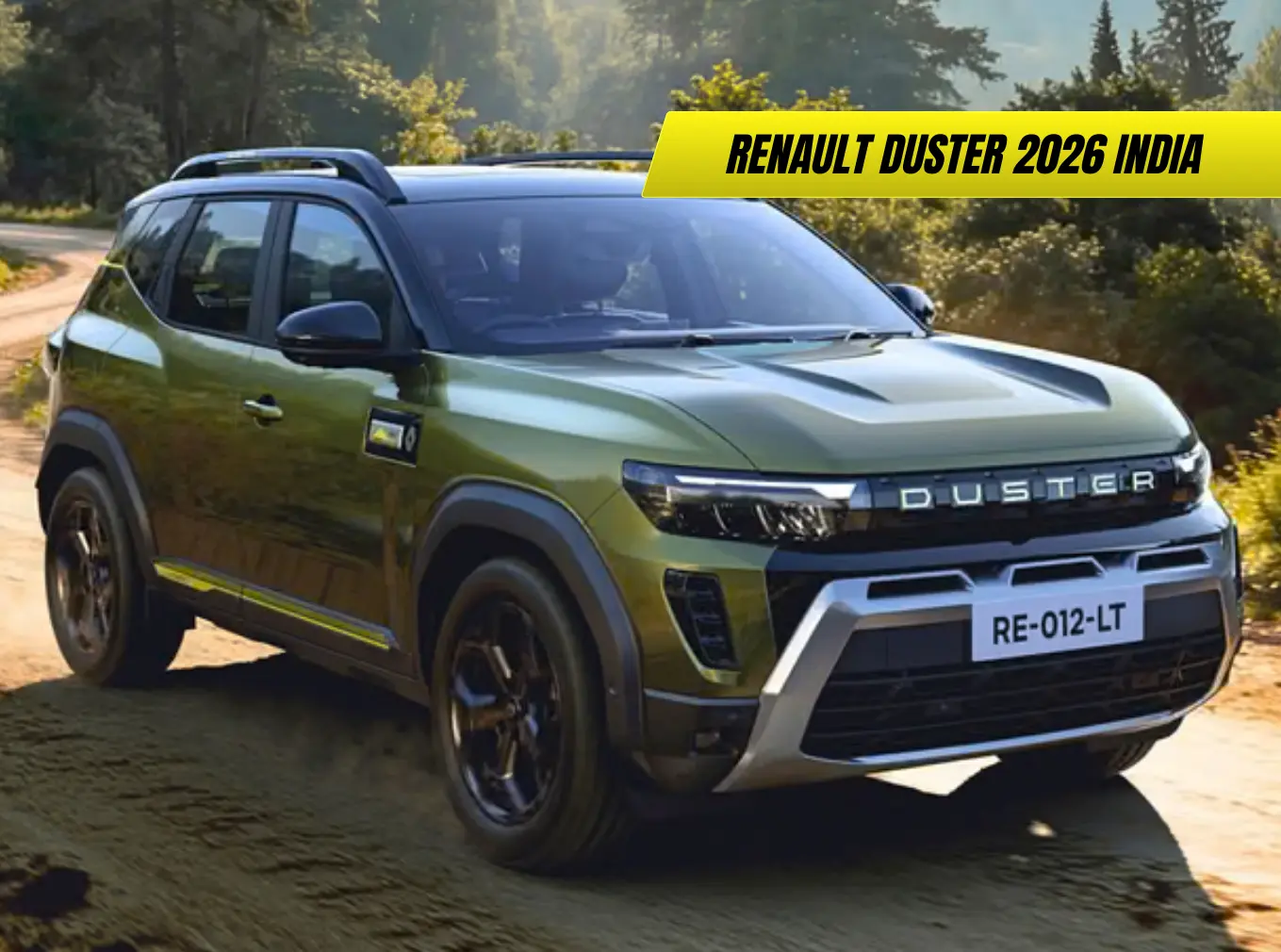
Renault Duster India 2026: third-generation budget SUV, 1.3T petrol, CVT/manual. Launch February 2026, ₹12-18 lakh (£11,500-17,000), UK availability uncertain.
Renault reveals third-generation Duster for Indian market (February 2026 launch) reintroducing budget SUV to country where original generation achieved massive success (2012-2019: 150,000+ units sold) before second-generation’s premature withdrawal (2020) amid financial pressures. Built on CMF-B platform shared with global Duster but adapted Indian requirements, the right-hand drive five-seat family hauler features 1.3-litre turbocharged petrol engine (156hp) paired six-speed manual or CVT automatic transmission (diesel excluded due BS6 Phase 2 emissions compliance costs), ladder-frame aesthetic design mimicking rugged SUV character, and estimated ₹12-18 lakh pricing (£11,500-17,000) targeting value-conscious buyers seeking Hyundai Creta/Kia Seltos alternatives. India-specific modifications include strengthened suspension addressing local road conditions, uprated cooling system handling 45°C+ temperatures, and simplified equipment levelsreducing complexity versus European specification enabling aggressive pricing strategy. UK availability unlikely as Renault prioritizes profitable European markets over right-hand drive investment, though India production potentially supplies other RHD territories (South Africa, Australia, Southeast Asia) if business case justifies export programs.
India Strategy: Returning to Proven Market
Duster India Sales History
| Generation | Period | Units Sold | Peak Year | Market Position |
|---|---|---|---|---|
| First-gen | 2012-2019 | 150,000+ units | 2013 (22,000) | Segment leader |
| Second-gen | Never sold | 0 units | N/A | Withdrew pre-launch 2020 |
| Third-gen | 2026-2030+ | Target: 25,000/year | TBC | Re-entry attempt |
Why India Matters for Duster
- Volume potential: India SUV market 650,000 units annually (2025), growing 12% year-on-year
- Brand heritage: Original Duster established Renault credibility (previously unknown brand)
- Price advantage: ₹12-18 lakh undercuts Hyundai Creta (₹11-20 lakh), Kia Seltos (₹10.9-20.4 lakh)
- Manufacturing efficiency: Chennai plant capacity enables local production (import duty avoidance)
- Export hub potential: India base supplies RHD markets (South Africa, ASEAN, Australia)
Why 2020 Withdrawal Happened
Second-generation Duster scheduled India launch 2020 canceled due:
- COVID-19 impact: Pandemic disrupting launch plans, demand forecasting
- Renault losses: Groupe Renault posting €8 billion 2020 loss necessitating cost cuts
- BS6 compliance: India emissions standards requiring expensive diesel engine upgrades
- Market shift: SUV segment premiumizing away from Duster’s budget positioning
2026 Re-entry Rationale
- Financial recovery: Renault profitability restored (€2.1 billion profit 2023)
- Platform efficiency: CMF-B shared costs across multiple models (Sandero, Jogger, Kardian)
- Petrol-only strategy: Avoiding diesel complexity, BS6 Phase 2 compliance costs
- Pent-up demand: First-gen Duster owners awaiting affordable replacement
Technical Specifications: India-Adapted Platform
Powertrain Options
| Specification | Detail |
|---|---|
| Engine | 1.3L turbocharged four-cylinder petrol (TCe 130) |
| Power | 156hp @ 5,500rpm |
| Torque | 254Nm (187 lb-ft) @ 1,800rpm |
| Transmission options | 6-speed manual or CVT automatic |
| Drive system | Front-wheel drive (AWD unlikely India) |
| Fuel type | Petrol only (no diesel, no hybrid) |
| Emissions | BS6 Phase 2 compliant |
| 0-100km/h | 10.5-11.5 seconds (estimated) |
| Top speed | 180km/h (112mph) |
| Fuel economy | 17-19 km/L (48-54 mpg) claimed |
Why No Diesel?
India traditionally diesel-dominated (60%+ SUV sales), but Duster excludes oil-burner:
- BS6 Phase 2 cost: 2023 emissions standards requiring expensive after-treatment (DPF, SCR, AdBlue)
- Price sensitivity: Diesel adds ₹1.5-2 lakh (£1,400-1,900) breaking budget positioning
- Market shift: Petrol share increasing (now 55% SUV sales) due narrowing fuel price gap
- Simplification: Single-engine strategy reduces development, manufacturing, service complexity
Why No Hybrid?
Hybrid technology excluded despite competitors offering it (Creta, Seltos, Grand Vitara):
- Cost barrier: Hybrid adds ₹2-3 lakh (£1,900-2,800) incompatible with budget strategy
- Volume constraints: Limited hybrid component supply (batteries, motors)
- Positioning: Duster targets value buyers, not eco-conscious premium customers
- Profitability: Thin margins on ₹12-18 lakh vehicle preclude expensive electrification
Design Language: Rugged SUV Character
Exterior Styling – India Specific
Front Fascia
- High-mounted LED DRLs: Y-shaped signature (Renault family design)
- Vertical headlights: Slim LED units flanking robust bumper
- Skid plate: Faux aluminum bash plate (plastic, not functional)
- Ladder-frame aesthetic: Horizontal bars creating tough SUV appearance
Side Profile
- Black plastic cladding: Thick wheel arch extensions (practical: stone chip protection)
- Roof rails: Standard across range (load capacity: 50kg)
- Higher ground clearance: 210mm (8.3 inches) addressing Indian road conditions
- Five-spoke alloy wheels: 16 or 17-inch (trim dependent)
Rear Design
- C-shaped LED taillights: Connected by trim piece
- Skid plate: Faux rear bumper protection
- Roof spoiler: Integrated aerodynamic element
- High loading lip: 850mm from ground (challenging elderly/children access)
Dimensions
| Measurement | India Duster | European Duster | Hyundai Creta |
|---|---|---|---|
| Length | 4,340mm | 4,340mm | 4,300mm |
| Width | 1,813mm | 1,813mm | 1,790mm |
| Height | 1,660mm | 1,656mm | 1,635mm |
| Wheelbase | 2,667mm | 2,667mm | 2,610mm |
| Ground clearance | 210mm | 200mm | 190mm |
Higher ground clearance (+10mm vs Europe, +20mm vs Creta) critical for speed bumps, potholes, rural roads dominating Indian driving conditions.
Interior and Technology
Cabin Layout
Dashboard Design
- 10.1-inch touchscreen: Portrait-oriented central display (top trims)
- 7-inch digital cluster: Driver information screen (mid/top trims)
- Physical climate controls: Buttons/dials retained (touchscreen criticism addressed)
- Hard plastics: Cost-conscious materials (no soft-touch surfaces lower dashboard)
Seating Configuration
- Five seats: 2+3 layout (no seven-seat variant India)
- Fabric upholstery: Standard across range (leather optional top trim)
- Rear space: 200mm knee room (class-competitive)
- Boot capacity: 430 litres (expandable to 1,623L seats folded)
Features by Trim
| Feature | Base | Mid | Top |
|---|---|---|---|
| Touchscreen | 8-inch | 10.1-inch | 10.1-inch |
| Digital cluster | 4.2-inch | 7-inch | 7-inch |
| Climate control | Manual | Auto single-zone | Auto dual-zone |
| Cruise control | ✗ | ✓ | Adaptive |
| Sunroof | ✗ | ✗ | Single-pane |
| Wireless charging | ✗ | ✗ | ✓ |
| Speakers | 4 | 6 | 8 (Arkamys audio) |
Safety Equipment
- Airbags: 6 airbags standard (2 front, 2 side, 2 curtain) – regulatory requirement
- ABS + EBD: Anti-lock brakes with electronic brake-force distribution
- ESC: Electronic stability control (mandated from 2023)
- Hill hold: Prevents rollback on inclines
- Reverse camera: Standard across range
- ADAS: Unlikely (adaptive cruise control top trim only, no autonomous emergency braking)
Indian market prioritizes visible features (sunroof, touchscreen) over advanced safety tech (ADAS, 360° camera) due buyer preferences and cost sensitivity.
India Pricing Strategy: ₹12-18 Lakh Target
Expected Pricing Structure
| Variant | Transmission | Price (₹ lakh) | Price (£) | Key Features |
|---|---|---|---|---|
| RXE | 6MT | 12.0-12.5 | £11,500-12,000 | Base, steel wheels, manual AC |
| RXL | 6MT | 13.5-14.0 | £13,000-13,500 | Alloys, touchscreen, cruise |
| RXZ | 6MT | 15.5-16.0 | £14,900-15,400 | Top spec, sunroof, auto AC |
| RXZ | CVT | 17.0-18.0 | £16,400-17,300 | Automatic transmission |
Competitive Price Comparison (India)
| Model | Price Range | Engine | Transmission | Drive |
|---|---|---|---|---|
| Hyundai Creta | ₹11.0-20.4 lakh | 1.5L petrol/diesel | MT/DCT/AT | FWD/AWD |
| Kia Seltos | ₹10.9-20.4 lakh | 1.5L petrol/diesel | MT/iMT/DCT/AT | FWD/AWD |
| Maruti Suzuki Grand Vitara | ₹10.7-20.1 lakh | 1.5L hybrid/petrol | MT/AT | FWD/AWD |
| Renault Duster | ₹12.0-18.0 lakh | 1.3L turbo petrol | MT/CVT | FWD |
| Nissan X-Trail | ₹32-50 lakh | 1.5L hybrid | CVT | FWD |
Duster slots mid-pack pricing but undercuts Creta/Seltos top-spec variants by ₹2-3 lakh, appealing budget-conscious buyers seeking space without premium features.
India-Specific Modifications
Suspension Tuning
- Strengthened springs: +15% rate increase handling potholes, speed bumps
- Revised dampers: Softer compression, firmer rebound (comfort bias)
- Result: More body roll versus European Duster, improved bad-road comfort
Cooling System
- Uprated radiator: +20% capacity addressing 45°C+ Indian summers
- Auxiliary cooling fan: Low-speed urban traffic heat management
- Oil cooler: Transmission/engine oil cooling preventing CVT overheating
Underbody Protection
- Thicker metal shields: Engine, gearbox protection from rocks, debris
- Anti-corrosion treatment: Additional rustproofing (monsoon humidity, coastal salt)
Acoustic Insulation
- Reduced soundproofing: Cost-saving measure (thinner carpets, less foam)
- Trade-off: Noisier cabin versus European spec (NVH complaints likely)
UK Availability: Unlikely Prospects
Factors Against UK Launch
- Right-hand drive investment: Tooling costs for low-volume market
- Pricing challenge: UK Duster £18,000-24,000 estimated (vs Dacia Duster £18,745) erodes value proposition
- Brand positioning: Renault UK focuses Arkana, Austral, Megane E-Tech (higher margins)
- Dacia cannibalization: Sister brand already sells budget Duster (rebadged Romanian version)
- Emissions compliance: UK market CO2 targets favor hybrids/EVs over petrol-only
Dacia vs Renault Duster Confusion
| Brand | Model | Market | Platform | Price | Relationship |
|---|---|---|---|---|---|
| Dacia | Duster | Europe (inc UK) | CMF-B | £18,745-27,745 | Budget Romanian brand |
| Renault | Duster | Global (ex-Europe) | CMF-B | Varies by market | Premium positioning |
| Renault | Duster India | India, RHD markets | CMF-B adapted | ₹12-18 lakh | India-specific |
Europe receives Dacia-badged Duster (budget), rest-of-world gets Renault-badged (mainstream). UK already has Dacia Duster making Renault version redundant unless significantly differentiated (unlikely given shared platform).
Possible RHD Export Markets
India production potentially supplies:
- South Africa: 25,000 annual SUV segment, Renault presence established
- Australia: 50,000 mid-size SUV market, though Renault withdrew 2021 (re-entry uncertain)
- Southeast Asia: Thailand, Indonesia, Malaysia (15,000-20,000 combined potential)
- Middle East RHD: UAE, Oman, Bahrain (10,000 units possible)
Total export potential: 60,000-100,000 annual units if Renault commits multi-market RHD strategy, though business case requires validation given brand’s conservative approach post-2020 losses.
FAQ
When does Renault Duster launch India?
February 2026 launch confirmed with deliveries commencing March-April 2026. Pre-launch bookings likely opening January 2026 (₹25,000-50,000 deposit).
How much will it cost?
Estimated ₹12.0-18.0 lakh (£11,500-17,300) spanning base manual to top CVT automatic. Undercuts Hyundai Creta/Kia Seltos top trims by ₹2-3 lakh.
Is diesel available?
No diesel option due BS6 Phase 2 compliance costs breaking budget positioning. Petrol-only 1.3L turbo (156hp) with manual or CVT transmission.
Will it come to UK?
Unlikely. UK already receives Dacia-badged Duster (£18,745-27,745) making Renault version redundant. India production may supply other RHD markets (South Africa, ASEAN) but UK availability unconfirmed.
What’s different from European Duster?
Strengthened suspension, uprated cooling, higher ground clearance (210mm), simplified equipment, India-specific pricing. Same CMF-B platform, 1.3T engine, but tuned for local conditions.
Does it have hybrid?
No hybrid offered despite competitors (Creta, Grand Vitara). Cost constraints and positioning as budget SUV preclude electrification. Petrol-only strategy maintains ₹12-18 lakh pricing target.
Is AWD available?
Unlikely. European Duster offers AWD but India-spec probably FWD-only reducing costs. First-generation India Duster had AWD (poor sales: <2% take rate) discouraging repeat.
Better than Hyundai Creta?
Different priorities: Duster offers larger size, lower pricing (₹2-3 lakh saving top trims), European brand prestige. Creta provides superior refinement, hybrid option, stronger resale value, established reputation.
The Renault Duster returns to Indian market February 2026 marking strategic re-entry following controversial 2020 second-generation withdrawal, with third-generation model built on CMF-B platform featuring India-adapted suspension, cooling, and ground clearance modifications addressing local requirements while 1.3-litre turbocharged petrol engine (156hp) paired six-speed manual or CVT automatic transmission targets value-conscious buyers through estimated ₹12-18 lakh (£11,500-17,300) pricing undercutting Hyundai Creta and Kia Seltos premium variants. Diesel and hybrid exclusion reflects cost-conscious positioning prioritizing accessible pricing over powertrain diversity, while front-wheel drive configuration and simplified equipment levels versus European specification enable aggressive pricing strategy capturing budget-focused segment abandoned during SUV market’s premiumization 2020-2025 period. UK availability remains unlikely given Dacia Duster already serving British market at £18,745-27,745 creating redundancy for Renault-badged variant unless significantly differentiated through equipment or positioning, though India production potentially supplies other right-hand drive territories including South Africa, Southeast Asia, and Middle East markets if export business case justifies investment. Whether Duster recaptures first-generation’s 150,000+ unit Indian success (2012-2019) depends on overcoming competitive intensity from established Korean rivals Creta and Seltos offering hybrid powertrains, advanced technology, and stronger brand reputations commanding customer loyalty, with Renault’s European heritage and aggressive pricing representing primary differentiation factors targeting budget-conscious families prioritizing space and value over premium features and badge prestige defining mainstream Indian SUV segment’s purchasing criteria.





