
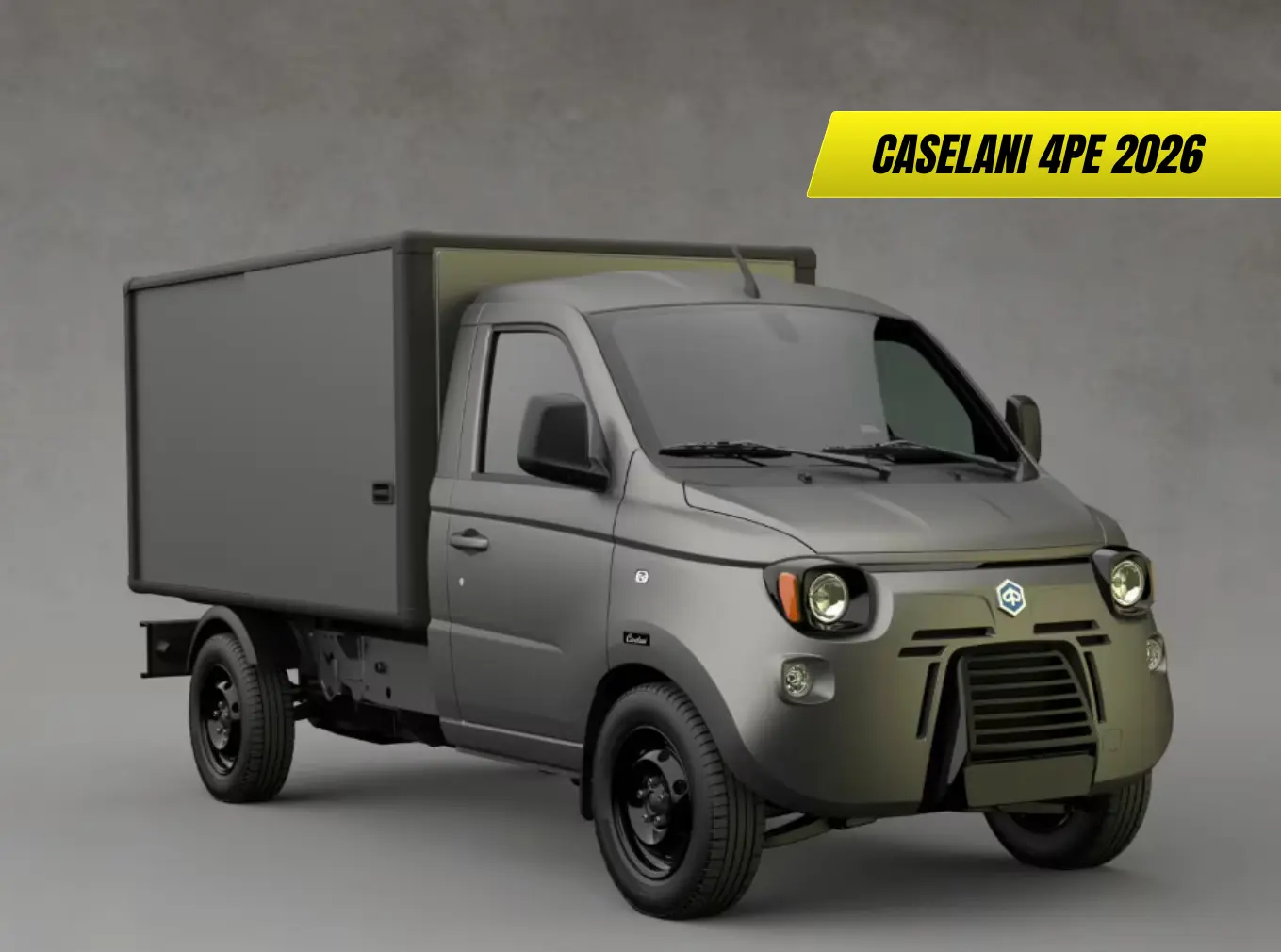
Caselani 4PE 2026: retro bodykit transforms Piaggio Porter, inspired by classic Ape. €15,000+ kit, fiberglass construction, no mechanical changes.
Italian coachbuilder Caselani introduces 4PE retro conversion kit transforming modern Piaggio Porter NP6/NPE utility vehicles into nostalgic homage to iconic Piaggio Ape three-wheelerthrough comprehensive fiberglass bodywork reimagining cab front with vintage-inspired fenders, bumpers, headlights, and grille designed by David Obendorfer (previous Citroën retro projects creator). The aesthetic-only transformation retains Porter’s mechanical specifications including 1.5-litre bi-fuel petrol engine (105hp gasoline/106hp LPG) or electric powertrain(201hp, 155-mile range) while replacing entire front fascia with central bumper elementmimicking Ape’s distinctive three-wheel stance despite Porter’s conventional four-wheel configuration. Installation available Caselani factory or authorized bodyshops, the kit costs estimated €15,000-20,000 (£13,000-17,000) positioning as premium customization for food truck operators, artisan businesses, and collectors seeking distinctive commercial vehicle appearance compatible with all Porter body styles (fixed deck, dumper, refrigerated van, food truck). UK availability uncertain as Piaggio Porter not officially sold British market, though European buyers increasingly embrace neo-retro commercial vehicles combining modern efficiency with heritage styling appealing lifestyle businesses prioritizing brand differentiation over mainstream anonymity.
Piaggio Ape Heritage: Three-Wheeler Icon
Ape Historical Context
| Model | Period | Configuration | Engine | Purpose | Production |
|---|---|---|---|---|---|
| Ape A | 1948-1953 | 3-wheel motorcycle-based | 125cc single | Post-war transport | 22,000 units |
| Ape B/C | 1953-1972 | 3-wheel evolved | 150-175cc | Commercial delivery | 500,000+ units |
| Ape 50 | 1969-2009 | 3-wheel light | 50cc moped-based | Urban delivery | 1 million+ units |
| Ape TM | 1982-present | 3-wheel diesel | 422-686cc diesel | Heavy-duty work | Active production |
Why Ape Matters Italian Culture
The Piaggio Ape (“bee” in Italian) represents quintessential post-war Italian ingenuity:
- Economic miracle symbol: Enabled small businesses rebuilding 1950s Italy
- Vespa evolution: Based on famous Vespa scooter platform (motorcycle front, cargo rear)
- Urban icon: Dominated narrow Italian streets where conventional trucks couldn’t access
- Food truck pioneer: Three-wheeler became synonymous with street food, gelato vendors
- Cultural export: Spread throughout Mediterranean, Asia, Latin America (millions worldwide)
Modern Ape Status
Still produced 2026:
- Electric variants: Ape E-City and E-Xtra battery-powered models
- Global sales: 15,000-20,000 annual units (primarily India, Italy, emerging markets)
- Nostalgia factor: Retro appeal driving premium pricing versus rational utility justification
- Collectors: Vintage 1950s-70s Apes commanding €5,000-15,000 restored condition
Caselani 4PE Design: Four Wheels, Three-Wheel Look
Bodykit Components Detailed
Front Fenders
- Material: Hand-laid fiberglass construction
- Design: Rounded, bulbous shape echoing Ape’s motorcycle-derived fender
- Color: Body-color painted or left raw fiberglass (customer choice)
- Mounting: Bolted to Porter’s existing chassis attachment points
Front Bumper
- Central element: Vertical nose cone mimicking Ape’s single front wheel housing
- Function: Purely aesthetic (no impact protection enhancement)
- Integration: Hides Porter’s conventional bumper beneath retro styling
- Material: Reinforced fiberglass or composite plastic
Headlights
- Supplier: Hella and Giantlight LED units
- Configuration: Twin round headlamps (vs Ape’s single headlight)
- Technology: Full LED (DRLs, main beam, indicators integrated)
- Positioning: Flanking central bumper element creating symmetrical appearance
Grille
- Design: Mesh or slat-style opening referencing Ape’s simple cooling vents
- Function: Allows airflow to Porter’s radiator (petrol version) or battery cooling (electric)
- Badge integration: Piaggio logo potentially repositioned or 4PE branding applied
Side Profile (Unchanged)
- Porter’s cab and cargo area remain unmodified
- Original door handles, mirrors, windows retained
- Fender flares might extend slightly beyond original bodywork
- Wheels unchanged (Porter’s standard steel or alloy rims)
Rear (Unmodified)
- Tailgate, rear lights, bumper remain Porter specification
- Only front cab receives retro treatment (cost/complexity reduction)
Piaggio Porter Platform: Chinese-Italian Collaboration
Porter NP6/NPE Specifications
| Specification | NP6 (Petrol/LPG) | NPE (Electric) |
|---|---|---|
| Platform | Foton Gratour V3 (China) | Foton Gratour V3 EV |
| Engine | 1.5L bi-fuel inline-4 | Single electric motor |
| Power | 105hp gas / 106hp LPF | 201hp (150kW) |
| Torque | 143Nm | 310Nm |
| Transmission | 5-speed manual | Single-speed reduction |
| Drive | Rear-wheel drive | Rear-wheel drive |
| 0-62mph | ~14 seconds | ~9 seconds |
| Top speed | 87mph (140km/h) | 75mph (120km/h) limited |
| Range | 300+ miles (fuel) | 155 miles (250km) urban |
| Payload | 1,000kg (2,200 lbs) | 800kg (1,760 lbs) |
| Gross weight | 3,500kg (Class N1) | 3,500kg |
Foton Partnership Background
Piaggio’s commercial vehicles now based on Chinese Foton platform:
- 2008: Piaggio Porter production ended (Italian-designed original)
- 2010: Partnership with China’s Foton Motor (Beiqi subsidiary)
- 2011: New Porter launched (rebadged Foton Gratour V3)
- Economics: Chinese platform reduces costs 40-50% versus Italian engineering
- Controversy: “Italian” branding despite Chinese origins (transparency issues)
4PE Kit Compatibility
Works across all Porter body configurations:
- Fixed deck: Open flatbed with dropsides
- Dumper: Hydraulic tipper for construction/agriculture
- Food truck: Custom catering conversions (most popular 4PE application)
- Refrigerated van: Insulated box body for perishable transport
- Specialized bodies: Workshop vans, mobile shops, promotional vehicles
Installation and Pricing
Installation Options
Factory Installation (Caselani, Sospiro)
- Process: Porter delivered to Caselani facility, kit installed by trained technicians
- Duration: 3-5 business days (disassembly, fitment, painting, reassembly)
- Warranty: Caselani provides 2-year warranty on bodywork installation
- Cost: €15,000-18,000 including kit + labor + painting
Authorized Bodyshop Installation
- Process: Customer purchases kit, takes to Caselani-approved installer
- Duration: 5-7 business days (variable by shop workload)
- Warranty: Shop-dependent (typically 1 year)
- Cost: €12,000-15,000 kit + €3,000-5,000 installation/painting (€15,000-20,000 total)
DIY Installation (Not Recommended)
- Complexity: Requires skilled fiberglass work, electrical integration (headlights), panel alignment
- Duration: 10-15 days (experienced builder)
- Risk: Poor fitment, water ingress, electrical faults voiding warranties
- Cost: €10,000-12,000 kit only (if Caselani sells without installation)
Pricing Breakdown Estimate
| Component | Cost |
|---|---|
| Fiberglass kit (fenders, bumper, grille) | €8,000-10,000 |
| LED headlight units (Hella/Giantlight) | €1,500-2,000 |
| Installation labor (40-50 hours) | €3,000-4,000 |
| Paint + finishing (body-color match) | €2,000-3,000 |
| Electrical integration (headlight wiring) | €500-1,000 |
| Total estimated | €15,000-20,000 |
Target Market: Who Buys 4PE Conversions?
Primary Customer Segments
Artisan Food Trucks
- Appeal: Distinctive appearance attracting customers at festivals, markets
- ROI justification: Unique branding commanding premium pricing (€6-8 vs €4-5 standard vendor)
- Instagram factor: Retro aesthetic driving social media engagement, free marketing
- Examples: Gelato vendors, mobile pizzerias, coffee trucks, gourmet street food
Lifestyle Businesses
- Florists: Vintage Porter delivering wedding flowers creates romantic brand image
- Mobile bars: Prosecco/cocktail trucks at events leveraging nostalgic charm
- Artisan bakers: Bread/pastry delivery emphasizing traditional craftsmanship
- Boutique deliveries: High-end retailers using distinctive vehicles reinforcing brand exclusivity
Collectors and Enthusiasts
- Piaggio fans: Unable to find/afford original Ape, Porter offers modern alternative
- Classic vehicle shows: 4PE conversions attracting attention at retro events
- Investment speculation: Betting limited-production conversions appreciate value
- Personal projects: Hobbyists creating unique recreational vehicles
Corporate Marketing
- Brand activations: Companies using eye-catching Porter for promotional campaigns
- Event catering: Corporate hospitality requiring distinctive vehicle presentation
- Retail pop-ups: Temporary stores in high-traffic locations leveraging visual appeal
Why Not Actual Ape Three-Wheeler?
| Factor | Piaggio Ape | Porter 4PE | Winner |
|---|---|---|---|
| Cargo capacity | 500kg max | 800-1,000kg | Porter |
| Speed | 30mph limited | 87mph capable | Porter |
| Range | 60-80 miles | 155-300+ miles | Porter |
| Weather protection | Minimal cab | Enclosed comfort | Porter |
| Modern features | Basic | Airbags, ABS, heating | Porter |
| Authenticity | 100% original | Retro pastiche | Ape |
| Licensing | Motorcycle (Europe) | Car license | Porter |
Porter 4PE offers Ape aesthetics with modern utility, practicality, and safety—compromise appealing businesses needing functional vehicle with nostalgic branding versus collectors prioritizing authenticity over usability.
UK Availability Challenges
Why UK Market Difficult
- No official Porter sales: Piaggio doesn’t sell Porter UK (right-hand drive investment unjustified)
- Import complexity: Individual vehicle importation requiring IVA (Individual Vehicle Approval) testing
- Cost barrier: €40,000+ Porter + €15-20k kit + UK import = £50-55k total (prohibitive small business)
- Service network: No Piaggio commercial vehicle dealers UK (parts, maintenance challenges)
- Regulatory uncertainty: Type approval for modified vehicle uncertain DVLA standards
Potential Workarounds
- European purchase: UK buyers acquiring 4PE Porter EU-registered, importing personally
- Alternative platforms: Caselani developing similar kits for UK-available vehicles (Renault Master, Ford Transit Custom)
- RHD conversion: Specialist companies converting LHD Porter to RHD (adds £8,000-12,000 cost)
David Obendorfer: Designer Behind 4PE
Designer Background
Caselani’s retro conversions designed by David Obendorfer, Austrian designer specializing neo-retro automotive styling:
Previous Caselani Projects
- Citroën Type H revival: Modern van receiving 1940s Type H aesthetic
- Fiat 500 Jolly: Beach-car conversions echoing 1950s Ghia Jolly
- Renault 4 updates: Modernized R4 vans with contemporary lighting
Design Philosophy
- Respect heritage: Avoiding pastiche, maintaining original’s proportions and character
- Modern integration: LED lighting, safety features hidden within retro styling
- Functional nostalgia: Pretty appearance doesn’t compromise vehicle utility
- Accessible exclusivity: Limited production creating scarcity without unobtainable pricing
FAQ
How much does Caselani 4PE cost?
Estimated €15,000-20,000 (£13,000-17,000) including fiberglass kit, LED headlights, installation, and painting. Base Porter costs €25,000-40,000 depending on petrol or electric powertrain.
What does 4PE stand for?
“4PE” combines “4” (four wheels, distinguishing from three-wheel Ape) with “PE” likely referencing “Piaggio Ape” heritage inspiration, though Caselani hasn’t confirmed official meaning.
Does it change Porter’s performance?
No mechanical modifications. Petrol version remains 105hp, electric 201hp. Kit adds negligible weight (~30kg fiberglass) not affecting acceleration, range, or payload capacity.
Can I buy it UK?
Difficult. Piaggio Porter not officially sold UK, requiring individual import. €40k Porter + €15-20k kit + £5-8k import/compliance = £50-55k total investment (prohibitive most buyers).
Is it street legal?
Yes, maintains Porter’s original type approval. Headlights meet European ECE regulations (Hella/Giantlight compliance). No structural modifications affecting crash safety or emissions.
How long does installation take?
Factory installation: 3-5 business days. Authorized bodyshop: 5-7 days. DIY not recommended due complexity requiring skilled fiberglass work and electrical integration expertise.
Does warranty transfer?
Porter’s manufacturer warranty unaffected (Caselani doesn’t modify powertrain). Caselani provides separate 2-year bodywork warranty covering fiberglass fitment, paint, and headlight installation.
Can I remove kit later?
Technically possible but impractical. Requires cutting/grinding fiberglass, restoring original panels (likely damaged during conversion), rewiring headlights. Permanent modification assumed.
The Caselani 4PE retro conversion kit transforms functional Piaggio Porter utility vehicles into nostalgic homage to iconic three-wheel Ape through comprehensive fiberglass bodywork reimagining cab front with vintage-inspired fenders, bumpers, and LED headlights designed by David Obendorfer creating distinctive appearance appealing artisan food trucks, lifestyle businesses, and collectors seeking brand differentiation through neo-retro styling. The estimated €15,000-20,000 (£13,000-17,000) aesthetic-only transformation retains Porter’s mechanical specifications including 105hp bi-fuel petrol or 201hp electric powertrain while compatible across all body configurations from fixed decks to food trucks, with installation available Caselani factory or authorized bodyshops requiring 3-7 business days completing conversion maintaining original type approval and warranties. UK availability challenges stem from Piaggio Porter’s absence British market necessitating complex individual vehicle importation adding £5-8k costs atop €40k base vehicle and €15-20k conversion kit creating £50-55k total investment prohibitive for most small businesses, though European buyers increasingly embrace distinctive commercial vehicles combining modern efficiency with heritage styling appealing Instagram-driven economy where visual differentiation commands premium pricing offsetting conversion costs through enhanced brand recognition and customer attraction justifying investment beyond rational utility calculations.





