
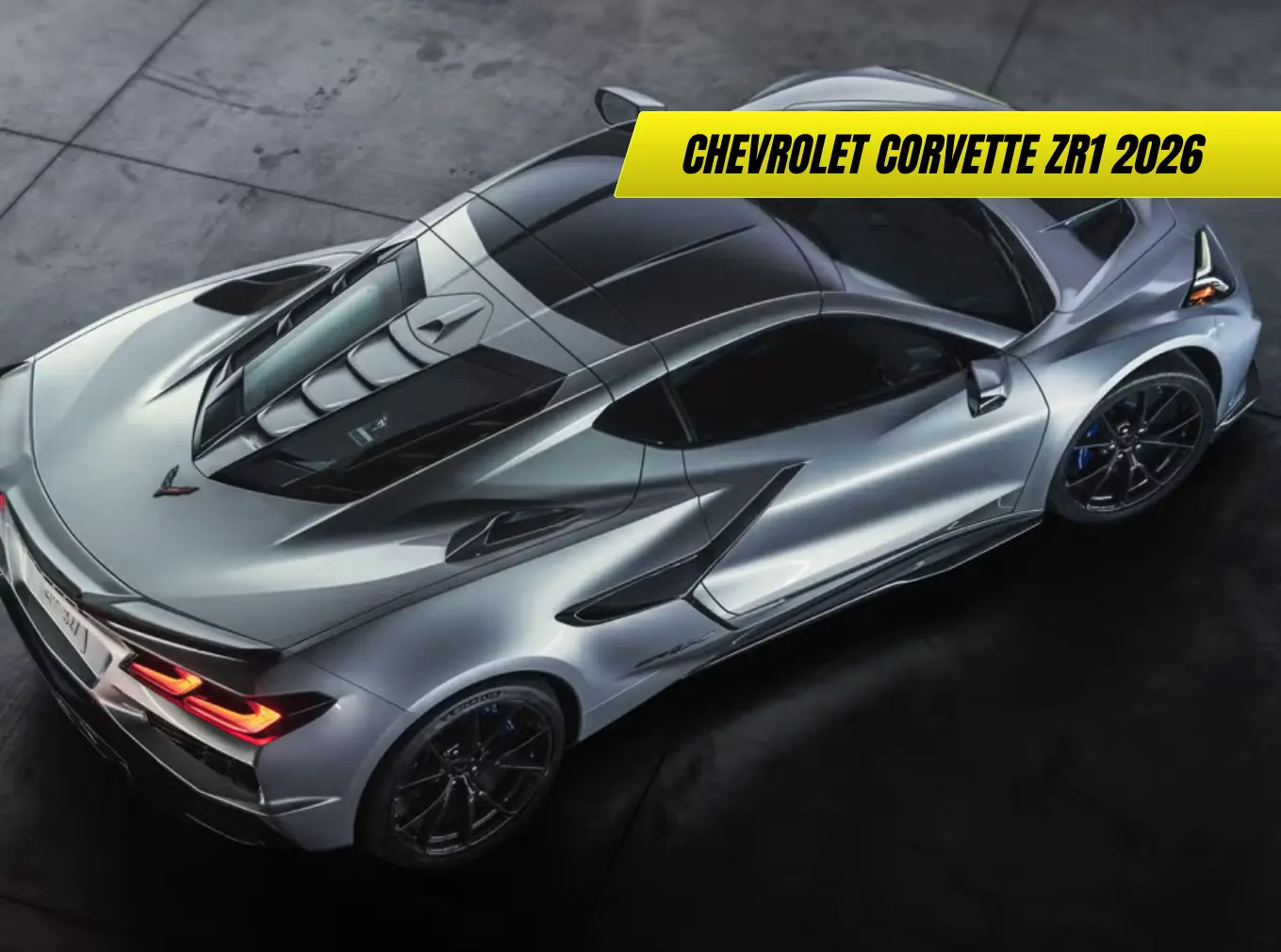
Chevrolet launches 2026 Corvette ZR1 as American hypercar featuring 1,064hp twin-turbocharged 5.5L LT7 V8 achieving 233 mph top speed and 2.3-second 0-60mph starting $185,000, while electrified ZR1X variant adds front electric motor delivering combined 1,250hp and sub-2.0-second 0-60mph for $207,395 challenging European exotics at fraction of cost.
American automotive icon Chevrolet unveils eighth-generation Corvette ZR1 as brand’s most powerful production vehicle ever, featuring groundbreaking 1,064 horsepower twin-turbocharged 5.5-liter LT7 V8 engine representing most powerful V8 from any American manufacturer while achieving 233 mph top speed (375 km/h) positioning ZR1 among world’s fastest production cars rivaling Ferrari SF90, McLaren 765LT, and Porsche 911 GT2 RS at $185,000 starting price – less than half European supercar equivalents’ $400,000-500,000+ pricing. The revolutionary flat-plane crankshaft V8 features twin-turbochargers generating 22 psi boost pressure, dual fuel injection (port and direct), and dry-sump lubrication enabling sustained high-speed cornering through advanced oil management, producing 828 lb-ft torque at 6,000 rpm channeled exclusively through rear wheels via 8-speed dual-clutch transmissionmaintaining traditional rear-drive supercar configuration versus all-wheel-drive compromise. Even more extreme ZR1X hybrid variant adds 186hp electric front-drive unit (EDU) creating hybrid all-wheel-drive configuration delivering combined 1,250 horsepower – making it most powerful production Corvette ever and among quickest production cars globally with sub-2.0-second 0-60 mph acceleration and sub-9-second quarter-mile at 150+ mph through instant electric torque supplementing V8 brutality starting $207,395 positioning against million-dollar hypercars (Bugatti, Koenigsegg, Rimac) at 80% discount. Advanced aerodynamic package features split rear wing generating 1,200+ pounds downforce at top speed, underbody venturi tunnels creating ground-effect suction, active front splitter and dive planes managing front downforce dynamically, and top-exit central exhaust reducing rear turbulence while creating dramatic visual signature distinguishing ZR1 from lesser Corvette variants, with available ZTK Track Performance Package adding carbon-fiber wheels saving 40 pounds unsprung weight, Michelin Pilot Sport Cup 2 R tires providing ultimate grip, and additional aerodynamic elements optimizing lap times over raw top speed.
Historical Context: ZR1 Nameplate Legacy
The ZR1 badge carries profound significance within Corvette lineage representing brand’s ultimate performance expression across multiple generations spanning four decades.
ZR1 Generational Evolution
| Generation | Years | Engine | Power | Top Speed | Significance |
|---|---|---|---|---|---|
| C4 ZR-1 | 1990-1995 | 5.7L DOHC V8 (LT5) | 375-405 hp | 180 mph | First ZR1, Lotus-engineered “King of the Hill” |
| C6 ZR1 | 2009-2013 | 6.2L Supercharged V8 (LS9) | 638 hp | 205 mph | Resurrection after 14-year hiatus |
| C7 ZR1 | 2019 | 6.2L Supercharged V8 (LT5) | 755 hp | 212 mph | Front-engine finale, highest-output Corvette until C8 |
| C8 ZR1 | 2026 | 5.5L Twin-Turbo V8 (LT7) | 1,064 hp | 233 mph | Most powerful V8 production car |
| C8 ZR1X | 2026 | 5.5L TT V8 + Electric | 1,250 hp | 233 mph | First hybrid ZR1, hypercar territory |
Why C8 ZR1 Represents Revolutionary Leap
Previous Generation Limitations
- Front-engine C7 ZR1 physically limited by weight distribution compromising handling
- Supercharger heat management challenges restricting sustained performance
- 755 hp approached front-engine platform’s practical limits without exotic materials
- Aerodynamics compromised by long hood and rear weight bias
Mid-Engine C8 Advantages Enabling 1,064hp
- Central mass concentration improving weight distribution (40/60 front/rear optimal)
- Shorter driveline reducing parasitic losses and weight
- Enhanced cooling through side-mounted radiators and dedicated turbo intercoolers
- Superior aerodynamics from compact frontal area and integrated underbody management
- Transaxle positioning enabling more aggressive suspension geometry
Twin-Turbo vs Supercharger Philosophy
Previous Supercharged Approach (C6/C7 ZR1)
- Instant throttle response from mechanical drive
- Linear power delivery throughout rev range
- Heat soak issues limiting sustained track performance
- Parasitic drag consuming ~70-80 hp driving supercharger
New Twin-Turbo Strategy (C8 ZR1)
- Higher peak boost pressure enabling greater output from same displacement
- Intercooling managing temperatures more effectively
- Exhaust energy recovery improving overall efficiency
- Modern electronic wastegate control mitigating traditional turbo lag
- Enables flat-plane crankshaft high-revving character
The twin-turbo flat-plane V8 represents American automotive engineering reaching parity with European exotic manufacturers (Ferrari, McLaren, Lamborghini) historically dominating forced-induction supercar segment through decades technical development and motorsport heritage, similar to evolution discussed in Ford Mustang GTD 2025.
LT7 Engine: Technical Deep Dive
The 5.5-liter LT7 represents General Motors’ most advanced V8 engine ever, combining American displacement tradition with European exotic engineering sophistication.
Core Specifications
| Component | Specification | Technical Significance |
|---|---|---|
| Displacement | 5,463 cc (333 cubic inches) | Compact for power output, enables high-revving character |
| Configuration | 90° V8, flat-plane crankshaft | Exotic Ferrari/McLaren-style configuration vs traditional cross-plane |
| Forced induction | Twin turbochargers, 22 psi boost | Massive pressure delivering exceptional specific output |
| Valvetrain | DOHC 4-valve per cylinder (32 total) | High-flow cylinder heads maximizing breathing |
| Fuel delivery | Dual injection (port + direct) | Optimizes combustion efficiency across operating conditions |
| Lubrication | Dry-sump system | Enables sustained high-G cornering without oil starvation |
| Redline | 7,000 rpm (estimated) | High for American V8, moderate for flat-plane configuration |
| Peak power | 1,064 hp @ 7,000 rpm | 194 hp/liter specific output |
| Peak torque | 828 lb-ft @ 6,000 rpm | Massive mid-range torque from turbocharging |
Flat-Plane Crankshaft Engineering
Traditional Cross-Plane Crankshaft (Most American V8s)
- Crank throws positioned 90° intervals creating uneven firing intervals
- Characteristic V8 “rumble” exhaust note from irregular pulse spacing
- Better balance reducing vibration at lower RPM
- Lower revving nature (6,000-6,500 rpm typical redlines)
Flat-Plane Crankshaft (LT7, C8 Z06’s LT6, European exotics)
- Crank throws positioned 180° intervals creating even firing intervals
- High-pitched exotic exhaust note similar to Ferrari/McLaren
- Requires counterweights managing secondary vibrations
- Enables higher RPM operation through reduced reciprocating mass
- Improved exhaust scavenging through evenly-spaced pulses optimizing turbocharger efficiency
Turbocharging System Architecture
Twin-Turbo Configuration
- Left bank turbocharger: Compresses intake air for cylinders 1-3-5-7
- Right bank turbocharger: Compresses intake air for cylinders 2-4-6-8
- Intercoolers: Air-to-liquid heat exchangers reducing intake charge temperatures
- Wastegates: Electronic control regulating boost pressure preventing over-boost damage
- Anti-lag system: Maintains boost pressure between shifts reducing turbo lag
Boost Pressure Management
- 22 psi maximum boost: Among highest production car turbocharged applications
- Electronic wastegate control: Millisecond-precision pressure regulation
- Overboost function: Temporary higher boost during acceleration (possible push-to-pass system)
Thermal Management Challenges
Heat Generation Sources
- Turbine exhaust temperatures: ~1,650°F (900°C) sustained
- Compressed intake air: ~300°F+ before intercooling
- Engine oil: Elevated temperatures from increased power density
- Coolant: Higher heat rejection versus naturally-aspirated engines
Cooling Solutions
- Multiple radiators: Engine coolant, transmission oil, differential oil, turbo intercoolers
- High-capacity oil cooler: Maintains oil temperatures within optimal range
- Dedicated turbo cooling: Post-shutdown coolant circulation preventing heat soak
- Underbody airflow management: Venturi tunnels creating low-pressure zones extracting hot air
ZR1X Hybrid System: Electrified Performance
The ZR1X represents Corvette’s first hybrid powertrain prioritizing performance rather than efficiency through strategic electric motor placement delivering instantaneous all-wheel-drive traction.
Hybrid Architecture Specifications
Rear Powertrain (Identical to Standard ZR1)
- LT7 twin-turbo V8: 1,064 hp / 828 lb-ft
- 8-speed DCT: Dual-clutch transmission
- Rear-wheel drive: Traditional RWD when front motor not engaged
Front Electric Drive Unit (EDU)
- Motor output: 186 hp / 145 lb-ft
- Motor type: Permanent magnet synchronous motor (PMSM)
- Placement: Integrated within front axle assembly
- Drive configuration: On-demand all-wheel drive activating when needed
Combined System Output
- Total power: 1,250 hp (1,064 + 186 hp)
- Total torque: 973 lb-ft (828 + 145 lb-ft)
- Power distribution: Infinitely variable between pure RWD to aggressive AWD torque split
- Weight penalty: ~100-120 lbs estimated (battery, motor, controls vs standard ZR1)
Battery and Energy Management
Lithium-Ion Battery Pack
- Capacity: ~1.1 kWh estimated (small performance-focused pack)
- Voltage: ~400V architecture
- Chemistry: High-discharge rate cells optimized for power delivery over capacity
- Placement: Likely floor-mounted maintaining weight distribution
- Thermal management: Liquid cooling maintaining optimal operating temperatures
Energy Strategy Modes
Qualifying Mode
- Maximum battery discharge rate enabling peak 1,250 hp output
- Duration: ~2-3 laps high-performance track usage before battery depletion
- Regenerative braking maximizes energy recovery between acceleration zones
- Target application: Hot laps, drag racing, competitive scenarios
Endurance Mode
- Conservative battery usage extending hybrid assist duration
- Balanced energy deployment and regeneration maintaining charge state
- Duration: Sustained track session (20+ minutes) with consistent hybrid assistance
- Target application: Road course racing, spirited canyon driving
Performance Traction Management Integration
The electric front axle integrates with Corvette’s advanced PTM system:
- PTM Pro Mode: Allows stability control disengagement while maintaining front axle torque vectoring
- Dynamic torque distribution: Millisecond adjustments optimizing traction corner-to-corner
- Launch control: Coordinates V8 power with electric front torque preventing wheel spin
- Push-to-pass button: Steering wheel-mounted button delivering instant maximum combined output
Performance Advantages vs Standard ZR1
Acceleration Improvements
- 0-60 mph: Sub-2.0 seconds (ZR1X) vs 2.3 seconds (ZR1) = -0.3+ second advantage
- 0-100 mph: ~4.5 seconds estimated vs ~5.5 seconds
- Quarter-mile: Sub-9 seconds @ 150+ mph vs ~9.5 seconds @ 145 mph
Traction and Handling
- Electric front torque fills turbo lag eliminating initial response delay
- AWD traction enables earlier throttle application corner exit
- Torque vectoring improves rotation and stability
- Enhanced braking through aggressive front-axle regenerative system
Track Performance Estimates
- Nürburgring lap time: ~6:30-6:40 estimated (among fastest production cars)
- Laguna Seca: ~1:20-1:22 estimated
- Virginia International Raceway: Sub-2:30 target
Aerodynamics and Design: Function Defining Form
The C8 ZR1’s dramatic appearance results entirely from aerodynamic requirements generating 1,200+ pounds downforce while achieving 233 mph top speed – conflicting objectives requiring sophisticated solutions.
Exterior Aerodynamic Elements
Front Aero Package
- Active front splitter: Adjustable height optimizing downforce vs drag depending on speed
- Dive planes: Vertical fins channeling airflow outward reducing front lift
- Hood vents: Extract hot air from radiators while reducing front lift
- Canards: Additional downforce generators ahead of front wheels
- Underbody venturi: Creates ground-effect suction pulling car toward track surface
Side Bodywork
- Enlarged side intakes: Feed turbo intercoolers and engine cooling
- Sculpted rocker panels: Guide airflow toward rear diffuser maintaining attached flow
- Wheel arch vents: Extract high-pressure air from wheel wells reducing lift and drag
Rear Aerodynamics (Most Distinctive)
- Split rear wing: Two-tier design with top blade creating low-pressure zone and bottom element managing diffuser airflow
- Central exhaust: Top-exit configuration reducing rear turbulence and underbody heat
- Rear diffuser: Aggressive strakes expanding exit area creating suction
- Rear louvers: Extract engine bay heat while adding minor downforce
Downforce vs Drag Balance
Track-Focused Configuration (ZTK Package)
- Downforce: 1,200+ lbs @ 186 mph (sustained cornering speeds)
- Drag coefficient: ~0.65 estimated (high drag from aggressive aero)
- Top speed: Limited to ~215 mph due to drag penalty
- Target: Maximum lap time performance
Top-Speed Configuration (Standard Aero)
- Downforce: ~800 lbs @ 186 mph (adequate high-speed stability)
- Drag coefficient: ~0.45 estimated (reduced drag enabling higher top speed)
- Top speed: 233 mph achieved
- Target: Balanced performance with top-speed capability
Styling and Visual Impact
Color Options and Special Editions
- Launch colors: Sebring Orange, Hypersonic Gray, Carbon Flash Metallic, Arctic White
- ZR1X-exclusive: Quail Silver Limited Edition ($241,395) with unique paint, carbon accents, numbered plaques
- Carbon fiber: Extensive visible carbon fiber (hood, roof, splitter, wing) on premium trims
- Stripes and graphics: Heritage racing stripes available referencing historical ZR1 models
Interior Design Evolution
While exterior signals extreme performance, interior maintains relative normality preserving daily usability.
Cockpit Layout
- 12-inch digital instrument cluster: Configurable displays prioritizing essential performance data
- 8-inch touchscreen: Infotainment with Apple CarPlay/Android Auto
- Heads-up display: Projects speed, gear, lap times onto windscreen
- Performance data recorder: Records track sessions with integrated telemetry
Materials and Trim Levels
1LZ Base Interior (ZR1: $185,000 / ZR1X: $207,395)
- GT2 bucket seats with manual adjustment
- Leather and microsuede upholstery
- Carbon fiber trim accents
- Standard equipment adequate most buyers
3LZ Premium Interior (ZR1: ~$198,000 / ZR1X: $218,395-228,395)
- Competition Sport bucket seats (additional bolstering)
- Nappa leather throughout cabin
- Carbon fiber steering wheel with suede grip
- Enhanced audio system (Bose Performance 14-speaker)
- Extensive carbon fiber interior trim
Special Options
- Carbon fiber wheels: $15,000-20,000 (40 lb weight savings)
- Painted brake calipers: Multiple color choices
- Custom interior colorways: Five new premium combinations
- ZTK Track Package: $20,000-25,000 (track-focused suspension, aero, tires)
Performance Capabilities and Track Prowess
The ZR1/ZR1X’s headline figures translate into measurable real-world performance positioning among world’s quickest production vehicles.
Acceleration Performance
| Metric | ZR1 (RWD) | ZR1X (Hybrid AWD) | Context |
|---|---|---|---|
| 0-60 mph | 2.3 seconds | <2.0 seconds | Hypercar territory (Bugatti, Rimac levels) |
| 0-100 mph | ~5.5 seconds (est) | ~4.5 seconds (est) | Among quickest production cars |
| Quarter-mile | ~9.5 sec @ 145 mph | <9.0 sec @ 150+ mph | Top-tier drag strip performance |
| Top speed | 233 mph | 233 mph | Among fastest production cars globally |
Braking Performance
J59 Carbon-Ceramic Brakes (Standard ZR1X, Optional ZR1)
- Front rotors: 16.5 inches diameter (largest-ever Corvette application)
- Rear rotors: 15.7 inches diameter
- Calipers: Alcon-developed 10-piston front / 6-piston rear
- Deceleration: Up to 1.9g measured during testing
- 60-0 mph: ~95-100 feet estimated (elite supercar performance)
- Fade resistance: Minimal fade during extended track sessions through carbon-ceramic thermal properties
Cornering and Lateral Grip
Standard ZR1 Suspension
- Magnetic Ride Control 4.0 (fourth-generation adaptive dampers)
- Specific ZR1 spring rates and anti-roll bars
- Performance-oriented geometry (camber, toe, caster)
- Michelin Pilot Sport 4S tires (275/30R20 front, 345/25R21 rear)
- Lateral acceleration: ~1.2-1.3g sustained (track-dependent)
ZTK Track Performance Package
- Further stiffened springs and dampers
- Increased negative camber for cornering grip
- Carbon fiber wheels (40 lb reduction improving response)
- Michelin Pilot Sport Cup 2 R tires (near-slick competition rubber)
- Maximum aerodynamic configuration (high-downforce wing settings)
- Lateral acceleration: ~1.4-1.5g sustained (elite supercar levels)
Track Lap Time Estimates (ZR1X with ZTK Package)
| Circuit | Estimated Lap Time | Competitive Context |
|---|---|---|
| Nürburgring Nordschleife | 6:30-6:40 | Top-10 production car territory |
| Laguna Seca | 1:20-1:22 | Matching Porsche 918, McLaren P1 |
| Virginia International Raceway | <2:30 | Sub-2:30 represents elite club |
| Road Atlanta | 1:22-1:25 | Among quickest production cars |
These estimates position ZR1X competitive with previous-generation hybrid hypercars (Porsche 918 Spyder, McLaren P1, LaFerrari) costing $850,000-1,500,000 when new – remarkable achievement at $207,395 starting price demonstrating American engineering reaching European exotic performance at fraction of cost.
Market Positioning and Competitive Analysis
The ZR1/ZR1X occupy unique position combining supercar/hypercar performance with mainstream manufacturer accessibility and relatively affordable pricing.
Direct Performance Competitors
| Competitor | Power | 0-60 mph | Top Speed | Price | Key Advantage |
|---|---|---|---|---|---|
| Corvette ZR1 | 1,064 hp | 2.3 sec | 233 mph | $185,000 | American value, accessibility |
| Corvette ZR1X | 1,250 hp | <2.0 sec | 233 mph | $207,395 | Hybrid hypercar, sub-2-sec 0-60 |
| Ferrari SF90 Stradale | 986 hp | 2.5 sec | 211 mph | $525,000+ | Italian exotic prestige |
| McLaren 765LT | 755 hp | 2.7 sec | 205 mph | $380,000+ | British carbon-fiber expertise |
| Porsche 911 GT2 RS | 691 hp | 2.7 sec | 211 mph | $325,000+ | German precision, motorsport heritage |
| Lamborghini Huracán STO | 630 hp | 3.0 sec | 193 mph | $330,000+ | Italian design, V10 drama |
| Ford Mustang GTD | 815 hp | ~3.0 sec | ~200 mph | $325,000 | American track-focused rival |
Value Proposition Analysis
The ZR1 costs $185,000 delivering 1,064 hp ($174/hp) versus:
- Ferrari SF90: $525,000 / 986 hp = $532/hp (3x more expensive per horsepower)
- McLaren 765LT: $380,000 / 755 hp = $503/hp (2.9x more)
- Porsche GT2 RS: $325,000 / 691 hp = $470/hp (2.7x more)
The ZR1X’s $207,395 for 1,250 hp ($166/hp) represents even more dramatic value positioning it against million-dollar hypercars:
- Porsche 918 Spyder: $850,000 / 887 hp = $958/hp when new
- McLaren P1: $1,150,000 / 903 hp = $1,274/hp when new
- LaFerrari: $1,400,000 / 950 hp = $1,474/hp when new
Beyond Pure Performance Metrics
Advantages Beyond Price
- Chevrolet dealer network: 3,000+ US dealers vs limited exotic brand presence
- Parts availability: Mainstream manufacturer logistics vs exotic car delays
- Service costs: Chevy labor rates ($150-200/hr) vs exotic specialists ($300-500/hr)
- Reliability reputation: GM powertrains vs exotic temperamental reputation
- Warranty: 3-year/36,000-mile bumper-to-bumper vs limited exotic coverage
- Insurance: Lower premiums versus exotics (brand perception despite performance)
Exotic Brand Advantages
- Prestige: Ferrari/McLaren/Porsche badges command social status Corvette lacks
- Exclusivity: Limited production creates rarity vs mass-market Chevrolet
- Resale values: Exotics typically depreciate slower than domestics
- Materials: Extensive carbon fiber, titanium, magnesium vs steel/aluminum GM construction
- Bespoke customization: Nearly unlimited personalization options vs Chevy’s limited palette
UK and European Market Considerations
While designed primarily for American market, the ZR1/ZR1X inevitably attracts international enthusiast interest despite significant barriers to European ownership.
UK Availability Challenges
Right-Hand-Drive Conversion
- General Motors historically hasn’t offered RHD Corvettes (minimal market justifying engineering cost)
- Third-party conversions possible but expensive (£30,000-50,000+) and potentially compromise structural integrity
- Insurance complications and potential registration difficulties
- No official Chevrolet UK dealer support
Import Process and Costs
Direct US Import Estimated Costs
- Base ZR1 price: $185,000 (£145,000 at current exchange rates)
- Shipping: £2,000-4,000
- Import duty: 10% = £14,500
- VAT: 20% on total = £32,300
- IVA testing/registration: £5,000-8,000
- Total landed cost: ~£200,000-210,000
Comparative UK Pricing Context
- McLaren 765LT: £280,000+
- Ferrari SF90: £390,000+
- Porsche 911 GT2 RS: £225,000+
- Ford Mustang GTD: £300,000+ (if imported)
Even with import costs, ZR1 represents value though lack of RHD and dealer support limits appeal versus established European alternatives offering factory support and appropriate engineering for UK roads.
Continental European Markets
Left-Hand-Drive Advantages
- ZR1 factory LHD compatible with European markets
- Enthusiast importers in Germany, Switzerland, Monaco serve clientele
- Track-focused buyers prioritize performance over daily usability concerns
Regulatory Challenges
- Euro 7 emissions compliance uncertain (US emissions standards differ)
- Type approval processes expensive and time-consuming
- Noise regulations potentially restricting track use
- Speed limiters required some jurisdictions above 155 mph
Estimated European Pricing (If Officially Sold)
- Germany: €200,000-220,000 estimated
- France: €210,000-230,000
- Italy: €220,000-240,000
- Switzerland: CHF 210,000-230,000
Pricing would position ZR1 competitively against European supercars though Corvette’s brand perception challenges in markets valuing heritage and prestige may limit volume regardless of objective performance advantages.
Frequently Asked Questions
When does the 2026 Corvette ZR1 go on sale?
Production began late 2025 with first customer deliveries commencing early 2026 (January-March). ZR1X hybrid variant follows slightly later with deliveries ramping Q2 2026 (April-June). Order banks opened mid-2025 with substantial waitlists suggesting 12-18 month delays for new orders placed today. Dealers likely adding market adjustments given unprecedented demand.
How much does the Corvette ZR1 cost?
ZR1 starts $185,000 (1LZ coupe) or $195,000 (convertible) before options. ZR1X hybrid starts $207,395 (1LZ coupe) or $217,395 (convertible). Premium 3LZ trim adds ~$13,000. ZTK Track Performance Package adds ~$20,000-25,000. Carbon fiber wheels ~$15,000-20,000. Fully-loaded examples exceed $250,000. Limited Edition ZR1X Quail Silver starts $241,395 with exclusive paint and trim.
What’s the difference between ZR1 and ZR1X?
ZR1: 1,064 hp, rear-wheel drive, twin-turbo V8 only, 2.3-second 0-60 mph, $185,000 starting price. ZR1X: 1,250 hp, hybrid all-wheel drive with front electric motor, sub-2.0-second 0-60 mph, $207,395 starting price, ~$22,000 premium. ZR1X adds instant electric torque eliminating turbo lag, AWD traction improving acceleration and handling, regenerative braking extending brake life, and qualifying/endurance energy management modes optimizing track performance.
Is the ZR1 faster than a Ferrari or McLaren?
Straight-line: Yes, ZR1/ZR1X accelerate faster than most Ferraris/McLarens costing 2-3x more, achieving 2.3-second (ZR1) or sub-2.0-second (ZR1X) 0-60 mph. Top speed: ZR1’s 233 mph matches or exceeds many exotics. Track: Competitive but depends on circuit – ZR1X with ZTK Package estimated matching or exceeding previous-generation hypercars (918, P1) though current exotic offerings continuously evolve. Overall: Performance parity achieved though exotic brands offer intangible prestige, exclusivity, heritage ZR1 cannot replicate.
Can I daily drive a Corvette ZR1?
Technically yes – ground clearance adequate, seats reasonably comfortable, trunk space sufficient weekend luggage, modern conveniences (CarPlay, cruise control, climate control) present. Practically challenging: 1,064 hp overwhelming city traffic, fuel economy ~12-15 mpg combined, expensive consumables (tires £2,000-3,000 per set lasting 5,000-10,000 miles), attracts unwanted attention, track-focused suspension firm for daily comfort. Better suited weekend toy or occasional driver versus sole transportation.
How much does ZR1 insurance cost?
Expensive but not exotic-level. US estimates $5,000-10,000 annually for clean-record 40+ year-old driver versus $15,000-30,000+ for equivalent Ferrari/McLaren. Factors: Domestic brand perception (lower theft risk), Chevy parts availability (lower repair costs), comprehensive dealer network (easier claims process), driver age/history, annual mileage, storage security. UK insurance potentially prohibitive given import status and lack of RHD.
Will there be a ZR1 convertible?
Yes, both ZR1 and ZR1X available in coupe or convertible (targa-top) bodystyles. Convertible adds ~$10,000 premium ($195,000 ZR1, $217,395 ZR1X base pricing). Structural reinforcement adds ~60-80 lbs weight potentially affecting acceleration marginally (~0.1-0.2 seconds 0-60 mph). Open-top experience at 200+ mph remains thrilling though aerodynamic turbulence and wind noise considerations apply high speeds.
How does ZR1 compare to Z06?
Z06: 670 hp naturally-aspirated flat-plane V8 (LT6), $110,000 starting price, 8,600 rpm redline, exotic NA sound, adequate most track enthusiasts. ZR1: 1,064 hp twin-turbo V8 (LT7), $185,000 starting price, massive torque, 233 mph top speed, extreme performance. Z06 offers 95% track capability at 60% cost with more engaging NA character while ZR1 delivers ultimate bragging rights and hypercar performance. Most buyers better served Z06 unless absolute maximum performance required or $75,000 price difference immaterial.
Conclusion
The 2026 Chevrolet Corvette ZR1 and ZR1X represent American automotive engineering achieving parity with European exotic manufacturers through unprecedented 1,064-1,250 horsepower outputs, sub-2.3-second 0-60 mph acceleration, and 233 mph top speed rivaling Ferrari SF90, McLaren 765LT, and Porsche 911 GT2 RS at $185,000-207,395 starting prices – less than half European supercar equivalents while delivering comparable or superior straight-line performance and competitive track capabilities. The revolutionary twin-turbocharged flat-plane-crankshaft LT7 V8 represents GM’s most sophisticated engine ever, while ZR1X’s hybrid all-wheel-drive system demonstrates performance-focused electrification philosophy prioritizing instantaneous acceleration over efficiency credentials, achieving sub-2.0-second 0-60 mph positioning among world’s quickest production vehicles alongside million-dollar Bugatti, Koenigsegg, and Rimac hypercars at fraction of cost demonstrating mainstream manufacturer resources competing against boutique exotic brands when engineering talent and corporate commitment align.
For enthusiast buyers, the ZR1/ZR1X deliver unprecedented performance accessibility enabling ordinary individuals experiencing hypercar capabilities previously restricted to ultra-wealthy collectors, with Chevrolet’s 3,000+ dealer network, mainstream parts availability, and relative reliability advantages versus temperamental exotics requiring specialist maintenance and limited service infrastructure. However, the ZR1’s $185,000-250,000 price range approaches exotic territory where badge prestige, exclusivity, and social cachet increasingly influence purchase decisions beyond objective performance metrics – Ferrari/McLaren/Porsche buyers partly purchasing brand heritage and community access alongside mechanical specifications, advantages Corvette cannot replicate regardless of performance parity or superior value proposition. The ZR1X’s $207,395 starting price particularly compelling given 1,250 horsepower and sub-2.0-second acceleration typically requiring $1,000,000+ investments, though limited production availability, likely dealer markups, and substantial waitlists may restrict accessibility despite nominal affordability relative to exotic alternatives.
Whether ZR1/ZR1X achieve commercial success beyond initial enthusiast demand depends on General Motors maintaining production discipline avoiding oversupply eroding resale values, Chevrolet dealers exercising restraint regarding market adjustments potentially alienating customers, and broader automotive community accepting American manufacturer credibly competing exotic brands after decades performance gap separating domestic and European offerings. The eighth-generation Corvette’s mid-engine transformation already demonstrated GM’s capability producing world-class sports cars competitive with Porsche 911 and McLaren GT, while ZR1/ZR1X escalate ambitions challenging established hypercar hierarchy through engineering excellence, manufacturing scale, and pricing strategies fundamentally disrupting segment assumptions regarding performance, accessibility, and value previously defined by European manufacturers dominating premium performance landscape since automotive industry’s inception over century ago.





