
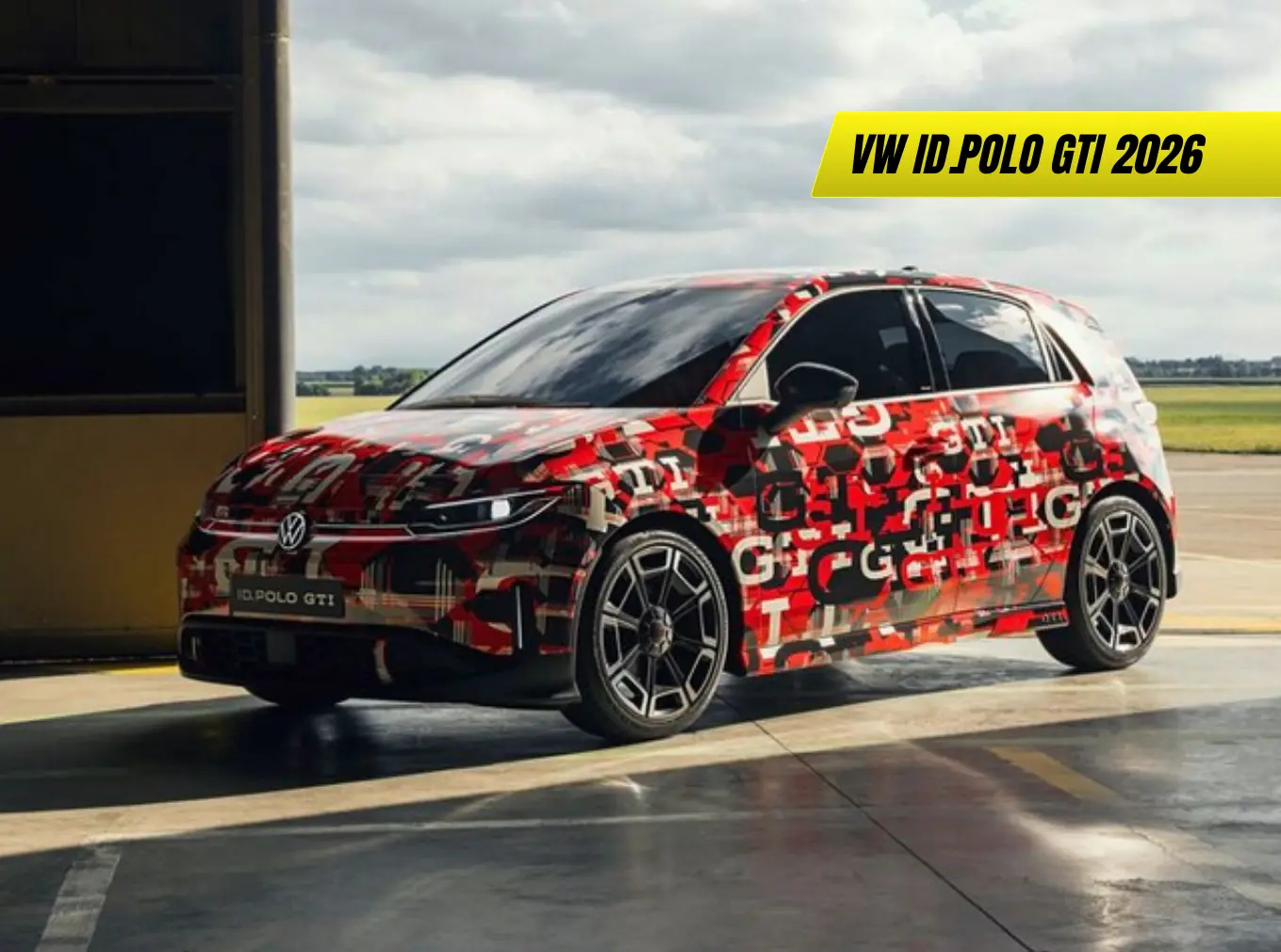
Volkswagen launches ID.Polo GTI as brand’s first electric performance hatchback late 2026 delivering 223 hp (166 kW) front-wheel-drive propulsion from 52 kWh battery enabling 280-mile range, distinctive hot hatch styling through aggressive bumpers, red brake calipers, and pronounced rear diffuser, while €30,000-35,000 estimated pricing positions as affordable electric alternative to combustion Golf GTI maintaining Wolfsburg’s 48-year hot hatch heritage entering battery-electric era though accepting performance compromises (0-100 km/h ~7 seconds versus Golf GTI’s 6.3s) prioritizing efficiency and accessibility over outright acceleration.
Volkswagen’s GTI nameplate evolution from 1976 original Golf GTI defining affordable performance segment through 2026 ID.Polo GTI represents brand’s first pure-electric hot hatch following decades combustion-only GTI models resisting electrification until regulatory pressures and Tesla market disruption forced German manufacturer accepting battery propulsion inevitability despite enthusiast resistance toward electric performance cars perceived lacking visceral engagement (engine sound, gear shifts, throttle response) characterizing traditional hot hatches where driving involvement outweighed absolute speed making 200 hp GTI more satisfying than 400 hp muscle cars delivering superior straight-line performance but minimal driver connection defining enthusiast preferences prioritizing experience over metrics. The 223 hp front-wheel-drive configuration delivers adequate rather than thrilling performance with estimated 6.9-7.2 second 0-100 km/h acceleration trailing combustion Golf GTI Mk8’s 6.3 seconds and significantly slower than electric rivals including Tesla Model 3 Standard Range (5.8s) and Cupra Born VZ (6.6s), though Volkswagen prioritizes efficiency maintaining 280-mile estimated range enabling daily use without charging anxiety plaguing higher-performance electric vehicles achieving 300+ hp consuming batteries rapidly reducing practical range below 200 miles making track days or spirited driving requiring mid-day recharging sessions interrupting driving flow traditional hot hatches avoid through quick fuel stops extending range indefinitely accepting five-minute refueling inconvenience versus hour-long charging delays characterizing even fastest DC stations. The €30,000-35,000 estimated pricing (official figures undisclosed) positions ID.Polo GTI between standard ID.Polo (€25,000 entry) and premium electric hot hatches including BMW i4 eDrive35 (€60,000+) creating accessible performance option targeting younger buyers and traditional GTI enthusiasts unwilling paying luxury pricing for electric alternatives or accepting Tesla brand image conflicting with European automotive heritage preferences where Volkswagen, BMW, and Mercedes represent aspirational mainstream status Tesla lacks despite superior technology and performance creating market opportunities German manufacturers slowly exploiting through affordable electric offerings finally addressing €25,000-35,000 segment abandoned since ID.3 disappointment failing capturing mainstream imagination through bland styling and software issues tarnishing Volkswagen’s electric credibility subsequently improved through ID.4, ID.5, and ID.7 refinements establishing MEB platform viability enabling ID.Polo family expanding Volkswagen’s electric portfolio downmarket toward budget-conscious buyers previously excluded by €40,000+ entry pricing restricting electric adoption to affluent early adopters.
Design and Styling: Hot Hatch Visual Language
The ID.Polo GTI translates traditional GTI design cues into electric-era aesthetic.
Exterior Design Elements
Front Fascia
- Pronounced lower intake: Honeycomb mesh pattern (functional for cooling electronics, not combustion engine)
- Red accent line: Horizontal stripe connecting headlights (GTI heritage callback)
- Aggressive bumper: Sharper angles versus standard ID.Polo’s softer curves
- LED headlights: Matrix LED technology with distinctive daytime running light signature
Side Profile
- 18-inch alloy wheels: Two-tone design exclusive to GTI variant
- Red brake calipers: Visual performance signifier (actual brakes likely identical to R-Line)
- Lowered ride height: 10-15mm reduction versus standard creating planted stance
- GTI badging: Side skirts and fenders
- Flush door handles: Aerodynamic pop-out design shared across ID.Polo range
Rear Design
- Extended roof spoiler: Enhancing downforce and aggressive appearance
- Massive diffuser: Disproportionately large for vehicle size, appearing more off-road than hot hatch
- Revised bumper: Cleaner lines versus standard ID.Polo
- GTI badging: Replacing standard ID.Polo nomenclature
- Dual reflector strips: Mimicking exhaust pipes (controversial fake elements)
Color Options (Speculation)
- Traditional GTI colors: Tornado Red, Dark Iron Blue, Pure White
- Possible exclusive GTI shades: Heritage Golf GTI colors as callbacks
Dimensions (Shared with Standard ID.Polo)
- Length: ~4,100 mm (similar to combustion Polo)
- Wheelbase: 2,600 mm (longer than Polo enabling spacious interior)
- Width: ~1,780 mm
- Height: ~1,530 mm (lowered versus standard for GTI)
Interior Design and Technology
Sport-Focused Cabin
Seating
- Sport seats with GTI plaid cloth upholstery (heritage tartan pattern) or optional leather
- Red stitching throughout cabin
- Embossed GTI logos on headrests and door sills
- Front seats with integrated headrests and bolstering
Dashboard Layout
- 10.25-inch digital instrument cluster: Customizable displays prioritizing performance data
- 13-inch central touchscreen: Improved software versus early ID.3/ID.4 issues
- Physical climate controls: VW reversed touchscreen-only approach after customer backlash
- Red ambient lighting: GTI-specific color scheme
Steering Wheel
- Sport steering wheel with red accent stitching
- Touch-sensitive controls for cruise control and media
- Possible drive mode selector (Sport, Eco, Individual)
- Flat-bottom design (unconfirmed)
Technology Features
- Wireless Apple CarPlay / Android Auto
- Head-up display (optional or standard depending on trim)
- Harman Kardon premium audio (optional)
- Adaptive cruise control with Traffic Jam Assist
- Park Assist with automated parking
Cargo Capacity
- Seats up: ~380-400 liters estimated
- Seats folded: 1,200+ liters (60/40 split-folding rear bench)
- Frunk: Minimal storage (motor occupies front compartment)
Powertrain and Performance Specifications
Electric Motor Configuration
Single Front Motor
- Type: Permanent magnet synchronous motor (PMSM)
- Power output: 223 hp (166 kW / 226 PS)
- Torque: ~310 Nm estimated (instant delivery from 0 rpm)
- Drive: Front-wheel drive (cost-saving versus AWD)
Performance Metrics (Estimated)
- 0-100 km/h: 6.9-7.2 seconds (VW hasn’t confirmed, speculation based on power-to-weight)
- Top speed: 160 km/h electronically limited (higher speeds drain battery excessively)
- Quarter-mile: ~15.5 seconds
Comparison: Combustion Golf GTI Mk8
- Power: 245 hp (gasoline) vs 223 hp (electric GTI)
- 0-100 km/h: 6.3s (gasoline) vs ~7.0s (electric)
- Top speed: 250 km/h (gasoline) vs 160 km/h (electric)
- Driving character: Manual/DSG gearbox engagement vs single-speed EV simplicity
Battery and Range
Battery Specifications
- Capacity: 52 kWh (net usable, gross ~57 kWh)
- Chemistry: Nickel manganese cobalt (NMC) likely
- Supplier: Undisclosed, possibly CATL or LG Energy Solution
- Voltage: ~400V architecture (MEB+ platform standard)
- Warranty: 8 years / 160,000 km maintaining 70% capacity
Range Performance
- WLTP combined: 450 km (280 miles) official claim
- Real-world mixed driving: 350-380 km (217-236 miles)
- Highway at 120 km/h: ~280-300 km (174-186 miles)
- Urban driving: 450+ km achievable with regenerative braking
Charging Capabilities
- DC fast charging: 130 kW maximum
- 10-80% charge time: ~28-30 minutes at peak rate
- AC home charging: 11 kW onboard charger standard
- Full charge (home): ~5 hours from empty
Comparison: Larger Battery Variant Unlikely
VW confirmed 52 kWh battery only option at launch, with smaller 37 kWh battery arriving later 2027 enabling €25,000 entry pricing. GTI variant unlikely receiving larger battery due to:
- Weight penalty compromising handling
- Cost increase pushing pricing too high
- 280-mile range adequate for hot hatch use case
Chassis and Handling
Suspension Tuning
Standard Setup (GTI-Specific)
- MacPherson strut front suspension (stiffened springs and dampers)
- Multi-link rear suspension (sportier tuning versus standard ID.Polo)
- Lowered ride height (~15mm) improving center of gravity
- Sport-tuned anti-roll bars reducing body roll
DCC Adaptive Dampers (Possible Option)
- Electronically adjustable dampers
- Comfort, Sport, Individual modes
- Real-time adjustment based on driving style and road conditions
- €800-1,200 option if offered
Driving Dynamics Challenges
Weight: ~1,750 kg (significantly heavier than 1,480 kg Golf GTI)
- Battery positioned low improving center of gravity but overall mass penalty evident
- Electric motors’ instant torque compensates somewhat but physics unavoidable
Torque Steer
- 223 hp through front wheels creating potential torque steer under hard acceleration
- Electronic differential (XDS+) mitigating through braking individual wheels
- No mechanical limited-slip differential (cost constraint)
Braking System
- Front: 340mm ventilated discs with red-painted calipers
- Rear: 310mm solid discs
- Regenerative braking: Adjustable levels (off, low, medium, high)
- Blended braking: Seamless transition between regenerative and friction
Pricing and Trim Levels
Expected Pricing Structure (Speculation)
ID.Polo GTI Base: €30,000-32,000
- 223 hp motor, 52 kWh battery
- Sport seats with GTI plaid cloth
- 18-inch alloy wheels
- LED headlights and taillights
- 10.25″ cluster + 13″ touchscreen
- Sport suspension
ID.Polo GTI Performance Pack: +€2,500-3,500
- DCC adaptive dampers (if offered)
- 19-inch lightweight alloys
- Harman Kardon audio
- Head-up display
- Matrix LED headlights
ID.Polo GTI Clubsport (Possible Future Variant): €38,000-42,000
- Increased power (~250-280 hp)
- Larger battery (60+ kWh)
- Track-focused aero package
- Carbon-ceramic brakes (unlikely given cost)
- Lightweight components
Competitive Landscape
| Model | Power | 0-100 km/h | Range | Price |
|---|---|---|---|---|
| VW ID.Polo GTI | 223 hp | ~7.0s | 450 km | €30-35k |
| Cupra Born VZ | 231 hp | 6.6s | 425 km | €38-42k |
| MG4 XPower | 435 hp | 3.8s | 385 km | €38-40k |
| Hyundai Ioniq 5 N | 650 hp | 3.4s | 448 km | €70k+ |
| Golf GTI Mk8 | 245 hp | 6.3s | 600+ km | €35-38k |
ID.Polo GTI Positioning
- Cheaper than Cupra Born VZ (€8,000 less)
- Slower than most electric rivals but adequate performance
- Better range than many competitors
- Comparable to Golf GTI pricing while offering electric advantages
Standard vs R-Line vs GTI: Three-Tier Strategy
VW offers tiered performance lineup addressing diverse customer segments.
Standard ID.Polo (€25,000-28,000)
Base Powertrain Options
- 114 hp (85 kW): Adequate city car, ~10.5s 0-100 km/h
- 133 hp (99 kW): Volume seller, ~9.5s 0-100 km/h
- 208 hp (155 kW): Pre-GTI performance, ~7.5s 0-100 km/h
Equipment
- 17-inch steel or alloy wheels
- Cloth upholstery
- Basic infotainment (may have smaller screens on base)
- Manual climate control (base trim)
R-Line (€28,000-30,000)
Styling Enhancements
- 18-inch sportier alloy wheels
- R-Line bumpers and side skirts
- Subtle aero additions
- R-Line badging
Interior Upgrades
- Sport seats (not full GTI specification)
- Ambient lighting
- Better trim materials
- Larger infotainment screen
Powertrain: Same as standard (114/133/208 hp options)
GTI (€30,000-35,000)
Full Performance Focus
- Exclusive 223 hp motor
- GTI-specific suspension tuning
- Performance braking system
- Unique styling elements (red accents, GTI badges, diffuser)
- Heritage GTI interior touches (plaid seats, red stitching)
Launch Timeline and Availability
Development Status: Final testing phase, spy photos show virtually undisguised prototypes
Production Timeline
- Standard ID.Polo launch: Spring 2026 (114/133/208 hp variants)
- ID.Polo GTI launch: Late 2026 / Early 2027 (one year after standard model)
- Production location: Spain (likely Pamplona or Martorell plant)
Market Availability
- Initial markets: Germany, UK, France, Italy, Spain, Netherlands
- Expansion: Rest of Europe 2027
- North America: Unlikely (VW focusing on larger EVs for US market)
- China: Possible adaptation with local battery supplier
Frequently Asked Questions
When can I buy the ID.Polo GTI?
Standard ID.Polo launches spring 2026 with GTI variant arriving late 2026 or early 2027 approximately one year after base model. VW hasn’t confirmed exact dates but spy photos showing undisguised prototypes suggest production-ready development nearing completion.
How much will ID.Polo GTI cost?
Estimated €30,000-35,000 before options based on standard ID.Polo pricing (€25,000 entry) and requiring premium over R-Line variants while remaining accessible versus Cupra Born VZ (€38,000+). Official pricing announced closer to launch with potential regional variations across European markets.
Is ID.Polo GTI faster than Golf GTI?
No. Electric ID.Polo GTI estimated ~7.0 seconds 0-100 km/h versus combustion Golf GTI Mk8’s 6.3 seconds despite similar power output (223 hp vs 245 hp) due to electric vehicle’s ~270 kg weight penalty (1,750 kg vs 1,480 kg) from battery mass. However, electric motor’s instant torque delivery may feel faster in daily driving despite slower objective acceleration.
What’s the range of ID.Polo GTI?
Official claim 450 km (280 miles) WLTP combined from 52 kWh battery with real-world range 350-380 km (217-236 miles) mixed driving conditions. Highway cruising 120 km/h reduces range to ~280-300 km while urban driving with regenerative braking can achieve 450+ km making GTI suitable daily use without frequent charging.
Can I get manual transmission?
No. All electric vehicles use single-speed reduction gearbox eliminating traditional multi-speed transmissions unnecessary with electric motors’ wide power band delivering maximum torque from 0 rpm through entire speed range. Some enthusiasts miss manual engagement though electric motors’ instant response provides different but compelling driving character.
Will there be ID.Polo GTI Clubsport?
Unconfirmed but possible future variant offering increased power (250-280 hp), larger battery (60+ kWh), and track-focused components. VW’s GTI Clubsport heritage suggests eventual flagship variant though initial launch focuses mainstream GTI establishing electric hot hatch credibility before introducing higher-performance derivative.
How does ID.Polo GTI compare to Cupra Born VZ?
Cupra Born VZ advantages: Slightly faster (6.6s vs ~7.0s 0-100 km/h), potentially better handling, more aggressive styling. ID.Polo GTI advantages: ~€8,000 cheaper (€30-35k vs €38-42k), similar range, stronger brand heritage, better dealer network. Choose Cupra for maximum performance within budget, VW for value and GTI heritage.
Is 160 km/h top speed enough?
For most users yes. Unlimited German autobahns enable higher speeds but sustained 160+ km/h cruising drains battery rapidly reducing range below 200 km making extended high-speed driving impractical. GTI targets sporty driving enjoyment through handling and acceleration rather than maximum velocity where electric vehicles inherently disadvantaged versus combustion efficiency.
Conclusion
Volkswagen ID.Polo GTI represents German manufacturer’s cautious electrification of legendary hot hatch nameplate balancing affordable €30,000-35,000 pricing, adequate 223 hp performance, and practical 280-mile range creating accessible electric alternative to combustion Golf GTI though accepting performance compromises (slower acceleration, lower top speed, heavier weight) inevitable current battery technology unable matching gasoline’s energy density and lightweight enabling Golf GTI’s 1,480 kg curb weight versus ID.Polo GTI’s estimated 1,750 kg penalty from battery mass even utilizing compact 52 kWh pack prioritizing efficiency over maximum power delivery. The heritage GTI styling cues (plaid seats, red accents, aggressive bumpers) and front-wheel-drive layout maintaining traditional hot hatch character partially offset electric powertrain’s simplified driving experience lacking manual transmission engagement, gear shift satisfaction, and exhaust symphony characterizing four decades GTI evolution from 1976 original Golf GTI through Mk8 current generation representing combustion hot hatch’s peak refinement before regulatory and market pressures forcing electric transition enthusiasts resist despite objective advantages (instant torque, minimal maintenance, lower operating costs) failing replicate visceral sensations defining analog driving experiences younger generations never experienced consequently accepting electric alternatives without nostalgic comparisons older enthusiasts cannot escape coloring preferences toward combustion purity electric vehicles cannot authentically recreate through artificial sound symposers or simulated gear shifts Tesla wisely avoided pursuing focusing instead electric powertrain’s unique character establishing new performance paradigm Volkswagen tentatively embracing through ID.Polo GTI testing market receptivity before committing full electric hot hatch portfolio potentially including Clubsport and R variants escalating performance and pricing addressing customers willing paying premiums for maximum capability within electric platform limitations.





